
Approved Group International
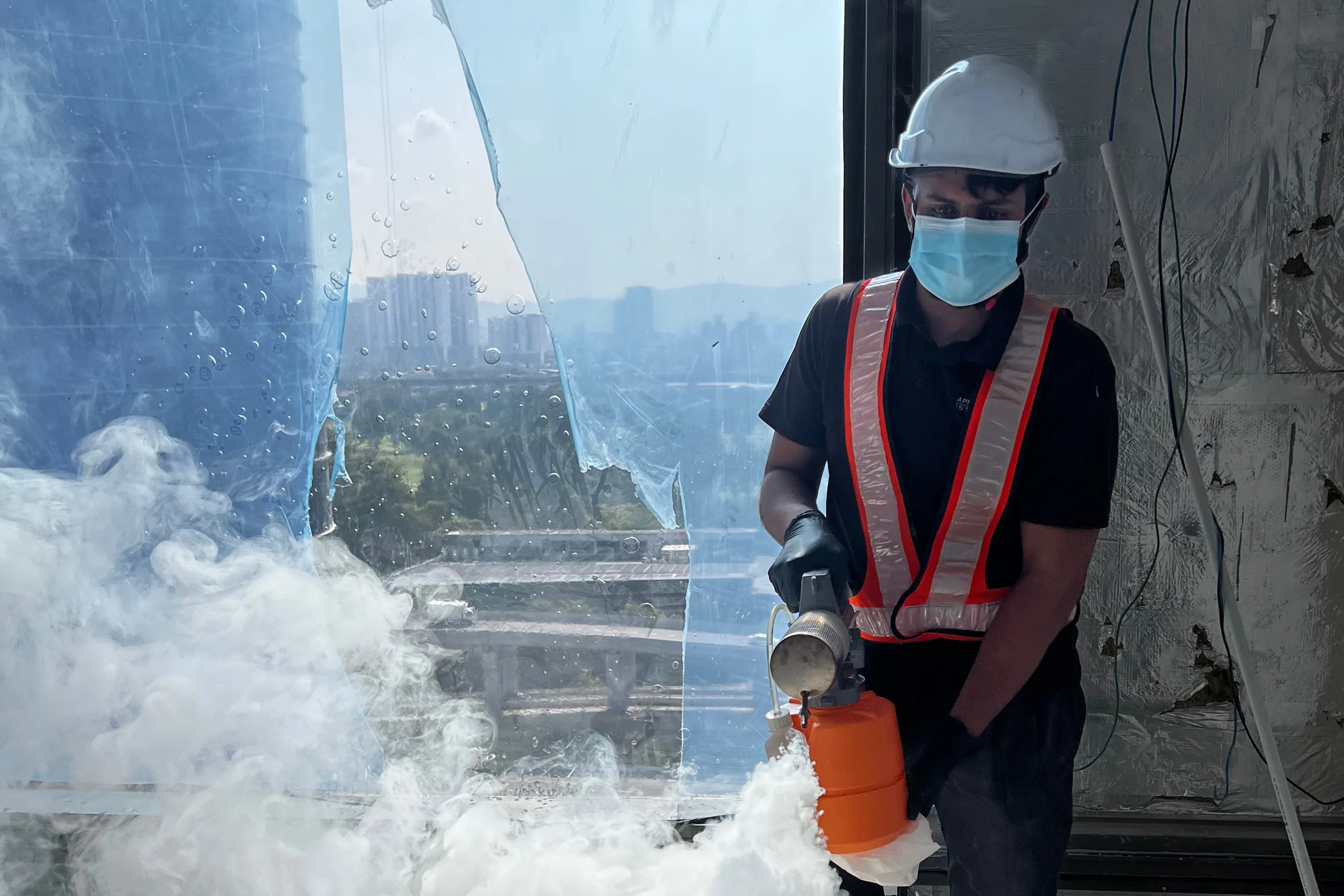
AGI technician in a hard hat, mask and safety vest fogging a damaged building interior with disinfectant

Services

Disaster Restoration

Disaster restoration returns damaged property, plant, systems and contents to service after a fire, flood, storm or other loss.

The question

How much of this can we actually save?

Engineering-led restoration of plant, electrical and electronic systems, property and contents after fire, flood and contamination, to IICRC S500, S520 and S700.

Restoration crews mobilise from Malaysia, Singapore and Indonesia, and across the region through the partner network. The first 48 hours decide most of what is recoverable, so the nearest office takes the call.

11,500
Restoration projects completed
72h
The window that decides recovery
8
Restoration specialisms
24/7
Emergency response line

What sits under this

8 services in disaster restoration

One team across all of them, so a loss that crosses two disciplines does not need two instructions.

One Loss, One Team

A plant manager rebuilding a line, a facility director drying three floors and a general counsel weighing recovery against a contractor are usually looking at the same loss from three different chairs. AGI's engineers, damage assessors and restoration technicians work from one file rather than three. The finding on cause, the assessment of what survived and the scope of what is put right arrive as one technical account, not a set of reports somebody else has to reconcile.

That continuity has a limit, and it is a deliberate one. Restoration does not start because a site needs to reopen. It starts once the investigation team has documented the evidence, preserved what needs preserving, or formally released the area for work. On a contested loss that boundary is usually a short conversation between the investigating engineer and the site team, not a delay measured in weeks. On an undisputed loss, documentation and release can happen within the first attendance. Drying or decontamination can begin the same day.

The same firm that establishes cause is therefore able to stand behind the restoration scope that follows it. The people who wrote the finding and the people who are drying, cleaning and reinstating the building are working from the same evidence and the same record of what was found.

A major loss can also touch more than one site or jurisdiction, particularly where a single incident interrupts a production network rather than one building. The same method and reporting format are applied at every site involved, so a facility director comparing progress across locations reads one consistent account rather than reconciling several.
The First Days Decide the Loss

Restoration is a race against three processes that do not wait for a decision to be made. Moisture moves into materials that were never wet at the time of loss, wicking upward through masonry and outward through insulation and ceiling voids. Soot is acidic. Left in contact with metal, glass and painted surfaces, it continues to corrode and etch them well after a fire has been extinguished. Microbial growth can begin within 24 to 48 hours wherever moisture remains trapped behind a wall, under flooring or inside insulation, whether or not anyone can yet see it.

None of that is a reason to move before the evidence is ready. It is the reason the investigation, assessment and restoration teams coordinate from the first attendance rather than in sequence over separate weeks. Structural drying, temporary power, weather protection and contamination control can often begin around evidence that has already been documented, while examination continues on the area still in question. The site is stabilised without disturbing the record the investigation still needs.

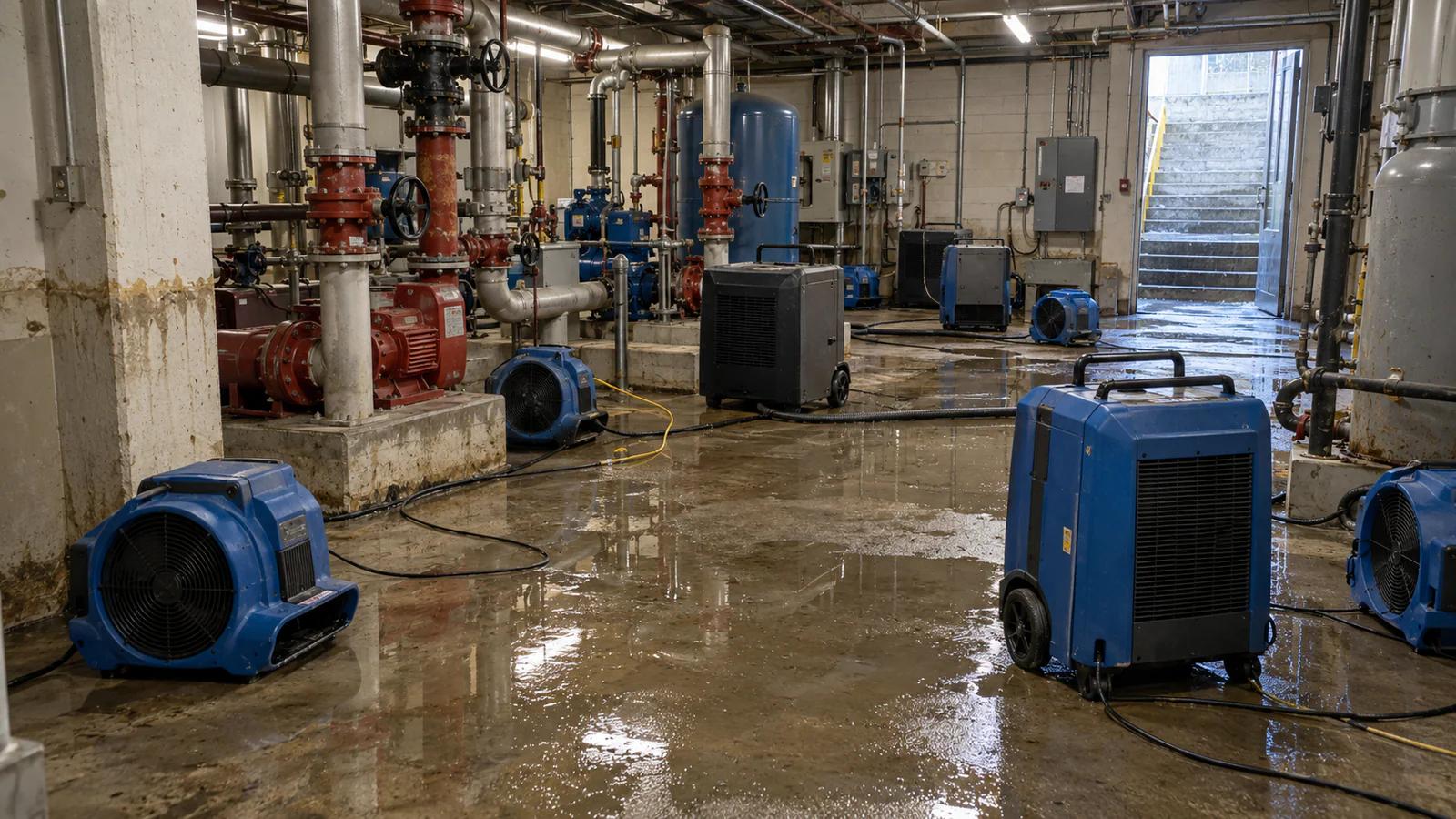
Air movers and dehumidifiers drying a flooded basement plant room
Plate 01Air movers and dehumidifiers drying a flooded basement plant room

Restorable or Replace

The decision to restore a component or replace it is made on evidence, not on how the item looks. Functional testing establishes whether equipment still performs to specification. Contamination chemistry, including chloride and ion testing on electrical and electronic components, establishes whether corrosive residue is likely to cause failure later even where none is visible now. The result is compared against the manufacturer's specification and, where the finding supports it, against the requirements for requalification and warranty reinstatement.

That method is applied consistently, whether the item is a motor control centre or a filing cabinet. Some components pass cleanly. Some fail on a single measurable point and are replaced. Many sit in between, where drying, decontamination or reconditioning restores function that visual inspection alone would have written off, or where testing reveals a risk that appearance alone would have missed. Restoration is performed to IICRC S500 for water damage and S700 for fire and smoke damage; mould remediation is performed to IICRC S520. Where corrosion risk remains after cleaning, vapour-phase corrosion inhibition and further chemical testing are used to confirm the equipment is stable before it returns to service. No fixed percentage of replacement cost is applied to that decision. Each item is tested on its own record, and where a manufacturer cannot confirm requalification criteria for an obsolete model, that gap is stated rather than resolved by assumption.

What We Restore

Each of the following operates under the same evidence-first method and the same reporting discipline, scaled to the service involved.

Property restoration. returns the structure and its finishes to service: controlled drying and dehumidification, soot and smoke residue removal, odour control, structural cleaning and the decontamination of building services ahead of reinstatement. See Property Restoration.

Content restoration. triages stock, furniture, records, equipment and specialised contents on the same evidence-first method, matching cleaning and decontamination technique to the material and the contamination involved. See Content Restoration.

Electrical restoration. covers the testing and decontamination of switchgear, busduct, motors and distribution equipment that must be proven safe before it is re-energised, not simply dried and switched back on. See Electrical Restoration.

Electronic restoration. applies precision decontamination to instruments, control systems and process electronics, where corrosion at a connector or a board can fail months after the loss that caused it if the contamination is not removed. See Electronic Restoration.

Plant and machinery restoration. works through the same requalification discipline that governs any rotating or process equipment returning to service, coordinated with the manufacturer where a warranty is in question. See Plant and Machinery Restoration.

Document and media restoration. stabilises paper, drawings, magnetic and digital media before deterioration becomes permanent, using freeze-drying and vacuum-drying techniques suited to the material. See Document and Media Restoration.

Mould remediation. addresses the moisture source as well as the growth, to IICRC S520, where a loss has gone undetected or undried long enough for microbial growth to establish. See Mould Remediation.

Emergency response and stabilisation. mobilises within 24 hours of appointment to stop secondary damage without disturbing the evidence the investigation still needs. See Emergency Response and Stabilisation.

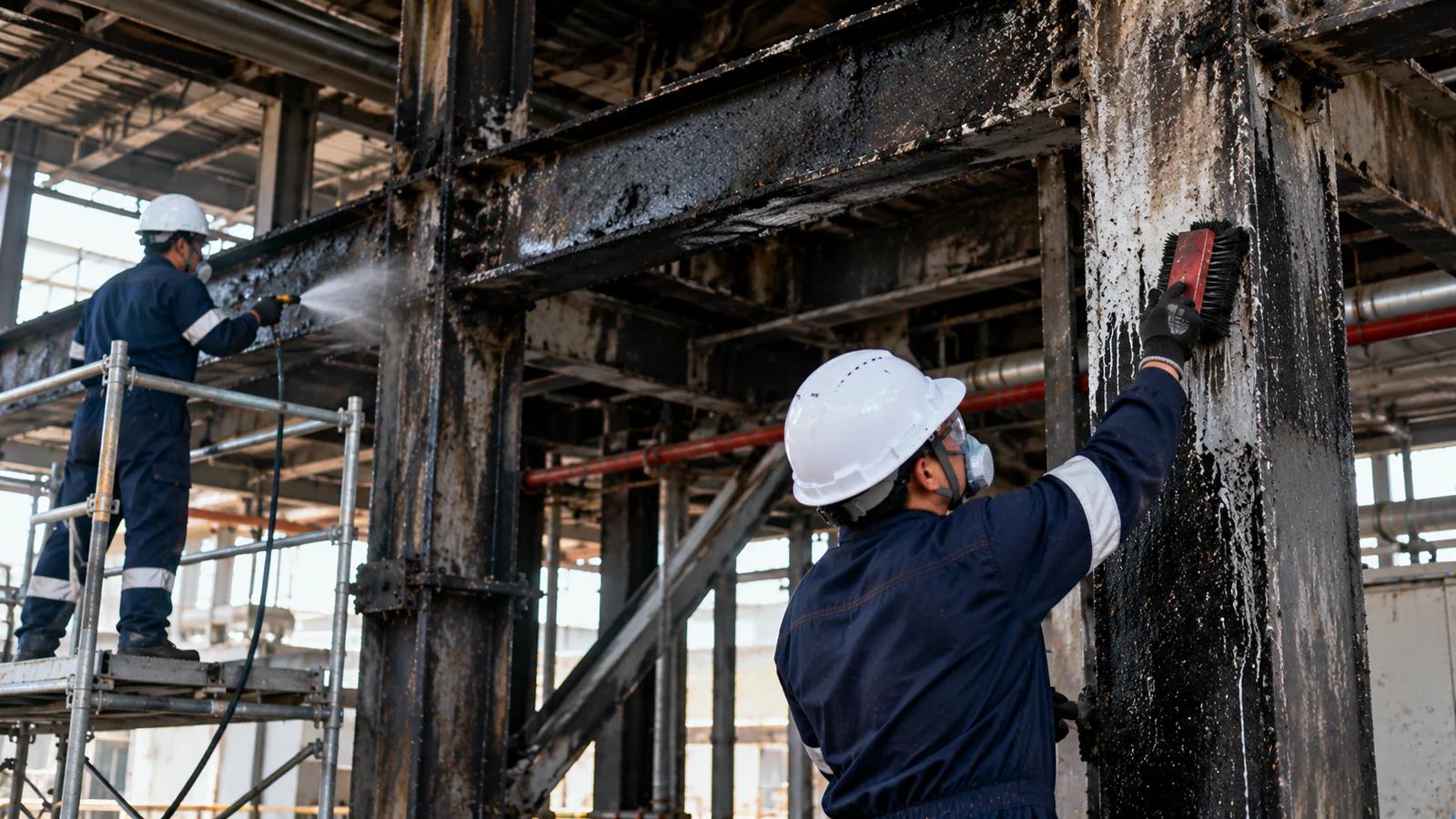
AGI technicians removing soot from the steel frame of a fire-damaged industrial building
Plate 02AGI technicians removing soot from the steel frame of a fire-damaged industrial building

Common questions

About disaster restoration

The questions that come up before an instruction, answered plainly.

How it runs

Four steps, in this order

The sequence matters more than the speed. Skipping the third step is what produces a conclusion that does not survive challenge.

  1. 1

    Stabilise

    Make safe, extract water and inhibit corrosion before damage becomes permanent.

  2. 2

    Triage

    Split assets into recoverable, possibly recoverable and lost, so effort goes where it counts.

  3. 3

    Restore

    Clean, dry, decontaminate and refurbish to a documented method.

  4. 4

    Verify

    Test against the criteria set at the start, and record the result on completion.

24/7 response

Need disaster restoration on a live matter?

Tell us what happened and where. A specialist in the right discipline will come back to you, not a sales desk.