
Approved Group International
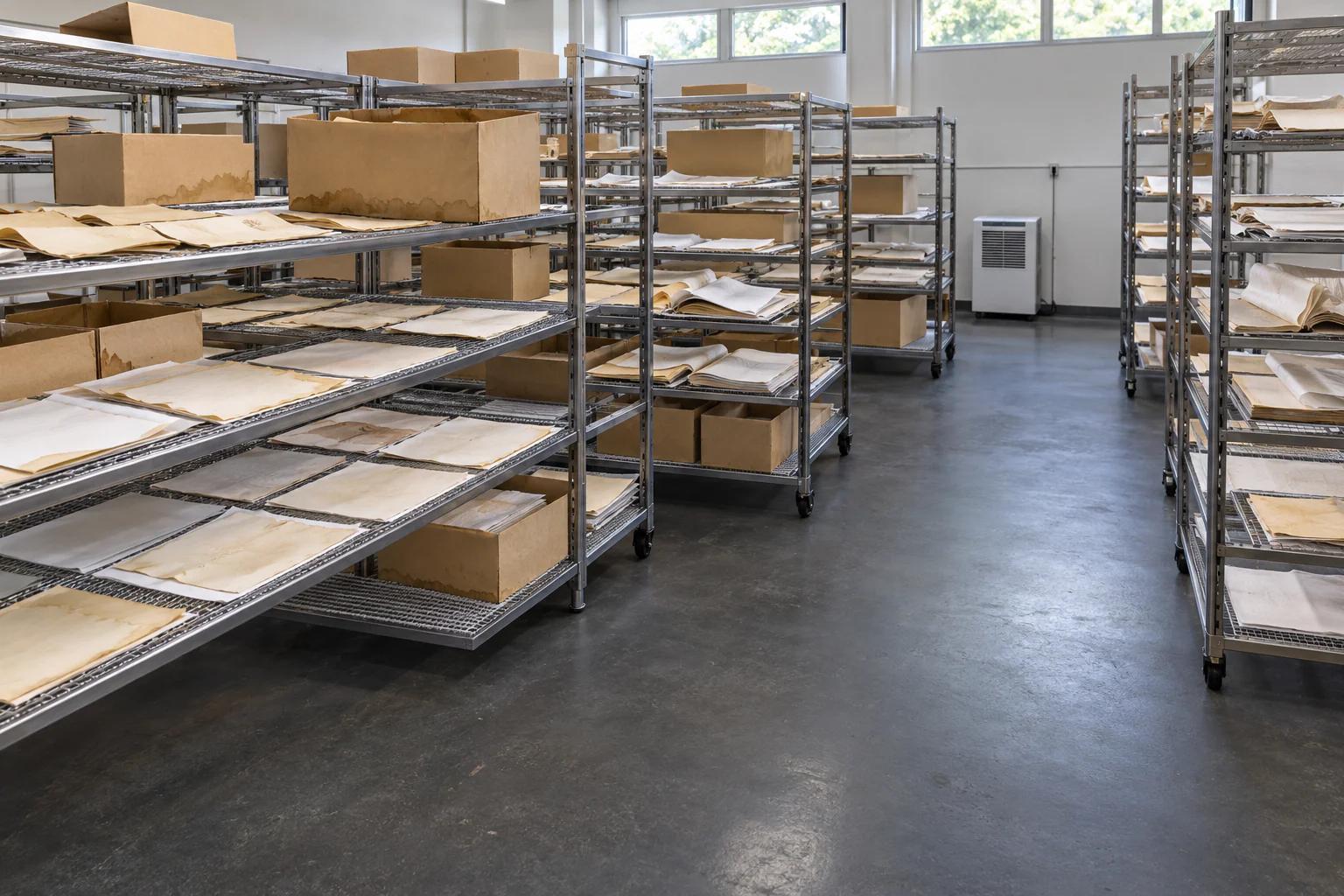
Water-damaged documents and archive boxes drying on racks in a clean room

Disaster Restoration

Document and Media Restoration

Document and media restoration stabilises and recovers records, drawings, books and stored media after water, fire or mould damage, and keeps a documented chain of custody where the material may itself be evidence.

When to call

  • A records room, archive or server room has flooded, and nobody yet knows what is salvageable.
  • Smoke and soot have reached a records area without water damage.
  • Documents relevant to a dispute or an investigation have been damaged, and a party needs them recovered without breaking the chain of custody that…
  • A regulator requires original records to be retained, not just a digital copy.
  • Mould has developed on stored paper or media, usually after a wetting event was not addressed quickly enough, and containment is needed to stop it…

What you receive

  • AGI may be instructed by any party responsible for damaged records or media.
  • Work generally produces a triage report, issued once affected material has been sorted and stabilisation begun, followed by a restoration and…

What Is Document and Media Restoration?

It is the technical process of stabilising, cleaning and recovering paper records, drawings, books and stored media after water, fire or mould exposure, and preparing a defensible account of how each item was handled from collection to return. It is not archival conservation of historic or artistic material, and it does not decide whether a document is genuine. Forensic document examination addresses authenticity; document and media restoration addresses physical recovery.

Where the affected material may itself be evidence in a dispute, restoration proceeds only once it has been documented, secured or formally released for work, and the handling record is kept detailed enough to withstand challenge later. Where recovery is purely operational, the priority shifts to getting a working copy of the material back into use as quickly as the condition of the original allows.
How We Restore

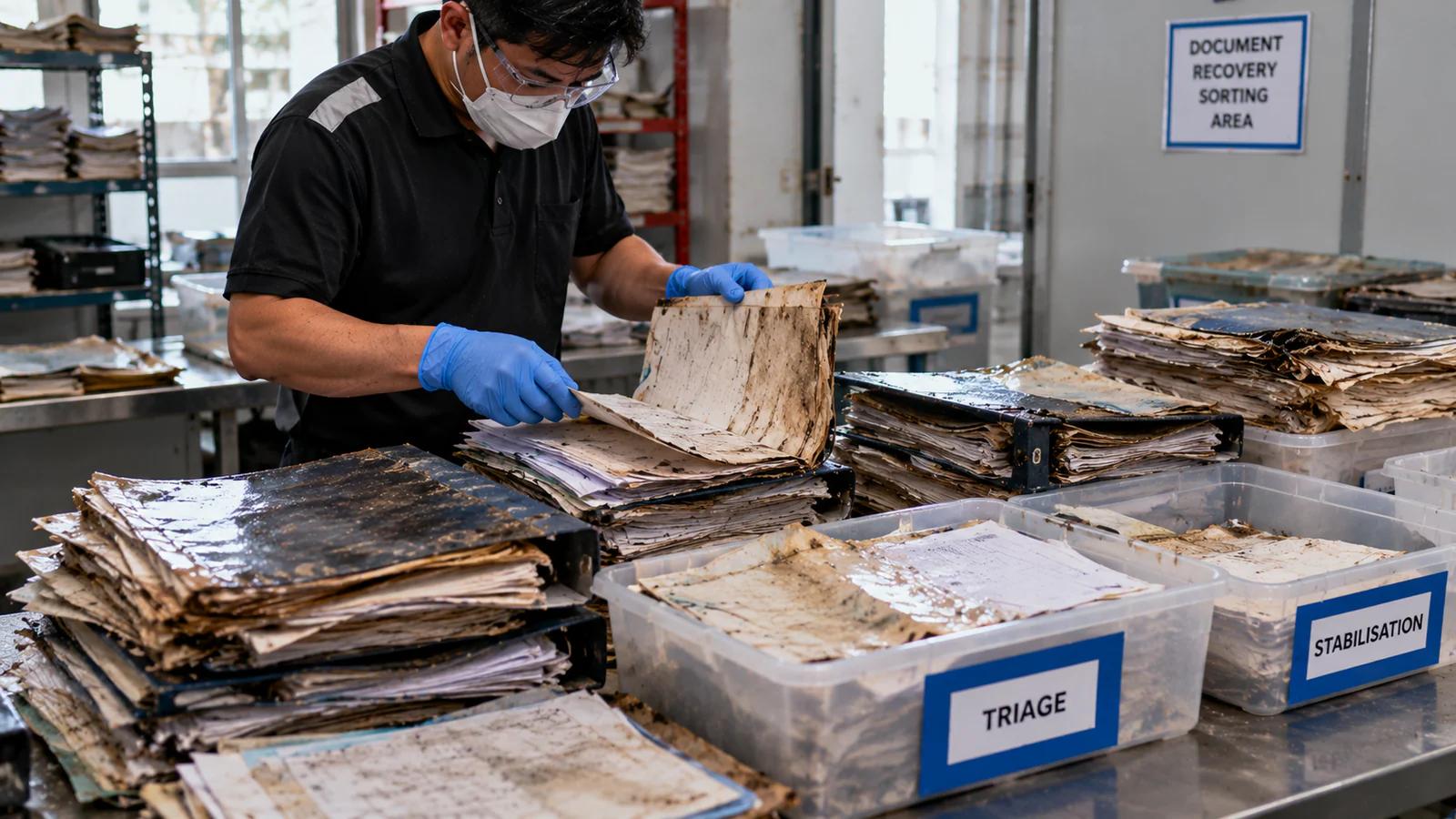
  1. Triage and stabilise. Affected material is sorted by damage type and urgency, and anything at risk of continued deterioration, particularly wet paper prone to mould, is stabilised first.

  2. Freeze-drying. Bulk wet paper records are freeze-dried to remove moisture without the swelling, distortion and page-blocking that air-drying causes.

  3. Cleaning. Soot, dust and other particulate contamination are removed from paper, bindings and media surfaces using methods suited to the material.

  4. Deodorisation. Smoke and mould odour retained in paper and binding materials is treated separately from visible cleaning, since odour can persist after a surface looks clean.

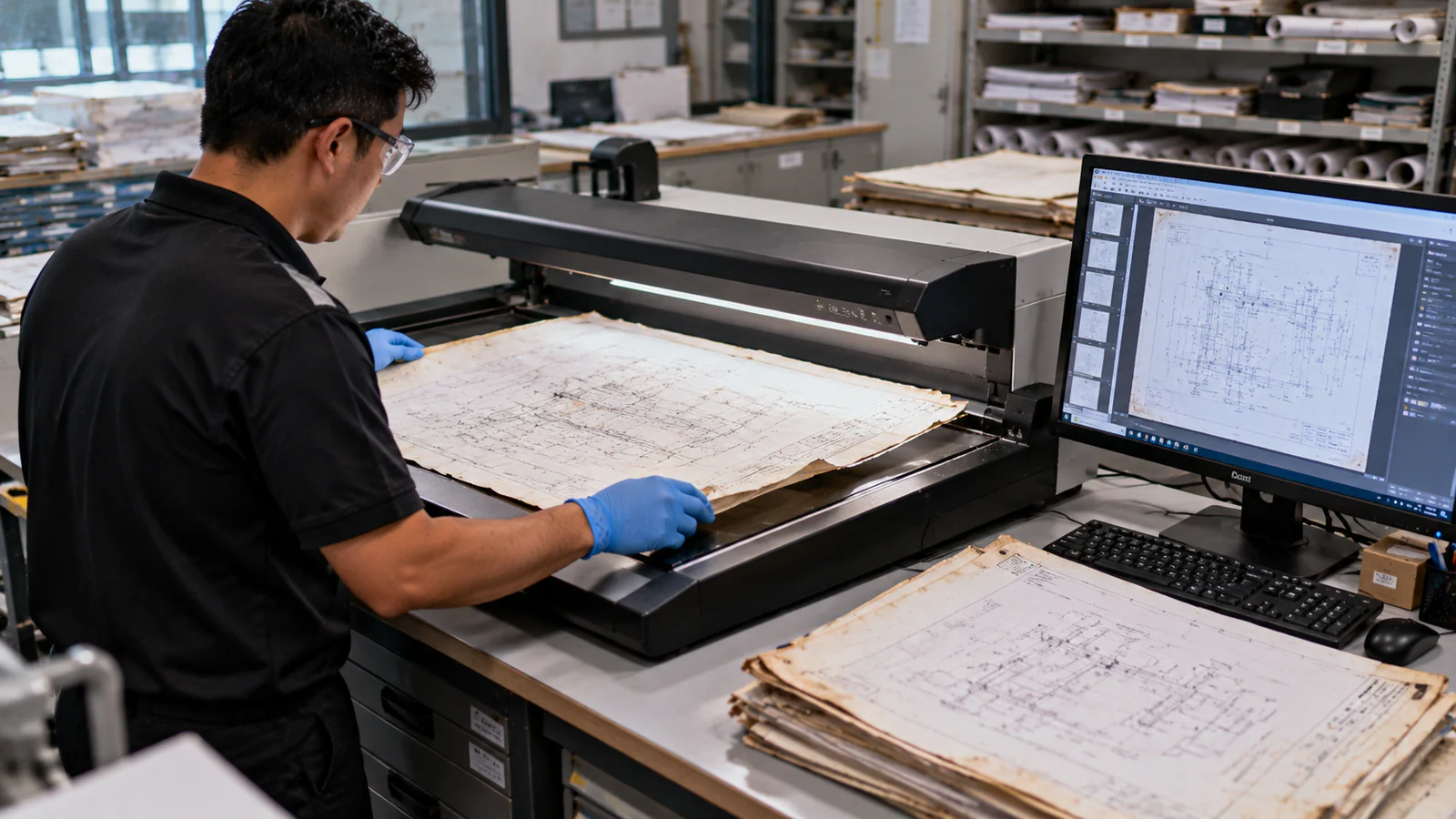
  5. Digitisation. Where appropriate, damaged or fragile material is digitised to restore working access, without treating the digital copy as a substitute for the original where the original itself must be retained.

  6. Chain of custody. Collection, handling, storage and return of every item is logged, a discipline applied without exception where the material may be evidence.

Technician sorting water-damaged paper records into triage and stabilisation trays
Plate 01Technician sorting water-damaged paper records into triage and stabilisation trays

What We Restore

Paper records and drawings. Contracts, engineering drawings, technical files and correspondence, where wetting, smoke or age-related deterioration threaten both the content and the physical document.

Books and bound volumes. Bound material affected by water or fire, where the binding itself often determines how the volume can be dried and handled.

Photographic and film media. Prints, negatives and film stock, which respond differently to water and heat than paper and require separate handling to avoid emulsion damage.

Digital and magnetic media. Hard drives, tapes and other storage media affected by water, heat or smoke, where recovery depends on the extent of physical damage to the storage medium itself.

What Decides These Cases

How quickly stabilisation began. Mould can establish on wet paper within 48 to 72 hours in warm, humid conditions. The interval between wetting and stabilisation usually determines how much of a wet archive can be saved.

Whether the material may be evidence. Where documents are relevant to a dispute or an investigation, the chain of custody record governs how the work proceeds, and recovery decisions are made with that constraint in mind rather than around it.

Whether the original itself must be retained, or a working copy will do. A regulatory or contractual requirement to keep the original changes the restoration sequence. Digitisation alone is not always sufficient, however clear the resulting copy.

Some material is not recoverable. Severe charring, advanced mould colonisation or total loss of a storage medium's physical structure can put full recovery out of reach. That limitation is stated rather than implied by a partial result.

Technician scanning fragile engineering drawings at a digitisation station
Plate 02Technician scanning fragile engineering drawings at a digitisation station

Common questions

About document and media restoration

The questions that come up before an instruction, answered plainly.

24/7 response

Protect the evidence first

Restrict access, change nothing, and call. Most of what decides a case is still on site in the first few days.

Emergency line open at all hours, across every office.