
Approved Group International
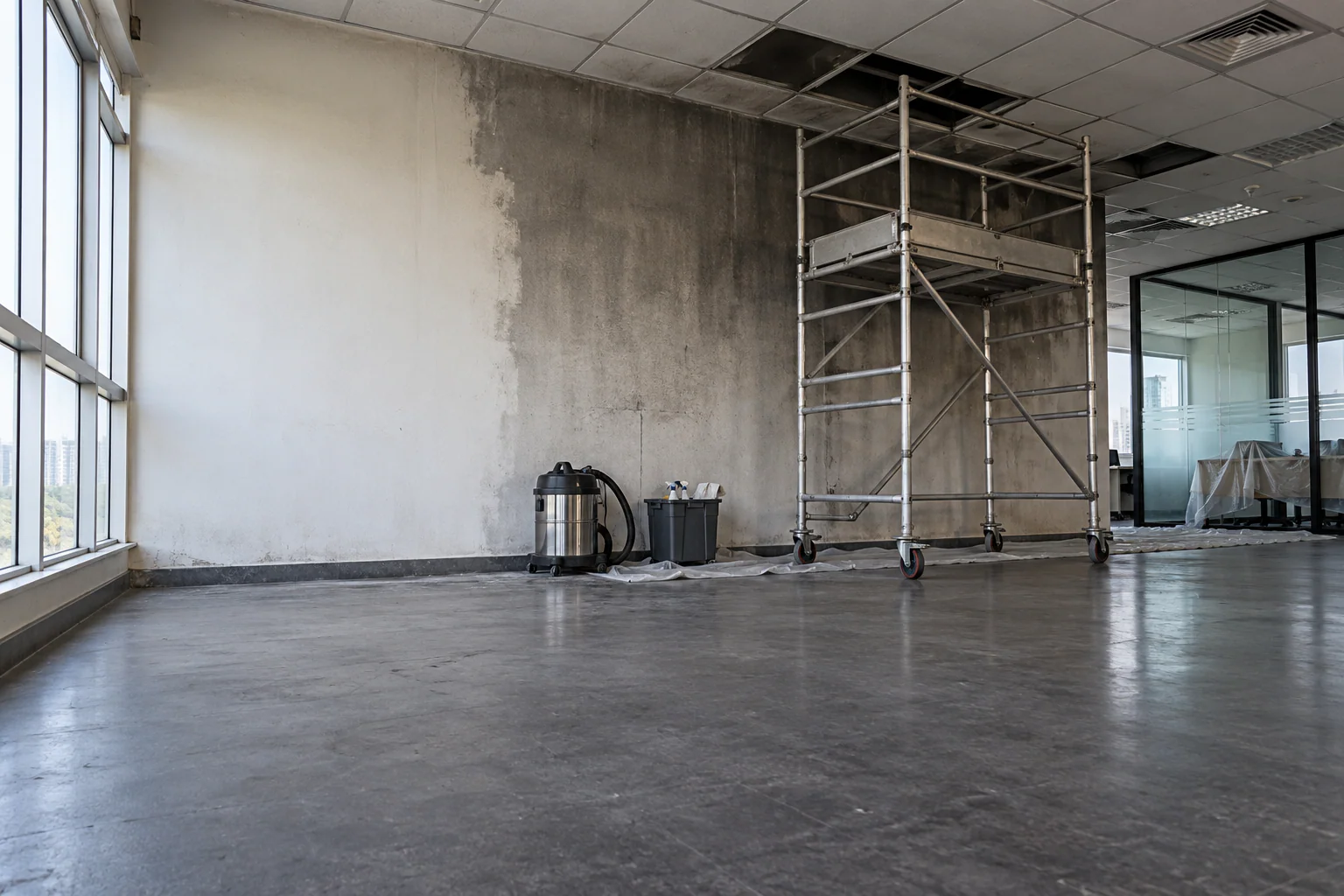
Office interior part-way through smoke damage cleaning, scaffolding against a partly cleaned wall

Disaster Restoration

Property Restoration

Property restoration returns a building's structure, finishes and services to service after fire, water or contamination damage, to IICRC S500 and S700.

Fire damage restoration and flood damage restoration are both this service: soot and smoke residue removal, structural drying, decontamination and reinstatement, to IICRC S500 and S700.

When to call

  • A site cannot reopen until the building is dry, clean and safe.
  • Smoke or soot has spread beyond the fire area.
  • Water has reached materials that are not yet visibly wet.
  • A contamination event affects building services rather than the structure alone.
  • Before anything fails.

What you receive

  • AGI may be instructed by any party responsible for the property or with an interest in its condition.
  • Whoever gives the instruction, the work produces a scope of works setting out what is being restored and to what standard, moisture and residue…
  • Many of our restoration technicians hold IICRC certification in water, fire and smoke, and odour control, and the team includes certified infrared…

What Is Property Restoration?

It is the technical process of drying, cleaning, decontaminating and reinstating a building's structure and finishes after fire, water or contamination damage, so the property returns to its pre-loss condition and function. It differs from a damage assessment, which determines the nature and extent of damage and the appropriate repair, restoration or replacement scope. Property restoration is the work carried out once that scope is set.

It also differs from general construction repair. A contractor rebuilding a wall assumes the wall needs rebuilding. A restoration technician measures moisture content, tests residue chemistry and checks structural material condition first, because much of what looks damaged is not, and some of what looks unaffected is contaminated in ways a visual inspection will not show.
How We Restore

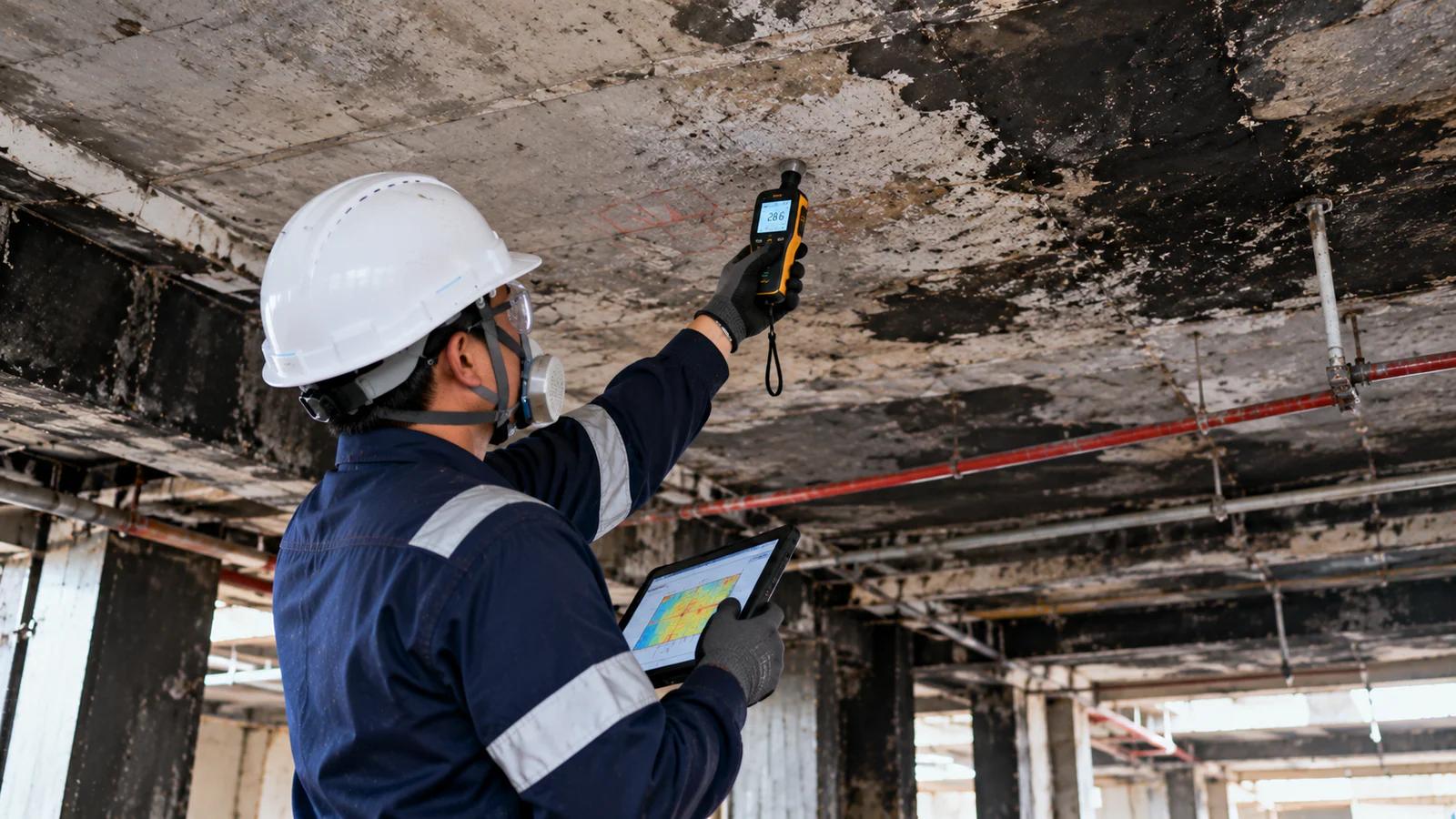
Assess and plan. Moisture mapping, soot and residue sampling, and structural material condition checks establish the actual extent of damage before a drying plan or cleaning method is chosen, so the scope reflects what the building needs rather than what is visible.

Extract and dry. Standing water is removed and structural drying and dehumidification are applied to IICRC S500, with moisture content tracked against target values for each material rather than by a fixed calendar.

Remove soot and smoke residue. Cleaning method is matched to the surface and the residue type, to IICRC S700, because a technique suited to a painted wall can damage a metal or glazed surface carrying the same residue.

Control odour. Odour control follows residue removal, addressing the source of the odour in the material rather than masking it, because odour that has not been removed at the source tends to return.

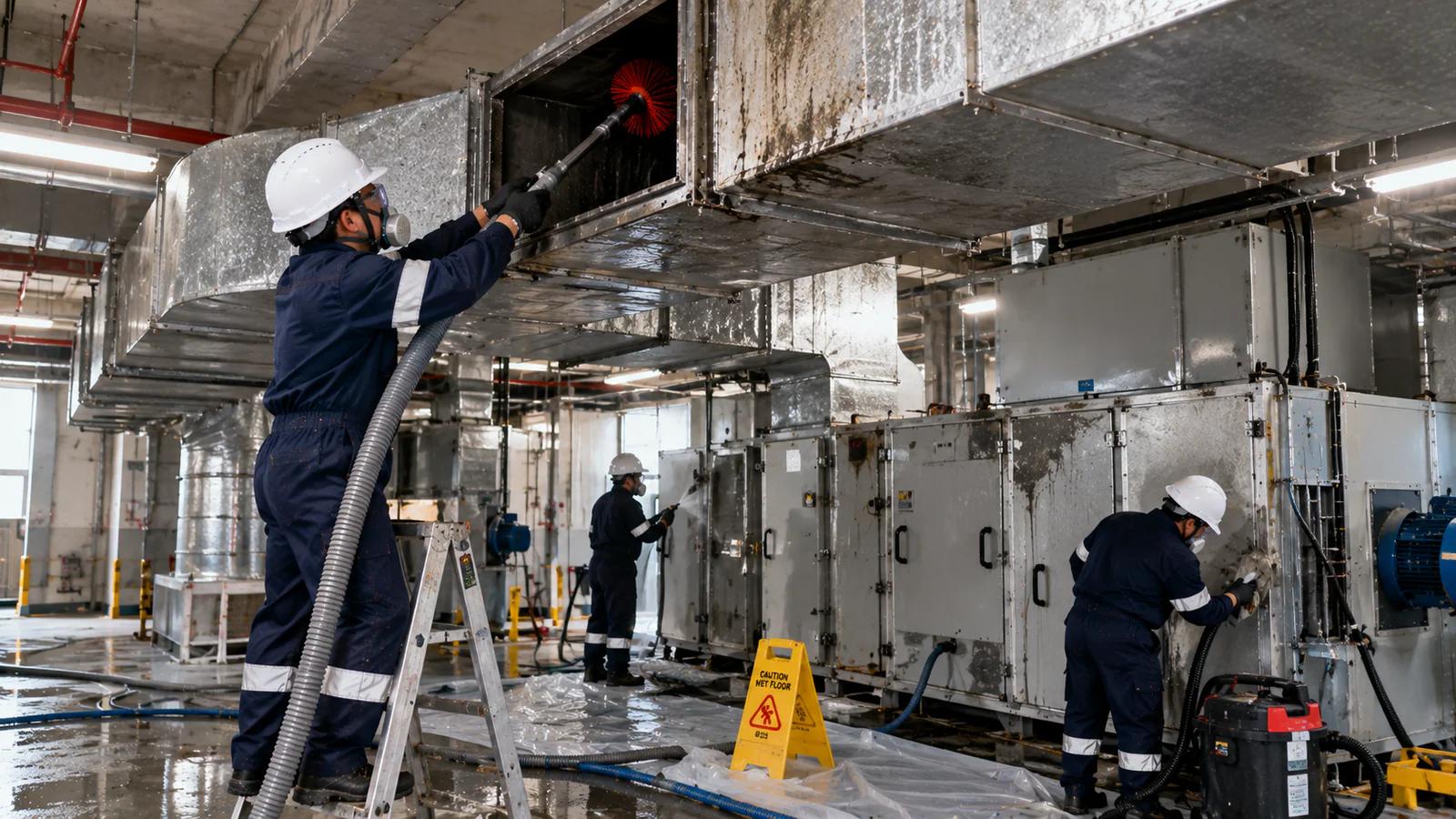
Clean and decontaminate structure and services. Structural cleaning, and decontamination of ductwork, risers and plant rooms, are carried out before those services are put back into use, so contamination is not recirculated through the building once it reopens.

Sequence reinstatement. Repair and reinstatement follow an order set by what the building actually needs first, life safety systems, weatherproofing, then finishes, rather than by contractor convenience, and the sequence is set out in the scope of works before work begins.

AGI engineer mapping moisture in a fire-damaged concrete ceiling with a meter and tablet
Plate 01AGI engineer mapping moisture in a fire-damaged concrete ceiling with a meter and tablet

What We Restore

Structural drying and dehumidification. Concrete, masonry, timber and insulation affected by water, firefighting water or flood, dried and monitored against target moisture content rather than a fixed schedule.

Soot and smoke residue removal. Walls, ceilings, structural steel, glazing and fixed finishes affected by fire, cleaned to a method matched to the surface and the residue.

Odour control. Odour arising from fire, smoke, water or contamination, addressed at its source in the affected material rather than masked at the surface.

Structural cleaning. Concrete, masonry and steel structure affected by contamination, corrosion or residue, cleaned and, where required, tested to confirm the contamination has been removed.

Decontamination of building services. Ductwork, risers, plant rooms and other building services affected by contamination, decontaminated and tested before being put back into use.

Reinstatement sequencing. Repairs and finishes returned in the order the building needs them, coordinated with the base building's life safety and weatherproofing requirements before cosmetic work begins.

What Decides These Cases

Whether the moisture reading supports drying or removal. Some materials dry successfully in place. Others, particularly where moisture has been present long enough to affect structural integrity, have to be removed and replaced rather than dried. The reading, not the material's appearance, decides which.

Whether residue is surface or has penetrated the material. Soot that sits on a sealed, hard surface responds to cleaning. Soot that has penetrated a porous or unsealed material may require the material itself to be removed. Testing establishes which condition applies before a cleaning method is chosen.

Whether services can be safely restarted. A ventilation system or a plant room that has not been decontaminated can recirculate contamination through a building the moment it is switched back on. Confirming decontamination before restart is often what decides how quickly a site can actually reopen.

Whether the building's condition before the loss affects the scope. Deferred maintenance, prior water damage or existing deterioration are separated, as far as the evidence permits, from damage attributable to the incident under investigation, because the two are not restored on the same basis.

AGI technicians cleaning ductwork and air handling plant before building services restart
Plate 02AGI technicians cleaning ductwork and air handling plant before building services restart

Common questions

About property restoration

The questions that come up before an instruction, answered plainly.

24/7 response

Protect the evidence first

Restrict access, change nothing, and call. Most of what decides a case is still on site in the first few days.

Emergency line open at all hours, across every office.