
Approved Group International
Switchroom after a flood, cabinet doors open and drying fans running

Disaster Restoration

Electrical Restoration

Electrical restoration returns switchgear, busduct, motors, transformers, and distribution and control panels to safe service after fire, flood or contamination, or establishes that a component cannot be returned to service at all.

When to call

  • Production has stopped because switchgear or a motor control centre has been under water or smoke.
  • Equipment looks undamaged, and someone still wants to switch it on.
  • A regulator or an internal safety committee wants assurance before re-energisation.
  • A supplier or contractor disputes responsibility for the damage, and the facility owner needs a technical account of the equipment's condition,…
  • A board or an operations director wants to know whether a sister facility carries the same exposure.

What you receive

  • AGI may be instructed by any party responsible for damaged electrical infrastructure.
  • Work generally produces a preliminary view of the equipment's condition, issued once the initial contamination assessment is complete, followed by…

What Is Electrical Restoration?

It is the technical process of determining whether electrical plant damaged by fire, flood or contamination can be cleaned, dried, tested and safely returned to service, and carrying out that work where the evidence supports it. It is not a repair estimate, and it is not the investigation that established how the damage occurred. Electrical failure investigation asks why a fault, a fire or a surge happened. Electrical restoration begins only once the relevant evidence has been documented, secured or formally released for work, and asks what can now be safely recovered.

Damage assessment sets the scope before restoration starts: what is damaged, what a repair or replacement should cover, and which equipment is a genuine restoration candidate. Restoration then carries that scope through to a tested, commissioned result.

How We Restore

  1. De-energise and isolate. No cleaning, testing or handling begins until the equipment is confirmed isolated and safe to work on.

  2. Contamination assessment. Chloride and ion testing on switchgear, busduct, motor windings and panel interiors establishes the type and concentration of contamination present, rather than relying on visible residue.

  3. Cleaning and decontamination. Conductive soot, moisture and residues are removed using methods suited to the equipment class, so that cleaning itself does not damage insulation or contacts.

  4. Controlled drying. Moisture trapped inside enclosures, windings and joints is removed under monitored conditions before testing proceeds.

  5. Insulation resistance and functional testing. Insulation resistance, continuity, earth resistance and functional testing are carried out against the equipment's own specification, not a generic pass mark.

  6. Manufacturer requalification. Where the manufacturer's own sign-off is required before warranty or safety cover can be reinstated, that requalification is arranged directly with them.

  7. Report and commission. Findings, test results and the restoration record are documented before equipment is released for re-energisation.

AGI engineer running insulation resistance tests on fire-damaged switchgear
Plate 01AGI engineer running insulation resistance tests on fire-damaged switchgear

What We Restore

Switchgear and busduct. Low- and medium-voltage switchgear, air- and gas-insulated assemblies, and the busduct runs connecting them, where contamination inside a sealed enclosure is rarely visible from outside.

Motors. Induction and synchronous motors affected by flood, fire or smoke, where winding insulation resistance and bearing condition usually decide the outcome.

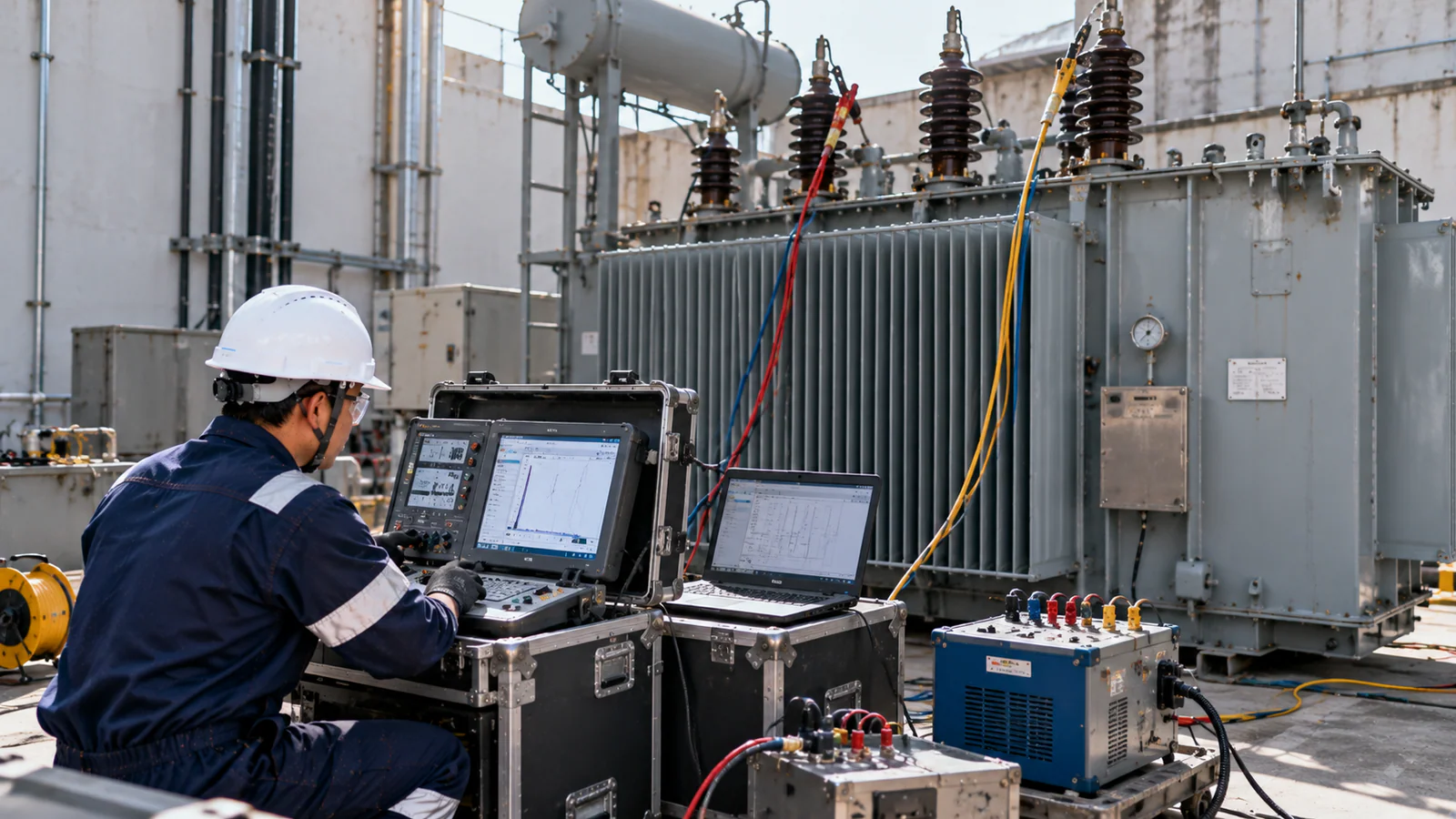
Transformers. Dry-type and oil-filled transformers exposed to flood or fire, where oil condition, winding insulation and bushings are assessed alongside the tank and enclosure itself.

Distribution boards. Low-voltage distribution equipment serving a building or process area, frequently the first point of contamination after water ingress.

Control panels. Motor control centres, process control panels and protection relay panels, where fine contamination on relay contacts and terminals can defeat a protection function without visibly damaging it.

What Decides These Cases

Whether insulation resistance meets specification. A reading below the equipment's own tolerance is not a judgement call. It is a limit the equipment either meets or does not.

What the contamination chemistry actually shows. Chloride and ion concentrations are compared against the levels a given equipment class can tolerate before corrosion or tracking becomes a continuing risk rather than a one-time event.

Whether the manufacturer will requalify the equipment. Some manufacturers will not reinstate a warranty on equipment that has been submerged or exposed to fire, regardless of test results. That position is established early, because it can decide the outcome before testing does.

Some equipment fails, and the assessment says so. Not every component that survives cleaning survives testing. Where insulation resistance, contamination levels or manufacturer criteria are not met, that finding is reported plainly, rather than qualified into an ambiguous recommendation.

AGI engineer testing a transformer's windings and bushings before it returns to service
Plate 02AGI engineer testing a transformer's windings and bushings before it returns to service

Common questions

About electrical restoration

The questions that come up before an instruction, answered plainly.

24/7 response

Protect the evidence first

Restrict access, change nothing, and call. Most of what decides a case is still on site in the first few days.

Emergency line open at all hours, across every office.