
Approved Group International
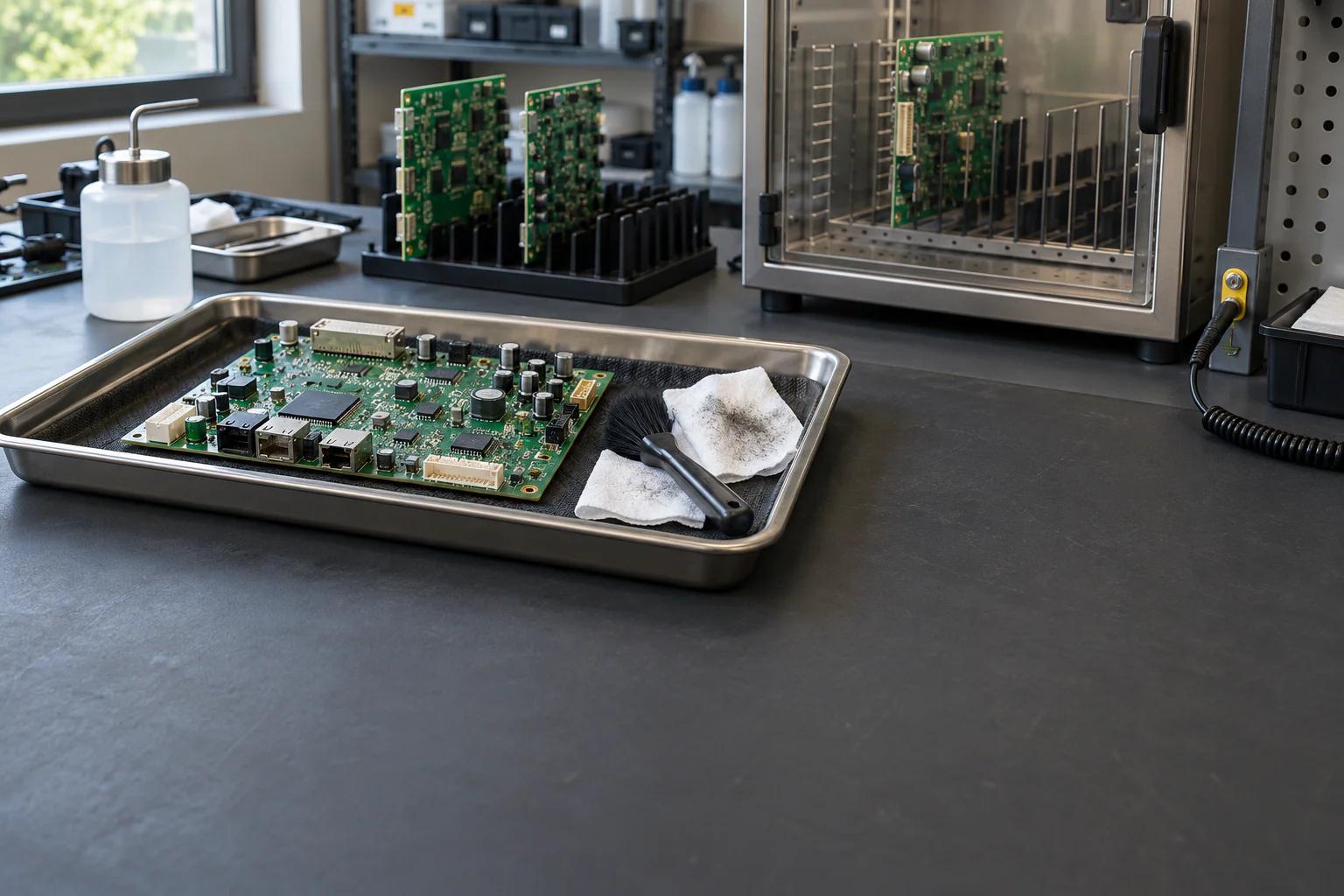
Circuit boards being cleaned and dried on a workshop bench during electronic restoration

Disaster Restoration

Electronic Restoration

Electronic restoration returns circuit boards, servers, instruments, controllers and process tools to reliable service after soot, water or corrosive contamination, or establishes that replacement is the safer course.

When to call

  • A data hall or control room has gone down after smoke or water exposure, and servers or controllers will not simply be wiped clean and switched…
  • Equipment powers on and appears to work, and someone assumes the problem has passed.
  • A hospital, laboratory or process facility needs instruments back in calibration and in service quickly.
  • A supplier or contractor disputes responsibility for contamination damage, and the facility needs an independent technical record of the…
  • A board wants to know whether the same exposure has reached comparable systems elsewhere on site.

What you receive

  • AGI may be instructed by any party responsible for damaged electronic equipment.
  • Work generally produces a preliminary view once initial decontamination and contamination chemistry are complete, followed by a full restoration…

What Is Electronic Restoration?

It is the technical process of decontaminating and testing circuit boards, servers, instruments, controllers and process tools after soot, water or corrosive exposure, to establish whether they can be safely and reliably returned to service. Electrical restoration covers the power equipment that feeds a facility; electronic restoration covers the boards, data systems and control logic that depend on it, where the damage is chemical and often invisible rather than structural.

It is not the investigation that established how a fire, a leak or a surge occurred, and it does not begin until the relevant evidence has been documented, secured or formally released for work. Damage assessment sets the scope of what needs restoring; electronic restoration carries that scope through decontamination, testing and, where appropriate, requalification.
How We Restore

  1. Assessment and inventory. Affected boards, servers, instruments, controllers and process tools are identified and recorded before any cleaning begins.

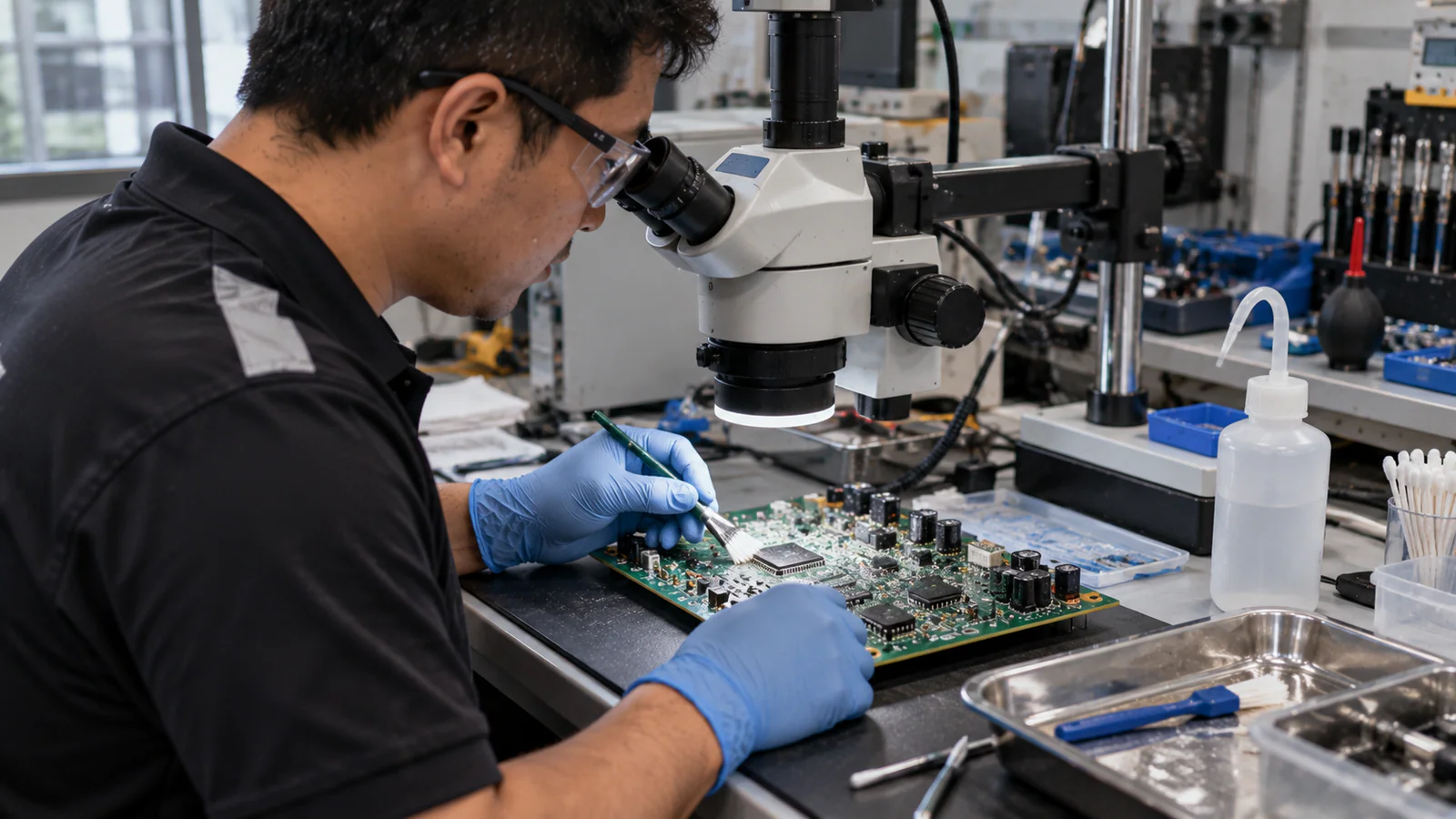
  2. Precision decontamination. Soot, particulates and light residue are removed from boards, connectors and assemblies using methods that do not damage fine circuitry.

  3. Ultrasonic cleaning. Components able to tolerate immersion are cleaned ultrasonically to reach contamination lodged in connectors and under surface-mounted parts.

  4. Vapour-phase corrosion inhibition. A protective vapour treatment arrests corrosion that has already begun, including in locations cleaning cannot physically reach.

  5. Contamination chemistry. Ion chromatography identifies what contamination is present, at what concentration, and whether it remains chemically active.

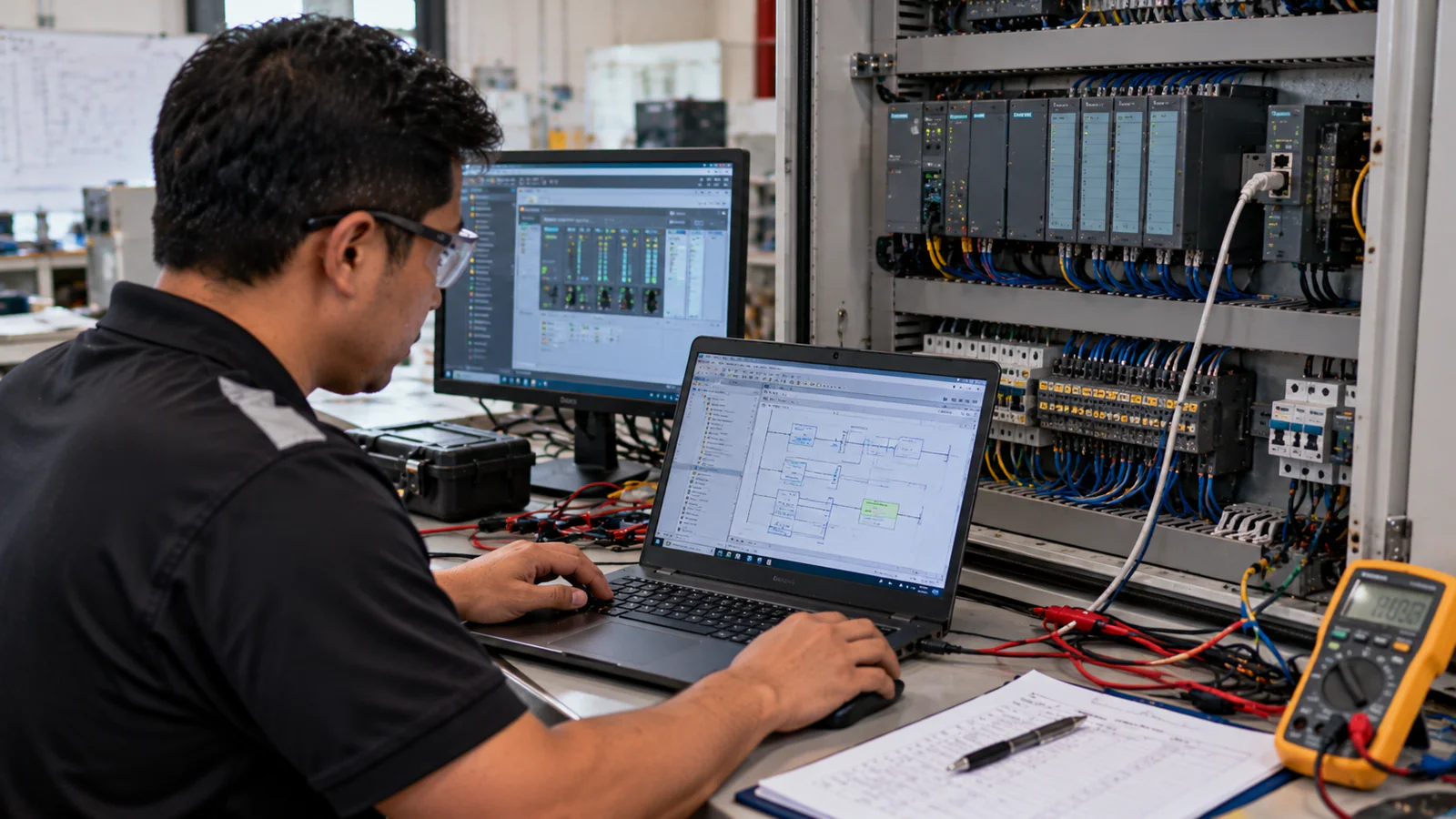
  6. Functional testing. Equipment is tested against its own specification, not a general pass mark, before any judgement on its condition is reported.

  7. Requalification and warranty reinstatement. Where the manufacturer's own process governs continued warranty cover, that requalification is arranged with them directly.

Technician decontaminating a circuit board under a microscope
Plate 01Technician decontaminating a circuit board under a microscope

What We Restore

Circuit boards and assemblies. Populated boards and subassemblies from process, control and instrumentation systems, where fine surface-mount contamination is the usual failure mechanism.

Servers and data infrastructure. Server chassis, storage arrays and networking equipment affected by smoke or water, where data integrity is assessed alongside the hardware itself.

Instruments and controllers. Laboratory and diagnostic instruments, programmable logic controllers and process instrumentation, frequently subject to their own manufacturer calibration and requalification requirements.

Process tools. Electronic control and monitoring equipment integrated into production and process lines, restored in sequence with the mechanical and electrical equipment it operates.

What Decides These Cases

Whether the contamination is still active. Ion chromatography distinguishes residue that continues to corrode from contamination that has been neutralised or is no longer reacting. Active contamination close to a safety- or process-critical function usually points toward replacement rather than restoration.

What functional testing actually shows. A board that passes contamination chemistry can still fail functional testing, and a board with detectable residue can still pass. Neither test substitutes for the other.

Whether the manufacturer will requalify the equipment. Some manufacturers decline to reinstate a warranty on equipment that has been contaminated, regardless of subsequent test results. That position is established early, because it can shape the restoration decision before testing is complete.

Some equipment is not restored. Where active contamination, failed functional testing or the manufacturer's own criteria rule an item out, that finding is reported directly rather than left ambiguous.

Technician testing a restored programmable logic controller with a laptop and multimeter
Plate 02Technician testing a restored programmable logic controller with a laptop and multimeter

Common questions

About electronic restoration

The questions that come up before an instruction, answered plainly.

24/7 response

Protect the evidence first

Restrict access, change nothing, and call. Most of what decides a case is still on site in the first few days.

Emergency line open at all hours, across every office.