ArticleForensic Investigation
Soil Sleuth
Referring to a real case that we handled back in the year 2008, soil evidence played an important role in solving this case. The case was about a vehicle…
By AGI Team4 min read
Read the article
Explosives are materials that produce violent chemical or nuclear reactions. Explosive material is a reactive substance that contains a great amount of…
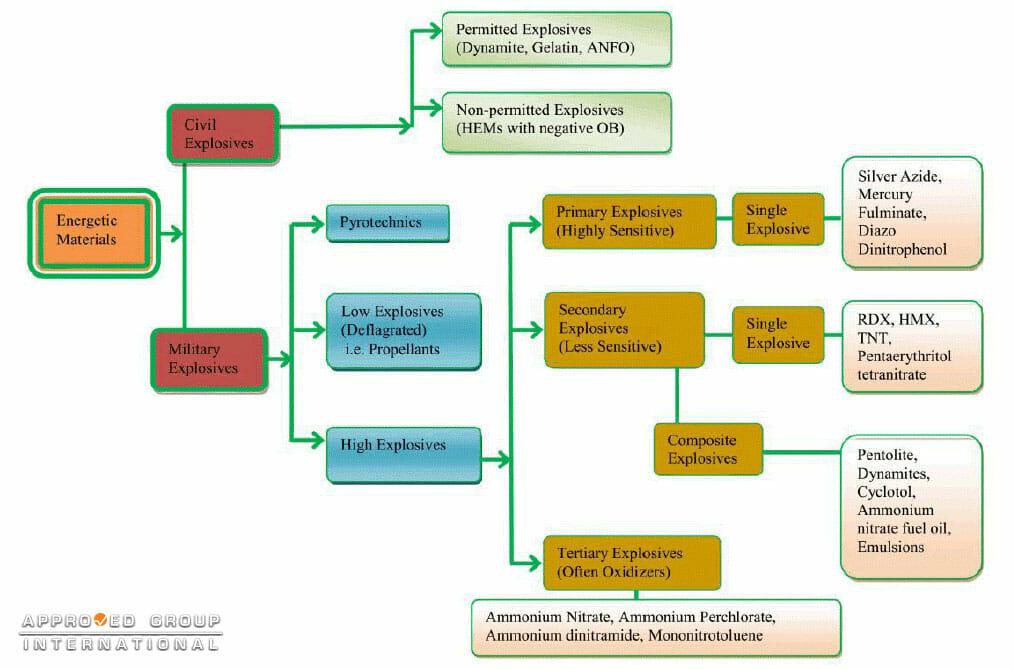
Explosives are materials that produce violent chemical or nuclear reactions. Explosive material is a reactive substance that contains a great amount of potential energy that can produce an explosion and usually accompanied by light, heat, sound and pressure. The word ˋbombˊ can easily impress any public due to the interest towards it and usually connects it to an explosion case. The truth is a bomb is an example of explosives. Explosion can be categorised into three fundamental types which are mechanical, nuclear and chemical. A mechanical explosion depends on the physical reaction, whereby pressure plays a role in the explosion. An overloading of a container with compressed air can cause explosion after a period of time as gases expands, if it is disturbed by external force. Examples of a mechanical explosion are steam explosion and dust explosion in a grain elevator. A chemical explosion is a compound or mixture which, upon the application of heat or shock, decomposes or rearranges with extreme rapidity, yielding much gas and heat. Nuclear explosion is the fusion or fission of nucleus of atoms. A nuclear reaction is whereby heavy nucleus splits spontaneously or on impact with another particle, and release of energy. Explosions are classified as low (deflagrating) and high (detonating) explosives.
The table below shows the difference between the two classifications.
There are sporadic cases leading to the usage of explosives in large term and quantity regardless of the types of explosives used. The most common ones are traditional pipe bomb, Molotov cocktail, some improvised explosive device (IED) which mainly damages the area of surface at a low to medium level of destruction depending on the circumstances. Common explosive materials used in these devices are flammable liquids and black and smokeless powder which represent the low explosive category. A detailed investigation of a blast or impact site will reveal essential information regarding the case. A complete documentation of the condition of the scene, including any structural damage and injuries or fatalities, investigators can slowly unravel what have occurred. After a blast, residue from the explosives that was utilized will be left behind. To recognize the type of explosives utilized, investigators may utilize an ion mobility spectrometer (IMS), a handheld chemical detection device, to distinguish residues that might be available around the impact site.
A dust explosion occurred at premises which later lead to a fire affecting the building. The picture shows an old bag house (dust collectors) which had exploded and caused a fire to take place.
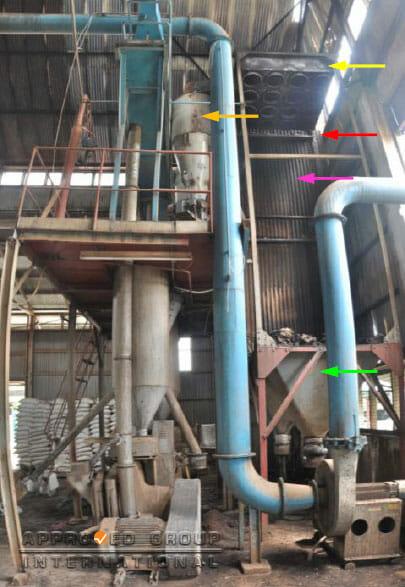
The red arrow indicates the severely burnt and damaged bag house.
The yellow arrow (upper – half mild steel sheets) shows that the area sustained with more damage as compared to the green arrow.
Heavy soot deposition is observed (pink arrow). The cause of the explosion upon investigation by our team proves that it was caused by frictional spark due to foreign objects within the pulveriser (a grinder for the grinding of many different types of materials) used to grind the material processed at the premises into fine powders.
Keep reading
ArticleForensic Investigation
Referring to a real case that we handled back in the year 2008, soil evidence played an important role in solving this case. The case was about a vehicle…
Technical NoteForensic Investigation
The forensic team of Approved Forensics Sdn Bhd (AFSB) was approached to determine the authorship of signatures on agreement documents.

Case StudyForensic Investigation
A Reverse Angle Photo Finish Camera (RAPFC), located at the finishing post of a horse racing track, was reported to have failed. The incident was discovered by…
24/7 response
Send us the detail and we will tell you what a proper investigation would need to establish.