
Approved Group International
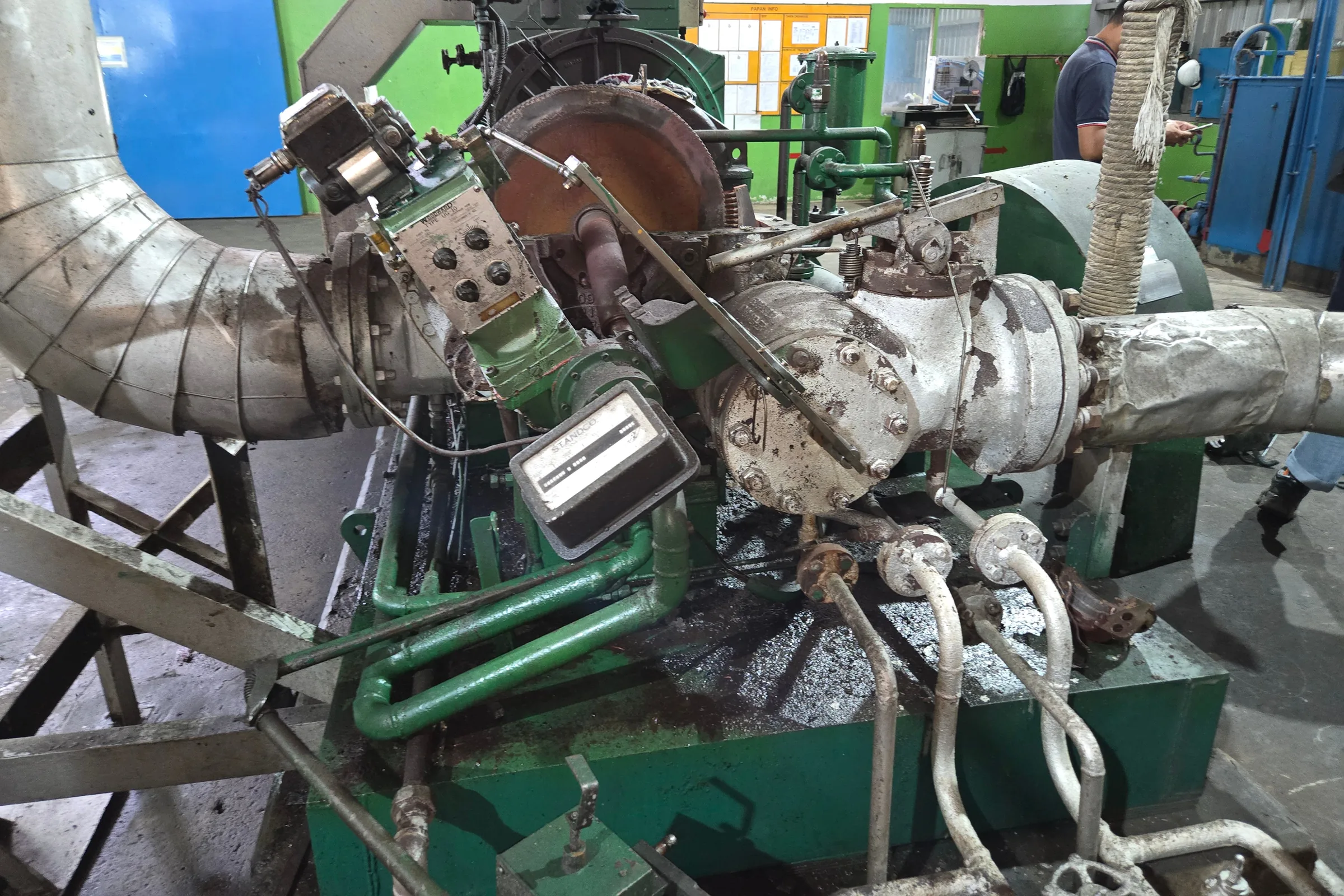
Heavy industrial machinery with damaged pipework and fittings, opened up for inspection in a factory

Forensic Investigation

Mechanical and Materials Failure Investigation

Mechanical and materials failure investigation establishes why a machine failed, and what the material itself can prove.

Crane failure forensic analysis sits inside this service: fatigue at boom and jib connections, hoist rope and brake failure, overload, and crane toppling during a lift or a load-out. The same examination applies to turbines, boilers, compressors, gearboxes and production lines.

When to call

  • When a machinery breakdown or industrial incident turns on cause.
  • Where a manufacturer, installer, contractor or supplier may bear responsibility.
  • When the extent of damage is disputed.
  • After an incident that injured someone or stopped production.
  • Before anything fails.

What you receive

  • AGI may be instructed by any party requiring an independent mechanical or materials failure investigation.
  • Preliminary advice may be provided shortly after attendance, where the available evidence supports it, so that urgent technical or operational…

What Is Mechanical and Materials Failure Investigation?

It is the engineering determination of why a machine, a pressure system or a mechanical installation failed, established from the physical condition of the components and the conditions under which they were operating. Materials examination sits at the centre of it. A fracture surface, a weld cross-section or a worn bearing race carries a record of what happened to it, and reading that record correctly is usually what separates a defensible finding from an educated guess.

This is not a repair estimate and it is not a condition survey. A damage assessment determines the nature and extent of damage and the appropriate repair, reconditioning or replacement scope. A mechanical and materials failure investigation addresses why the failure occurred, including whether design, manufacture, installation, maintenance, operation, deterioration, an external event or a combination of factors caused or contributed to it. The conclusion is determined by the available evidence, not by the position of the party who commissioned the work.
How We Investigate

Secure and preserve evidence. Failed components may be scrapped, machines stripped for repair and control data overwritten on a rolling window. Early attendance therefore focuses on identifying what must be documented, preserved or retained before the condition of the evidence is changed.

Examine the machine as found. Dimensional survey, clearance and alignment measurement, and photographic recording at both macro and microscopic scale, extended by 3D laser scanning or drone photogrammetry where the plant is too large or unsafe to survey conventionally.

Recover the history. Design and manufacturer data, commissioning records, maintenance and lubrication logs, vibration and condition-monitoring trends, alarm and trip data, process parameters, previous repairs and shift or operating records are reviewed to establish the conditions leading up to the event.

Test the material. Metallurgical examination and fractography are used where appropriate to identify fracture mechanisms and distinguish evidence of fatigue, overload and other damage processes. Hardness and composition are compared with specification; non-destructive testing is applied where relevant; and lubricant or deposit chemistry may be examined where contamination is in question, including gas chromatography-mass spectrometry and scanning electron microscopy. Vibration data may be compared with the machine's baseline signature where one exists, and engineering calculations are checked against design conditions and the standards to which the equipment was built, including applicable ASME and API requirements.

Evaluate and eliminate. Plausible failure mechanisms are tested against the available evidence and eliminated where they are not supported. Where the evidence permits, the remaining cause or contributing causes are reported; where it does not permit a reliable determination, the limitation is stated.

Report and, where required, testify. The final report explains the evidence, analysis, conclusions and their limitations in terms a non-specialist decision-maker can understand and another expert can independently examine. Where the matter proceeds to arbitration, litigation or another formal hearing, the investigator can support and defend those findings through expert evidence.

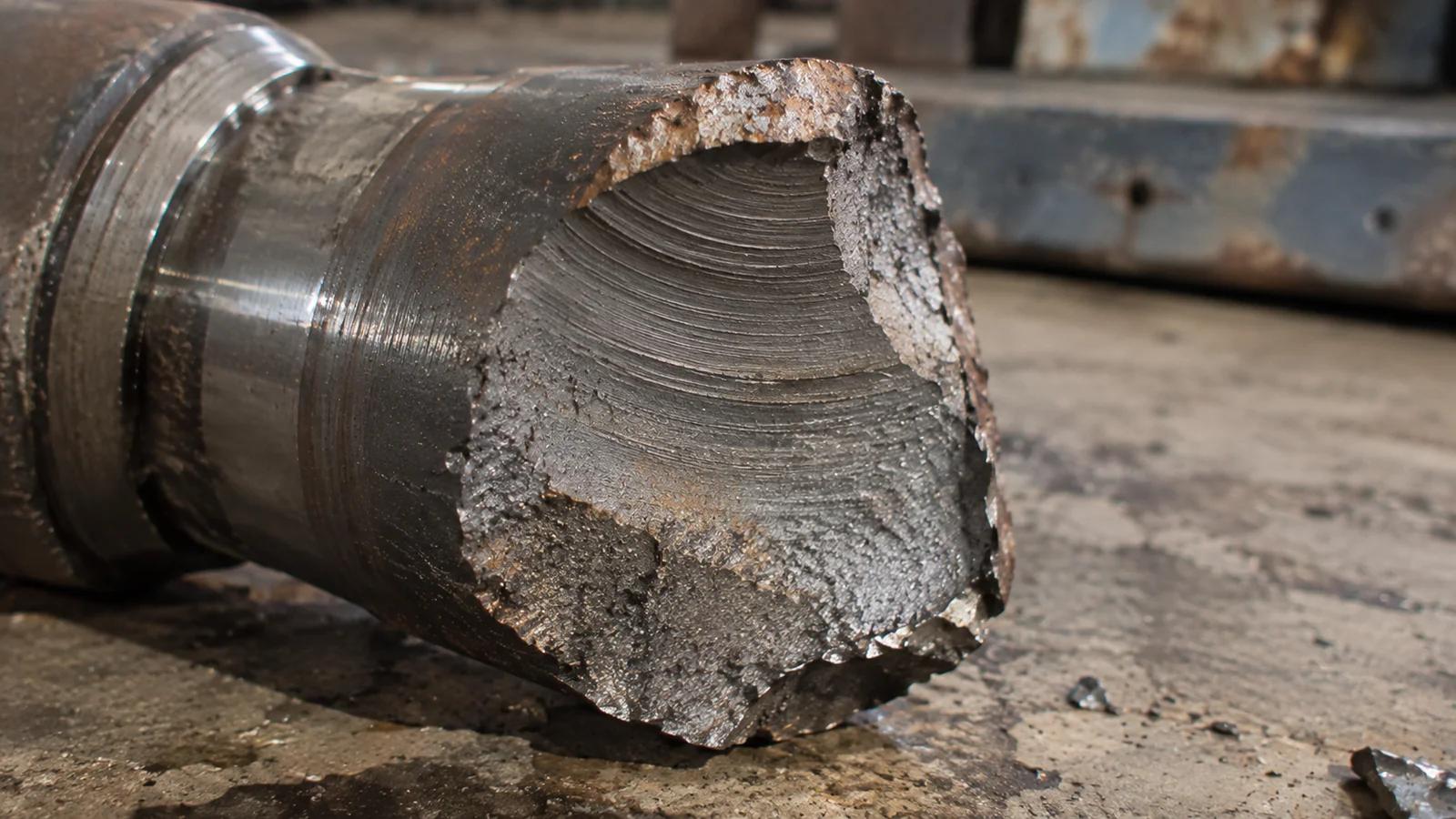
Fractured end of a failed industrial shaft showing the break surface
Plate 01Fractured end of a failed industrial shaft showing the break surface

What We Investigate

Boilers, pressure systems and thermal plant. Water-tube and fire-tube boilers, thermal oil heaters, pressure vessels, heat exchangers, economisers, superheaters and steam piping. Tube failure, drum and shell weld failure, overheating, thermal fatigue, water chemistry damage, overpressure and low-water events.

Steam and gas turbines and rotating plant. Turbo-alternators, centrifugal and reciprocating compressors and the turbines that drive them. Blade and vane failure, rotor and shaft fracture, bearing and journal damage, seal failure, imbalance, misalignment, resonance and overspeed.

Engines and generation sets. Diesel and gas engines, generator sets, and the cooling, fuel and control systems that keep them running. Crank and connecting-rod failure, piston and liner damage, cooling system failure, and governor or protection failure.

Cooling and refrigeration. Centrifugal and screw chillers, ammonia and freon refrigeration plant, cooling towers, condensers, evaporators and cold rooms. Compressor failure, refrigerant loss, tube corrosion and erosion, and the cascade of product loss that follows a control failure.

Lifting, handling and conveying. Quay, gantry, tower and mobile cranes, hoists, reach stackers, conveyors and elevators. Structural and mechanical failure of booms and jibs, rope and sheave failure, brake and drive failure, overload and impact damage.

Production and process machinery. Paper machines, printing presses, extruders, injection moulding, presses, machine tools, mills, kilns, furnaces, sterilisers, kernel plant and packaging lines. The machinery a factory's output, and its business interruption exposure, depends on entirely.

What Decides These Cases

Fatigue leaves a readable signature. A fatigue fracture can preserve evidence of where cracking initiated and how it progressed, including features such as beach marks and, at microscopic scale, striations where present. Those observations are considered together with loading, geometry, material condition and service history to assess whether fatigue caused or contributed to the failure and why it developed.

Lubrication failure often has an underlying cause. Bearings and rotating components commonly show damage associated with inadequate or degraded lubrication, but the investigation does not stop at that observation. Contamination, seal or cooling failure, misalignment, interrupted supply, incorrect lubricant selection or operating conditions may have caused or contributed to the lubrication breakdown. Establishing that sequence is usually more informative than identifying the damaged bearing alone.

Pre-existing damage and prior repair can materially affect the finding. Machines accumulate wear, earlier repairs and damage from previous events over their service life. The investigation separates, as far as the evidence permits, damage attributable to the incident under investigation from deterioration or defects that were already present. That distinction can be central to repair scope, responsibility, quantum and any subsequent recovery or defence.

Manufacturing defects can be demonstrated. Lack of fusion in a weld, casting porosity or a component measurably outside specification may be identified through examination and testing. Establishing that a defect exists is only one part of the analysis; whether it caused or contributed to the failure is assessed against the component's design, loading, operating history and the other available evidence.

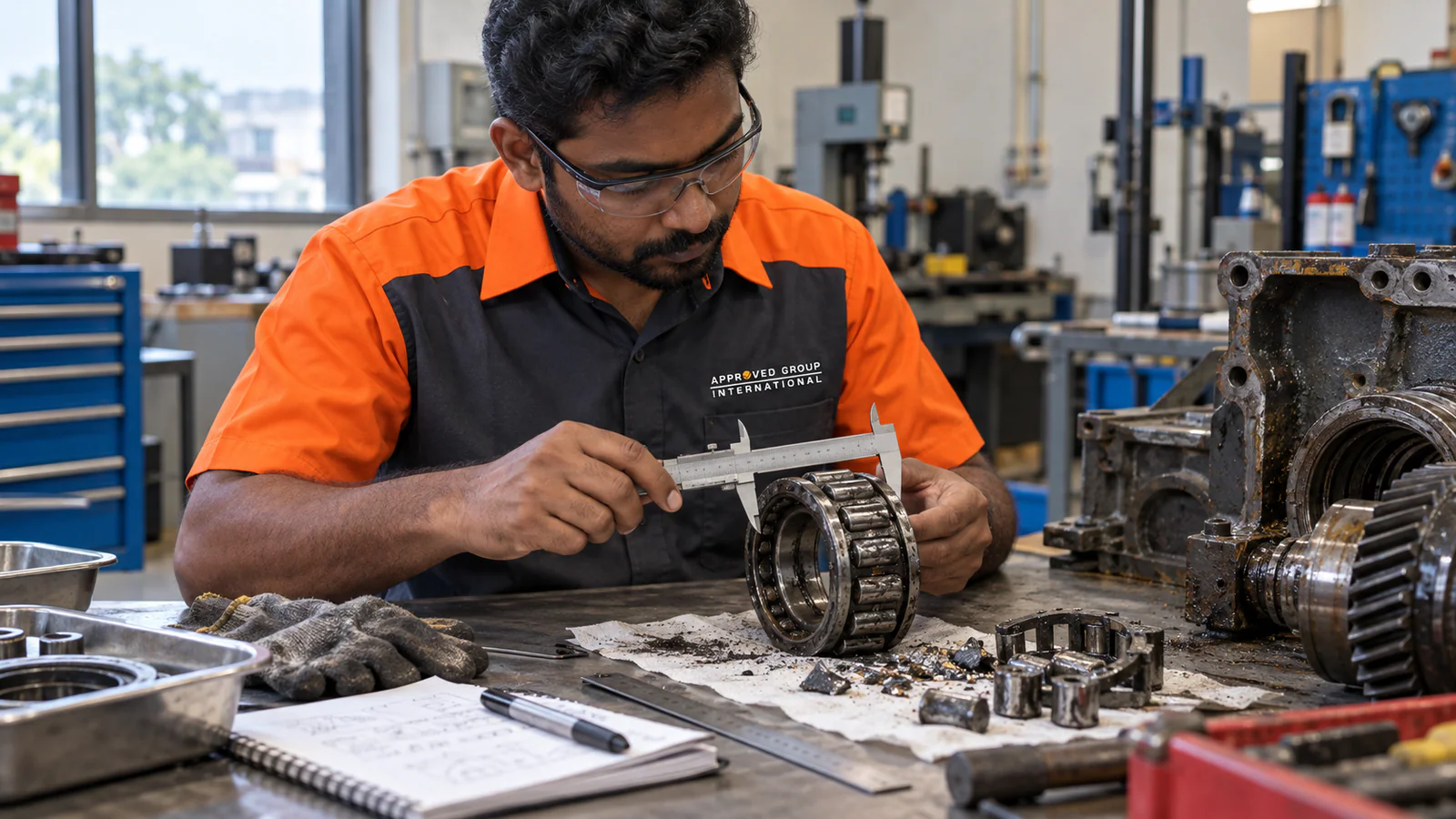
AGI engineer measuring a failed roller bearing with callipers at a workshop bench
Plate 02AGI engineer measuring a failed roller bearing with callipers at a workshop bench

Common questions

About mechanical and materials failure investigation

The questions that come up before an instruction, answered plainly.

24/7 response

Protect the evidence first

Restrict access, change nothing, and call. Most of what decides a case is still on site in the first few days.

Emergency line open at all hours, across every office.