Approved Group International
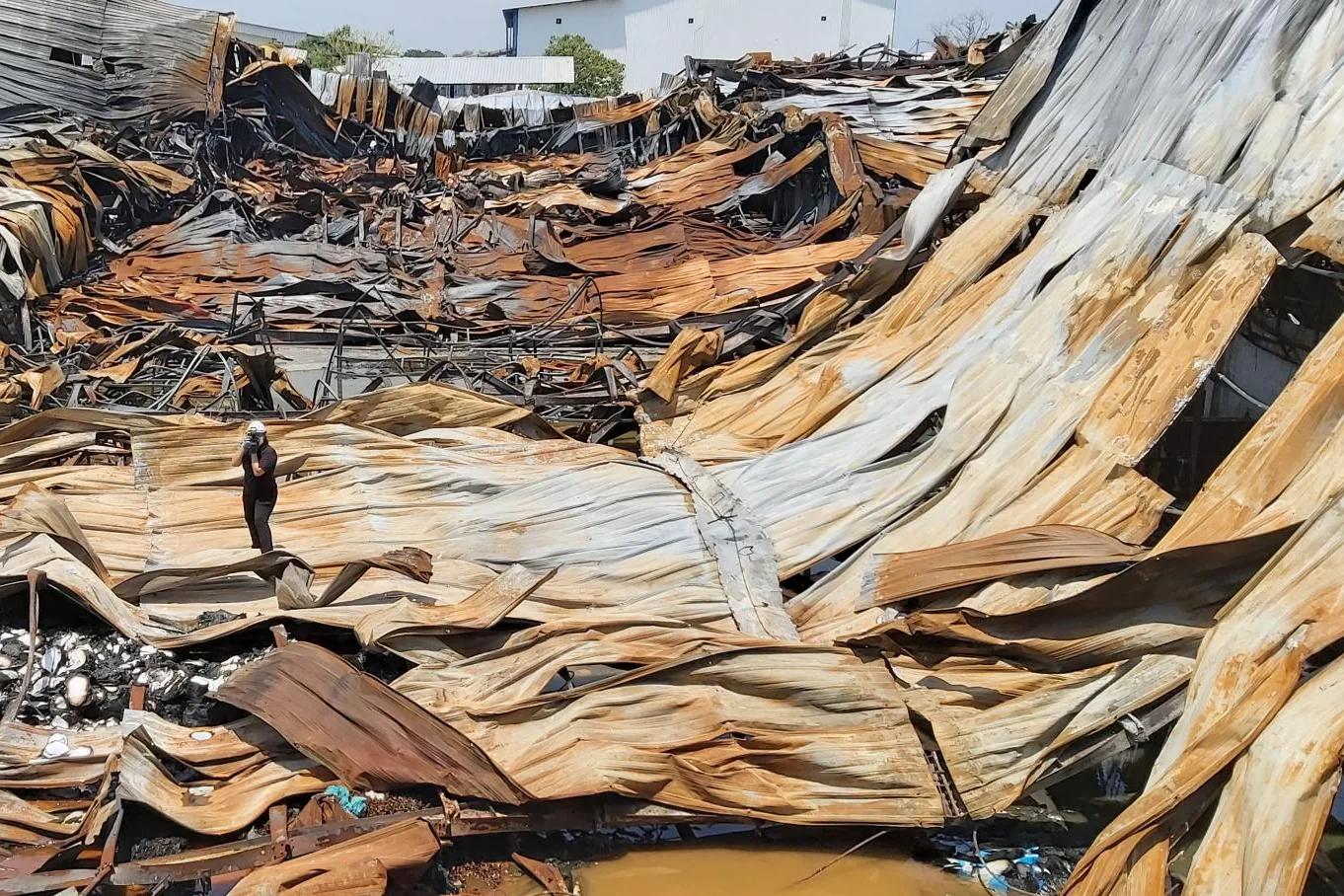
Fire-twisted roof sheeting collapsed across the floor of a burnt-out factory, an investigator standing in the debris

Forensic Investigation

Fire and Explosion Investigation

Fire and explosion investigation establishes where a fire or an explosion originated, how it developed, and what caused or initiated it.

Where we work: fire investigation Singapore, Malaysia and Indonesia, handled by the office nearest the loss. That is what keeps attendance inside the window where the scene is still readable.

When to call

  • Production has stopped, and nobody can say when it will resume.
  • A regulator or an internal safety review wants an independent finding.
  • A supplier, a contractor or another party may bear responsibility.
  • The board wants to know whether a sister facility carries the same risk.
  • An insurance claim needs an independent cause finding before it can be resolved, particularly where the value at risk, a suspected exclusion or a…

What you receive

  • The party carrying the loss is usually the one who instructs us.
  • Whoever gives the instruction, the work produces the same three things.
  • Many of our investigators hold recognised fire and explosion investigation qualifications and certified infrared thermography credentials,…

Independence

We are instructed by parties on all sides of a fire or an explosion, often on the same loss from opposite positions: owners, operators, contractors, manufacturers and their respective advisers. The finding does not move with the instruction. Any prior relationship with a site, an asset or a party is disclosed before an appointment is accepted, and an instruction is declined where a conflict cannot be managed properly.

Where the pattern evidence points away from the outcome the instructing party expected, that is what goes in the report. There is no other form of independence worth having.

Major and Complex Losses

A major fire rarely stays a fire. It becomes a structural question once the building has to be entered safely, an electrical question once the origin traces to a switchroom, and an operational question the moment production stops. Three or four parties may already have appointed their own experts within the first week, each with an interest in the same debris field.

Mobilisation within 24 hours of appointment. Fire debris is cleared for safety faster than almost any other class of evidence. A scene examined early supports a finding that the same scene examined a week later cannot.

One multi-discipline team. Origin and cause, the electrical failure that may have started it, and the structural question of what can be safely re-entered are answered by people working the same site under one technical lead. Not by several separate appointments reconciled later by someone who was never there.

Joint working with the other experts on site. Joint inspection and joint testing, agreed early, reduce the months of dispute that can follow once each party has examined the debris alone and reached its own conclusions in private.

Preliminary findings while the investigation continues. , so that operational and commercial decisions are informed by engineering judgement rather than by the first call after the alarm.

The same rigour applies to a single machine fire in a small workshop. The team is smaller and the report is shorter. The method does not change.

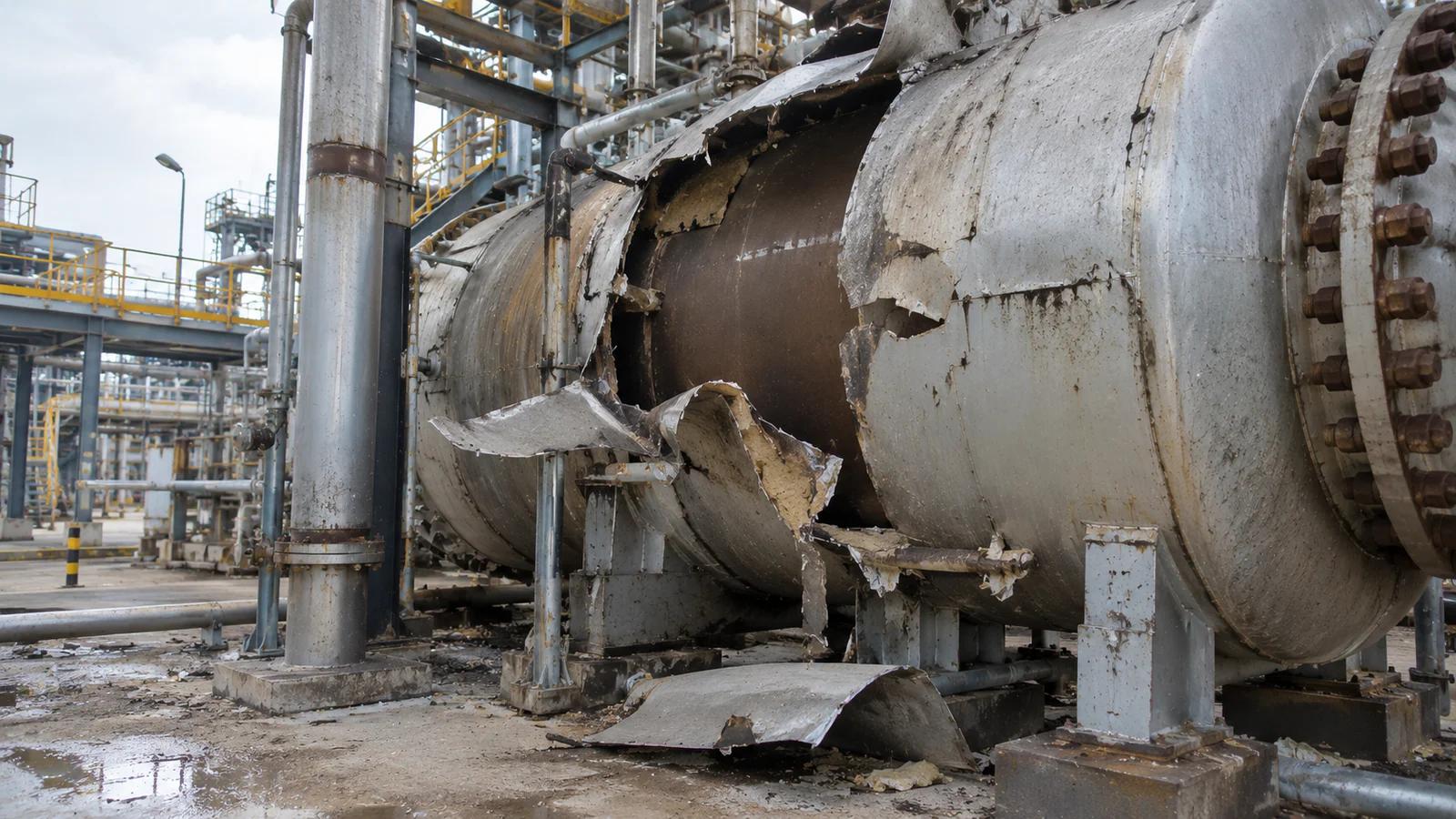
Ruptured pressure vessel at a process plant after an explosion
Plate 01Ruptured pressure vessel at a process plant after an explosion

One Loss, One Team

Cause, damage and restoration sit in separate firms more often than not, and on a fire that takes weeks to resolve, the material is still drying out while the parties argue about scope. AGI can continue from origin and cause into damage assessment, stabilisation and restoration within the same technical team.

The investigators who trace an origin to a specific circuit sit in the same firm as the technicians who dry, decontaminate and restore what is salvageable. Whether a control card failed from the fire or from the water used to fight it is a question the investigation has usually already answered by the time restoration decisions are made, and that answer changes what is replaced and what is cleaned. Restoration and stabilisation begin only once the relevant evidence has been documented, preserved or formally released for work, because the people preserving the evidence and the people stabilising the site are working to one plan.

What Is Fire and Explosion Investigation?

Fire and explosion investigation identifies the area of origin, the ignition source and the first fuel, then tests that finding against every other plausible cause the evidence will support. It follows NFPA 921, the guide developed for fire and explosion investigation, and AGI's investigators are qualified against NFPA 1033, the standard that sets out what a competent investigator must know and be able to demonstrate. Both are used well beyond the jurisdiction where they originated, as a working reference for origin and cause work generally.

This is a different exercise from a fire service's own incident report, and a necessary one rather than a competing one. A fire service exists to extinguish the fire and protect life. Its report records what the attending crew observed while doing exactly that, under real time pressure and for operational purposes. An independent investigation returns once the scene is safe. It has the time to apply fire pattern analysis, arc mapping and laboratory testing where the evidence calls for it, and produces a finding written on the basis that it may ultimately be tested by another expert or in court. The two records serve different purposes. Neither substitutes for the other.

How We Investigate

  1. Secure and preserve. The scene is secured and evidence protected from further disturbance before examination begins, the starting requirement of a defensible investigation.

  2. Examine from the outside in. The structure or asset is read from the exterior inward, recording structural damage, burn patterns and the sequence in which different areas were affected.

  3. Narrow the origin. Char depth, smoke staining, V-patterns and, on an electrical circuit, arc mapping are read together to narrow the fire to an area, then to a point, of origin.

  4. Identify ignition and first fuel. Once origin is established, the investigator identifies what ignited and what burned first: an electrical fault, an open flame, friction, a chemical reaction, self-heating or a deliberate act.

  5. Test and eliminate. Every plausible cause consistent with the evidence is tested and eliminated where it is not supported, following the method set out in NFPA 921, until the cause or contributing causes the evidence supports remain.

  6. Report, and testify where needed. Findings are set out in a report prepared on the basis that the evidence, methodology and reasoning may ultimately be challenged, with expert evidence given where a matter proceeds to a hearing.

What We Investigate

The practice runs across three areas, each with its own method.

Fire origin and cause. is the core discipline: where a fire started, what ignited it and why, across premises of every kind and scale, applying NFPA 921 method and arc mapping.

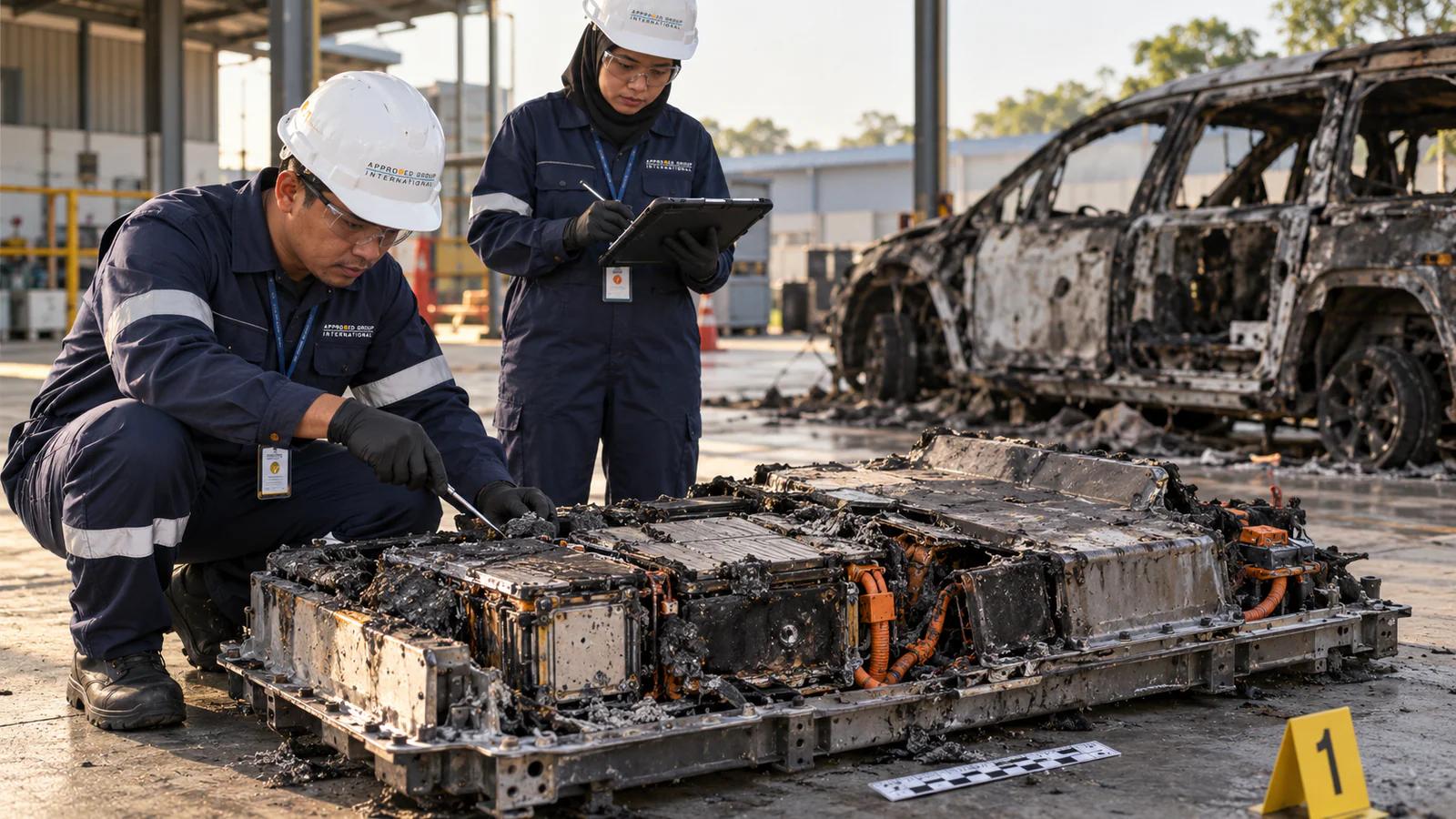
Vehicle fire investigation. treats a different scene. A car, a bus or a piece of heavy plant burns and destroys evidence differently from a building, and the question increasingly includes a battery pack rather than only a fuel system or a wiring loom.

Explosion investigation. covers gas, chemical, boiler, storage-tank, dust and process-related explosions, where much of the evidence is destroyed at the moment of failure and the finding has to be built from what survives.

Electrical faults are among the largest recorded categories of origin in this practice's casework, and the point at which fire and explosion investigation meets forensic engineering directly. Establishing whether an electrical fault caused the fire, or the fire caused the electrical fault, often decides how the rest of the matter is resolved. That finding is developed jointly with the electrical failure investigation discipline, not handed off to it afterward.

Deliberate-act findings are reached by the same evaluation and elimination method as any other cause, applied without assuming intent from the outset. Multiple unconnected seats of fire, an unusual burn pattern or the presence of an accelerant are the kind of physical evidence that supports or rules out a deliberate cause. A finding of that kind is reported only once the accidental alternatives have genuinely been eliminated, never because the circumstances looked suspicious on arrival.

Self-heating and spontaneous combustion account for a recurring share of the practice's fire casework. It concentrates in materials that generate their own heat under specific storage and process conditions: agricultural by-products, oilseed residues and other bulk material held in silos and warehousing longer than its moisture content and ventilation allow. These fires typically start inside the stored mass rather than from an external source, and the investigation has to establish moisture content, storage duration, ventilation and temperature history to explain why self-heating crossed into ignition.

Dust and gas explosions destroy much of their own evidence at the point of failure. A combustible dust suspended at the right concentration inside a confined space behaves as a fuel. Establishing sequence and cause then depends on what survives in the structure, the ductwork and the process equipment once the event is over.

What Decides These Cases

Where exactly the fire started. Area of origin narrows the whole matter. A fire that started in wiring under warranty raises different questions from one that started in wiring installed the week before, and misreading the point of origin misreads everything that follows it.

Whether the cause is electrical, mechanical or human. The same debris can support more than one account until it is tested properly. Separating an electrical fault from an overheated bearing from a deliberately set fire is usually the whole dispute in miniature.

Whether the report survives being challenged. Chain of custody, the reasoning from pattern to origin to cause, and candour about what the debris does not show decide whether a finding is merely accepted or actually withstands cross-examination.

How much of the loss the fire actually caused. Water damage, prior wear and unrelated deterioration often sit inside the same matter as the fire itself. Separating them is frequently what decides what is repaired, what is replaced, and at whose cost.

Engineers examining a burned electric vehicle battery pack beside a burnt-out car
Plate 02Engineers examining a burned electric vehicle battery pack beside a burnt-out car

Common questions

About fire and explosion investigation

The questions that come up before an instruction, answered plainly.

24/7 response

Protect the evidence first

Restrict access, change nothing, and call. Most of what decides a case is still on site in the first few days.

Emergency line open at all hours, across every office.