Approved Group International
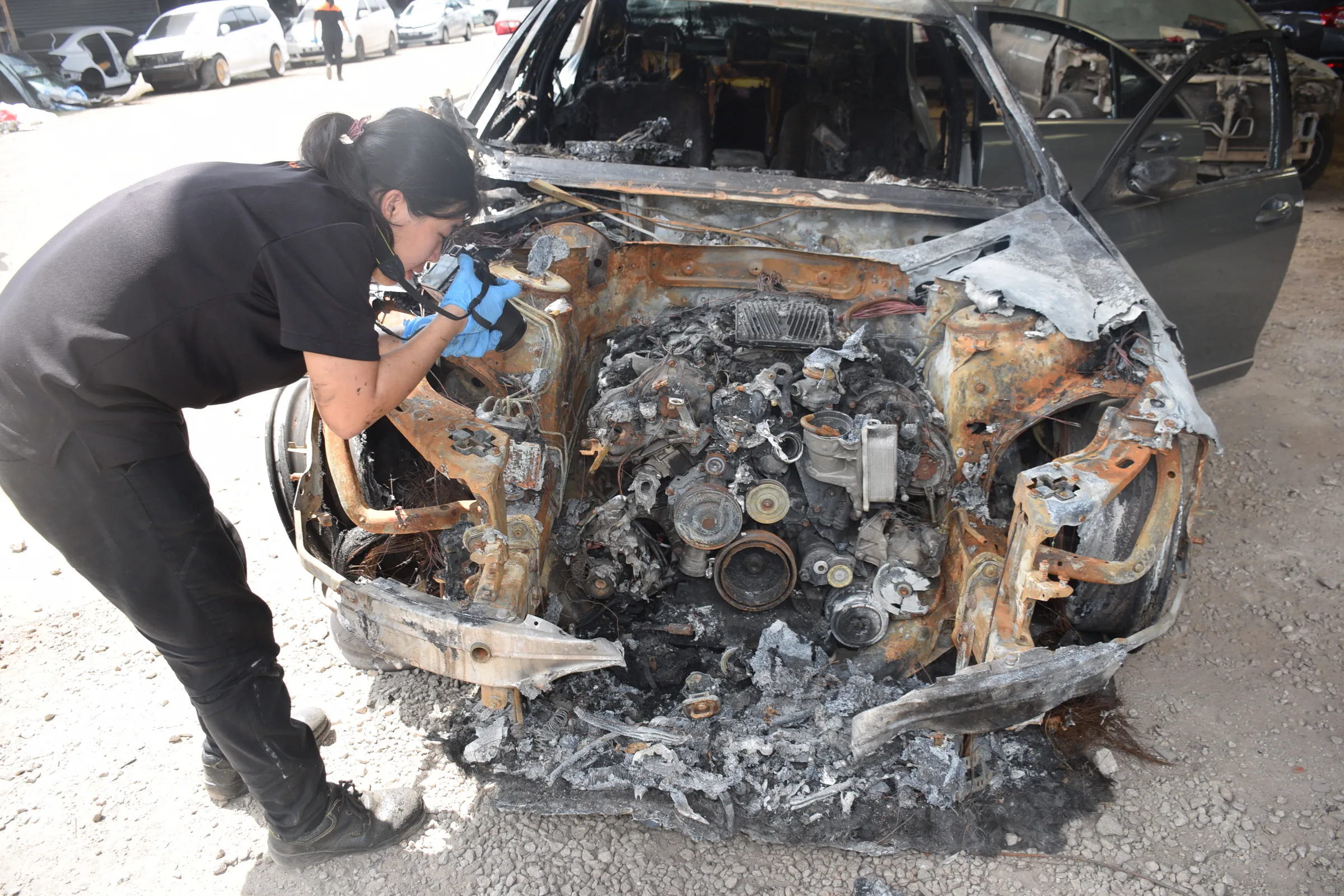
AGI investigator in gloves examining the burnt-out engine bay of a fire-damaged car

Forensic Investigation

Vehicle Fire Investigation

Vehicle fire investigation establishes where a fire began in a vehicle or a piece of mobile plant, what ignited it, and whether that finding is consistent with the account given.

When to call

  • A fleet needs the vehicle back in service, and the depot wants to know if the fault is fleet-wide.
  • A manufacturer, dealer or workshop may bear responsibility.
  • An industrial incident.
  • A total-loss or identity question needs resolving.
  • A claim has been disputed, and an independent cause finding is needed to support or test the account given.

What you receive

  • Fleet operators instruct us directly when a fire has taken a vehicle out of service and they need to know whether the fault could recur across the…
  • Most engagements produce the same three things.
  • Many of our engineers and consultants hold chartered or professional registrations relevant to the jurisdictions in which they practise, and the…

What Is Vehicle Fire Investigation?

It answers a narrower question than a building fire investigation does. Given what survived the fire, what is the most probable point and cause of ignition, and does that finding hold once every other explanation has been tested and eliminated? It is not a motor damage assessment, which determines the nature and extent of damage and the appropriate repair or replacement scope without asking why the vehicle burned. It is not accident reconstruction either, which analyses how a collision happened rather than why a fire followed one. The two disciplines are frequently engaged together where a fire starts after an impact.

A vehicle fire also destroys evidence differently to a building fire. A cabin can burn to bare metal in minutes, yet a fuel line, a battery pack or a length of wiring harness beneath it can survive intact enough to examine. Much of the method exists to find and preserve exactly those components before they are scrapped, repaired over, or lost to salvage.

How We Investigate

Vehicle examination protocol. A systematic, external-to-internal examination of the burnt vehicle. Burn pattern, depth of char and the condition of every major system are recorded before anything is moved, so the area of origin is fixed against physical evidence rather than assumption.

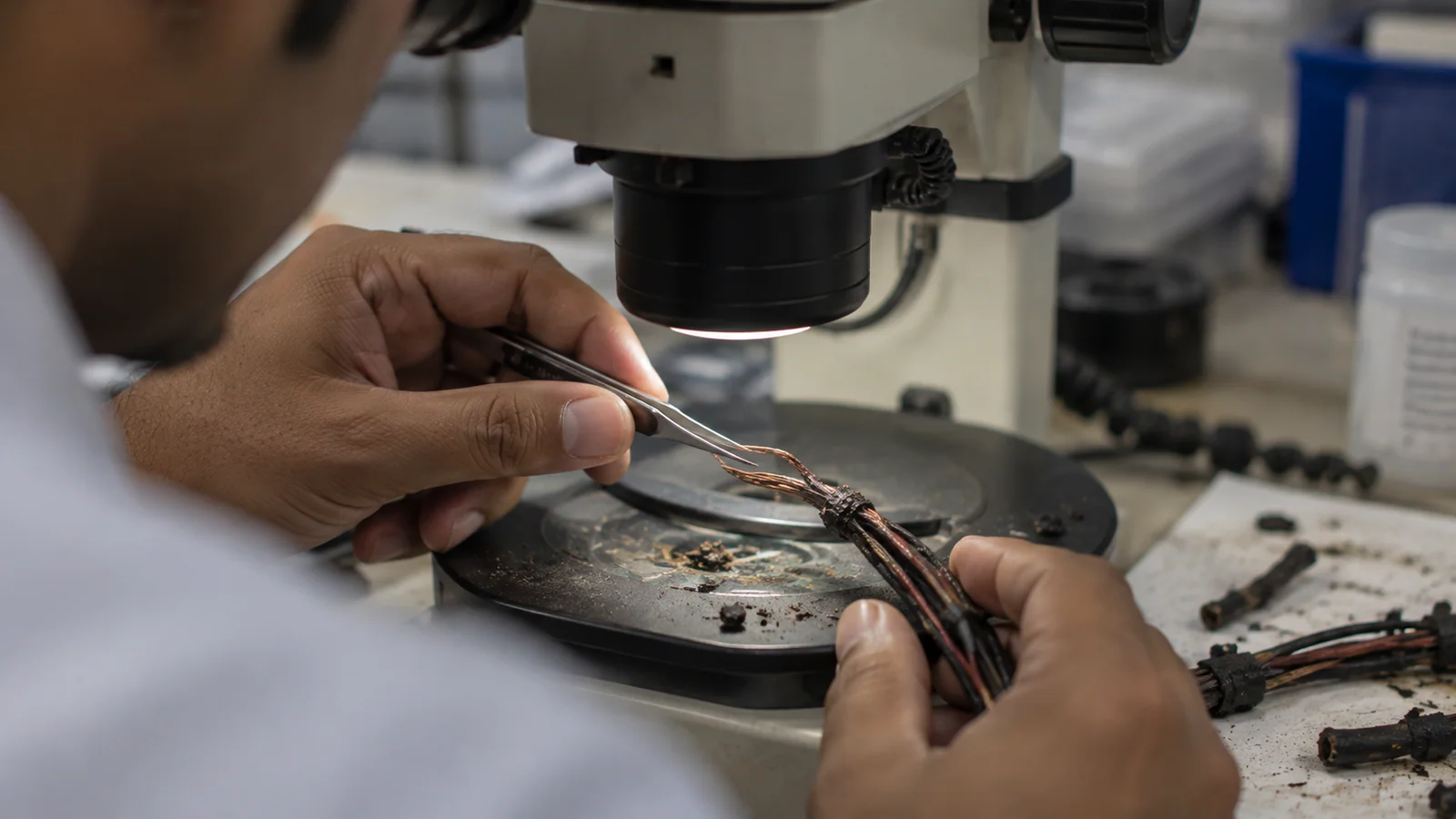
Burn pattern and arc mapping on the wiring harness. Where an electrical cause is suspected, arcing and fusing along the harness are mapped, and suspect strands examined under a microscope, distinguishing a cause bead from a victim bead.

Component recovery. Fuel lines, hydraulic reservoirs, battery packs, switchgear and aftermarket wiring are recovered and examined individually on the bench, since components can remain testable long after the cabin around them is gone.

Ignitable liquid residue analysis. Where a fuel-related or deliberate cause is possible, debris and surface samples are analysed by gas chromatography-mass spectrometry.

Control unit and telematics data. Data from the engine control unit or an onboard telematics system, where it survives the fire, is extracted and reviewed as part of establishing the sequence of events leading to ignition.

Known failure modes and recalls. Findings are checked against documented failure modes and recall history for the model and component concerned. The report sets out the elimination process behind the conclusion, not the conclusion alone. Where the evidence permits, the remaining cause or contributing causes are reported; where it does not permit a reliable determination, that limitation is stated.

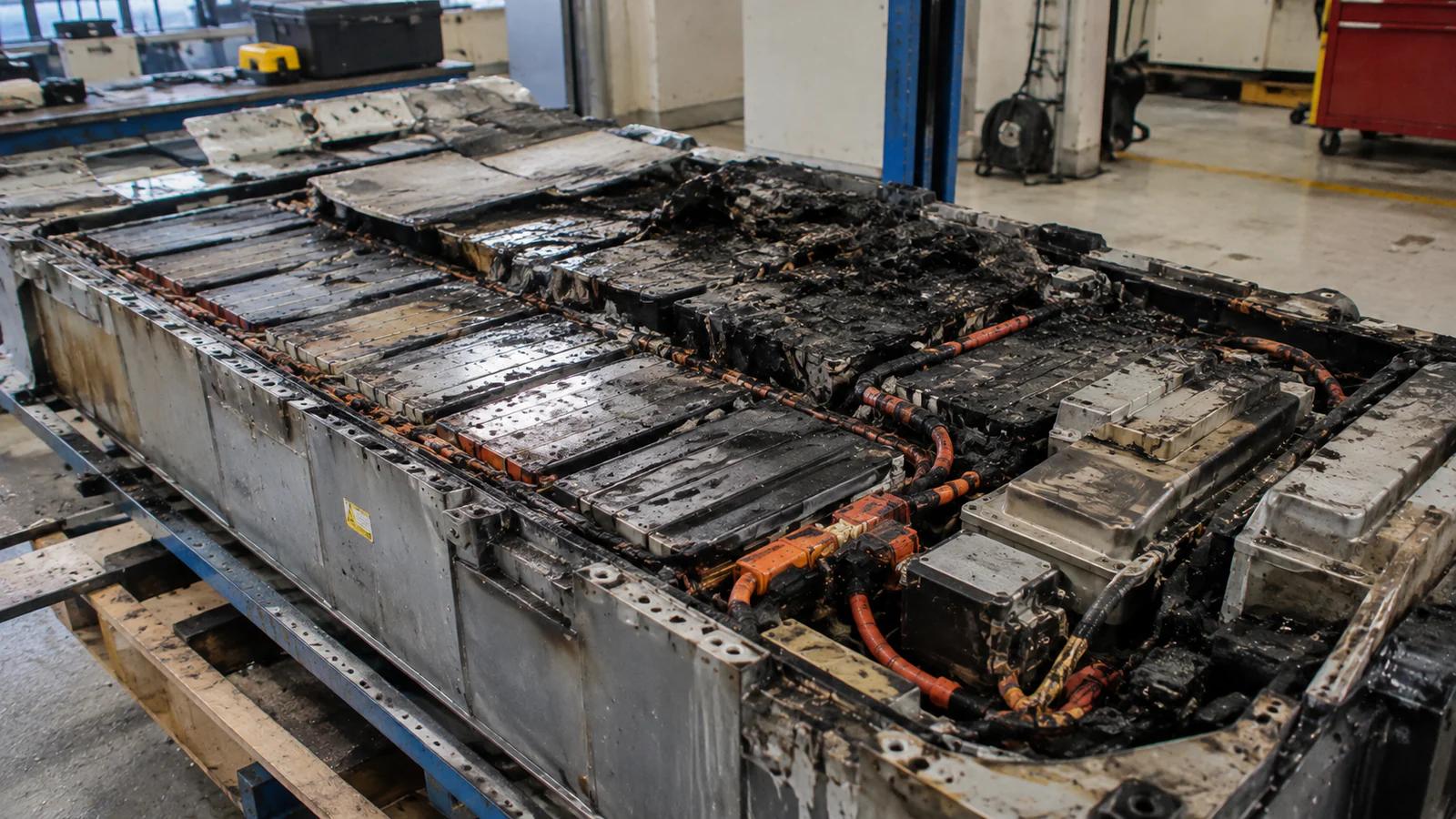
Burnt electric vehicle high-voltage battery pack opened up on a workshop pallet
Plate 01Burnt electric vehicle high-voltage battery pack opened up on a workshop pallet

What We Investigate

Engine bay and harness. Most origins trace to the engine compartment: a wiring harness fault, a leaking fluid reservoir against a hot exhaust surface, or a fuel leak reaching an ignition source. Harness examination under microscope is standard wherever an electrical origin is suspected.

Aftermarket accessories. Alarm systems, audio equipment, lighting and auxiliary wiring fitted outside the factory build are a recurring, non-standard ignition source. They are examined separately from the vehicle's original electrical system, not folded into it.

Fuel and exhaust. Leaking fuel or hydraulic lines contacting a hot exhaust manifold, and fuel system integrity following a collision, are common findings. The leaked fluid's chemistry and flash point form part of the analysis.

EV and hybrid high-voltage batteries, thermal runaway and charging. Electric and hybrid vehicles add a high-voltage battery pack and a charging system as further origin candidates. This covers thermal runaway within the battery pack, damage to high-voltage cabling, and failure at the onboard charger or the charging point, each examined alongside the same engine-bay and accessory checks applied to a conventional vehicle. Whether thermal runaway began inside a cell or was triggered by an external event, such as impact or an upstream electrical fault, is usually the question that decides the finding.

Buses, lorries and heavy plant. A fire on a bus or a fleet lorry is investigated for cause in the same way as a private vehicle. The added question is whether the same failure mode is present across the rest of the fleet. Excavators, cranes, generators and other mobile plant carry their own wiring harnesses, hydraulic systems and fuel supplies, and a fire on plant working at height, underground, or on a remote site brings its own access and evidence-preservation challenges.

Deliberate ignition, established rather than assumed. Where collision, smoking material, mechanical failure, fuel leakage and electrical failure have each been tested and excluded, a fire is left with human involvement as the only remaining explanation. This is stated as the outcome of an elimination process, and where the evidence cannot close the question, the report says so.

Consistency with the account given. A fire's burn pattern, direction of spread and the sequence in which components failed can be compared against the account of what happened and when. Where a fire follows a collision, the damage pattern should show impact damage first and fire damage growing outward from the point of impact. Where it does not, that inconsistency is itself a finding.

Identity and total-loss questions. Where a vehicle is a commercial total loss, the investigation also considers whether components beyond the fire-damaged area remain serviceable. Comparing chassis and engine numbers against factory records establishes genuine identity where salvage value or a fraud question depends on it.

What Decides These Cases

Whether the damage is consistent with the account given. A burn pattern either supports the sequence described by the driver or owner, or it contradicts it, and the finding states which, with the physical evidence that supports the conclusion.

Whether the origin is electrical or mechanical, and, on an EV, where thermal runaway began. A cause bead on a wiring strand tells a very different story from a victim bead. On an electric or hybrid vehicle, whether a cell failed on its own or was driven to fail by an external cause changes where responsibility sits.

Whether ignition was deliberate. Established only once every accidental and mechanical explanation has been tested and excluded, never assumed from the absence of an obvious alternative.

Vehicle identity, where a total loss is claimed. Chassis and engine number verification against factory records decides whether a salvage or fraud question has any substance, independent of the fire finding itself.

Examiner studying a burnt wiring harness under a stereo microscope
Plate 02Examiner studying a burnt wiring harness under a stereo microscope

Common questions

About vehicle fire investigation

The questions that come up before an instruction, answered plainly.

24/7 response

Protect the evidence first

Restrict access, change nothing, and call. Most of what decides a case is still on site in the first few days.

Emergency line open at all hours, across every office.