Approved Group International
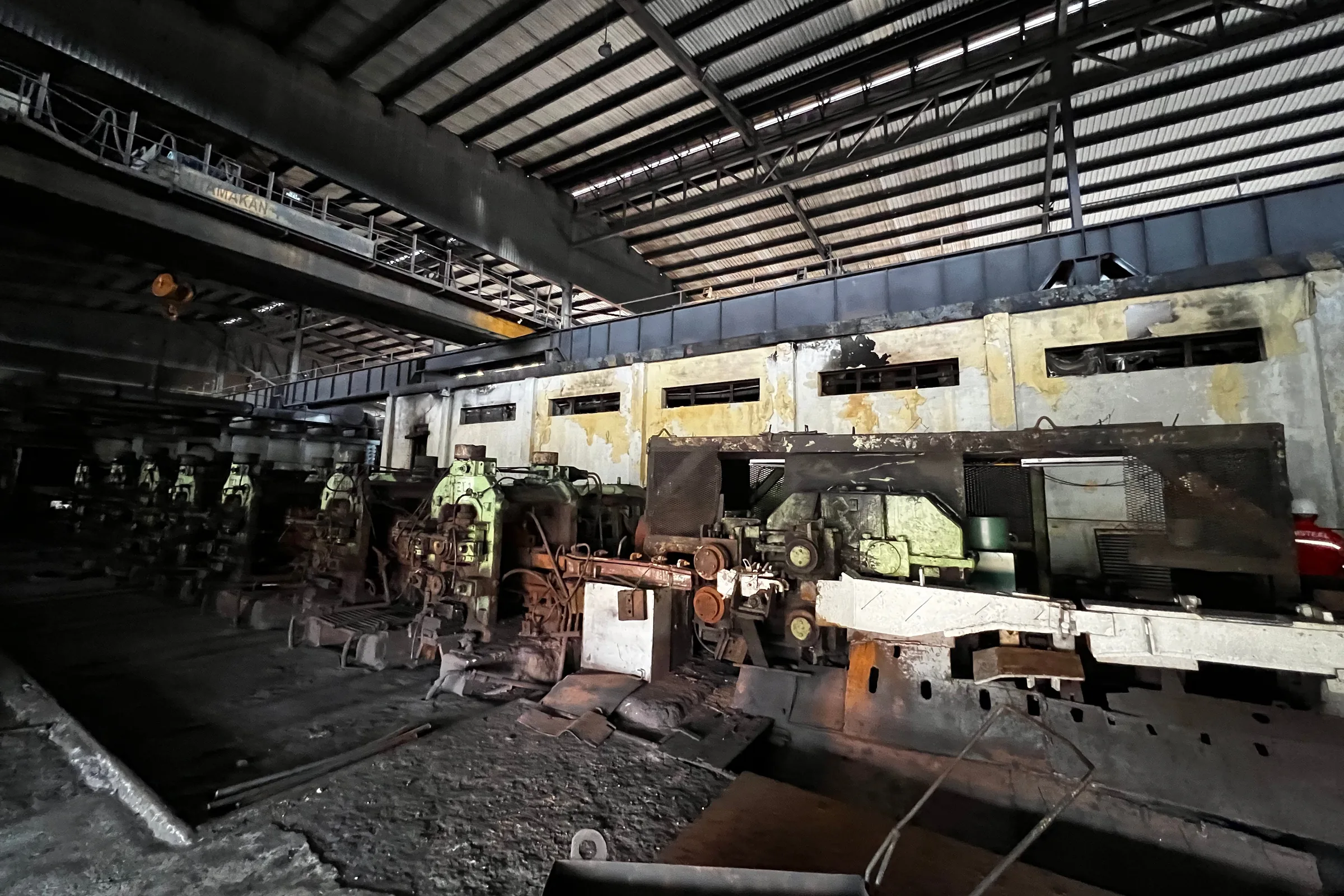
Fire-damaged factory hall with charred production machinery under a scorched steel roof

Forensic Investigation

Fire Origin and Cause Investigation

Fire origin and cause investigation establishes where a fire began, what ignited it, and by what mechanism it developed.

Origin and cause work runs out of all six offices, with the Jakarta and Kuala Lumpur teams taking most of the regional instructions.

When to call

  • Production has stopped and nobody can say what failed.
  • A regulator or an internal safety review wants an independent finding.
  • Liability and recovery.
  • A loss has been disputed, and the party funding the claim wants a finding that will hold under challenge.
  • Pre-loss.

What you receive

  • Plant operators, facility owners, risk managers and their boards commission most of this work directly, wanting to know what failed before…
  • Most engagements produce the same three things.
  • Assets in this practice routinely cross borders: designed in one country, built in another, insured and financed elsewhere again.
  • Many of our engineers and consultants hold chartered or professional registrations relevant to the jurisdictions in which they practise.

What Is Fire Origin and Cause Investigation?

The discipline answers three linked questions, in a fixed order: where in the building or asset the fire began, what first ignited there, and by what physical or chemical mechanism. It is a process of hypothesis and elimination. An investigator's first impression of a scene is treated as a hypothesis to be tested, never as a conclusion to be defended.

It sits next to two neighbouring disciplines without being either of them. A damage assessment determines the nature and extent of damage and the appropriate repair, restoration or replacement scope; it does not ask why the fire started. An electrical failure investigation examines why a specific piece of electrical plant failed, on its own engineering terms, whether or not that failure produced a fire. The two often converge. A transformer or a distribution board can be both the origin of a fire and the subject of a separate equipment investigation, and the origin and cause finding is usually what decides whether the second one is needed at all.

How We Investigate

Every investigation follows the structured, evidence-led sequence set out in NFPA 921. Investigators are qualified against NFPA 1033, and a hypothesis that cannot be tested against physical evidence is not reported as a finding.

  1. Scene security and evidence preservation. The scene is secured and evidence protected from disturbance, contamination or removal before examination begins.

  2. Exterior examination. The building or asset is assessed from the outside first: direction and extent of external fire spread, ventilation openings, and structural damage, recorded before entry.

  3. Interior examination. Examination then moves inward, room by room, documenting contents, finishes and structural elements, and the order in which different areas appear to have burned.

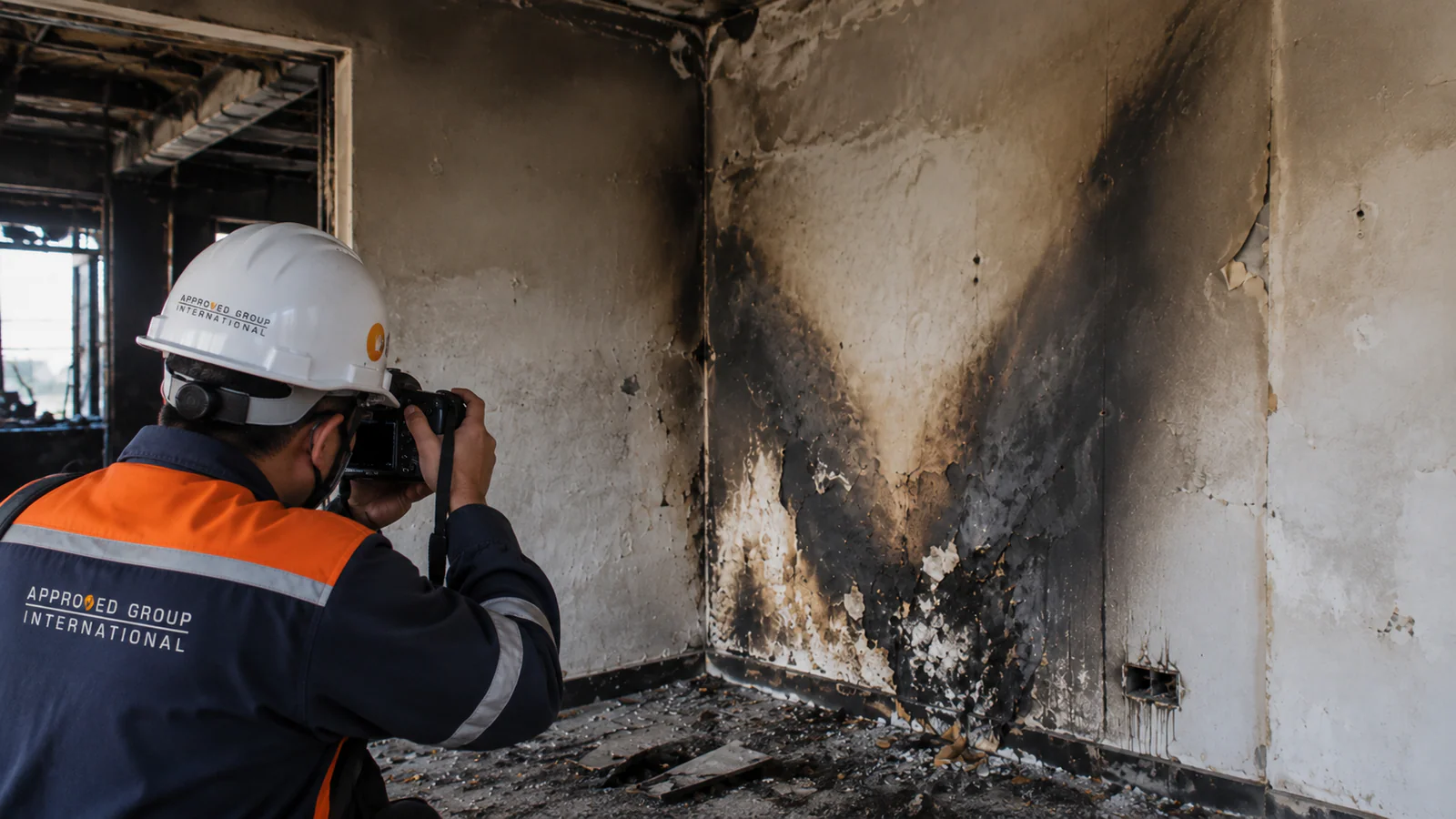
  4. Fire pattern analysis. Char depth, calcination, smoke staining, V-patterns and lines of demarcation are read together across the scene to trace the fire's spread back toward its start.

  5. Arc mapping. Every arc site on a damaged circuit is located, plotted and sequenced. The arc closest to the true origin, not the one that looks most dramatic, usually marks where the fault began.

  6. Establishing the area and point of origin. Pattern evidence, arc mapping and the damage record are combined to narrow the fire to a specific area and, where the evidence allows, a specific point within it.

  7. Identifying the ignition source and first fuel. A loose connection, an open flame, friction, a chemical reaction, self-heating, or a deliberate act: what ignited, and what burned first.

  8. Hypothesis testing and elimination. Every cause consistent with the physical evidence at that origin is tested, and every cause the evidence does not support is eliminated.

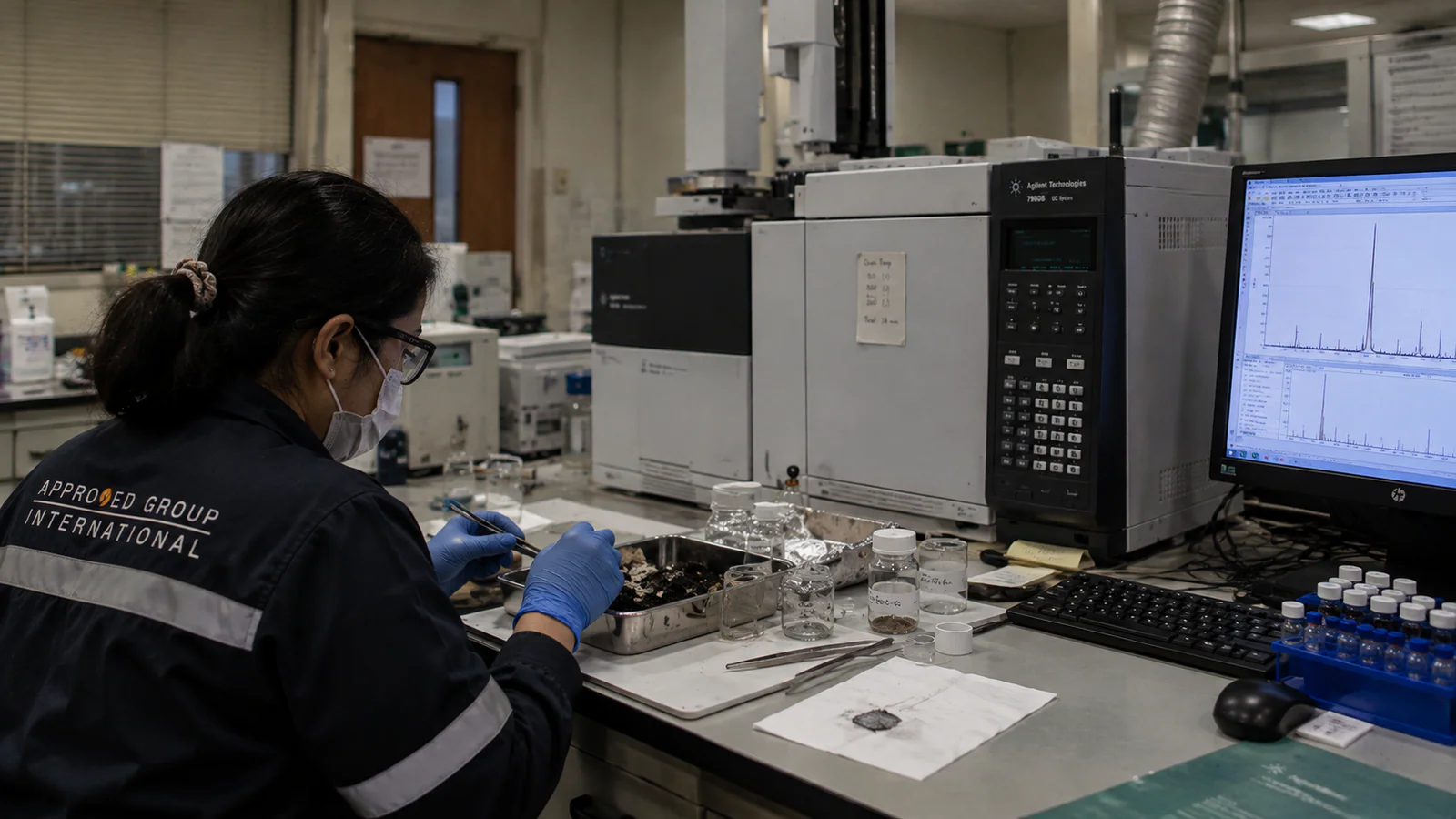
  9. Ignitable liquid residue sampling. Where an accelerant is suspected, fire debris is sampled and analysed by gas chromatography-mass spectrometry to confirm or exclude an ignitable liquid.

  10. Witness and recorded-image timeline. Witness accounts and recovered footage are checked against the physical fire pattern to build a timeline that the pattern evidence either supports or contradicts.

  11. Reporting and testimony. A written finding that a non-specialist can act on and another expert can interrogate, followed by expert evidence where the matter proceeds to a hearing. Where the evidence permits, the remaining cause or contributing causes are reported; where it does not permit a reliable determination, that limitation is stated.

AGI fire investigator photographing a V-shaped burn pattern on an interior wall
Plate 01AGI fire investigator photographing a V-shaped burn pattern on an interior wall

What We Investigate

Warehouses and distribution. Racking, stored goods, loading bays and the electrical reticulation feeding lighting and equipment across large, open floor areas. Open racking and long cable runs give a fire room to establish itself before discovery, which is one reason this premises type recurs.

Factories and process plant. Production lines, process equipment, thermal oil systems and the electrical installations feeding them, where the origin can sit in the process itself or in the supply to it.

Retail. Multi-tenant premises with shared electrical reticulation, cold storage, signage and back-of-house plant. The origin more often sits in a tenancy or common-area connection than in stock on the shop floor.

Hotels and high-rise. Guest floors, kitchens, plant rooms and riser shafts, in buildings where the mechanism of vertical spread bears on the finding almost as much as the point of origin does.

Residential and shophouses. Mixed-use and multi-unit buildings, where shared wiring, renovation work and appliance use in individual units are recurring lines of enquiry.

Agricultural processing. Kernel and fibre storage, boilers, presses and drying equipment, where an electrical fault and self-heating in stored biomass are both plausible from the outset and have to be tested against each other.

Power and utility plant. Transformers, switchgear, generation equipment and substations, where the origin and cause finding often decides whether a separate electrical failure investigation is also required.

Data centres and exchanges. Server halls, UPS and battery rooms, and cabling risers, where the continuity pressure on the facility makes the speed and defensibility of the finding matter almost as much as the finding itself.

Electrical failure is the largest single category of origin across this casework. It leans more heavily on arc mapping: tracing every arc site on the damaged circuit, then establishing which one sits closest to the true origin, rather than assuming the most visibly damaged section is where the fault started. Where the fault sits deeper, in plant-level equipment such as switchgear or a transformer, the matter is taken on by our electrical failure investigation practice alongside the origin finding.

What Decides These Cases

Whether a fault caused the fire, or the fire damaged the fault. Heat from a fire can fuse, melt and arc wiring that had nothing to do with starting it. Distinguishing a cause bead, evidence the wire was energised and initiated the fire, from a victim bead, formed only after the fire reached an already de-energised wire, is one of the most technically demanding steps in the method, and often what a disputed loss actually turns on.

Deliberate-act findings, established by evaluation and elimination. A finding of a deliberate act is not assumed from an absence of an obvious accidental cause. It follows the same process as any other cause: every accidental and mechanical explanation is tested against the evidence first, and a deliberate-act finding is supported by specific physical evidence, such as multiple unconnected seats of fire, an unusual burn pattern, or confirmed accelerant residue, considered together rather than in isolation.

Self-heating in stored materials. Certain stored materials heat internally under specific conditions of moisture, density and ventilation until the heat generated exceeds the heat that can escape. Establishing this as a cause requires evidence of storage duration, moisture content and temperature history, not merely the observation that no other ignition source was found.

Why the fire service's own report answers a different question. The attending fire service exists to extinguish the fire and protect life, and its incident report reflects that purpose. It is produced under operational time pressure, is rarely tested against alternative causes, and is not written to withstand cross-examination. An independent investigation treats that report as one piece of evidence among several, not as the finding itself.

AGI laboratory analyst preparing a fire debris sample beside a gas chromatography instrument
Plate 02AGI laboratory analyst preparing a fire debris sample beside a gas chromatography instrument

Common questions

About fire origin and cause investigation

The questions that come up before an instruction, answered plainly.

24/7 response

Protect the evidence first

Restrict access, change nothing, and call. Most of what decides a case is still on site in the first few days.

Emergency line open at all hours, across every office.