
Approved Group International
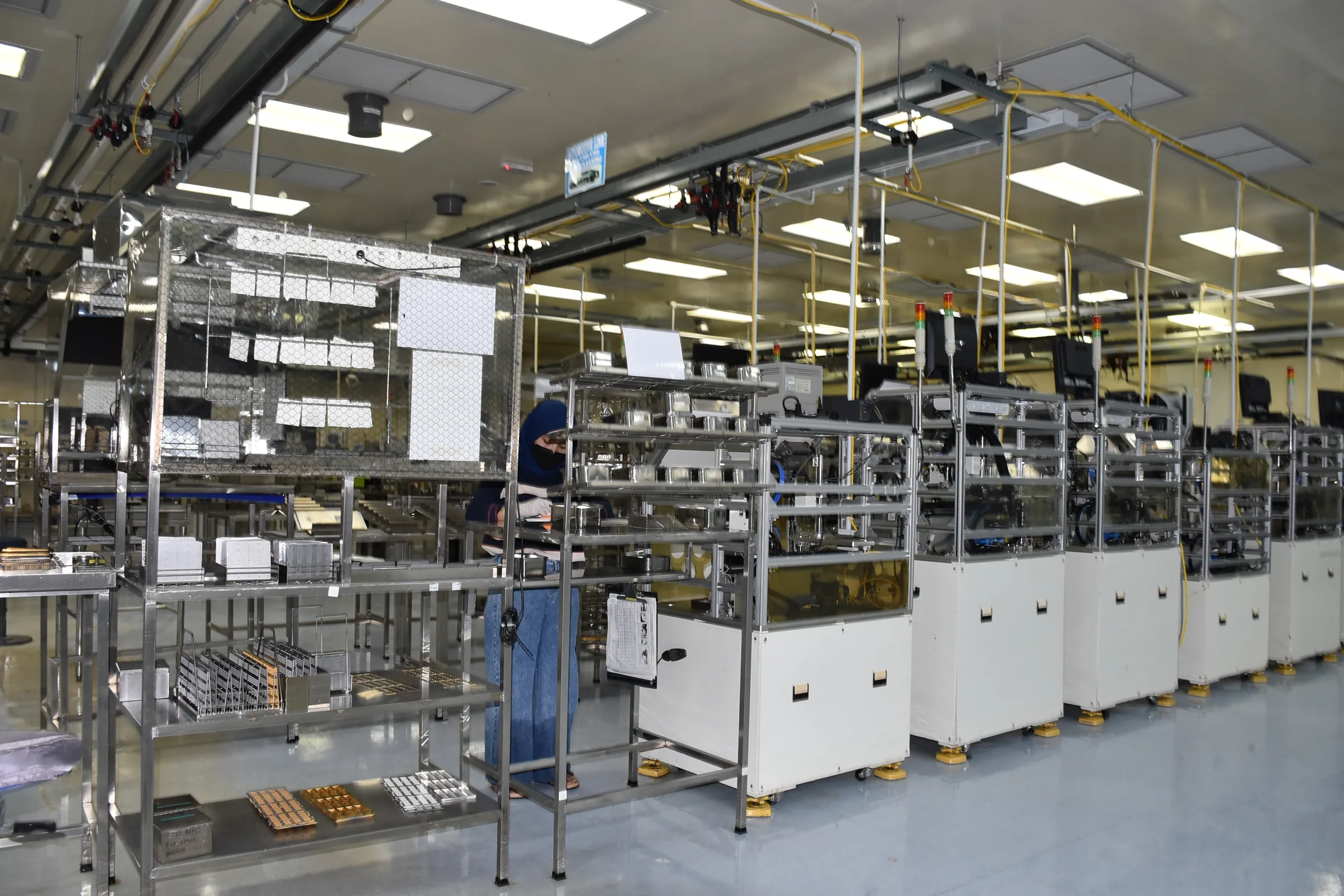
Clean, brightly lit electronics manufacturing floor with rows of automated assembly stations

Manufacturing

Semiconductor and Electronics Manufacturing

AGI investigates fire, contamination and process failure across semiconductor and electronics manufacturing, and assesses what can be cleaned and requalified against what must be scrapped.

Manufacturing

What we are called to in semiconductor and electronics manufacturing

Fire, failure investigation, damage assessment, restoration and risk assessment for semiconductor and electronics manufacturing operations, by the engineers who investigate the losses.

  • Electronic Restoration
  • Technical Inspection
  • Plant and Machinery Damage Assessment
  • Electrical Failure Investigation
48h
Corrosion onset on exposed tooling
12mo
Typical replacement lead on process tools
3
Restoration specialisms usually engaged
8,500
Forensic cases solved

What fails here

Five mechanisms behind most of the loss

Select one to see what happens, what settles it evidentially, and which discipline handles it.

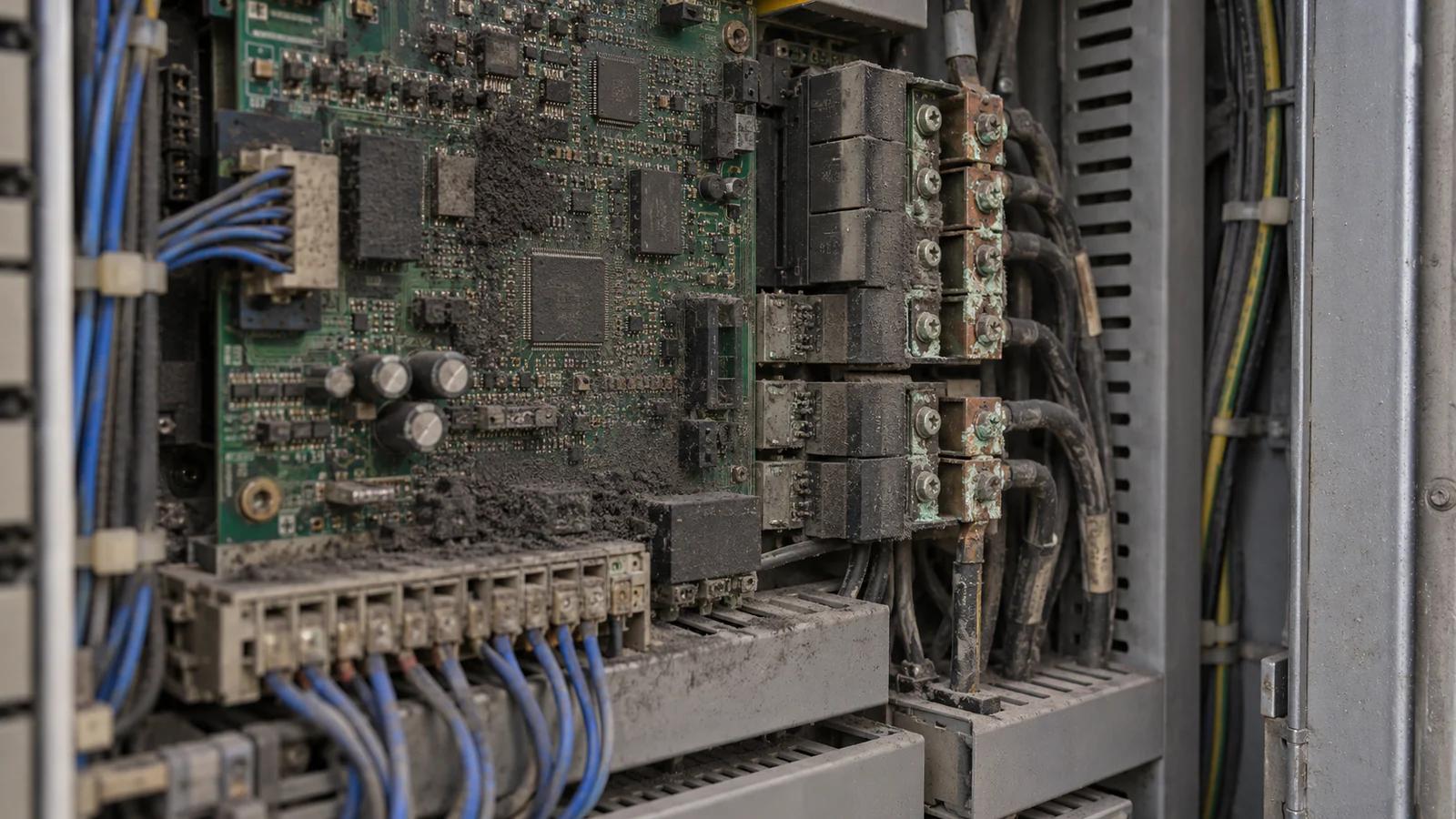
Circuit boards in a control cabinet under a soot film, with corrosion starting on the copper contacts

Chloride contamination

What happens

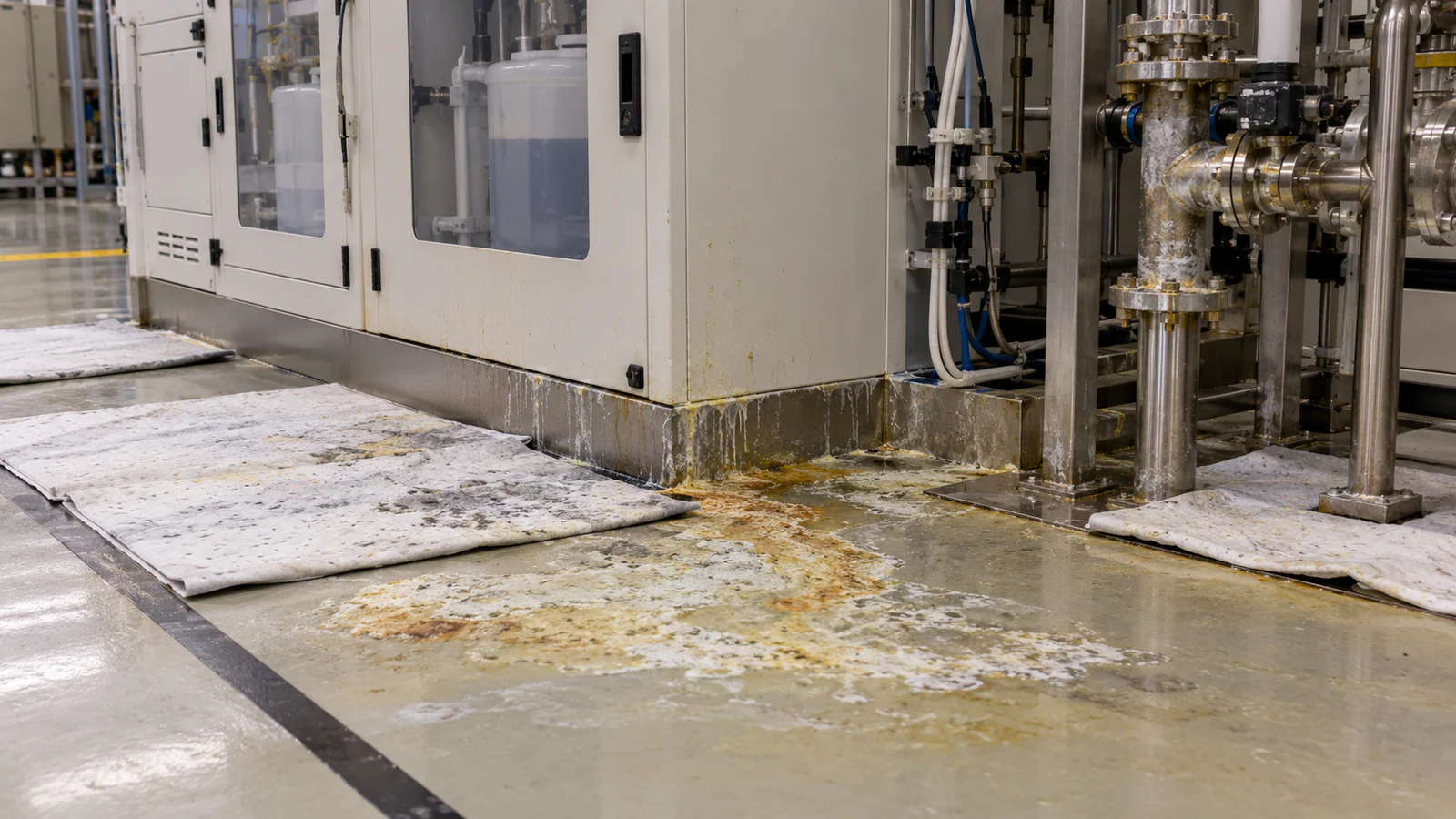
Combustion of cable insulation releases chlorides that travel on smoke into tool enclosures and control racks well away from the fire, then corrode continuously.

What settles it

Surface chloride sampling across zones, mapped against airflow. The distribution rarely matches where the fire was.

Electronic Restoration

The first fortnight

What is recoverable is decided early

A loss in this sector follows a predictable clock. Most of the difference between a recovered asset and a written-off one is made before anyone has agreed who pays.

  1. Hour 0–12

    Isolate and dehumidify

    Humidity control starts before anything else. Chlorides are inert dry and aggressive wet.

  2. Hour 12–48

    Map contamination

    Zone sampling to establish where residue actually travelled, which is rarely where it is assumed.

  3. Day 2–30

    Restore tools

    Board-level cleaning and functional testing, run tool by tool against replacement lead times.

  4. Month 2+

    Requalify

    Cleanroom requalification and process verification before production resumes.

What Fails in Semiconductor and Electronics Manufacturing

Process gas and chemical systems. Silane, hydrogen and other pyrophoric or flammable gases used in deposition and implant. The wet benches, scrubbers and abatement systems are built to contain them, and sometimes do not.

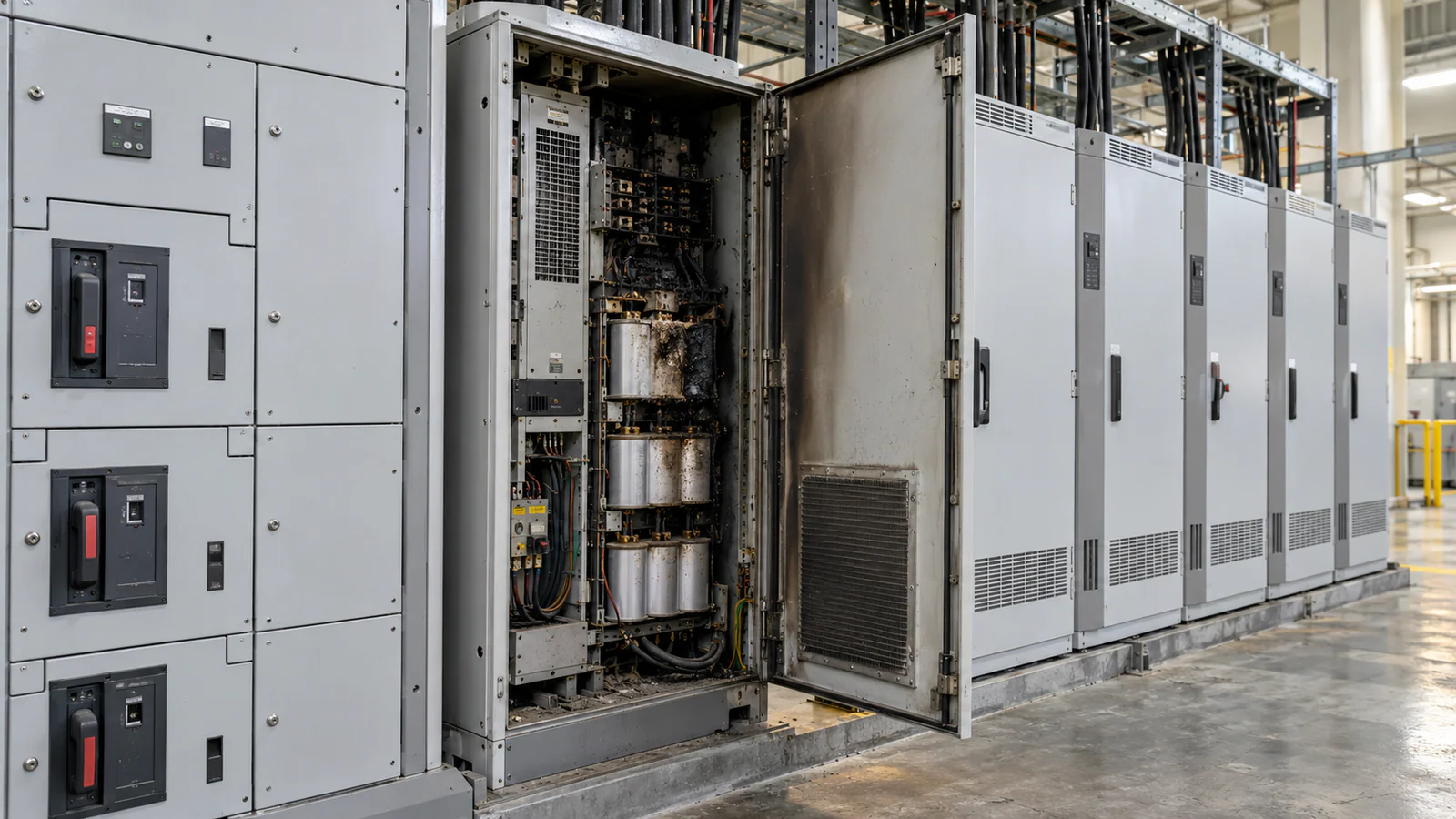
Cleanroom electrical and control infrastructure. Power distribution, uninterruptible supply, building management, and the interlocks meant to isolate a tool the moment a fault is detected.

Process tools themselves. Steppers, etchers, deposition chambers, ion implanters, and the robotics that move wafers between them. Most of it runs continuously. Almost none of it tolerates disruption well.

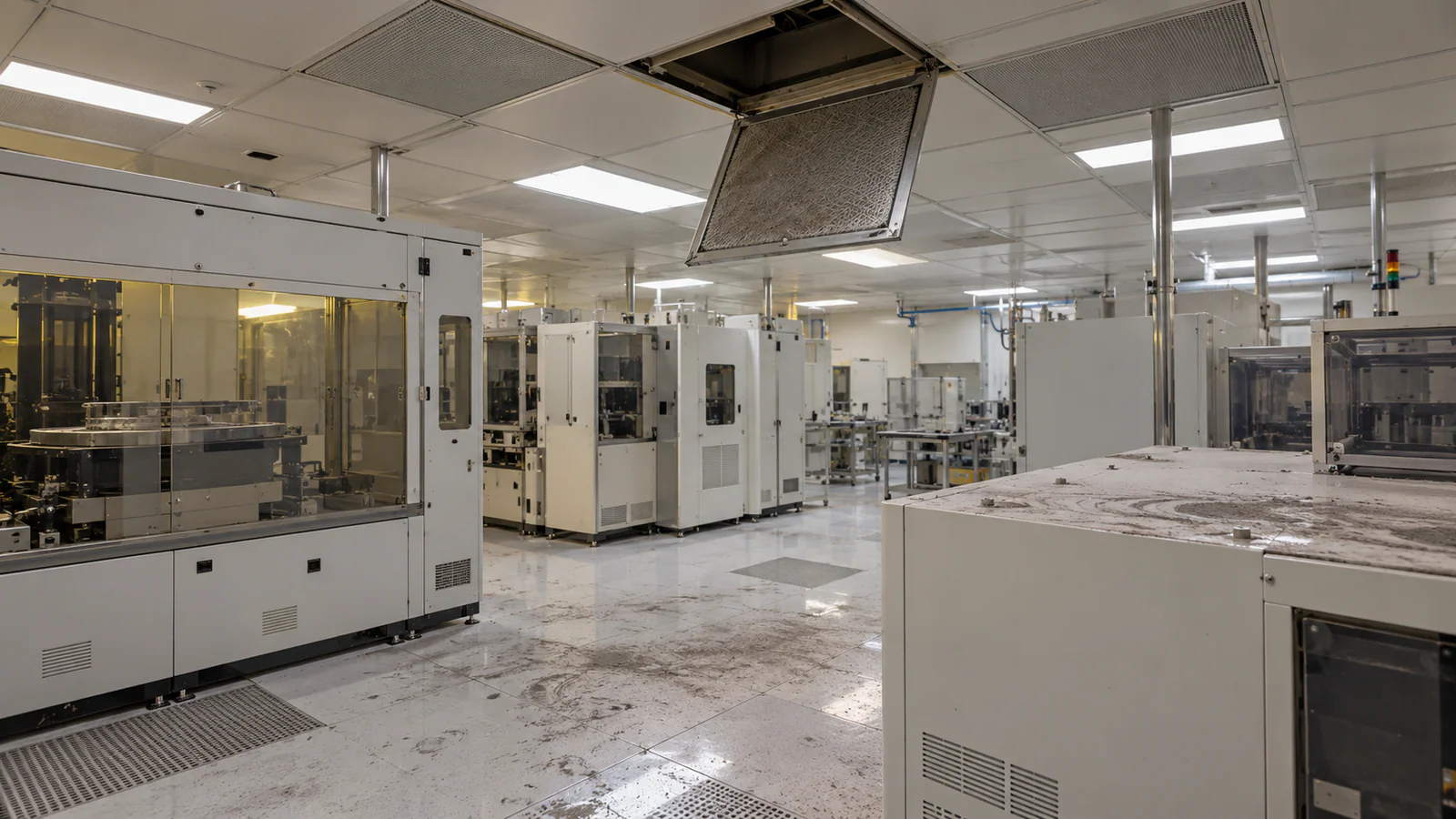
Exhaust and recirculating air. Ductwork carries residue and corrosive vapour well beyond the room where an incident started. It is often the route by which undamaged-looking equipment becomes compromised equipment.

Crystal growth and furnace equipment. A breach that lets molten material reach a cooling line can trigger a steam explosion, a distinct and recurring failure mode separate from a wafer line fault.
Fire and Explosion

A fab fire is seldom a single, simple ignition. Flammable and pyrophoric gases, dense electrical loading and continuous process heat sit close together. An investigation has to work out which of them started the event, and which followed it. We apply the method set out in NFPA 921. Electrical faults, gas system integrity, static discharge and chemical reaction pathways are all examined before a finding is reached.

Duct fires from accumulated deposit are worth naming on their own. The ignition itself can be small. The smoke and residue it distributes through the exhaust system rarely are.

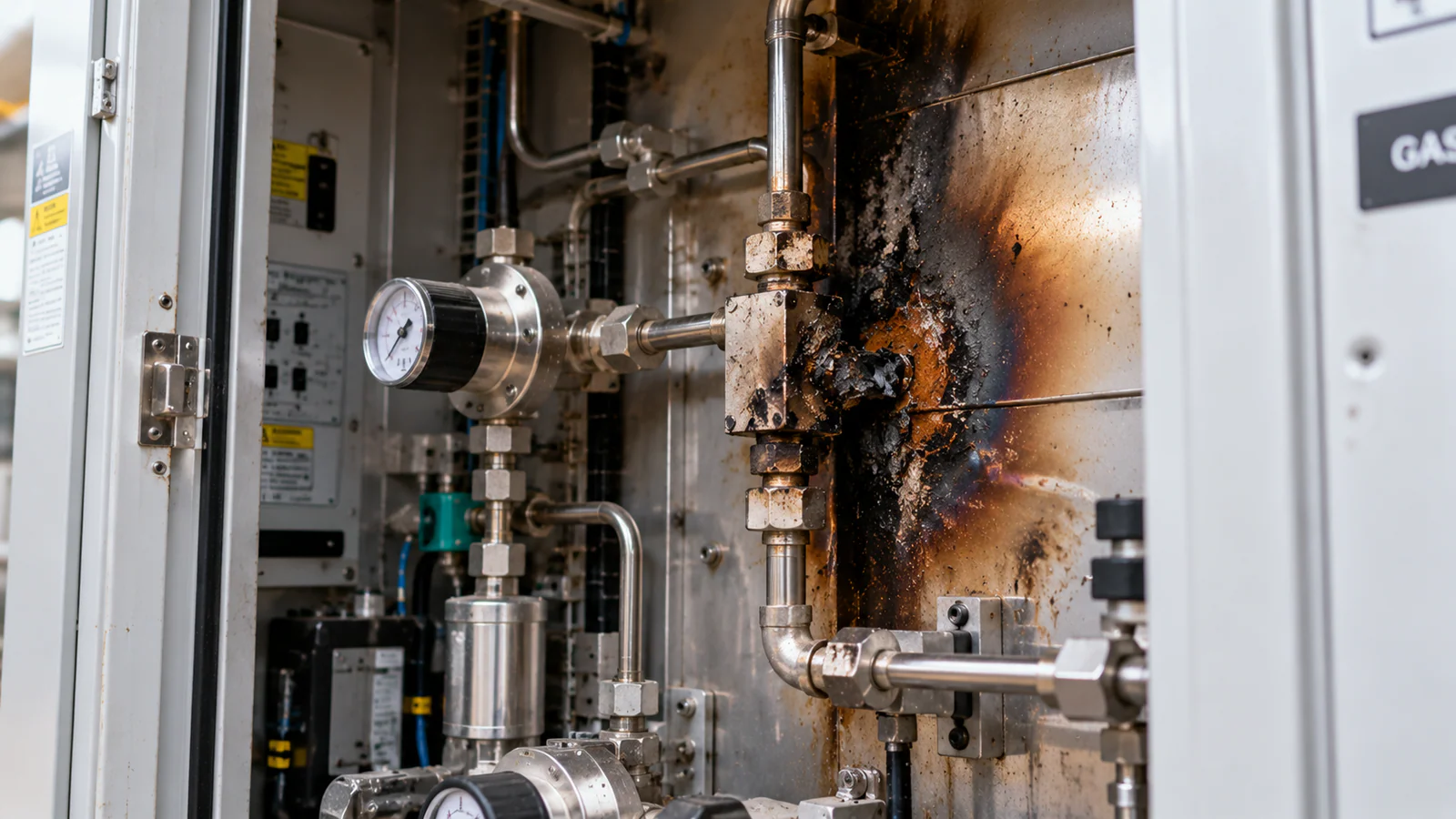
Explosion investigation follows the same discipline where a gas release, a solvent vapour or a pressurised chemical system is implicated. Sequence usually matters as much as cause. Whether a gas cabinet failed before or after a fire started changes both the liability picture and the scope of what has to be tested afterward.

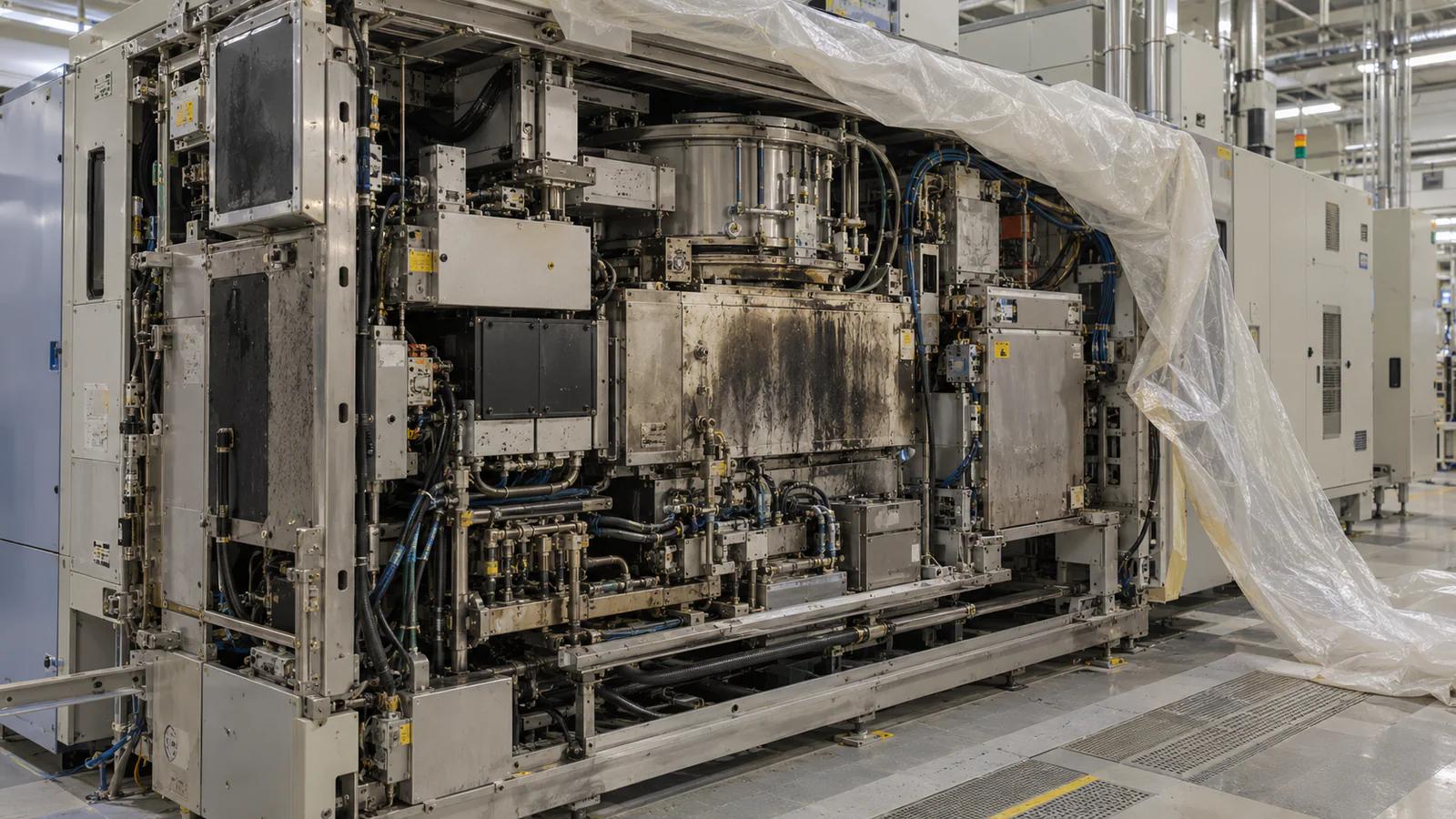
Gas cabinet with scorching around a fitting after a gas release
Plate 01Gas cabinet with scorching around a fitting after a gas release

Failure Investigation

Electronic failure investigation is the discipline most fab and EMS losses turn on, and it asks whether a control card, a power supply, a robotics controller or a process tool died of contamination, a power event, water, or an internal defect, and whether the unit can be returned to service. That question is answered with instruments, not assumption. Infrared thermography finds where heat concentrated. Scanning electron microscopy examines board and contact surfaces. Ion chromatography and gas chromatography-mass spectrometry identify what residue is present, and at what concentration. Where the evidence does not permit a reliable determination, that limitation is stated.

A device that looks untouched can still carry a corrosive film that fails a contact months later. One that looks scorched can sometimes be cleaned and requalified without argument. Appearance is a poor guide either way.

Damage Assessment and Restoration

A damage assessment determines the nature and extent of the damage and the appropriate repair, restoration or replacement scope, and restoration begins once the relevant evidence has been documented, preserved or formally released for work. Contamination is the issue that defines this sector, more than fire itself. Soot and corrosive residue travel through cleanroom air handling and reach process tools and wafer stock that show no visible damage. Deciding what is genuinely compromised against what can be cleaned and requalified is where the claim is won or lost. A tool with corrosive deposit on an exposed contact behaves differently from one with the same deposit sealed inside an unaffected chamber. The distinction is rarely obvious from a walkthrough.

We test before we recommend, and wipe sampling and chemistry testing establish what is present on a surface, at what level, and whether standard decontamination will remove it before anything is committed to paper. Restoration proceeds against a documented baseline. Requalification follows manufacturer and process tolerances, not a general assumption that clean means clean. Wafer stock, reticles and chemical inventory are assessed the same way. What is provably compromised, what has residual value, and what has none.

Risk Assessment

Facility risk assessment for fabrication and electronics manufacturing looks at gas detection coverage, suppression system design and interlocks, cleanroom pressurisation and filtration, and the electrical infrastructure that keeps a line running. It is commissioned most often before an expansion, before a change of process chemistry, or after a near miss that did not become a claim. The assessment is engineering judgement against the facility as built. It is not conformance to a checklist. It usually identifies where a small capital spend would materially reduce the downtime exposure sitting behind the insured value.

The Work in This Sector

We investigate. Crystal growth and furnace equipment used to grow silicon ingots carries its own failure mode, distinct from a wafer line fault: a breach that lets molten material reach a cooling line can trigger a steam explosion capable of damaging equipment well beyond the furnace itself. Distribution transformers and cable systems feeding a fab or an electronics manufacturing services plant are investigated the same way as the process tools they supply.

We assess. Photovoltaic module lines, hard-disk and solid-state drive manufacturing equipment and other precision assembly tools are assessed on the same evidence-led basis as a wafer fab, whatever the specific product. A tool or a shipment of tooling damaged in transit, a common source of loss given its value and fragility, is assessed against the same specification and functional test applied to a tool damaged on site. Capacitor and power-supply faults on control and drive electronics are examined component by component.

We restore. Decontamination of process tools and cleanroom components follows manufacturer cleanliness requirements specific to fabrication equipment, not a general industrial standard, and circuit board assemblies recovered from a fire or flood are cleaned and requalified against that tolerance before return to service. Lab equipment, carpet and general contents affected alongside the process area are restored as part of the same engagement.

We survey before a loss. A facility risk assessment reviews cleanroom fire protection and smoke-evacuation design, gas cabinet and abatement integrity, and compliance with the cleanliness and materials standards this sector holds itself to, ahead of an expansion or a change in process chemistry. Preventive reconditioning of tooling under a maintenance programme extends the same engineering judgement to equipment that has not yet failed.

What Decides These Cases

Whether contamination reached a tool's internal, electrically active surfaces, or stopped at an external housing that can simply be wiped down. Whether cleaning and requalification restore a tool to specification, or whether the manufacturer's own tolerance requires replacement regardless of test results. Whether the loss is driven by the cost of the damaged tools, or by the time needed to requalify an entire line before it can run product again. And, in a fire, whether the ignition began in the process gas system, the electrical infrastructure, or somewhere else entirely. That finding usually decides where liability sits.

Common questions

Working in semiconductor and electronics manufacturing

24/7 response

A loss in semiconductor and electronics manufacturing?

Tell us what failed. You will get an engineer who has seen it in this sector, not a general enquiry form.