Approved Group International
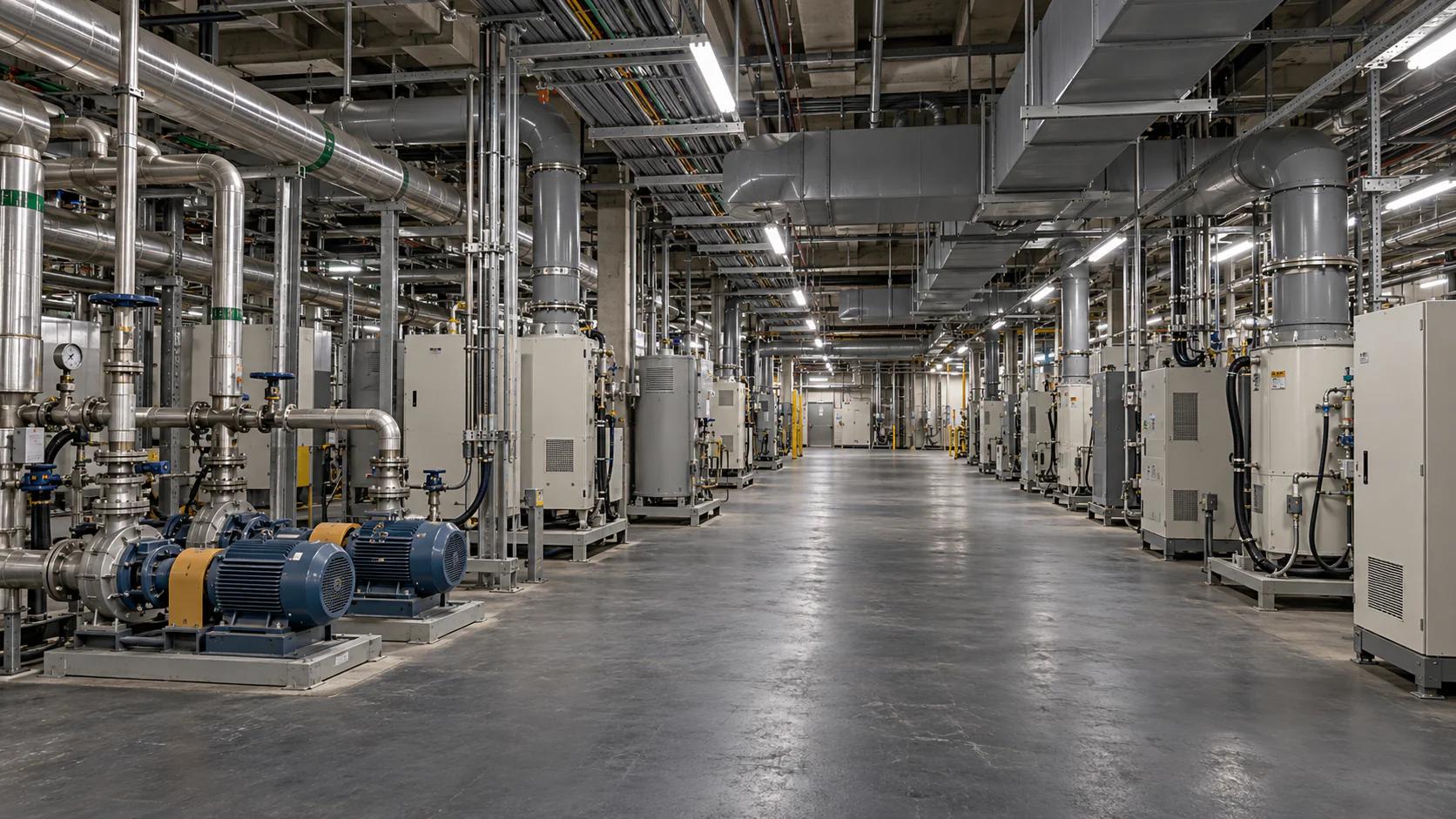
Utility level beneath a semiconductor cleanroom with pumps, pipework and ducting

Findings · Semiconductor and electronics

Semiconductor and Electronics Manufacturing: what fails and why

What fails in wafer fabs, assembly and test lines and electronics plants, how it fails, and what an engineer looks at to decide it. Patterns from our casework.

38%
Losses where contamination exceeded fire damage
48h
Median onset of visible corrosion
12mo
Median tool replacement lead time

The ranking

What came up most

Ordered by share of the casework reviewed. The top two account for more than half of it.

  1. 01

    Chloride contamination beyond the fire zone

    38%

    Found in zones with no heat damage and no visible residue.

  2. 02

    Cleanroom requalification driving the timeline

    22%

    Requalification, not repair, sets the return-to-production date.

  3. 03

    Tool lead time exceeding the BI period

    18%

    Restoration becomes the only option that fits the policy period.

  4. 04

    Power quality events misread as equipment failure

    12%

    The damage pattern follows the supply, not the process.

  5. 05

    Deferred assessment of apparently working equipment

    10%

    Equipment runs for weeks, then fails after the claim closes.

The Assets That Fail

Five asset classes account for most of what our engineers are called to examine. They are ordered here by how often they appear in the cases reviewed.

Process and production tools. Deposition, etch, plating and surface-processing chambers. Laser and precision cutting equipment. Ion implant systems, and the robotics and pick-and-place machinery that move product between them. This is the asset class most often at the centre of the work.

Electronic control and power assemblies. Printed circuit board assemblies, control cabinets and power supply modules. And the discrete components inside them: capacitors, semiconductor switching devices, wiring looms and terminations.

Electrical distribution infrastructure. Transformers, low- and high-voltage cabling, switchgear and motors. They keep a line running, and when they fail they often take equipment two rooms away with them.

Facility and building services. Lifts, chillers, exhaust and recirculating ductwork, and the fire protection systems built around them. Rarely the asset a plant director thinks of first. Often the one that decides how far a loss spreads.

Work-in-progress, stock and consumables. Wafer stock, reticles, chemical inventory and finished or part-finished product. Assessed for what has genuinely lost value against what has not.

How They Fail

Process and production tools fail most often through contamination, not through direct damage. Soot, corrosive residue and extinguishing agent travel through cleanroom air handling. They settle on tool surfaces that show nothing to the eye. The evidence that decides these cases is chemical, not visual. Wipe and surface sampling, analysed by ion chromatography, gas chromatography-mass spectrometry or scanning electron microscopy, establishes what is present, and at what concentration. It also shows whether contamination reached an exposed, electrically active surface, or stopped at a sealed external housing. A second, smaller pattern is mechanical: cracking and fracture in precision components. This is usually traced through dimensional survey and material examination, once the tool is stripped under controlled conditions. Water ingress is a recurring third pattern, whether from firefighting, a burst pipe or general flooding. The question it raises is identical to the contamination question. Did the water reach internal, electrically active parts, or was it contained by the housing?

Electronic control and power assemblies fail predominantly through electrical faults that leave a physical trace. Wiring and reticulation defects, short circuits, arcing and flashover recur across the cases reviewed. So do component-level failures in capacitors and switching devices. Infrared thermography identifies where heat concentrated before and during the event. Scanning electron microscopy then examines board and contact surfaces for the fault's signature. A board that looks scorched can sometimes be cleaned and requalified without argument. One that looks untouched can still carry a corrosive film that fails a contact months later. Appearance is a poor guide to either outcome.

Electrical distribution infrastructure fails through the mechanisms any electrical engineer would expect. One distinction matters in this sector: the consequence travels. Transformer failure, switchgear flashover, protection and circuit-breaker faults, and voltage spikes or surges all recur. Some trace to lightning, some to switching events on the supply network. Each is examined against protection and relay data, insulation testing and fault-current calculation. So much load in a fab or an assembly plant sits behind the same distribution board. A fault that would be contained elsewhere can propagate into several process tools before protection operates, or before an interlock isolates the affected circuit.

Facility and building services fail in ways that are rarely dramatic on their own but decide how far a loss spreads. Sprinkler discharge, pipe bursts and storm-driven water ingress recur in the cases reviewed. The exhaust duct is worth naming on its own. It is often the route by which equipment in an unaffected bay becomes compromised equipment, carrying deposit and vapour well beyond the room where an incident began.

Work-in-progress and stock fail on a simpler test. Was it in the path of contamination, heat or moisture, and to what degree? Transit and handling damage, heat exposure and water damage recur. The assessment turns on the same chemistry and functional testing applied to the tools around them, not on how the material looks in the box.

Published loss experience for the sector adds two mechanisms. Both are less common in our own files, and severe where they occur. One is a chain reaction inside crystal-growth equipment. A molten-material leak degrades an adjacent cooling structure, water reaches the leak, and a steam explosion follows. That sequence is only findable by working backward through witness accounts, control and alarm logs, and collaborative dismantling with the equipment's manufacturer. The other is fire load carried by the cleanroom itself: combustible materials, flammable process chemistry and dense electrical loading, sitting close together. Industry fire-protection standards for cleanroom construction were written to address exactly this, after a run of severe sector losses in the 1990s.

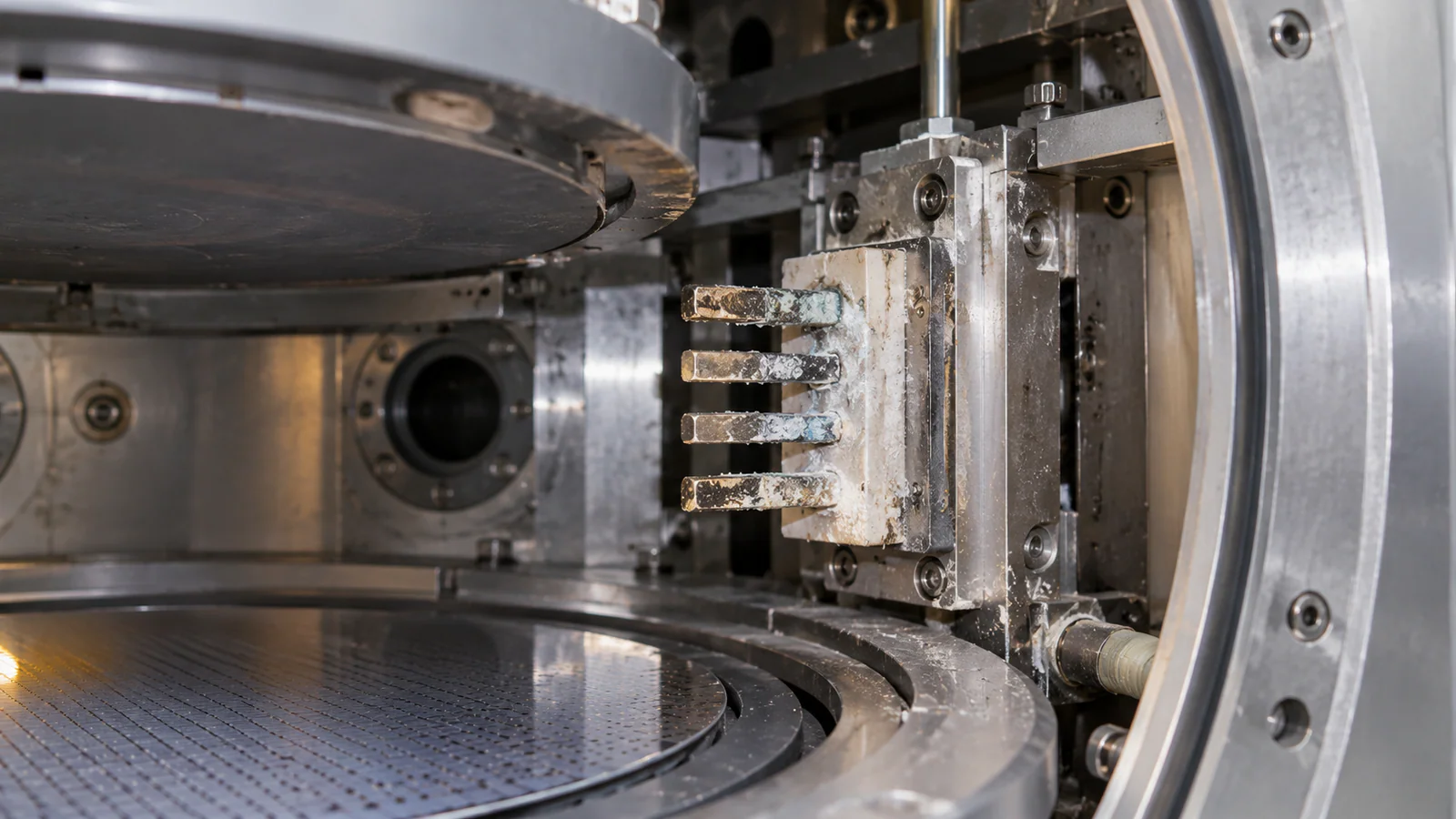
Inside a wafer processing chamber, residue on an exposed electrical contact
Plate 01Inside a wafer processing chamber, residue on an exposed electrical contact

What Made the Loss Bigger Than It Needed to Be

Several contributing factors recur across the cases reviewed, independent of what actually failed.

Protection that did not isolate quickly enough. An interlock is designed to isolate a tool the moment a fault is detected. Sometimes it operates after, rather than before, contamination or damage reaches the equipment it was meant to protect.

Cleanup or repair beginning before the evidence was documented. Surfaces get wiped down. Components get handled. A tool gets moved for repair before its condition is recorded. Each narrows what a later investigation can establish, and the report has to say so.

Moisture left inside electronics before decontamination began. Corrosion and contact failure develop in the days after firefighting water or flooding reaches a board. The interval before a controlled drying or decontamination response often matters as much as the water itself.

Residue carried through air handling into bays that were assumed unaffected. Where the exhaust or recirculating air path was not traced early, contaminated equipment was sometimes identified only after it had already been returned to production, or handled as though it were clean.

Equipment returned to service without functional or contamination testing. A tool that looks undamaged is not the same as a tool that has been tested and found undamaged. That gap has widened losses more than once in the cases reviewed.

What Is Restorable and What Is Not

The pattern that decides restorability most often is where contamination or damage reached, not how a tool looks from outside. Deposit sealed inside an unaffected chamber behaves differently from the same deposit on an exposed, electrically active contact. Cleaning and requalification restore the first case to specification more often than the second. Manufacturer tolerance can still require replacement even where chemistry testing shows contamination has been removed. Published guidance on contamination limits for semiconductor process equipment is written more tightly than a general industrial standard. The equipment's own specification governs the outcome, not a general assumption that clean means clean. Work-in-progress and consumables follow the same logic. What is provably compromised, what has residual value, and what has none, is established by testing, not assumed from position or appearance. Restoration is the more common outcome in the cases reviewed where the evidence supports it, and where the cost of downtime while an entire line requalifies exceeds the cost of testing and cleaning individual tools. Replacement lead times for the most specialised process tools, which can run to a year or more, weigh in the same direction.

What a Pre-Loss Survey Would Have Found

Several of the mechanisms above are visible before they fail. That requires an engineer looking at the facility as built, not a checklist. Gas detection coverage, and suppression and interlock design, checked against how a tool would actually fail rather than how it was specified to operate. Cleanroom pressurisation and filtration, and whether the air handling path would carry contamination into unaffected areas faster than it could be contained. Electrical infrastructure loading and protection coordination matter too, particularly where several process tools share a distribution board that was never sized, or re-coordinated, for the load now sitting behind it. Exhaust duct condition and deposit accumulation is a fire-load question long before it is a housekeeping one. Chillers, sprinkler systems and cabling insulation age at a different rate from the process tools they support, and are inspected less often. A facility risk assessment is engineering judgement against the plant as it actually stands. It recurs in our practice most often before an expansion, before a change of process chemistry, or after a near miss that did not become a loss.

Method Note

This report draws on our own casework for semiconductor and electronics manufacturing, across the countries where we work. Each case was reviewed against the same evaluation-and-elimination method applied in any single investigation. Plausible mechanisms are tested against the physical and chemical evidence, and reported only where the evidence supports them. Frequencies are given as "most often," "a recurring pattern" and "less common but severe." These reflect patterns in the cases reviewed. They are not a count presented as a total of the firm's work in this sector. The archive is not a complete record of every matter we have handled, and figures drawn from it are not published as such. Records without a final, evidence-based determination are excluded from the patterns above. Mechanisms attributed to published loss experience are drawn from outside our own files. They are identified as such wherever they appear, and none are attributed to a named organisation. Where a case in our own files did not permit a reliable determination, that limitation was recorded at the time. It is not represented here as a resolved pattern. This report was prepared on 25 September 2026, and reflects the archive as it stood on that date. The cases were reviewed across the 27 countries in which the work was completed. The identity of the instructing party does not alter the method applied or the findings reached. Where the evidence does not permit a reliable determination, that limitation is stated.

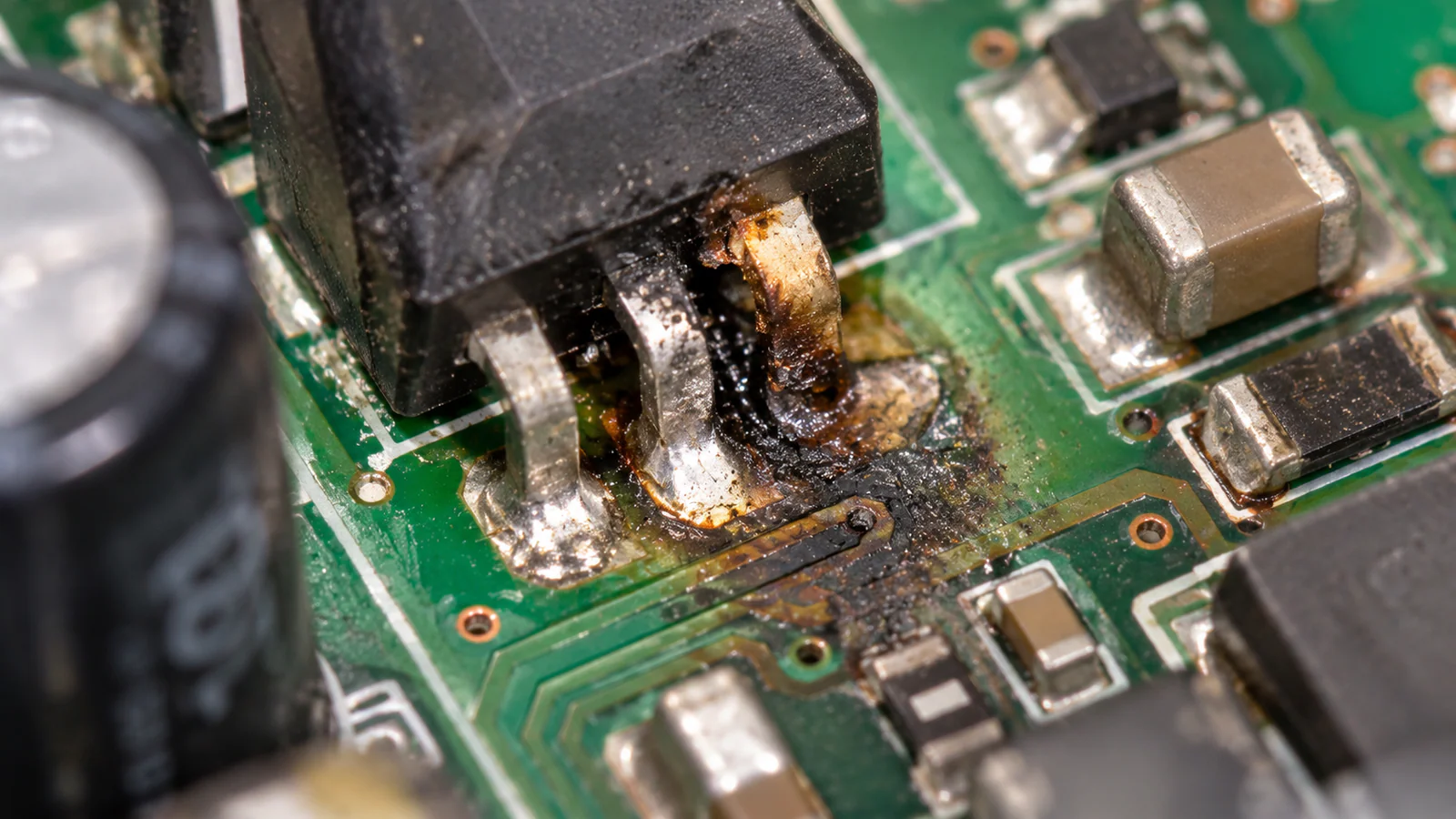
Close-up of arc damage at a component lead on a circuit board
Plate 02Close-up of arc damage at a component lead on a circuit board

24/7 response

Does this match what you are looking at?

If the pattern fits, the next step is an engineer on site. If it does not, that is worth knowing early too.