
Approved Group International
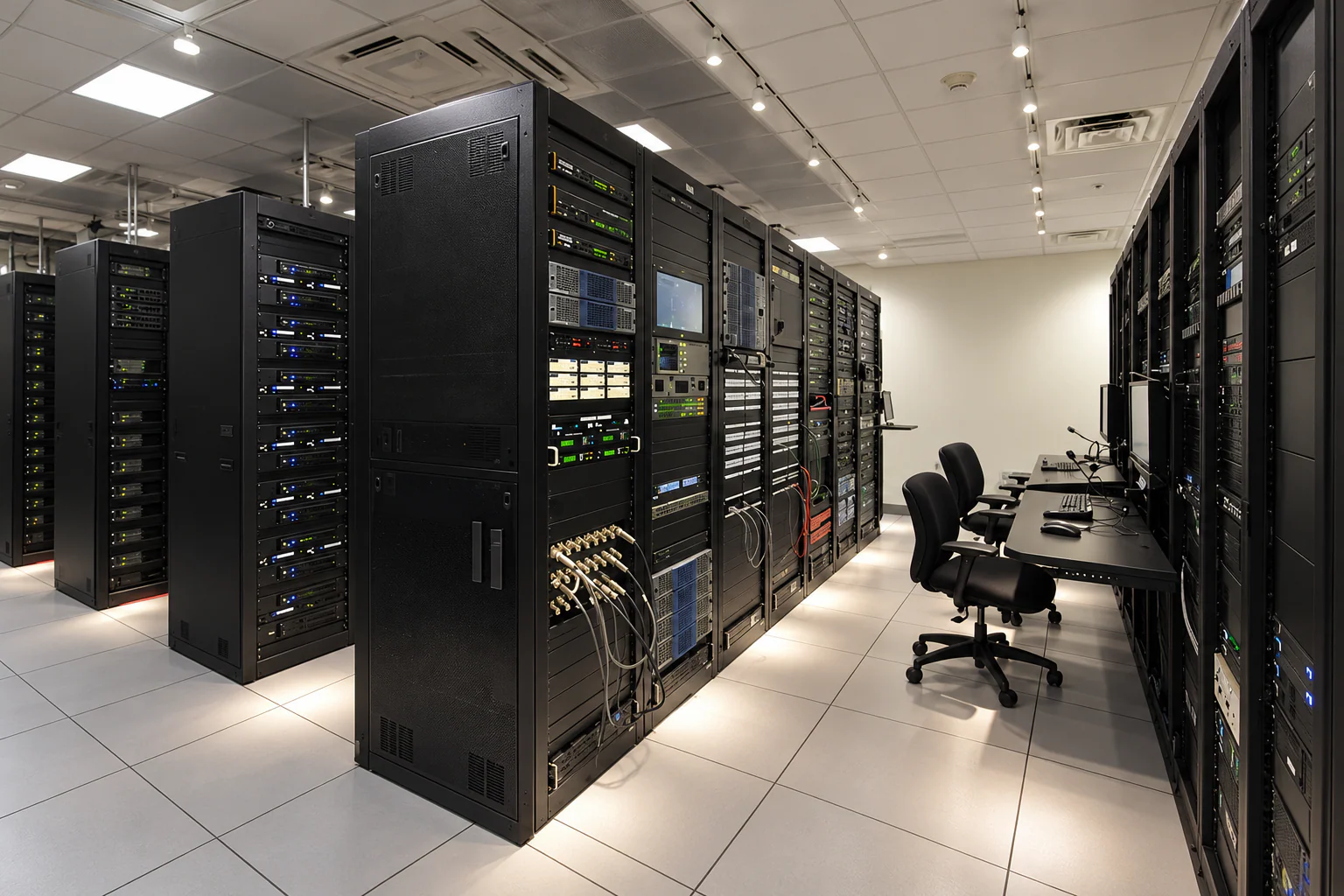
Data centre room with rows of server racks and a monitoring desk

Infrastructure

Data Centres and Telecommunications

AGI investigates failure in data halls, power and cooling infrastructure and telecommunications networks, and assesses what hardware can safely return to service.

Infrastructure

What we are called to in data centres and telecommunications

Fire, failure investigation, damage assessment, restoration and risk assessment for data centres and telecommunications operations, by the engineers who investigate the losses.

  • Electrical Failure Investigation
  • Machinery Risk Assessment
  • Electronic Restoration
  • Risk Assessment
24/7
Emergency response line
4
Disciplines across power and cooling
72h
Window for contaminated electronics
6
Offices across Asia-Pacific

What fails here

Five mechanisms behind most of the loss

Select one to see what happens, what settles it evidentially, and which discipline handles it.

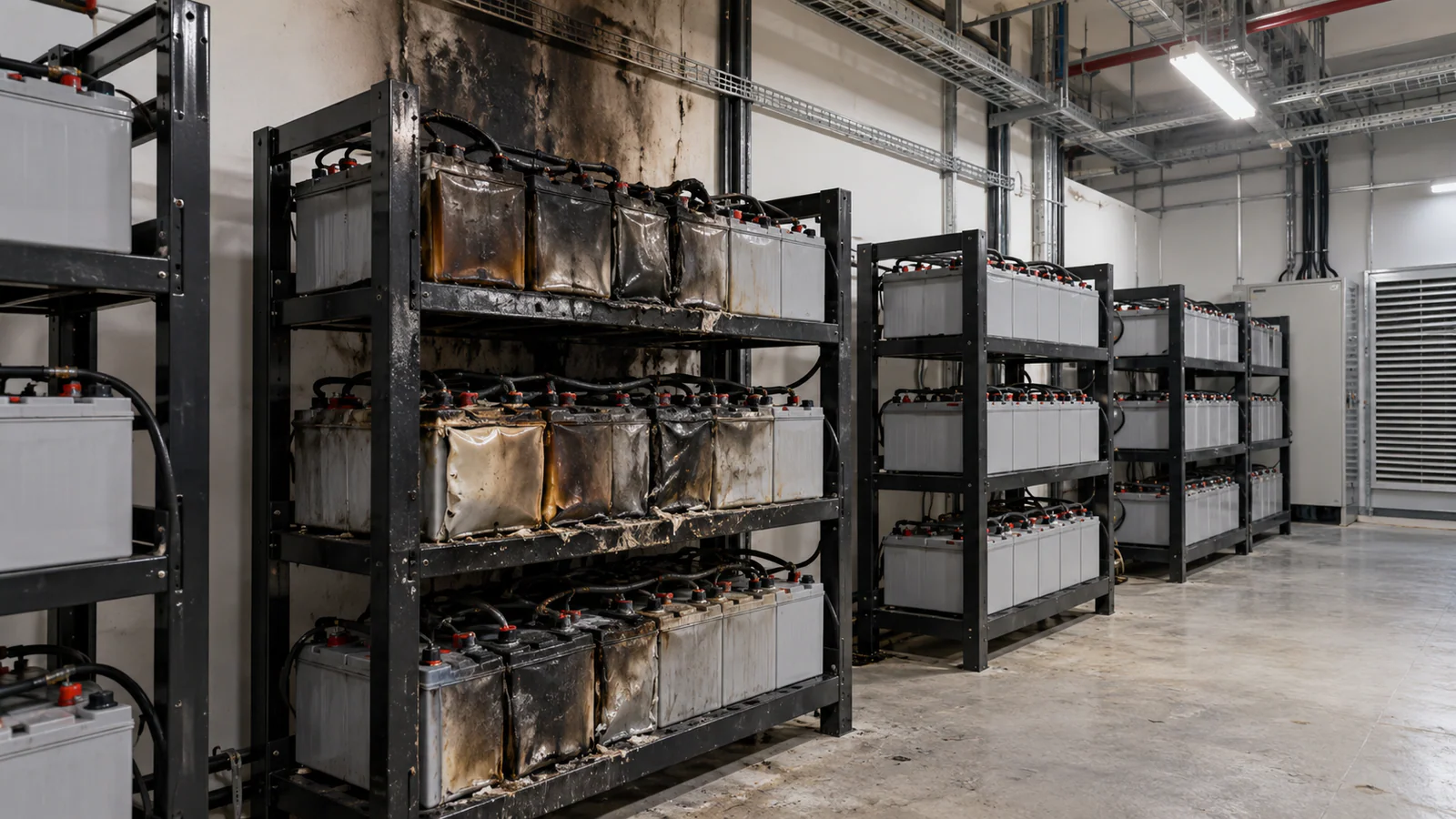
UPS battery rack with swollen, scorched batteries and soot rising up the wall behind

UPS and battery failure

What happens

Battery thermal event or UPS fault taking out the protected supply, with smoke reaching the equipment the system existed to protect.

What settles it

Battery monitoring history, cell examination and UPS event logs. Impedance trend normally shows the cell degrading first.

Electrical Failure Investigation

The first fortnight

What is recoverable is decided early

A loss in this sector follows a predictable clock. Most of the difference between a recovered asset and a written-off one is made before anyone has agreed who pays.

  1. Hour 0–4

    Restore supply

    Availability first. Investigation waits, but the evidence is preserved in parallel where it can be.

  2. Hour 4–24

    Capture logs

    BMS, UPS and DCIM records pulled before they roll over. This is the most time-critical item on the site.

  3. Day 1–10

    Assess hardware

    Contamination sampling and board-level assessment on affected equipment.

  4. Week 2+

    Report and harden

    Cause, plus the sequencing or test-regime change that prevents the repeat.

What Fails in Data Centres and Telecommunications

Uninterruptible power supply and battery systems. Thermal runaway in a battery string, inverter failure, and the fire or off-gassing that follows are among the most consequential events a facility can have. They sit directly between the grid and the load.

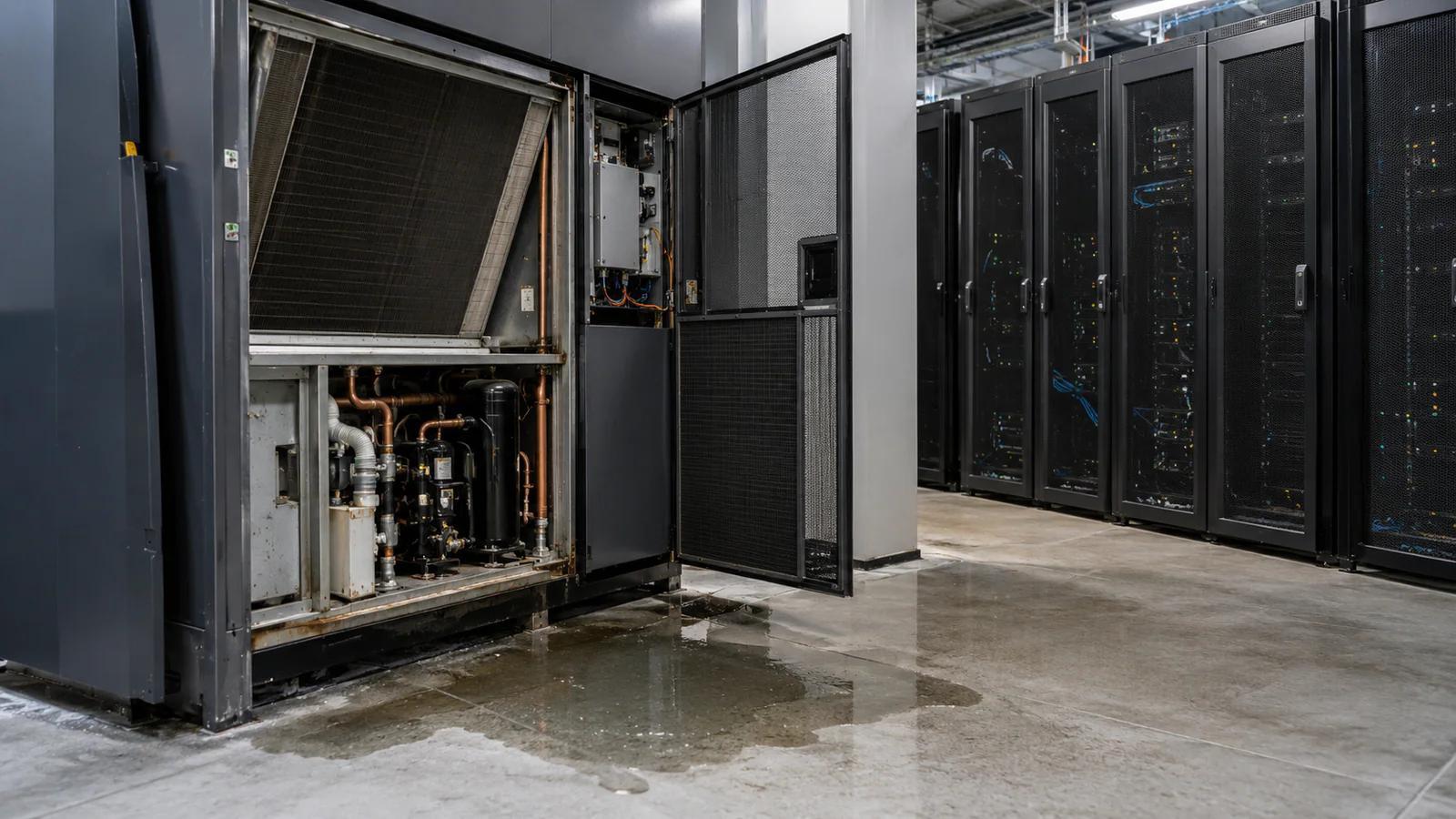
Cooling plant and chillers. A cooling failure need not burn anything. Hours above the specified inlet temperature can degrade or fail hardware across an entire hall.

Switchgear and busduct. Arc faults and insulation failure in the electrical distribution feeding the facility. Often, this is the single point on which an entire hall's redundancy depends.

Telecom exchanges and base stations. Similar power and cooling dependencies at a smaller physical scale, but often carrying a wider service footprint per site.

Lightning and surge damage. The most frequently investigated failure mechanism in this sector, reaching broadcast, surveillance and other sensitive electronic equipment through power and signal lines even where the unit itself shows no external mark.
Fire and Explosion

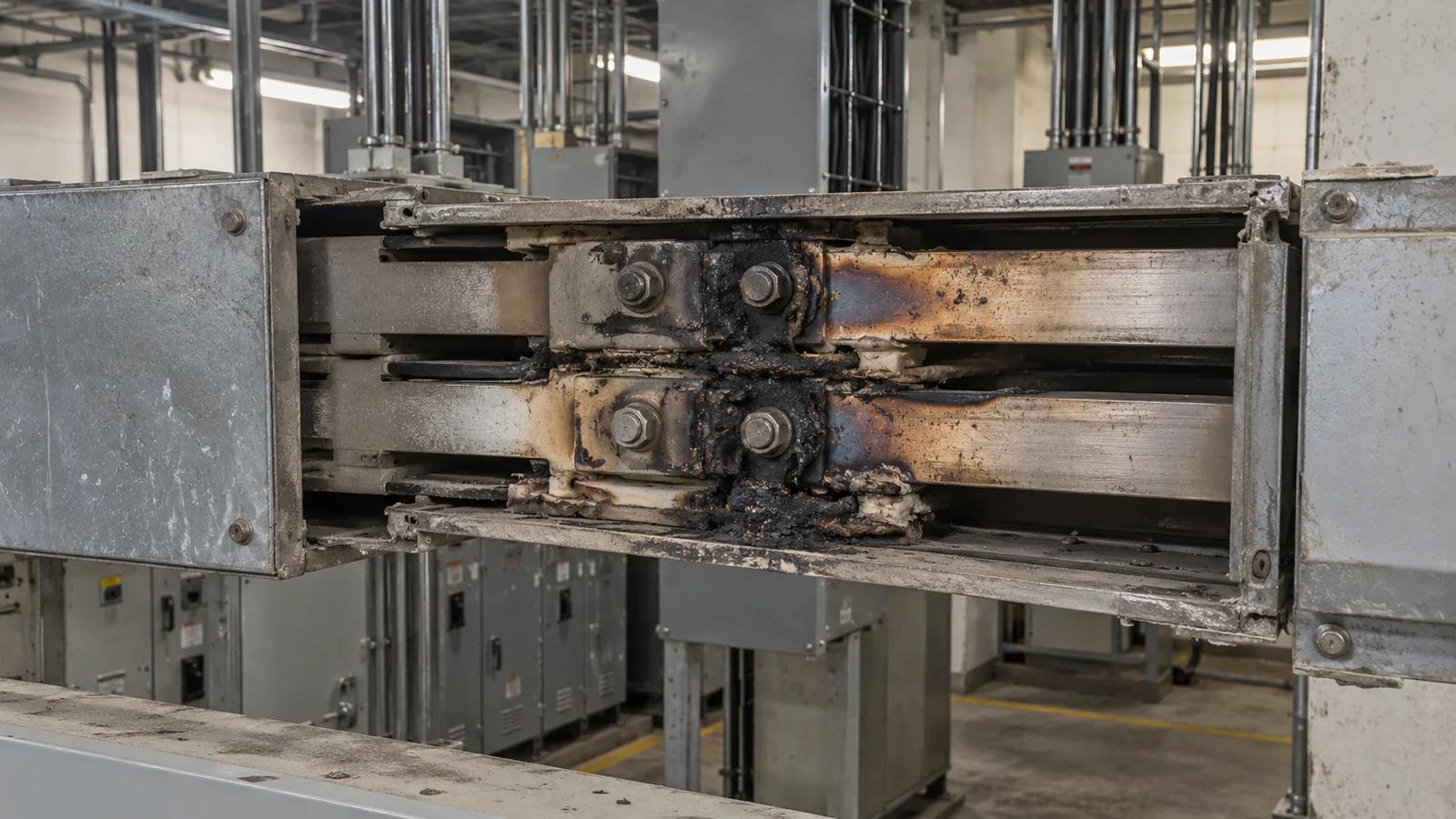
Battery fires and busduct arc faults are the two events this sector sees most. They behave differently. The approach has to match which one occurred. A lithium-ion battery event is examined for the cell or string that initiated thermal runaway, whether protection and monitoring operated as designed, and whether propagation to adjacent strings was contained. An arc fault in switchgear or busduct is examined for the originating fault, often with sweep frequency response analysis and insulation testing on adjacent equipment to establish how far the event actually reached. That footprint is very often smaller than the visible damage suggests.

Suppression system performance is part of the same inquiry. Whether a clean agent or other system activated as designed, and whether it was sized correctly, frequently decides how much of the hall was genuinely at risk. Much of the rest simply looked alarming on the day.

Busduct joint with arc damage and carbon tracking at its bolted connection
Plate 01Busduct joint with arc damage and carbon tracking at its bolted connection

Failure Investigation

Electrical failure investigation examines the switchgear, busduct, UPS and battery systems that sit upstream of the racks: the fault path, the protection and relay response, and whether the equipment behaved within its design envelope before it failed. Electronic failure investigation, working from the same evidence, examines the hardware itself. Server and networking equipment, power distribution units and rack-level electronics are assessed board by board for whether the failure originated in a power event, contamination, water, or a component defect, and for whether the unit can be returned to service. Where the evidence does not permit a reliable determination, that limitation is stated.

Board-level examination decides more of this outcome than most claims teams expect. A server that lost power cleanly is often recoverable. One that saw a sustained overvoltage, even briefly, frequently is not. Nor is one that saw a corrosive contamination event. The difference is established with diagnostic testing. Not a visual check.

Damage Assessment and Restoration

A damage assessment determines the nature and extent of the damage and the appropriate repair, restoration or replacement scope, and restoration begins once the relevant evidence has been documented, preserved or formally released for work. The physical damage in a data hall event is often small. The commercial loss almost never is. Restoration priorities are set by what returns capacity fastest and most safely. Not by what looks most damaged. That ordering is one of the more consequential decisions on a claim of this kind.

Racks affected by heat, smoke or water are assessed individually. A unit with visible fire damage may be a total loss while its neighbour, exposed only to smoke, can often be cleaned, tested and returned to service within days. Cooling plant and UPS equipment are assessed against manufacturer tolerances rather than general condition, because a chiller or battery string that is marginally outside specification can fail again quickly if simply put back into service. Where restoration and investigation run under one plan, hardware testing can begin on unaffected racks while the cause of the initiating event is still being established elsewhere in the hall.

Risk Assessment

Facility risk assessment for data centres and telecommunications sites examines battery room design and ventilation, UPS and generator redundancy, cooling capacity against design load, and switchgear condition and protection coordination. It is commissioned most often ahead of a capacity expansion, a battery chemistry change, or a renewal where the insurer wants an engineering view of single points of failure rather than a paper compliance check. The output is usually a short list of findings. They matter far more to the loss exposure than the length of the report suggests.

The Work in This Sector

We investigate. Telecom towers and their foundations are investigated for structural and anchor bolt failure alongside the electrical plant they carry, and a mast that has come down is examined for whether the cause sat in the structure, the foundation, or an external event. Broadcast and studio equipment, satellite terminals and surveillance cameras reached by a surge are examined for the path it travelled and the components it damaged, work that draws on the same electronic failure method used on rack-level hardware.

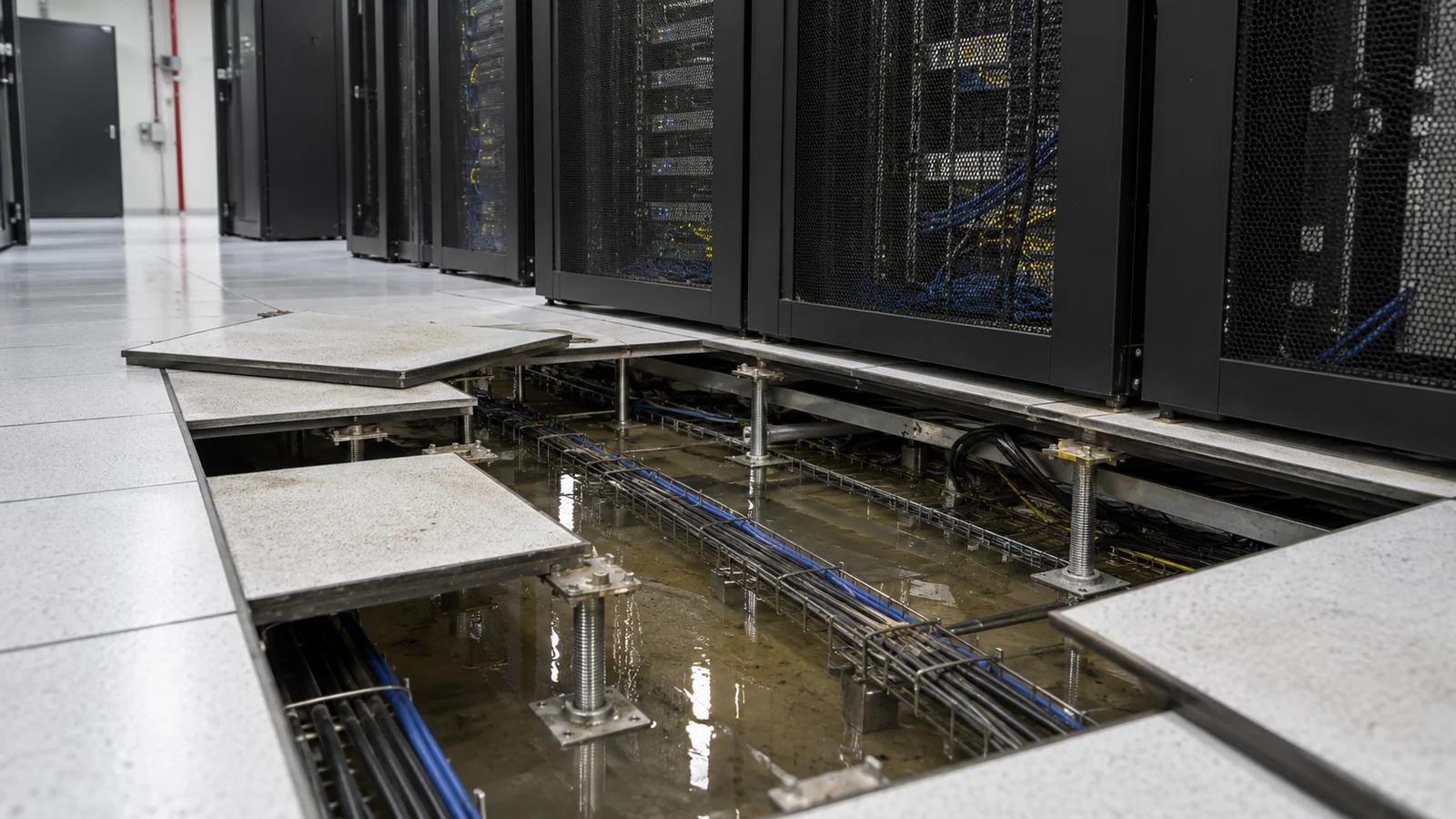
We assess. A flood or fire reaching a switch room, a server room or a base station is assessed asset by asset. Cable drums, distribution boards, standby generators and broadcast equipment recovered from the same incident rarely carry the same extent of damage, and each is tested against its own specification rather than written off as a single loss. Shipment damage to chillers and cooling plant moved onto or off a site is assessed the same way.

We restore. UPS and battery systems, switchboards and server room electrical infrastructure recovered from fire or water are decontaminated and requalified where testing supports it, and residue reaching equipment well beyond the room where an incident began is cleaned before it causes a second failure. Studio and exchange equipment follows the same sequence: test, decontaminate, requalify, replace only where testing cannot support a return to service.

We survey before a loss. A pre-loss survey extends to fire alarm and gas-suppression system design and performance, not only the battery, cooling and switchgear condition already covered, because a suppression system sized incorrectly decides how much of a hall is genuinely at risk once an incident starts. Towers and the structures carrying antennas are reviewed on the same basis as the electrical plant they support.

What Decides These Cases

Whether the initiating event was electrical, thermal, or a cooling failure. That finding usually decides which system's design and maintenance history comes under scrutiny. Whether battery or switchgear protection operated as designed, or failed to isolate a fault that then propagated further than it should have. Whether hardware exposed to heat, smoke or a power event can be tested and returned to service, or must be replaced, decided component by component rather than by rack. And how much of the claimed loss is genuinely attributable to physical damage, as opposed to downtime that would have occurred under a shorter, better-managed restoration sequence.

Common questions

Working in data centres and telecommunications

24/7 response

A loss in data centres and telecommunications?

Tell us what failed. You will get an engineer who has seen it in this sector, not a general enquiry form.