
Approved Group International
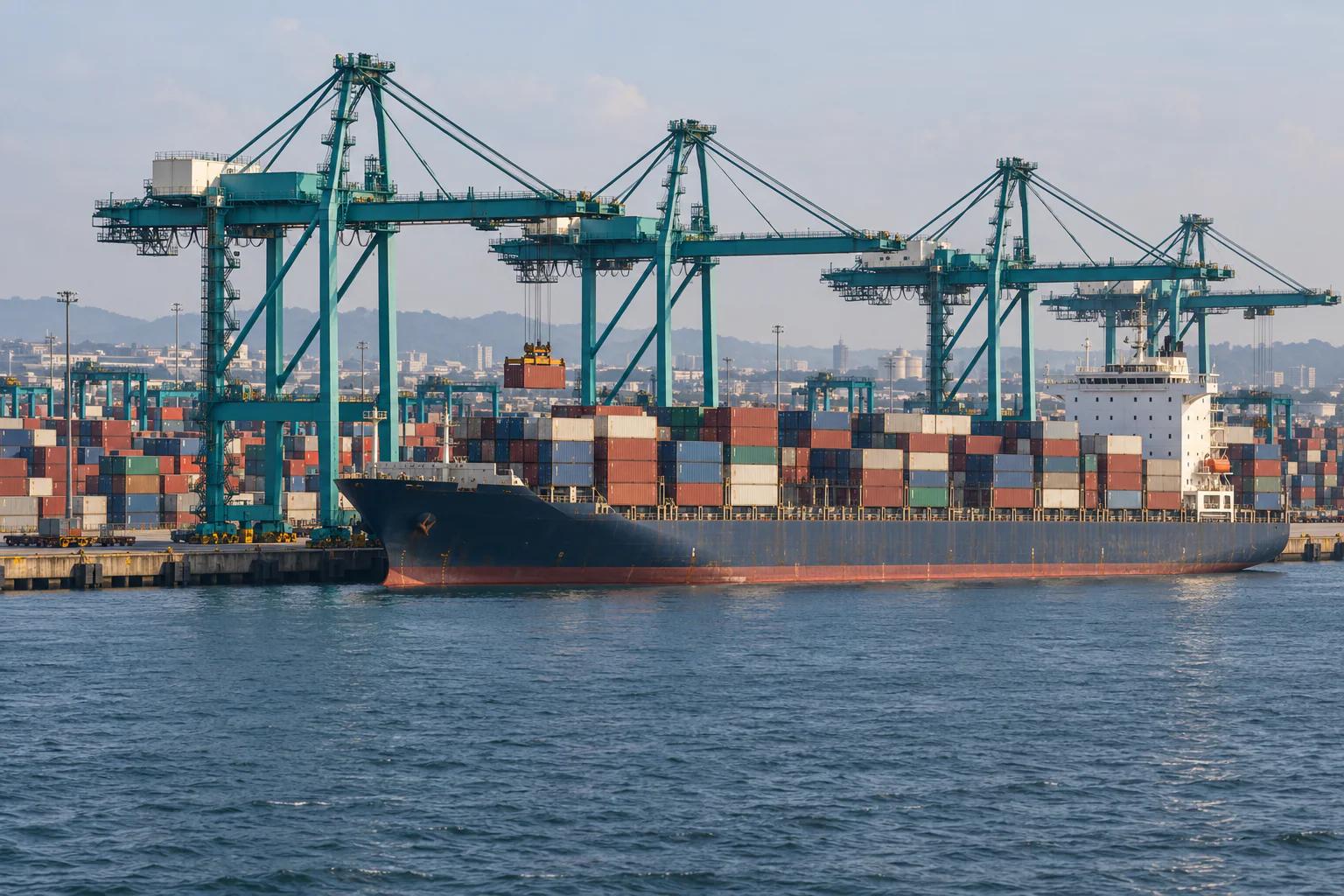
Container port with ship-to-shore cranes loading a large container ship

Infrastructure

Ports, Shipping and Marine

Approved Group International investigates, assesses and restores losses across container terminals, vessels, shipyards and the warehouses and storage yards that sit between them.

Infrastructure

What we are called to in ports, shipping and marine

Fire, failure investigation, damage assessment, restoration and risk assessment for ports, shipping and marine operations, by the engineers who investigate the losses.

  • Forensic Engineering
  • Structural Failure Investigation
  • Mechanical and Materials Failure Investigation
  • Fire and Explosion Investigation
6
Offices across Asia-Pacific
24h
Target attendance, regional
3
Marine disciplines in one team
27
Countries served

What fails here

Five mechanisms behind most of the loss

Select one to see what happens, what settles it evidentially, and which discipline handles it.

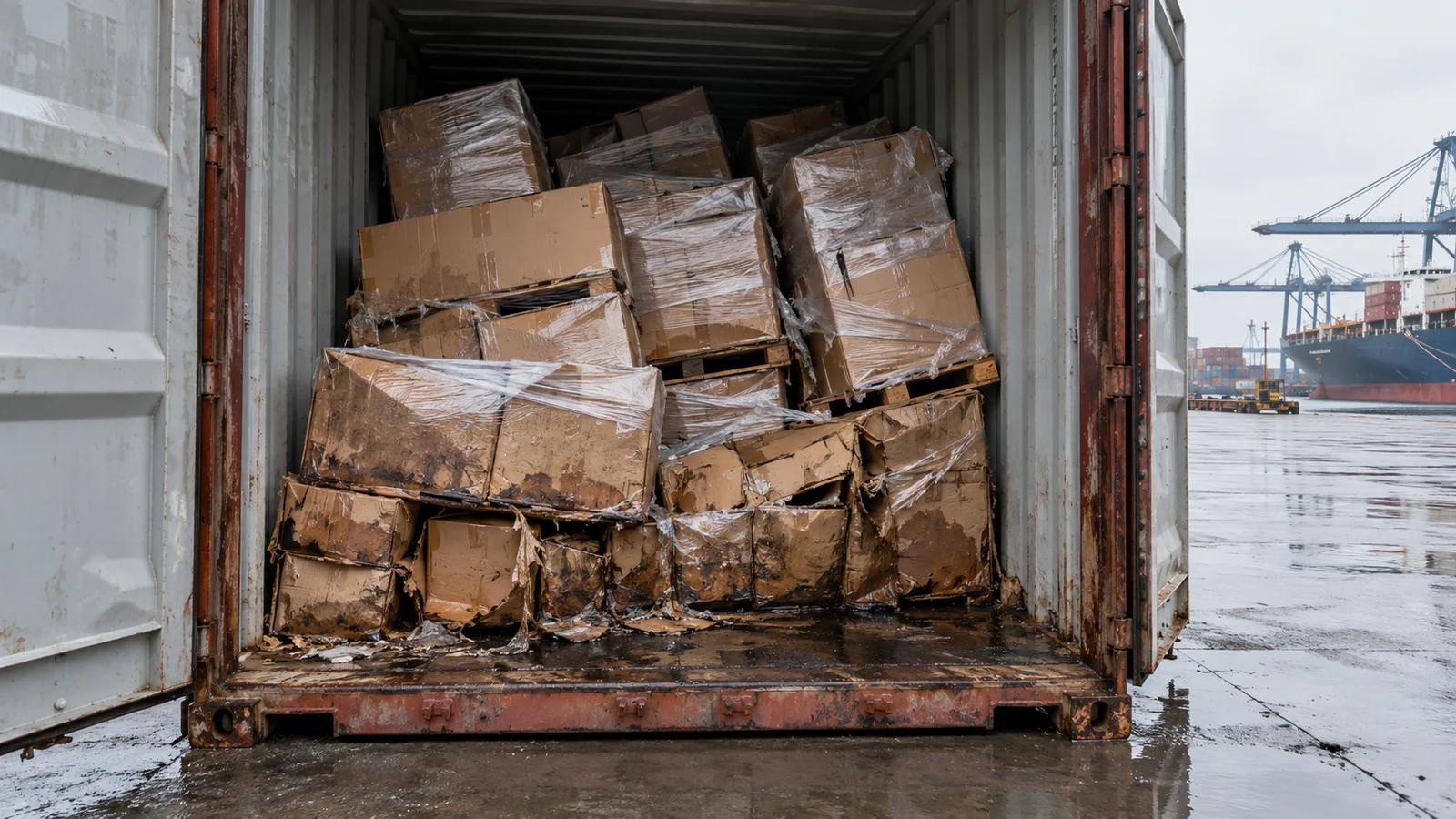
Shipping container opened at a port, its bottom cartons water-stained and collapsed

Cargo damage

What happens

Wetting, crushing, shifting or temperature excursion in transit, discovered at discharge with several parties in between.

What settles it

Stowage and lashing review, container condition, and data logger records where carried.

Forensic Engineering

The first fortnight

What is recoverable is decided early

A loss in this sector follows a predictable clock. Most of the difference between a recovered asset and a written-off one is made before anyone has agreed who pays.

  1. On discharge

    Survey

    Joint survey before cargo moves. Once it leaves the terminal, apportioning damage becomes substantially harder.

  2. Day 1–5

    Document

    Stowage plans, lashing records, logger data and condition photography collected while parties are still present.

  3. Day 5–21

    Examine

    Laboratory work on failed components or damaged cargo samples.

  4. Week 4+

    Apportion

    Where the damage occurred and which party held risk at that point.

What Fails in Ports, Shipping and Marine

Container fires are the defining risk of this sector. They are difficult in a specific way. Cargo inside a container is often misdeclared, poorly packed, or incompatible with what is stowed beside it, so that by the time smoke is visible the fire may already involve dangerous goods nobody on site knew were there. Heavy lifting plant fails too. Quay cranes, yard cranes and reach stackers all fail mechanically and electrically under continuous heavy-duty cycling, and a crane failure is rarely small, given the loads involved and the height at which they are carried.

Cargo damage disputes are constant background work, not a rare event. Did the damage happen on the voyage, during handling at the terminal, or before the container was ever loaded? That question is raised on a meaningful share of significant cargo claims. Bulk cargo prone to liquefaction, where moisture content exceeds the safe limit for the voyage, is a further recurring cause of cargo loss, investigated separately from a container fire. Vessel systems add a further category, specific to hulls and machinery rather than to the terminal: main and auxiliary engines, electrical distribution, and bunkering and fuel systems.
Fire and Explosion

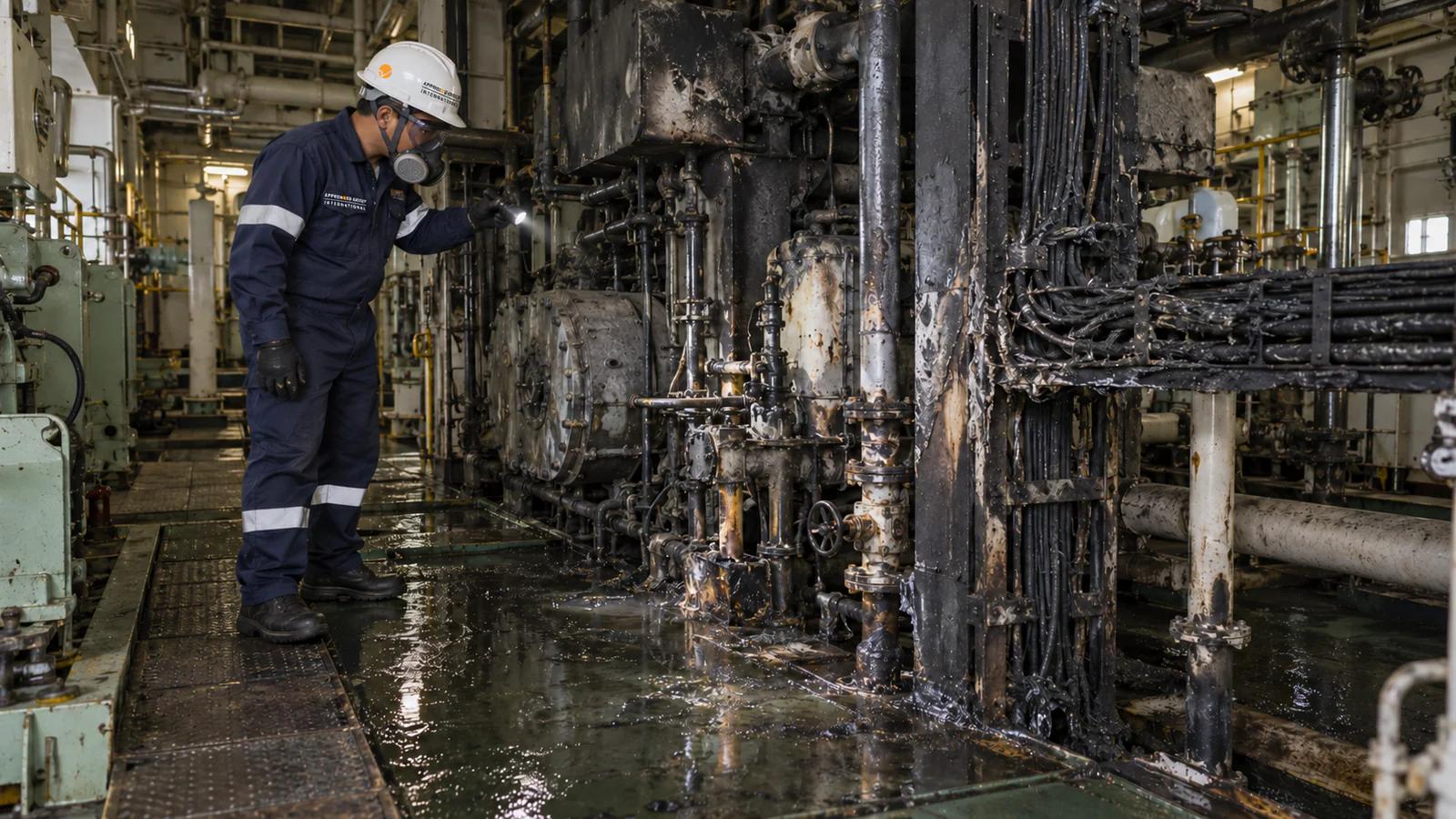
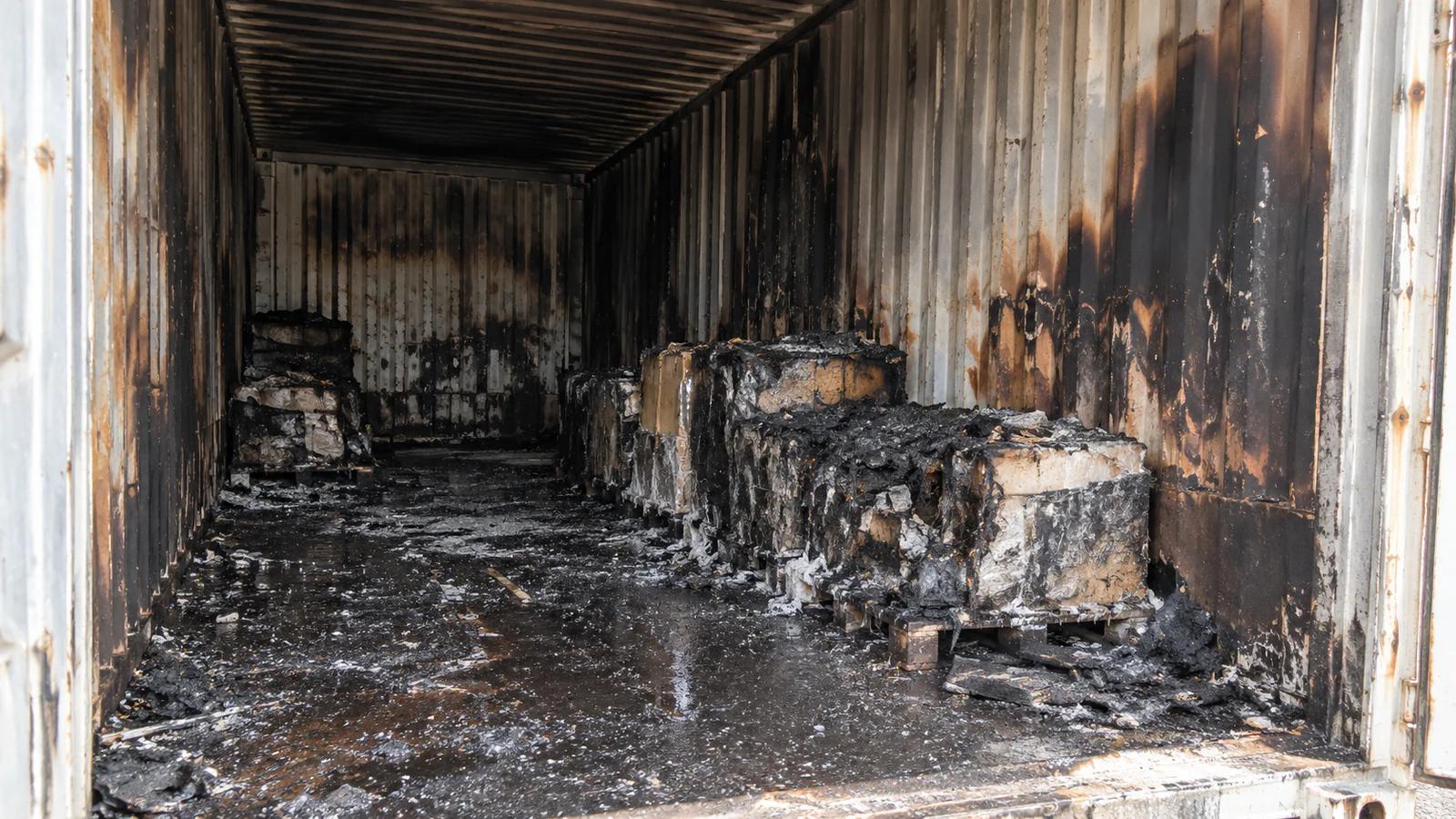
Container fires demand fast, disciplined origin work. The evidence, the container, its contents and its position in the stack, is frequently moved, opened or fought with water before an investigator arrives. We apply the method in NFPA 921 to establish origin within the container or the stack, working from stowage plans, manifests and dangerous goods declarations alongside physical examination. What was supposed to be inside the box and what was actually inside it are not always the same thing. Engine room fires aboard vessels are related but distinct. Most trace to fuel or lubricating oil reaching a hot surface, or to an electrical fault in engine room wiring.

Explosion risk concentrates around bunkering and fuel systems, battery-powered equipment, and undeclared dangerous goods in container stacks. Each carries its own method. None of it is treated as routine.

Fire-damaged interior of a shipping container with charred cargo
Plate 01Fire-damaged interior of a shipping container with charred cargo

Failure Investigation

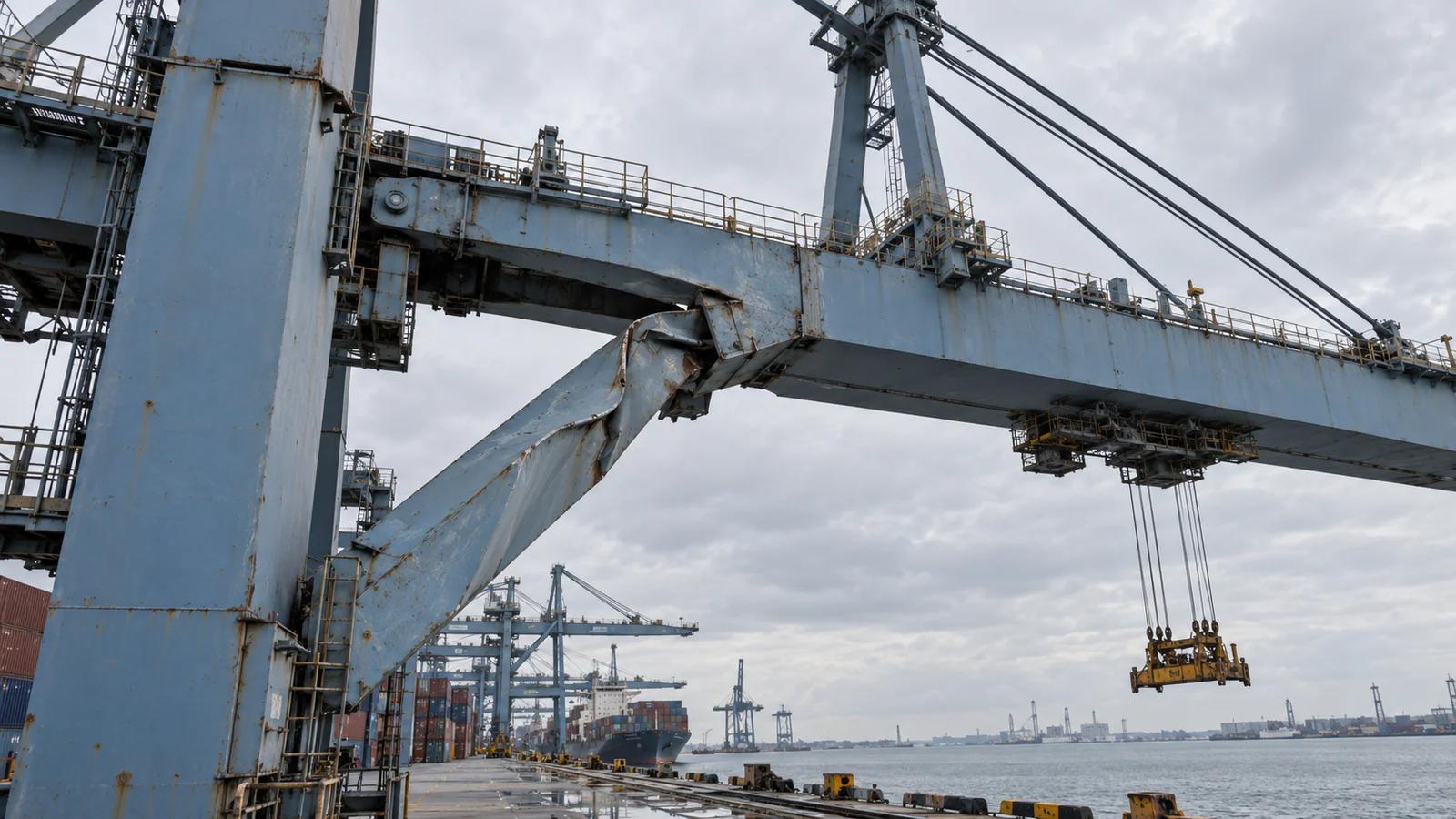
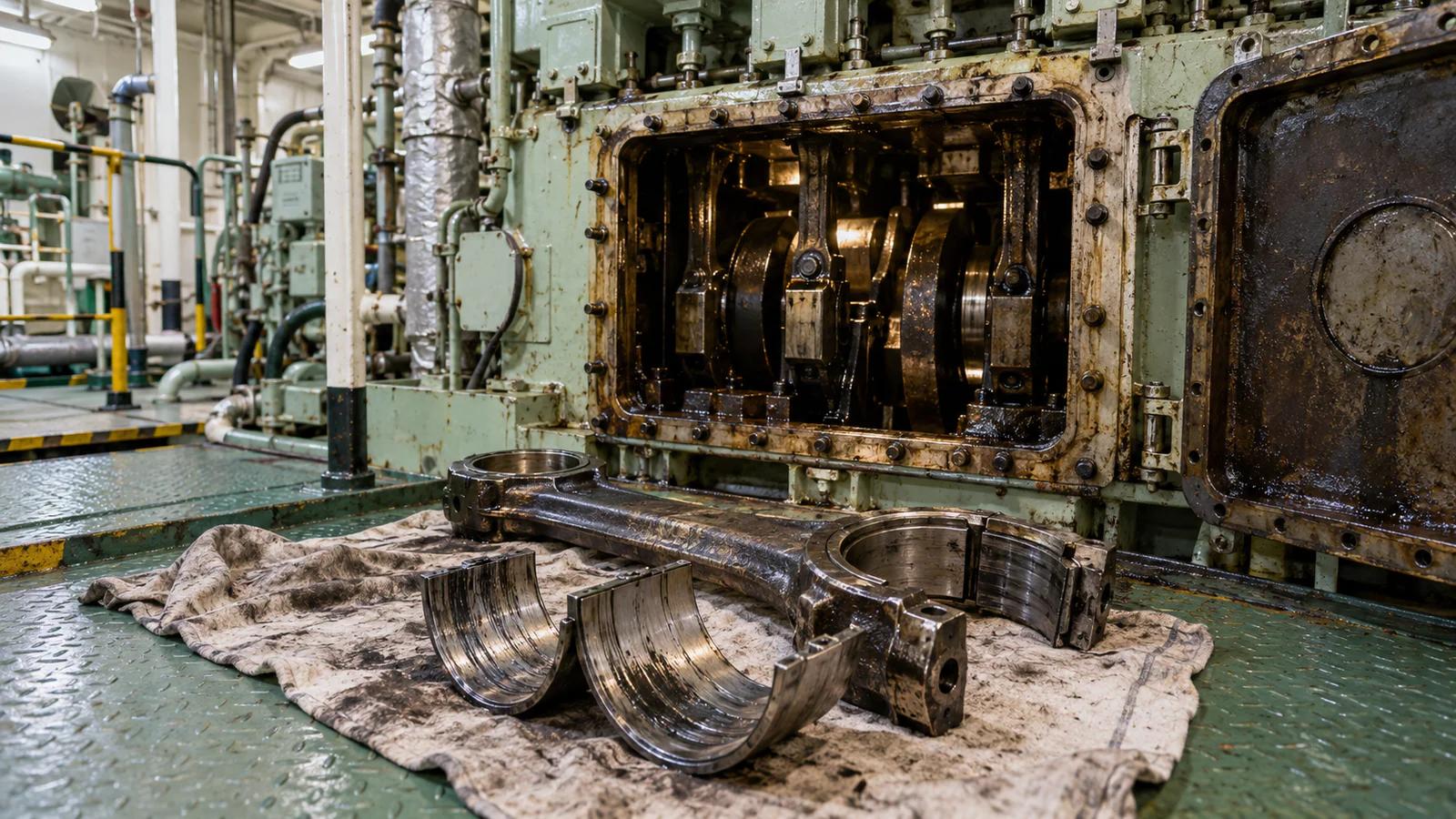
Quay and yard crane failure investigation covers drives, brakes, structural components and control systems. It works from maintenance and duty-cycle records. Heavy lifting plant fails differently under continuous use than equipment that runs intermittently. Reach stacker and cargo scanner failures follow the same mechanical and electrical discipline. Marine hull and machinery investigation covers main and auxiliary engines, propulsion and thruster systems, and onboard electrical distribution. It asks a question specific to vessels: whether the failure is consistent with the conditions the vessel reported during the voyage. Where the evidence does not permit a reliable determination, that limitation is stated.

Damage Assessment and Restoration

A damage assessment determines the nature and extent of the damage and the appropriate repair, restoration or replacement scope, and restoration begins once the relevant evidence has been documented, preserved or formally released for work. Cargo damage assessment is a question of proportion as much as of condition. A container may show water staining on some cartons and none on others. The assessment has to determine what genuinely was affected. It does not write off a consignment wholesale, simply because part of it was exposed. Terminal infrastructure, damaged cranes, scanners, warehouse racking and yard surfaces, is assessed against what can return to service quickly and what must be rebuilt. Every day a berth or a crane is out of service is capacity the terminal cannot recover later. Restoration of vessel systems and shipyard plant follows the same principle. Stabilise what keeps operations running, and sequence the rest around what the investigation still needs preserved.

Risk Assessment

Pre-loss risk assessment in this sector concentrates on a defined set of systems: crane and heavy lifting plant condition, electrical distribution across the terminal, bunkering and fuel system integrity, and warehouse fire compartmentation and dangerous goods segregation. For vessel operators and shipyards, the same discipline is applied to engine rooms, electrical systems and fuel handling, before a failure rather than after one.

The Work in This Sector

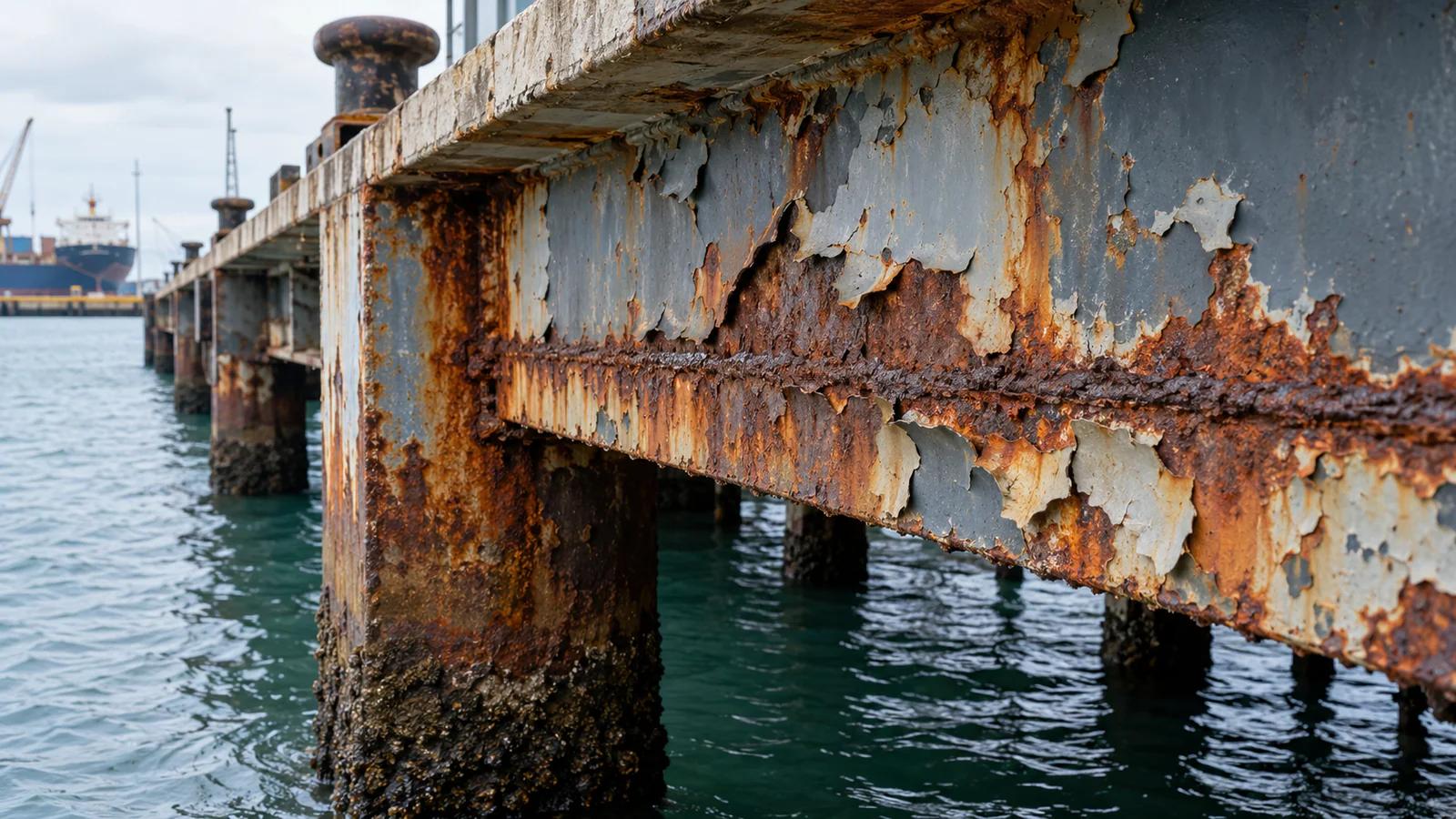
We investigate. Container and cargo fires, quay and yard crane failure through to the drive, brake, wire rope and boom connection, and vessel hull and machinery failures all fall within scope. Materials examination extends to corrosion, fatigue and fracture on rudders, propellers, stanchions and other structural fittings exposed to a marine environment for years before a failure surfaces. Engine room fires, generator and switchboard faults, and the structural failure of jetties, pontoons and other floating or fixed marine works are investigated using the same evidence-based method applied to a terminal crane or a warehouse fire.

We assess. Cargo condition is assessed carton by carton rather than consignment by consignment, separating genuine transit or handling damage from pre-existing moisture, contamination or packing defects, including the moisture testing a cargo at risk of liquefaction requires. Damaged cranes, scanners and terminal plant are assessed against what can return to service and what cannot. Vessel machinery and hull damage are assessed against class and statutory requirements, and a crane or gantry collapse is examined through structural back-analysis of the failed components.

We restore. Switchboards, control cabinets, generators and machinery recovered from a fire or flooding are decontaminated and reconditioned rather than replaced wherever testing supports it, using de-rusting, corrosion control and soot and residue removal suited to a marine environment.

We survey before a loss. Thermographic inspection of terminal electrical distribution and vessel machinery supports condition-based maintenance, and a bulk cargo susceptible to that risk is reviewed ahead of loading rather than after a voyage raises the question.

What Decides These Cases

Voyage, terminal handling, or packing before loading. Which of the three a cargo loss traces to decides who bears it, and it is rarely resolved by inspecting the cargo alone. Whether declared cargo information was accurate is a recurring and consequential question in container fires. A fire that would have been manageable with accurate declarations becomes a different kind of loss when the contents were not what the paperwork said. Then there is the question that matters most commercially. How quickly can a berth, a crane or a yard go back into service without compromising the evidence an investigation still needs?

Common questions

Working in ports, shipping and marine

24/7 response

A loss in ports, shipping and marine?

Tell us what failed. You will get an engineer who has seen it in this sector, not a general enquiry form.