What Fails in Warehousing and Logistics
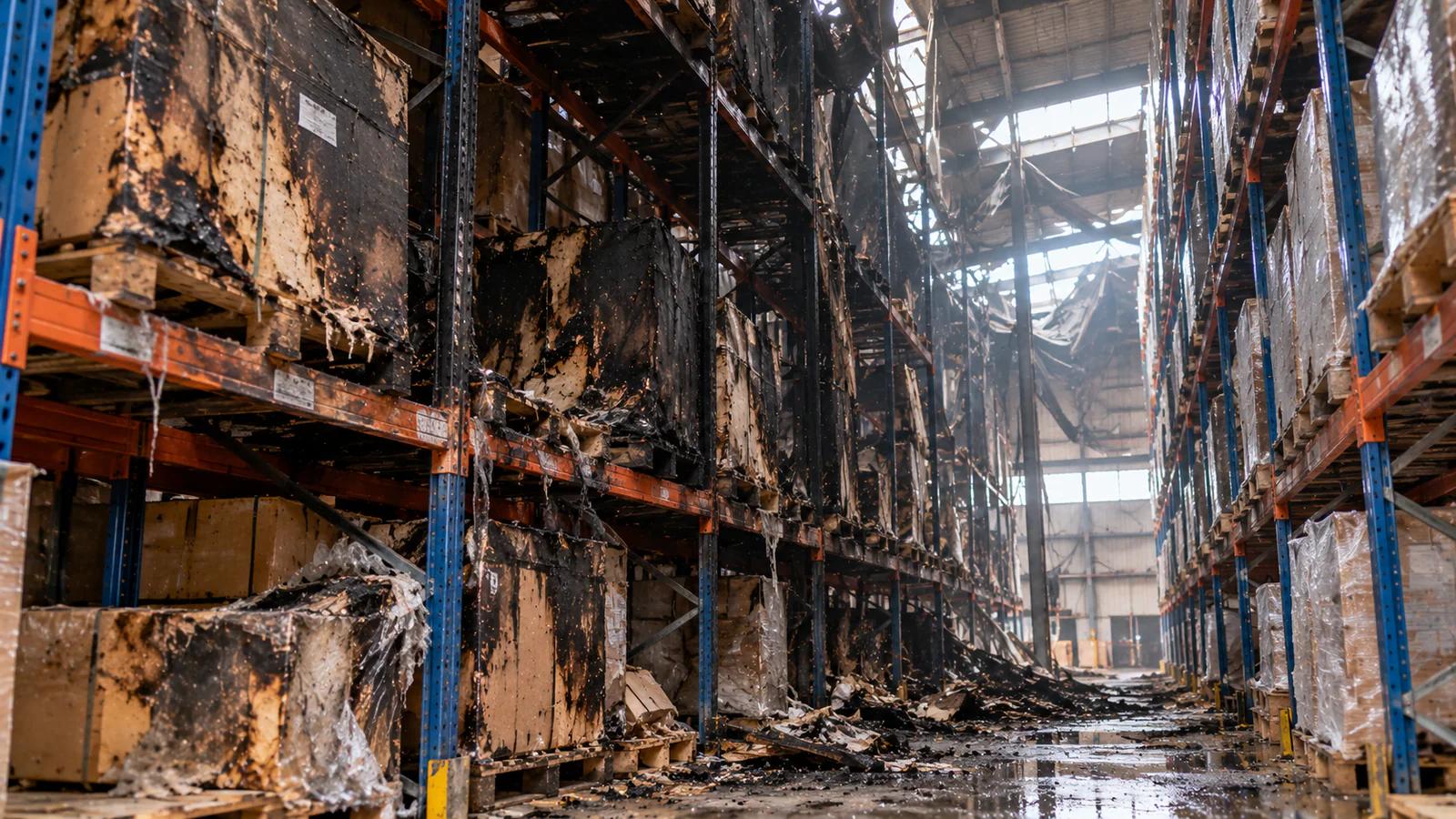
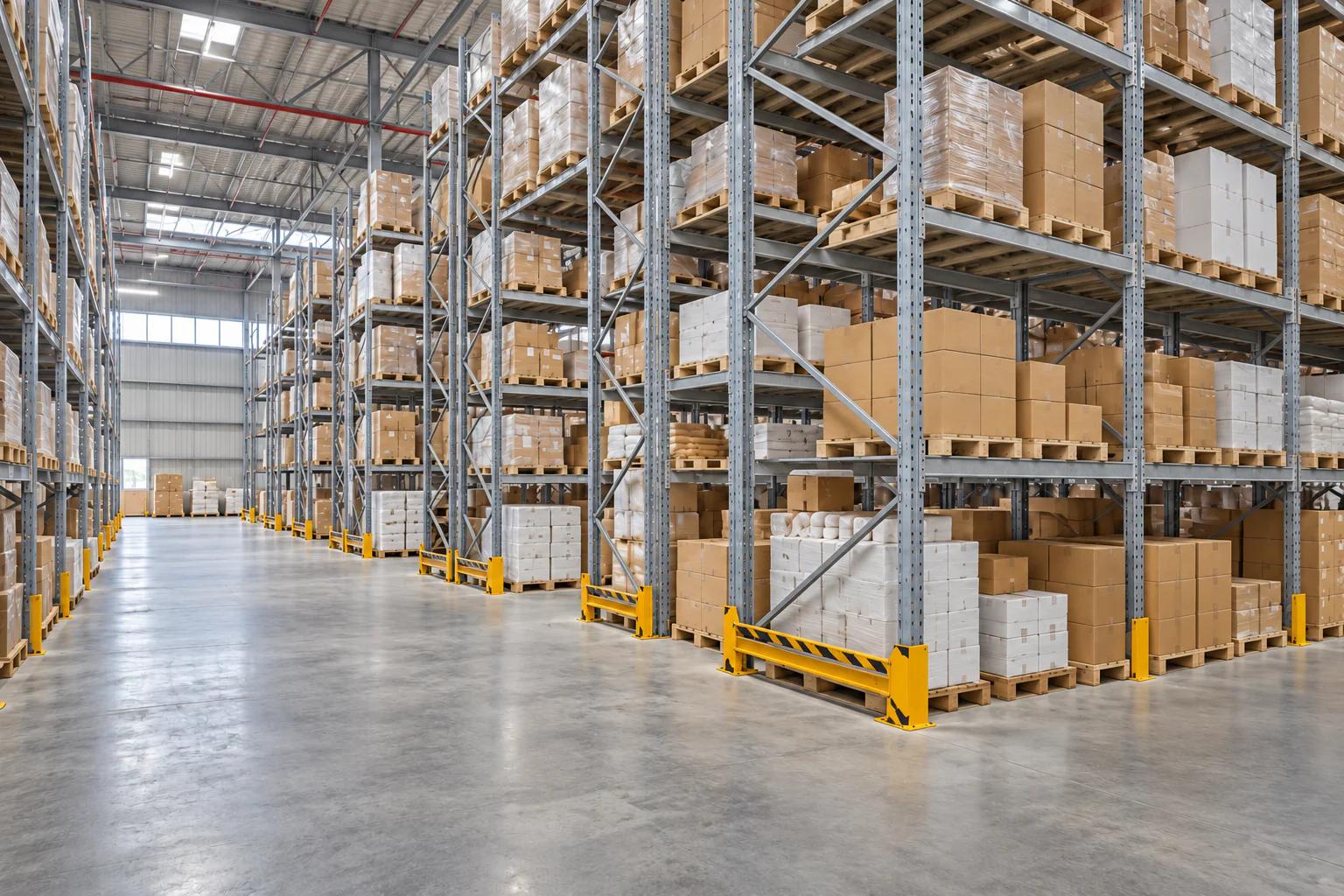
Compartmentation, or its absence, decides the scale of nearly every warehouse fire we investigate. A distribution centre is typically one large volume, with high-piled storage and open aisles between racking. It is built that way for the throughput the operation needs. Fire load per square metre in modern high-bay storage is considerable. Fire-rated separation between storage zones is sometimes minimal. Sprinkler design does not always keep pace with a change in stored commodity. Either gap is enough: a fire that starts at one rack can then involve the entire building within an hour. Stored organic and combustible commodities also carry a spontaneous-combustion risk of their own, quite apart from any ignition source in the building.
Racking collapse is the second recurring failure. It is rarely simple corrosion. It is rarely fatigue, either. It is usually something else. Impact damage from forklifts and reach trucks, working at speed in narrow aisles, weakens upright frames. The damage is not always visible until load is added. Overloading is the other common cause, beyond the rack's rated capacity or beyond what the floor beneath it was designed to carry. The two frequently combine. A previously impact-damaged frame fails under a load it would otherwise have carried.
Cargo and transit damage is a different kind of question. The building is often undamaged. Nothing there is broken. The dispute concerns whether the condition of the goods on arrival matches the conditions the shipment is said to have experienced: a temperature excursion in a cold chain movement, shock or vibration in transit, or water ingress during handling.