
Approved Group International
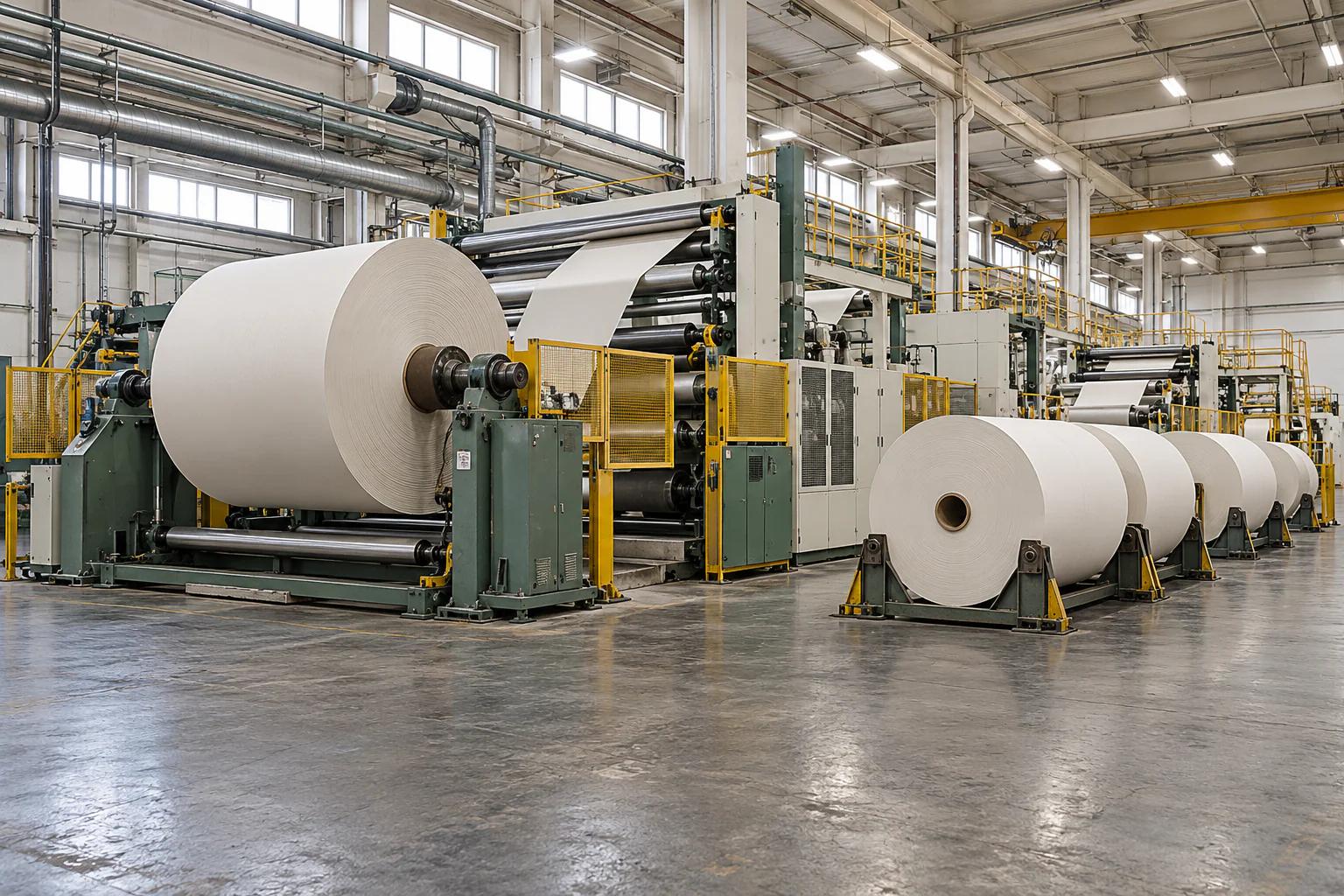
Paper mill hall with large rolls of paper on the production line

Manufacturing

Paper, Printing and Packaging

Approved Group International investigates fire, failure and damage, and assesses risk, across paper machines, converting lines, corrugators, offset and flexographic presses, computer-to-plate systems, and the reel and finished goods storage that supports them.

Manufacturing

What we are called to in paper, printing and packaging

Fire, failure investigation, damage assessment, restoration and risk assessment for paper, printing and packaging operations, by the engineers who investigate the losses.

  • Manufacturing: what fails and why

What Fails in Paper, Printing and Packaging

Solvent and ink flammability is the recurring theme. Flexographic and gravure printing use solvent-based inks in volume. The drying ovens that set them run hot, immediately downstream of the printing units. A solvent vapour concentration can briefly exceed the lower explosive limit inside an oven or its ducting. Met by an otherwise unremarkable ignition source, it accounts for a meaningful share of press fires in this sector.

Dust and trim accumulation is the second constant. Paper dust from slitting and sheeting settles inside electrical enclosures and on hot bearings. Fine particulate from die-cutting and corrugating does the same. It behaves as fuel, much as lint does in a textile mill. Housekeeping around a press is a fire control measure, not only a cleanliness one. It is treated that way. Every investigation we open starts from that assumption.

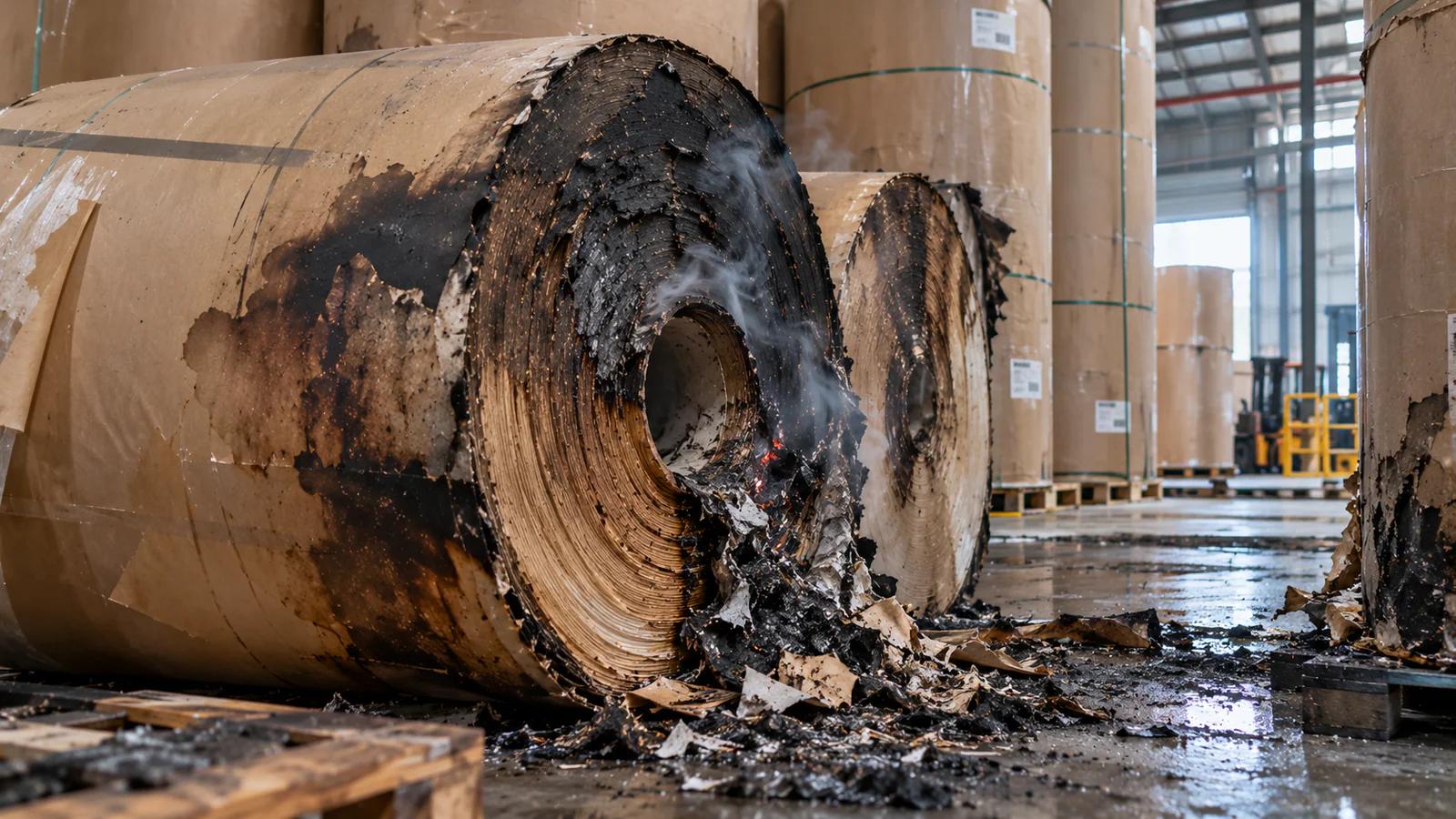
Reel and finished goods storage decides how far a fire spreads once it starts. Paper reels burn from the outside in. They hold heat. They hold it for a long time. A fire in a reel store can smoulder and reignite well after it appears controlled, and corrugated stock, stacked and shrink-wrapped, behaves similarly. Where that storage sits close to the machine hall, the two losses are rarely separable. Humidity and moisture fluctuation in the same storage areas can distort paper and board dimensionally long before any fire or mechanical failure occurs.
Fire and Explosion

Investigation follows NFPA 921. It is conducted by investigators qualified against NFPA 1033, establishing the area of origin from fire pattern, plant data and witness accounts before a cause is tested. On flexographic and gravure lines, oven temperature and airflow records, solvent recovery system condition, and the ventilation history of the drying section are examined together. A solvent ignition inside an oven leaves a different pattern from a fire that started on the press and reached the oven afterward.

Dust as a fuel source is assessed in extraction ductwork, baghouses and enclosed guarding wherever accumulation is plausible. Electrical ignition sources are tested against the same standard applied on any other production line. Reel store fires are examined for smouldering combustion and reignition risk before the scene is declared safe to release. That finding has practical consequences for the site, not only evidential ones.

Charred paper reel in a reel storage warehouse after a fire
Plate 01Charred paper reel in a reel storage warehouse after a fire

Failure Investigation

Presses are precision machines. Cylinder, roller and bearing tolerances are measured in microns. A failure that looks minor, a seized bearing, a misaligned gear, a failed drive, can be traced to lubrication, alignment or an upstream electrical fault in the drive system that fed it. We examine the component and the maintenance record together. The two rarely disagree by accident. Where the evidence does not permit a reliable determination, that limitation is stated.

Corrugator failures usually concern the heating and gluing sections. They are interdependent. Temperature control and glue application affect each other, and a fault in one shows up as a defect that looks like the other. Computer-to-plate systems and their imaging hardware fail for reasons closer to electronic equipment than to mechanical plant. They are investigated on that basis.

Damage Assessment and Restoration

A damage assessment determines the nature and extent of the damage and the appropriate repair, restoration or replacement scope, and restoration begins once the relevant evidence has been documented, preserved or formally released for work. Soot is the material that decides most claims in this sector, for the plant manager deciding whether to restart a press as much as for the insurer settling the loss. It is conductive. It is corrosive. It migrates. It is fine enough to reach bearings, drive electronics and the optical and imaging components a press or a plate system depends on, and a machine restarted too soon after a fire can fail again within days if contamination was not fully removed first. Moisture does comparable harm to reels, sheet stock and packaging materials, sometimes without visible signs until the stock is unwrapped.

Assessment establishes, machine by machine, what is cleaned and returned to service, what needs component replacement, and what has passed the point where repair costs more than replacement. That determination is technical, not visual. It is where an engineering assessment earns its keep. It stands against the instinct to replace everything that stood near the fire.

Risk Assessment

A facility risk assessment examines solvent handling and oven ventilation on printing lines, dust and trim housekeeping around presses and corrugators, and the separation between reel or finished goods storage and the production halls they serve. Fire detection inside enclosed drying and extraction systems is assessed on its own terms. An incipient fire there can run for some time before it becomes visible from the floor.

The Work in This Sector

We investigate. Fires and explosions on presses, corrugators and converting lines, in reel and plate storage, and in confined spaces such as ductwork, pulp storage tanks or plant rooms holding suppression or process gas. Electrical and control-system failures behind a press stoppage or an imaging fault on a computer-to-plate system, mechanical failures in cylinders, bearings and drive couplings, and lightning and structural damage to buildings, chimneys and machine halls all fall within scope. Where a fire has spread from one process area to another, or beyond the building, the path and extent of that spread are established alongside the point of origin.

We assess. Presses, corrugators, plate and imaging systems and converting lines, examined component by component for smoke, soot and water damage before repair, cleaning or replacement is decided. Reels, sheet stock and finished goods are assessed for damage from fire, water or humidity, and moisture-related deformation in stored paper and board is separated from mechanical or electrical causes.

We restore. Presses, cylinders, imaging and plate equipment, decontaminated of soot and moisture and requalified before restart, and water-damaged documents and paper stock stabilised through freeze-drying rather than treated as a total loss by default. Electrical and control equipment affected by fire or water is restored once the evidence permits.

We survey before a loss. Solvent handling, oven ventilation, and dust and trim housekeeping reviewed against the hazard they present, and separation between storage and production halls checked section by section. Humidity and moisture conditions in reel and finished goods storage are surveyed on their own terms, since fluctuating conditions can compromise stock before any fire or mechanical failure occurs.

What Decides These Cases

Whether a solvent vapour concentration inside an oven or its ductwork was the ignition point, rather than the press itself, usually decides where fault sits. It also decides what that means for the equipment supplier or the operator. Whether dust and trim accumulation had built up beyond what the housekeeping regime allowed for is frequently the finding that determines liability. Whether soot contamination inside a press or plate system is removable, rather than a basis for replacement, changes the claim substantially, and depends on testing, not inspection alone. Where reel storage sat close to the production hall without adequate separation, the extent of the total loss often traces back to that single layout decision.

Common questions

Working in paper, printing and packaging

24/7 response

A loss in paper, printing and packaging?

Tell us what failed. You will get an engineer who has seen it in this sector, not a general enquiry form.