
Approved Group International
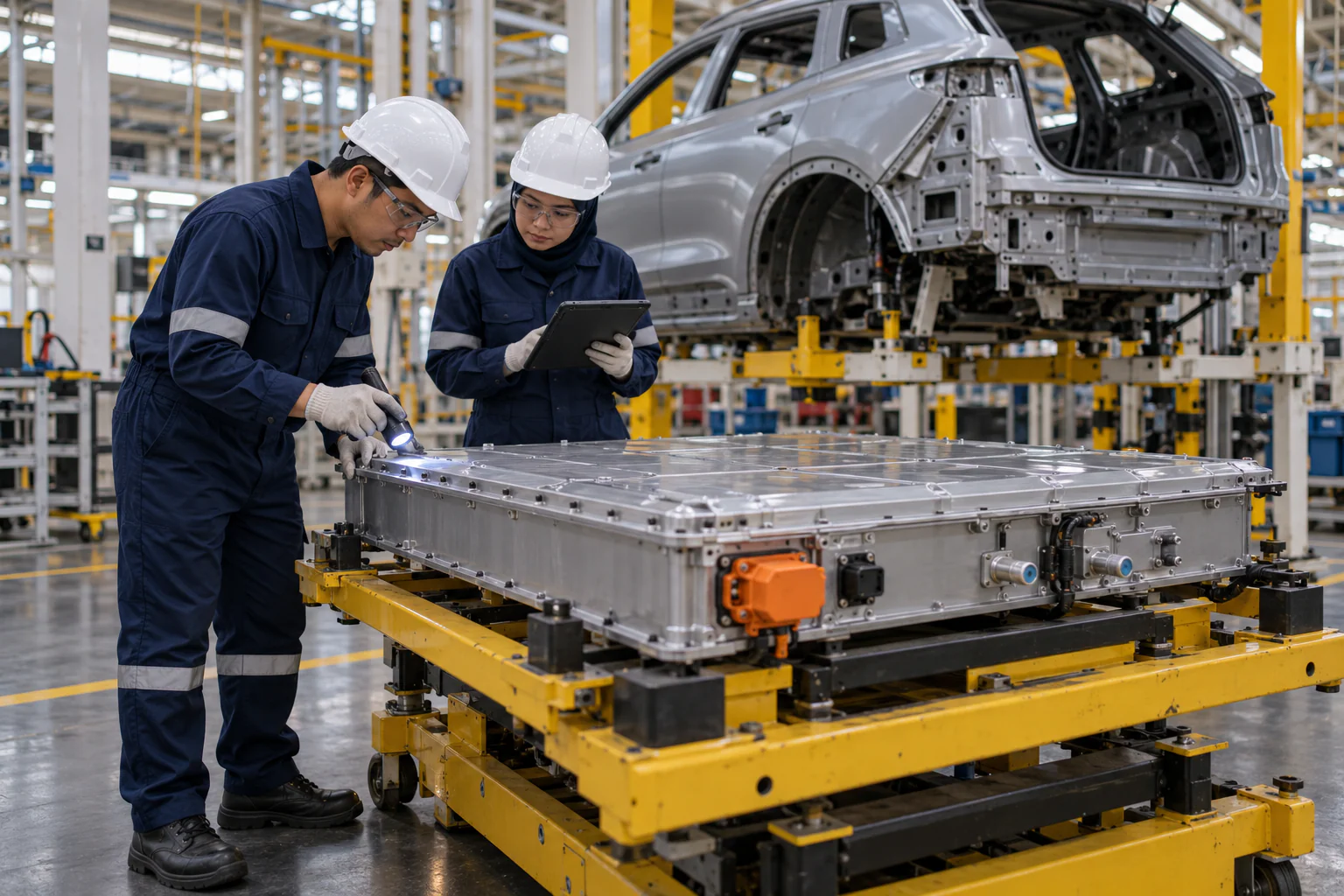
Engineers inspecting an electric vehicle battery pack on a car assembly line

Manufacturing

Automotive and EV Manufacturing

AGI investigates fire, explosion and equipment failure across vehicle and component manufacturing. We assess what a stopped line, a damaged battery stock or a compromised stockyard actually costs to put right.

Manufacturing

What we are called to in automotive and ev manufacturing

Fire, failure investigation, damage assessment, restoration and risk assessment for automotive and ev manufacturing operations, by the engineers who investigate the losses.

  • Manufacturing: what fails and why

What Fails in Automotive and EV Manufacturing

Paint and coating lines. Solvent vapour, spray booth ventilation and curing ovens sit close together. A fault in any one of them can ignite the others.

Press shops and body assembly. Hydraulic and mechanical press failure, tooling damage, and the fires that follow a lubricant or hydraulic fluid ignition under load.

Battery and cell production and storage. Cell manufacture, module assembly, and the storage of finished packs. A single defect can propagate. Often before anyone sees a problem.

Finished-vehicle stockyards. Transit and storage damage, and increasingly, thermal events in stored electric vehicles that are difficult to access and slow to fully extinguish.

Finished vehicle fire and accident investigation. Separate from plant losses, individual vehicles reach us for wiring faults, airbag deployment failures and collision damage that does not match the circumstances described.
Fire and Explosion

Manufacturing fires in this sector tend to originate in a small number of places. Electrical faults in press and robotics control systems. Solvent vapour ignition on a paint line. A thermal event in battery cell or module production. Each leaves a distinct evidence pattern. The investigation follows NFPA 921 to work back from the damage to the ignition source, rather than assuming it from the layout of the plant.

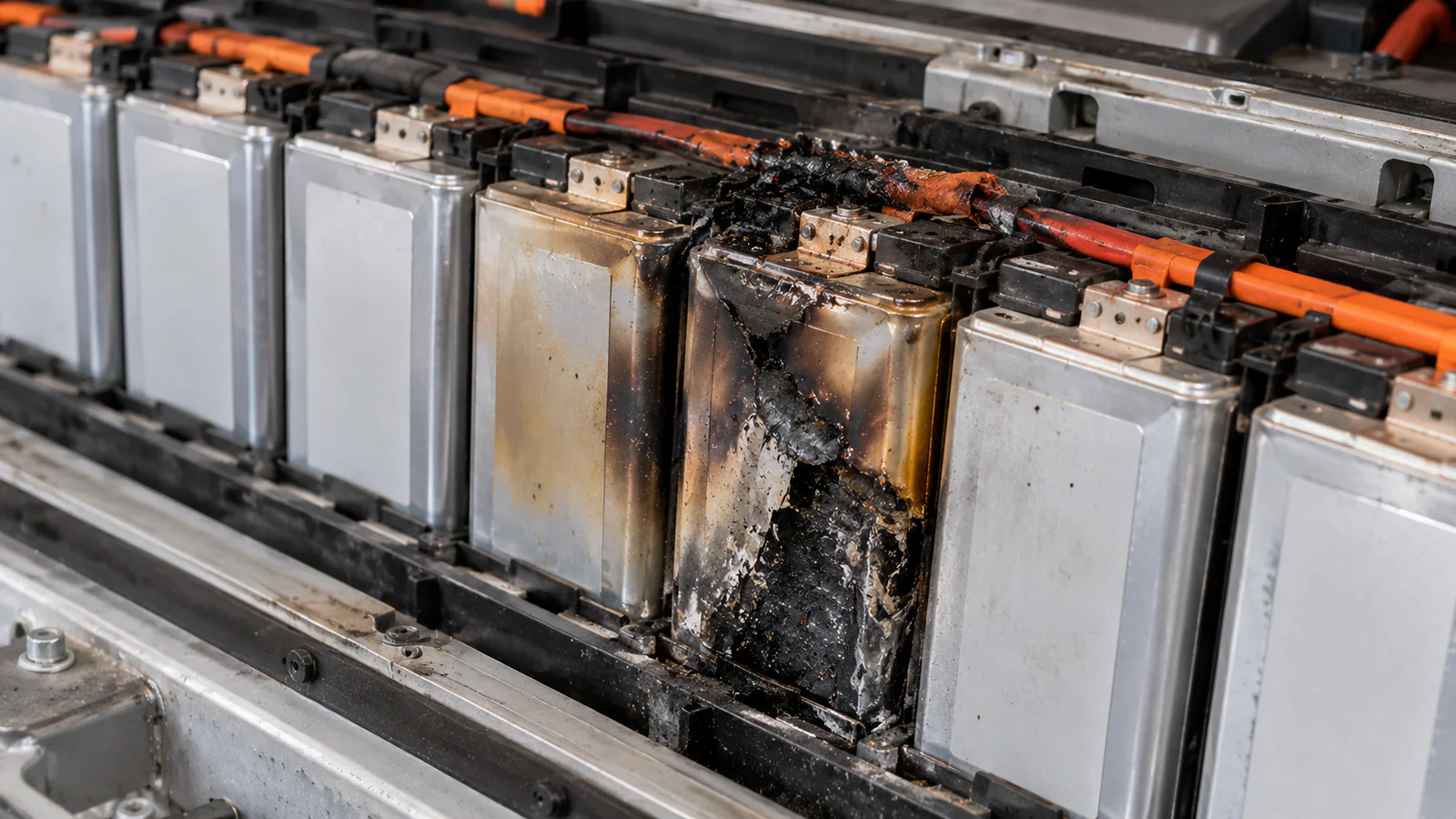
Lithium battery thermal runaway is a category on its own. A single cell can enter runaway from an internal defect, physical damage, or an electrical or charging fault. The investigation establishes which cell started the event, whether it was isolated or propagated to its neighbours, and whether the battery management system responded as designed. That finding is rarely straightforward. Thermal runaway can destroy much of the evidence that would explain its own origin. This is exactly why early attendance and methodical evidence recovery matter more here than almost anywhere else in the plant.

Lithium-ion battery module with one cell scorched by thermal runaway
Plate 01Lithium-ion battery module with one cell scorched by thermal runaway

Failure Investigation

Mechanical failure investigation covers the presses, conveyors, robotics and tooling that make up an assembly line. It examines whether a failure came from fatigue, overload, misalignment or a maintenance gap. Electrical failure investigation covers the control systems and power distribution feeding those lines, including the charging infrastructure now built into most EV plants. Where a battery is involved, the two disciplines work together. Electrical evidence establishes what the charging or management system did. Cell-level examination establishes what happened physically inside the pack. Where the evidence does not permit a reliable determination, that limitation is stated.

Charging incidents are their own recurring pattern, separate from cell manufacturing defects. A fault in charging infrastructure, in the vehicle's onboard system, or in how a partly assembled vehicle was connected during test, can all produce a similar-looking fire. Distinguishing between them usually determines who bears the loss.

Damage Assessment and Restoration

A damage assessment determines the nature and extent of the damage and the appropriate repair, restoration or replacement scope, and restoration begins once the relevant evidence has been documented, preserved or formally released for work. A production line stopped by fire, water or smoke is assessed component by component, because a press, a robot controller and a section of conveyor rarely fail together even when they sit in the same bay. Equipment exposed to firefighting water is treated with particular care. Corrosion sets in fast. On precision tooling and electrical cabinets especially. A machine that looked recoverable on day one can be a write-off by day ten if drying and inhibition were not started promptly.

Battery stock presents a different problem. Cells or modules exposed to heat, physical shock or a suspected internal fault cannot simply be inspected visually and cleared. Stock assessment after a battery incident generally separates the stack into three groups: cells confirmed undamaged, cells requiring further testing, and cells treated as compromised regardless of appearance. The risk of a delayed thermal event in a cell that looks fine is not one most facilities are willing to carry. Stockyard and transit damage to finished vehicles is assessed against the same standard. What is cosmetic, what is structural, and what changes the vehicle's safety systems in a way a repair cannot fully resolve.

Risk Assessment

Facility risk assessment for automotive and EV plants examines paint line ventilation and fire separation, press and robotics protection systems, battery production and storage layout, and charging infrastructure design. It is commissioned most often ahead of a battery line being added to an existing plant, where the fire and storage risk of the new process is materially different from the rest of the facility, and rarely covered by the plant's original design basis.

The Work in This Sector

We investigate. Fire and explosion investigation extends from the press shop and paint line into gas-fired furnaces and heat treatment equipment, and down to the level of an individual finished vehicle. A wiring fault, a loosened terminal connection or an airbag deployment failure is traced to its origin. Accident reconstruction compares a vehicle's damage pattern against the circumstances described, distinguishing a genuine collision mechanism from one the physical evidence does not support.

We assess. Precision manufacturing equipment, CNC machines, laser cutting tools and coordinate measuring machines, is checked against its original specification after fire, flood or a lightning event rather than replaced on the strength of outward condition. Corrosion and conductivity testing on affected components supports the same evidence-based repair-or-replace decision applied to production machinery generally.

We restore. Vehicles and components carrying smoke or contamination odour are treated rather than assumed unsaleable, and motor and drivetrain parts affected by flooding are dehumidified and functionally tested before return to service. Workshop and handling equipment, such as a vehicle hoist, is restored once the underlying mechanical damage has been assessed.

We survey before a loss. Infrared thermographic survey of electrical and mechanical installations identifies a developing fault across a plant's power distribution, and battery safety review, covering hazard analysis and how an incident might propagate, is commissioned ahead of a new production line being added.

What Decides These Cases

Whether a battery thermal event originated from an internal cell defect, physical damage, or a charging or electrical fault. Each points to a different party. Whether propagation was contained by cell or module design, or whether inadequate spacing or a failed management system let it spread. Whether firefighting water reached tooling and electrical cabinets before drying could begin, which is usually what separates a repairable line from a replaced one. And whether stockyard damage is cosmetic or affects a vehicle's structural or safety systems, since that distinction decides the disposition of the whole consignment, not just the visibly marked units.

Common questions

Working in automotive and ev manufacturing

24/7 response

A loss in automotive and ev manufacturing?

Tell us what failed. You will get an engineer who has seen it in this sector, not a general enquiry form.