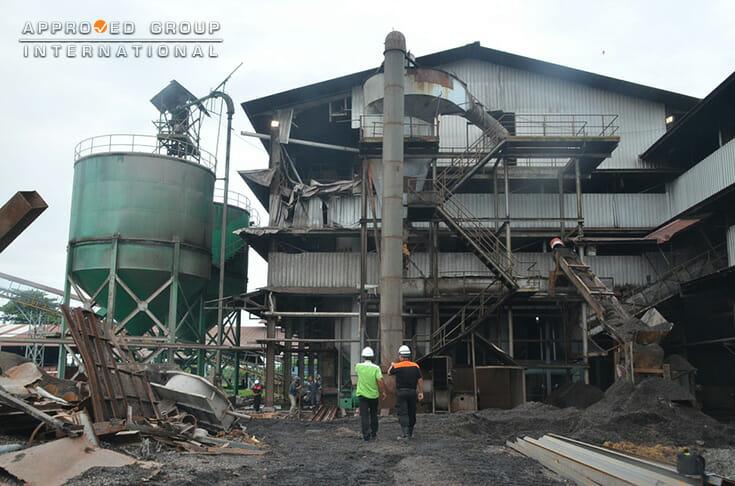
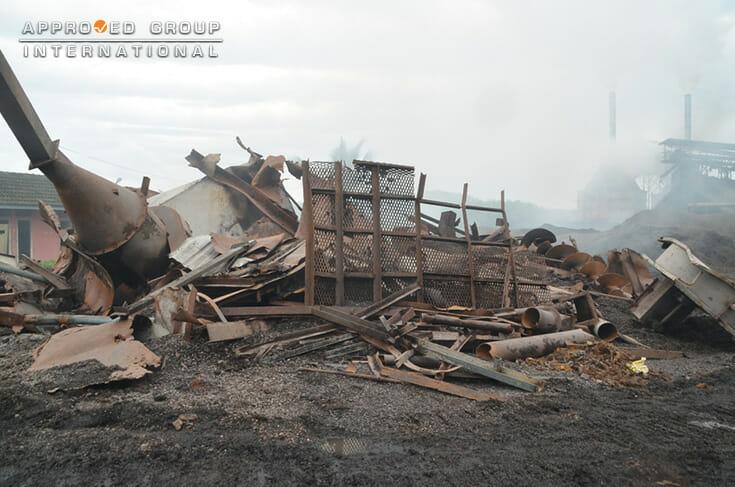
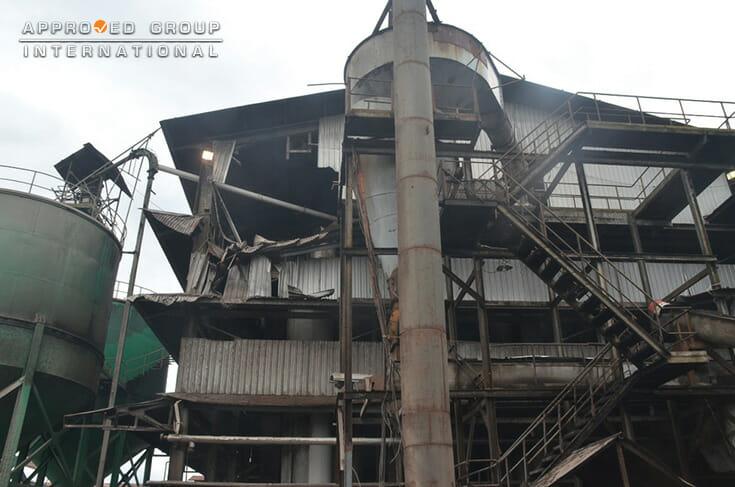
An elevated silo tank (LTDS) was reported to have collapsed late in the evening at a palm oil and palm kernel processing plant.
·3 min read
An elevated silo tank (LTDS) was reported to have collapsed late in the evening at a palm oil and palm kernel processing plant. The collapsed LTDS damaged the wall and a section of the belt conveyor installation. The silo wall had also ruptured, causing the palm oil kernel to overflow onto the ground. Due to the incident, the operations were halted and several repair and modification works were conducted before operations resumed. The LTDS is used to separate the palm shells from the palm kernels. After the separation, the shells will be transferred to the shell bunker whereas the kernels will be transported to the kernel silo for subsequent oil extraction. The palm shells are then used as a fuel for the boiler heat-up process.
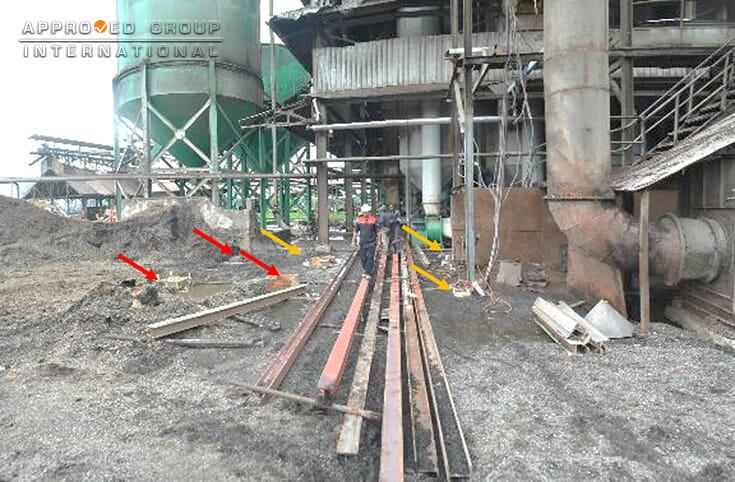
The columns of the silo frame were made of L-shaped columns, welded onto steel base-plates that are attached to the surface of six (6) squared-shape concrete foundation. Three (3) of the six (6) base-plates were not affected by the incident, albeit with the ends of the L-shaped columns completely detached from the base-plates. The other three (3) base-plates were being reconstructed with additional concrete and/or bolts.
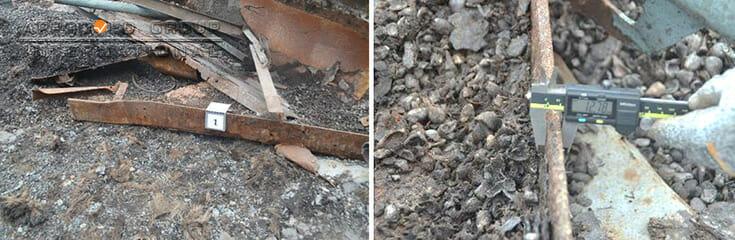
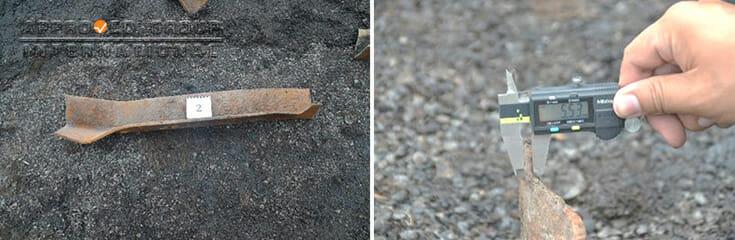
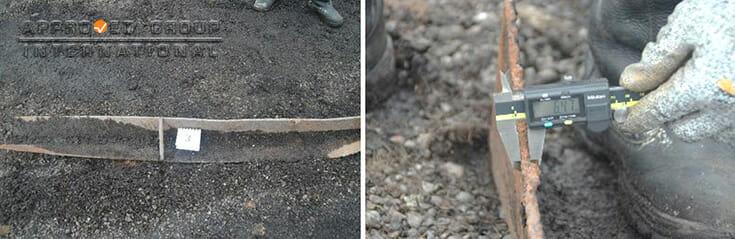
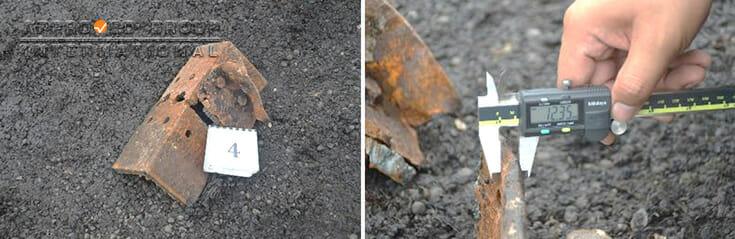
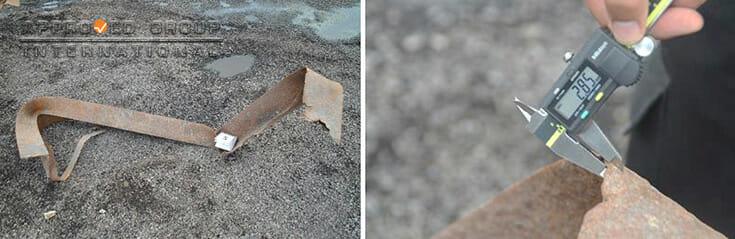
AGI’s team was able to excavate five (5) samples of the L-shaped column sections from the piled remains for further examination. Severe corrosion was observed throughout the surface of the examined sample where the columns had a rough and pitted surface. Severe loss of material was observed on the thickness of the columns.
The reduction of the columns’ thickness can be due to excessive corrosion. Corrosion is a gradual deterioration of metal by an electrochemical process due to the exposure to the environment. The effect of corrosion on a metal structure includes weakening of the strength and reduction in aesthetic value. Based on site visit, the silo was located at the open area, and thus naturally exposed to the moisture in air and water from rain. Prolonged exposure to the corrosion hazard from the environment would eventually cause the structure to fail and subsequently caused the silo to collapse. The loss of material can affect and compromise the structural integrity of the silo frame. It is further supported by calculating the second moments of area, which is a geometrical property which reflects the efficiency of a cross-sectional area to resist bending caused by loading. The second moments of area, Ix of an L-shaped column can be calculated using the following formula: $$ I_x = {t(5L^2-5Lt+t^2)(L^2-Lt+t^2 ) over 12(2L-t)} $$
t = Cross-sectional thickness
L = Length of the L-shaped column leg
The calculation revealed that as the thickness of the L-shaped column decreases, the value of the second moments of the area will also decrease. This corresponds to the decrease of ability for the cross-sectional area of the column to resist bending due to loading. Consequently, the strength of the structure will also be compromised and thus failure will occur. Comparing the second moments of the area for the thickness of 12 mm and the thickness of 5 mm, it appears that the structure integrity had reduced by approximately 55.4%. Therefore, the failure of the silo was caused by the material failure due to the corrosion exhibited on the L-shaped columns.
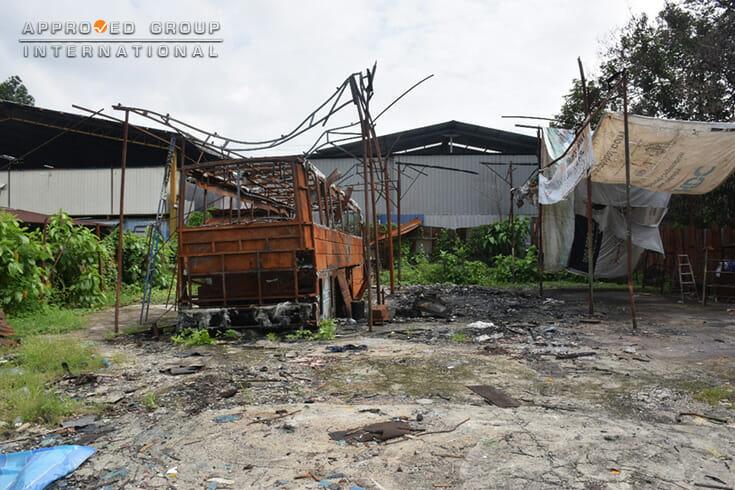
A shuttle bus, that was left in a workshop for floorboard replacement, suddenly caught on fire. The owner, Mr Fin had just gone for lunch with the mechanics …