An incendiary fire is a fire that is deliberately set up with the intent to cause the fire to occur in a place it is not suppose to be (NFPA 921, 2017).
- How does the fire investigator relate a fire incident to incendiary fire?
- What are the conditions that lead to a conclusion proving a fire scene was due to incendiary fire?
Firstly, if an investigator observes a trail pattern during his/her investigation, they will perform a more detailed examination on that trail pattern. A trailer are deliberately introduced fuel to aid in the spread of fire from one spot to another or a connecting path to connect separate fires. The type of fuel such as liquid or solid fuels and the quantity of it plays a major role in the fire survival and spread. Upon confirming the presences of a trail pattern, it can be partially concluded that fire is due to incendiary fire. Good observation skills and being meticulous are very important in identifying details related to a fire scene. To create a trail pattern, material such as clothing or paper are used to soak up with the fuel and will be lit up. The interesting part is there are some cases which involves exotic accelerants as fuel for example; thermite mixtures which is a mixture of iron oxide Fe2O3 (rust) and aluminium powder and commonly used in welding. The mixture produces exceedingly hot fires. Such accelerants leave behind residues which are visually observable. The presence of an exotic accelerant can be justified by the observation of rapid rate of fire growth, brilliant flares and melted steel or concrete. The most famous incendiary device used by perpetrators is the Molotov cocktail. Other than trail patterns, possible physical evidences that could be present at the incendiary fire incident would be multiple seat of fires, presence of ignitable liquid at the area of fire origin and unusual fuel load. Numerous electrical fires are now being disguised and called as ‘accidental’ fires. Most forensic investigators would report electrical fires as accidental. However, AGI takes investigations a step further to analyse the ‘root cause‘. Only upon very close scrutiny by AGI’s forensic team, many of these ‘accidental’ fires have been re-classified are ‘deliberate’ fires. A fire was reported to have occurred within a premise in Indonesia. The incident was initially noticed by security personnel of the industrial area who then alerted the security guards of premises. The guards when to the rear section of premises and saw smoke emanating out from tarpaulin area. The guards quickly called the fire department and alerted the management of the premises. The cause of the fire incident after our team’s investigation proves it was due to electrical failure of the electrical reticulation, in this case, due to neutral floating.
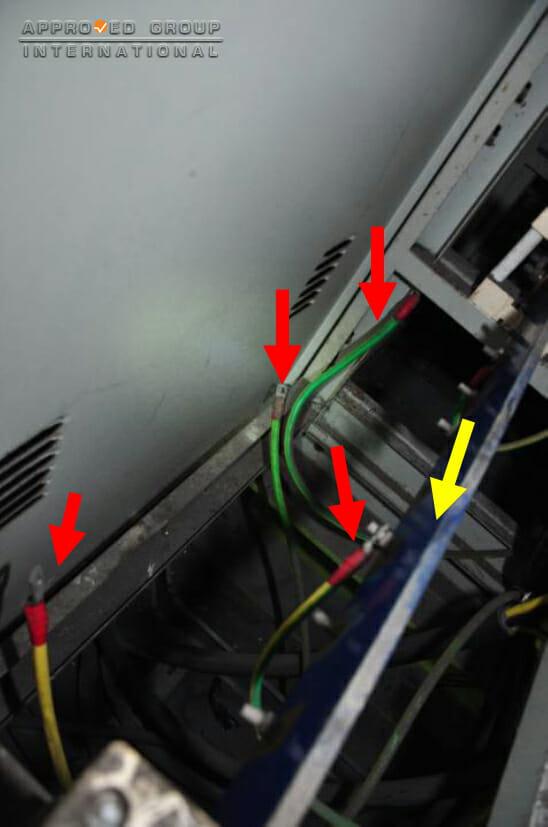
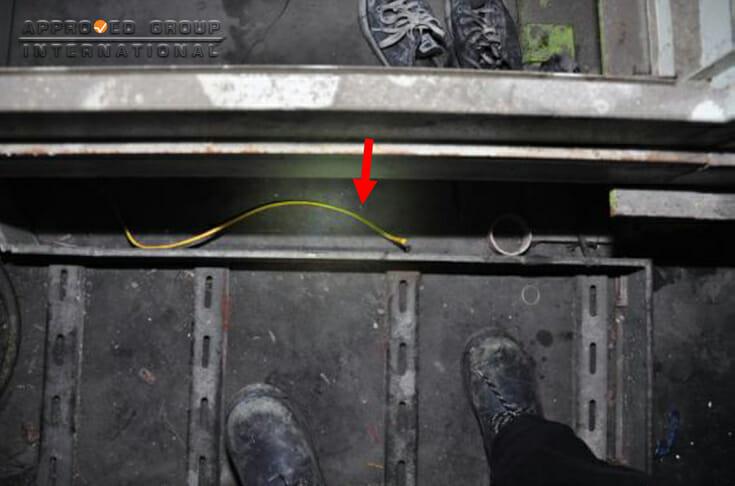
“Neutral floating” is a term used when neutral cables are not connected to the grounding system or earth. In this particular case, five (5) neutral cables were found to be disconnected from the neutral bus bar. The disconnected neutral cables caused ‘neutral floating’ within the electrical system, where the electrical system lost its reference point. This caused the voltage to float to a maximum of its phase voltage which in turn caused an unbalanced load condition.
The unbalance load condition degraded the insulation of the electrical reticulation and caused an electrical failure downstream. A fire then occurred from the electrical failure which subsequently ignited the stocks.
The neutral cables were intentionally dismantled and were not re-installed to its original position. This cause of fire is labelled as incendiary fire due to “neutral floating”.