
Approved Group International
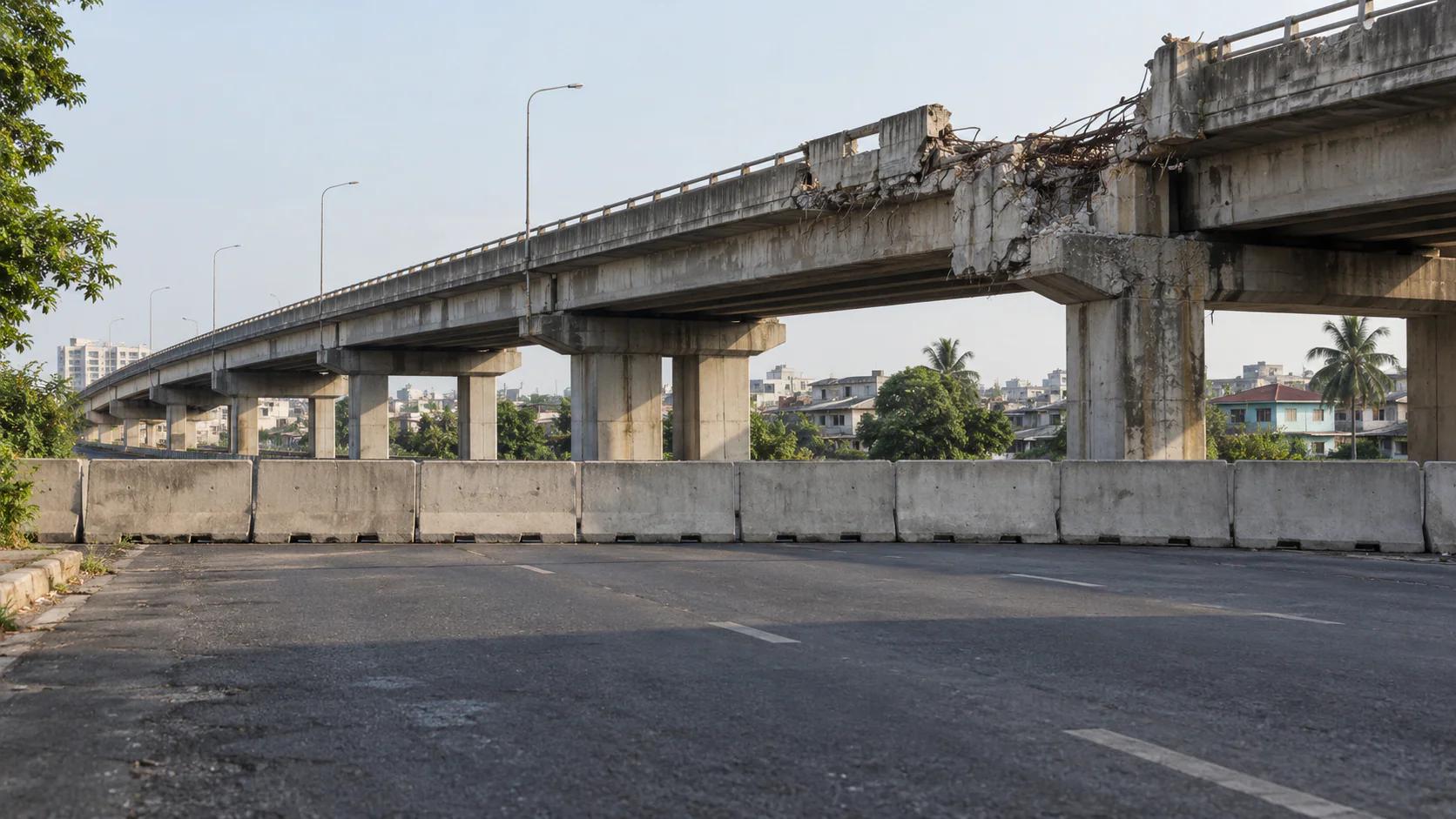
Damaged concrete flyover closed with barriers across the road

Who we work with

Government and Public Bodies

Public hospitals, universities, utilities, ports, airports, rail operators and housing boards; regulators and authorities; public procurement.

Who we mean

Government and Public Bodies

Government and public bodies come to engineering in three ways. As asset owners, when a hospital, campus, substation, port or terminal has been damaged. As authorities, when a statutory investigation is running and an independent engineering account is needed beside it. And as procuring bodies, when a report has to stand in a tender file, a public inquiry or a court.

What you are really asking

Who gives us an independent technical finding that will stand beside the statutory investigation and survive public scrutiny?

Why you matter to AGI

Where our work starts

Public bodies appear on a meaningful share of our work, mostly after fires and on infrastructure. Their assets serve the public, so the finding has to hold up to scrutiny well beyond the parties involved, and we want authorities and agencies to know they can reach us directly.

Why AGI matters to you

How we help

We work beside the statutory investigation, not instead of it. A public asset owner, an authority, or a prosecuting or defending body may instruct us, and the method does not change with the instructing party. Findings are written with method and limitations stated, so they stand in a spending review, a procurement dispute or a hearing, and one appointment can cover several sites reporting in one format.

  • An independent account beside the official investigation
  • One format across several sites
  • Reports written to stand up to public scrutiny

Where we are called in

The situations we meet most often with you

Each one in the words you would use, and what you hold at the end of it.

All situations in Start Here
  • Fire or explosion

    Who can provide an independent fire investigation alongside the fire department's report?

    You receive

    An engineering account of origin and cause written to withstand scrutiny in a public inquiry, a tender file or a court, with method and limitations stated, and an investigator who can be called.

    The service behind it
  • Structure, ground or civil works

    A public bridge, school, hospital or terminal has structural damage. Who assesses it independently?

    You receive

    An engineering account of cause and condition, with survey and load calculations another expert can check, and a sequence for safe reopening written to stand in public scrutiny.

    The service behind it
  • A claim, report or finding is disputed

    A contractor and an authority disagree about why a public asset failed. Who gives an independent view?

    You receive

    A report written to the duty owed to the tribunal, usable in a procurement dispute, an inquiry or a court, with an expert who can be called.

    The service behind it
  • Condition before a purchase, handover, renewal or tender

    Before we accept a public facility or let a maintenance contract, who verifies the condition independently?

    You receive

    A condition record and a specification the department can accept against, written to stand in a procurement review.

    The service behind it

Service that will free your mind

Whoever you are, the method is the same

AGI will always give you the best service it can, and an answer you can rely on, so you can get on with yours.

  • Scientific method

    Evidence gathered and preserved, every plausible explanation tested, and only what the evidence supports reported.

  • Independent

    Any party may instruct us, and the finding does not move with who pays for it.

  • Credible

    More than 8,500 forensic investigations, in work completed across 27 countries, written to be relied on and tested.

  • Since 1986

    Forensic investigation, damage assessment, restoration and risk, under one name since AGI was founded.

24/7 response

Tell us what happened

Send the matter once. It is routed to the office nearest the loss and to the discipline that handles it.