
Approved Group International
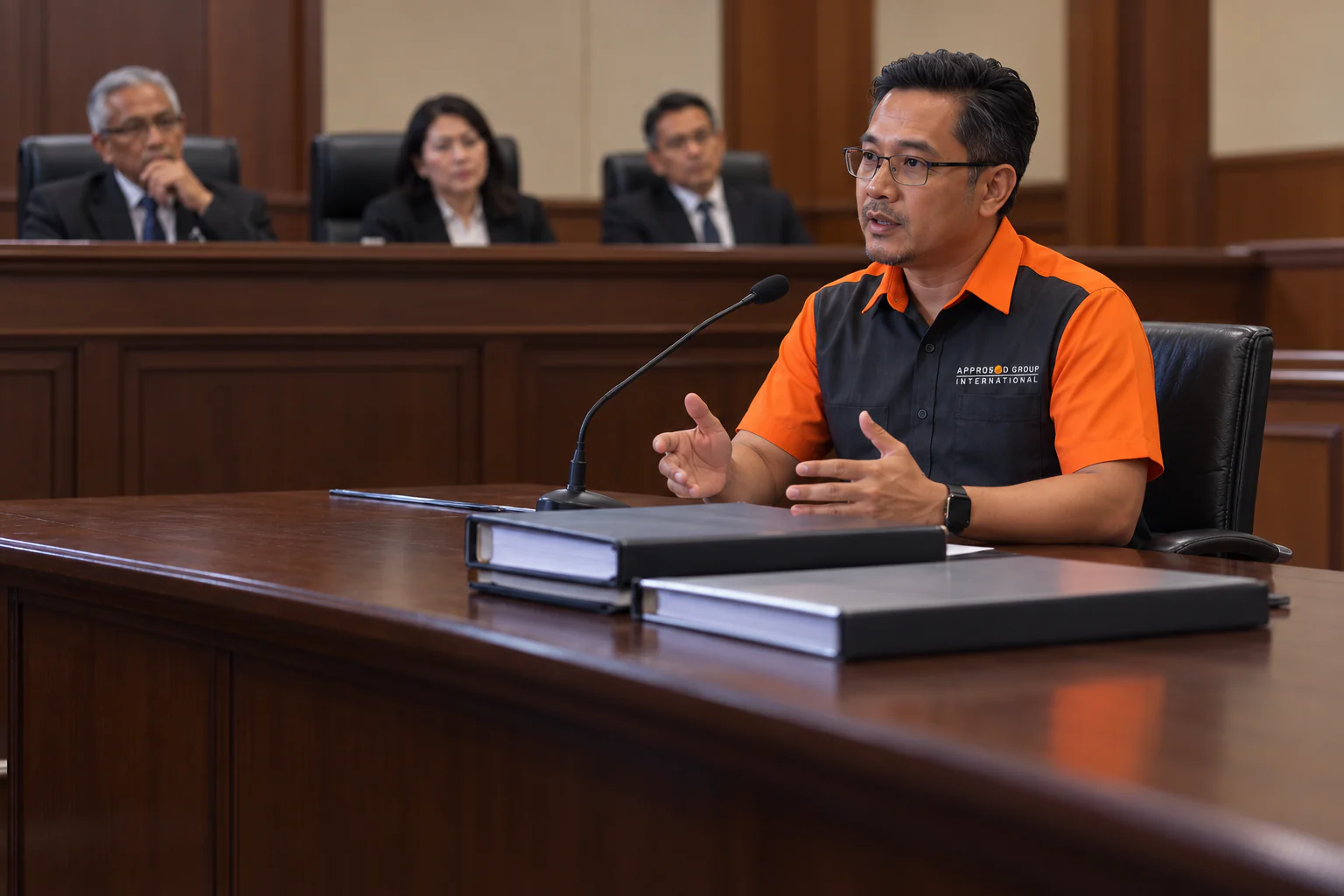
AGI expert giving evidence at the witness table of an arbitration hearing room

Forensic Investigation

Expert Witness and Litigation Support

Expert witness and litigation support carries an independent technical finding into arbitration, litigation and other formal hearings. A conclusion on a transmission-class transformer failure, a collapsed grandstand roof, a fractured pressure vessel or a contaminated marine cargo has to survive examination by a tribunal. It does not simply have to satisfy the party that commissioned it. The work draws on our forensic engineering and fire and explosion investigation practices, and on the specialised disciplines addressed elsewhere in this group. It covers report preparation, joint expert conferral and giving evidence under examination.

When to call

  • Proceedings have started or are likely
  • An opposing expert report needs technical review
  • A joint expert statement is directed
  • A matter is heading to arbitration or adjudication

What you receive

  • Instructions come from lawyers acting for a party to a dispute, and, on occasion, directly from a tribunal exercising its own power of appointment…
  • Whichever party gives the instruction, the scope is agreed before the work begins: what question the expert is being asked to answer, what…

What an Expert Witness Does

An expert witness gives an independent opinion, formed from the evidence and from professional judgement, to help a tribunal, court or arbitral panel understand a technical question it cannot resolve unaided. The expert is instructed and paid by one party. The opinion is owed to the tribunal, not to the party that issued the instruction. That distinction is the entire basis on which expert evidence carries weight. An opinion that shifts to favour the instructing party is not expert evidence. It is advocacy wearing an engineer's title, and a tribunal that detects it will discount everything else the witness says.

In practice, this means the expert reaches the same finding regardless of who is paying. It means stating plainly where the evidence does not support a firm answer. It means conceding a point under cross-examination where the evidence requires it. Not every instruction reaches a hearing. Many are resolved once each side understands what the evidence will, and will not, support.
Written to Be Tested

A report intended for a tribunal is written differently from one prepared for internal use. Every stage of the reasoning has to be visible. What was observed. What was tested. What alternative explanations were considered, and why they were eliminated or retained. Assumptions are stated rather than absorbed silently into the conclusion. The limits of what the evidence supports are set out alongside the finding itself, not left for cross-examination to expose.

That discipline starts at the first site visit, not at the drafting stage. Photographs, measurements, laboratory results and interview notes are recorded in a form another expert could follow and check independently, because they usually will. No expert can properly guarantee the outcome of legal proceedings. What a properly prepared report can do is withstand the two tests that matter most, an opposing expert's review and cross-examination, without the finding changing shape under pressure. The reasoning is one of evaluation and elimination, and the report says so. Where the evidence does not permit a reliable determination, that limitation is stated.

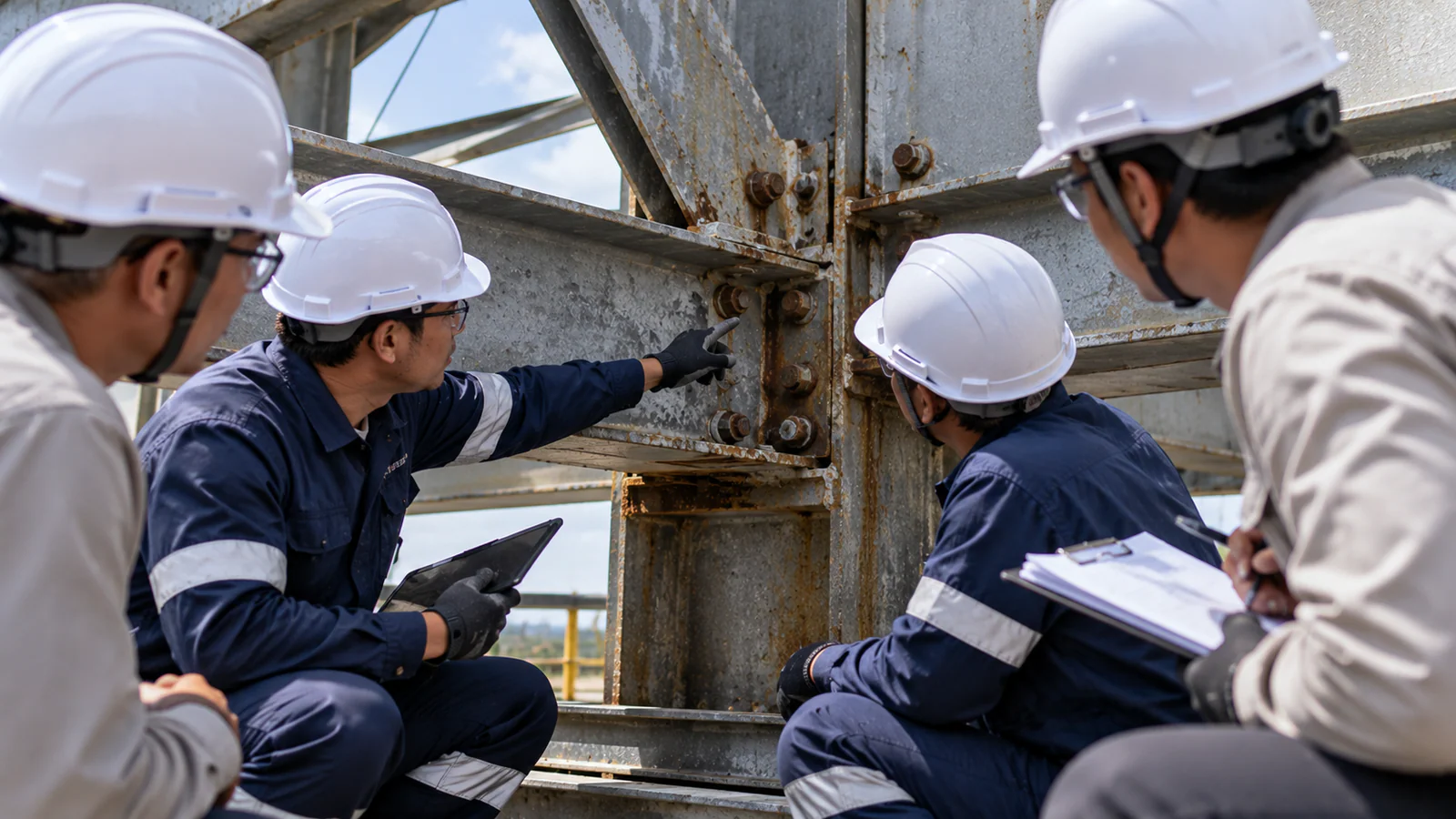
AGI engineers and other experts at a joint inspection of a corroded steel connection
Plate 01AGI engineers and other experts at a joint inspection of a corroded steel connection

Independence and Conflicts

Independence has to be demonstrable, not simply asserted. Any prior relationship with a party, a site, an asset or another expert involved in the matter is disclosed before an instruction is accepted. Instructions are declined where a conflict cannot be properly managed. An expert who has previously advised, inspected or been employed by a party to the dispute is not in a position to give independent evidence in that matter. Nor is one who holds a financial interest in the outcome.

Where the evidence points to a conclusion that is unhelpful to the party paying the invoice, that is the conclusion reported. A tribunal weighing expert evidence is, in effect, testing whether the witness would have reached the same finding for either side. There is no other form of independence worth having.

Technical Report or Expert Report?

A technical report prepared for a claim, or for an internal review, is written to establish a finding for the party that commissioned it. It can properly reflect that party's interest in the outcome, provided it does not misstate the evidence. An expert report prepared for arbitration, litigation or a formal hearing is a different document. It is addressed to the tribunal. It discloses the instructions given and the material relied upon. It states the expert's independent opinion, not the instructing party's position.

The same investigation often produces both. A technical report may be commissioned first, to establish cause and support an internal or commercial decision, and only later reframed, or supplemented, as an expert report once a matter moves toward a formal hearing. Where that transition happens, the underlying evidence and methodology do not change. Only the form and purpose of the document do.

Working Alongside Another Expert

Joint inspections and joint expert meetings are common wherever more than one party has an interest in the same failure or loss. They let each expert examine the same physical evidence. They let each expert question the other side's methodology directly. They record where the two opinions agree and where they genuinely differ, rather than leaving a tribunal to guess at the extent of the disagreement. Where a tribunal or the parties request it, that record can take the form of an agreed statement of issues: a short document setting out what is common ground and what remains in dispute, and why.

Working alongside another party's expert does not change the finding reached. The purpose is narrower than that. It reduces the number of questions a tribunal has to resolve to the ones that genuinely require a decision, and it removes disagreement that turns out, on inspection, not to exist.

Evidence Over the Life of a Matter

A dispute can run for years between the incident and a final hearing, well beyond the period a site or a repair contractor would ordinarily retain anything. A component removed in the first week has to remain identifiable. So does a download taken from a control system, or a sample sent for laboratory testing. Each has to stay traceable and in a defensible condition for as long as the matter is live, not only for as long as the investigation itself is open.

That discipline is maintained from the point evidence is first secured: how it was recovered, who has held it since, what tests were performed on it, and where it is now. A chain of custody that cannot be accounted for is a gap an opposing expert will use, whatever the underlying finding says. The record is built to close that gap before it is asked for.

Giving Evidence

Where a matter proceeds to arbitration, litigation or another formal hearing, the investigator can be called to explain and defend the findings under examination. That means answering questions from the tribunal. It means answering questions from the instructing party's own counsel. It means answering questions from the party challenging the finding, without the answers depending on who is asking. Our investigators have given evidence under examination.

Preparation for that follows the same discipline as the report itself: knowing exactly what the evidence supports, what it does not, and where the honest answer is that a further test or a limitation applies. A witness who overstates a finding under pressure damages the case more than a limitation stated plainly at the outset ever would.

Staged Scoping

The full extent of a matter is not always known when an expert is first instructed. A structural finding may raise a question about a single beam, or about every similar connection across a building. A cargo dispute may turn out to involve one container or an entire consignment. Where the scope cannot reasonably be fixed at the outset, the work is staged. An initial phase establishes what the evidence shows and what further testing or investigation would be needed to go further. Later phases are commissioned only once that need is confirmed, rather than committing to a full scope before anyone knows what it should be.

Disciplines This Work Covers

Expert witness and litigation support is not a discipline in its own right. It is how findings from any of our forensic disciplines are carried into a formal hearing. The underlying technical work sits within forensic engineering, across its mechanical, electrical, electronic, structural, civil, geotechnical and marine disciplines. It sits within fire and explosion investigation too, covering origin and cause, vehicle fire and explosion matters. Digital forensic investigation, forensic document examination, lightning damage investigation and vehicle accident reconstruction each carry their own evidential requirements. Each can proceed to expert evidence in the same way.

Whichever discipline a matter engages, the same requirement applies. A report built to be tested. An investigator able to defend it.

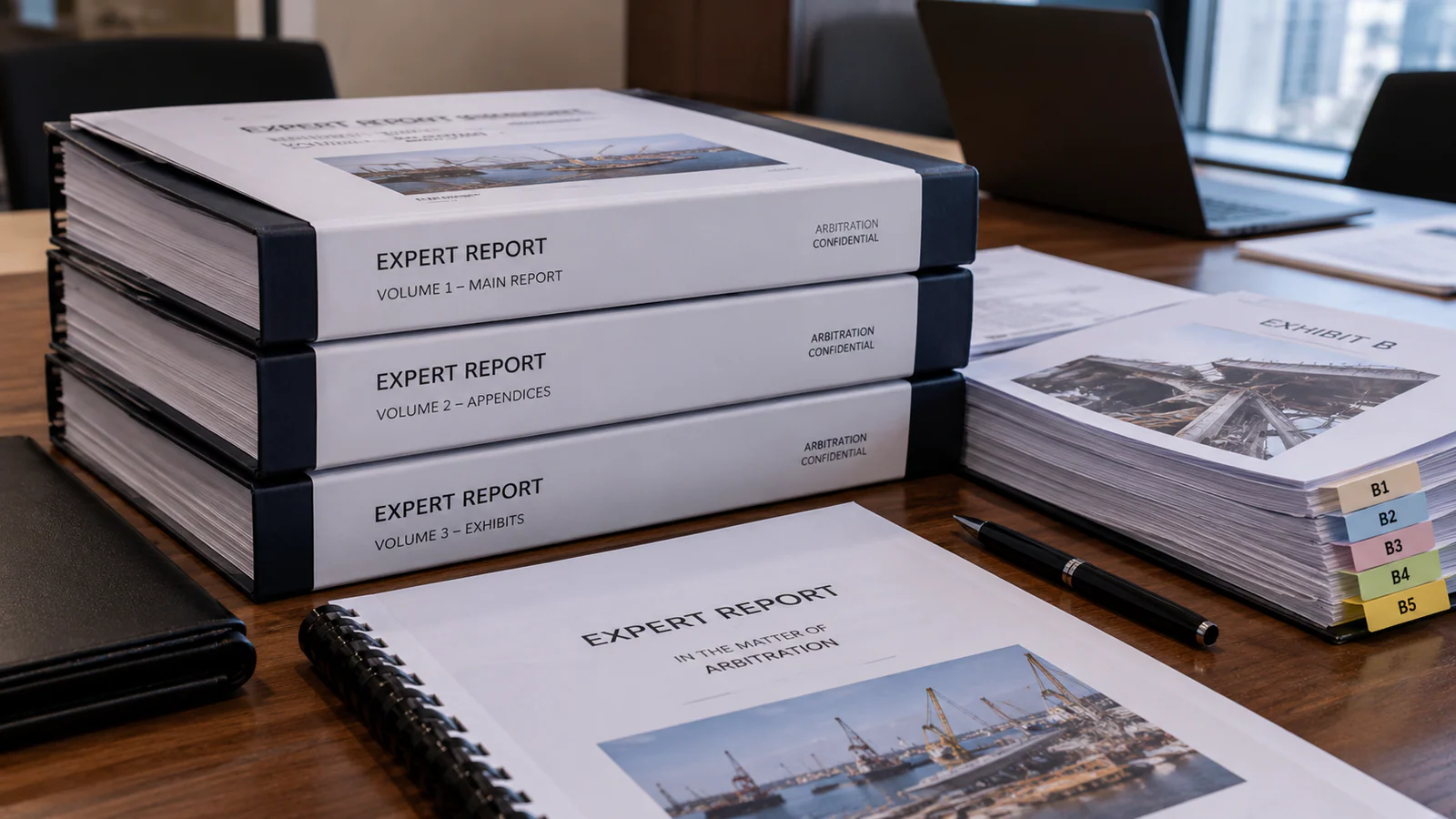
Bound expert report volumes and exhibit bundles prepared for an arbitral tribunal
Plate 02Bound expert report volumes and exhibit bundles prepared for an arbitral tribunal

Common questions

About expert witness and litigation support

The questions that come up before an instruction, answered plainly.

24/7 response

Protect the evidence first

Restrict access, change nothing, and call. Most of what decides a case is still on site in the first few days.

Emergency line open at all hours, across every office.