
Approved Group International
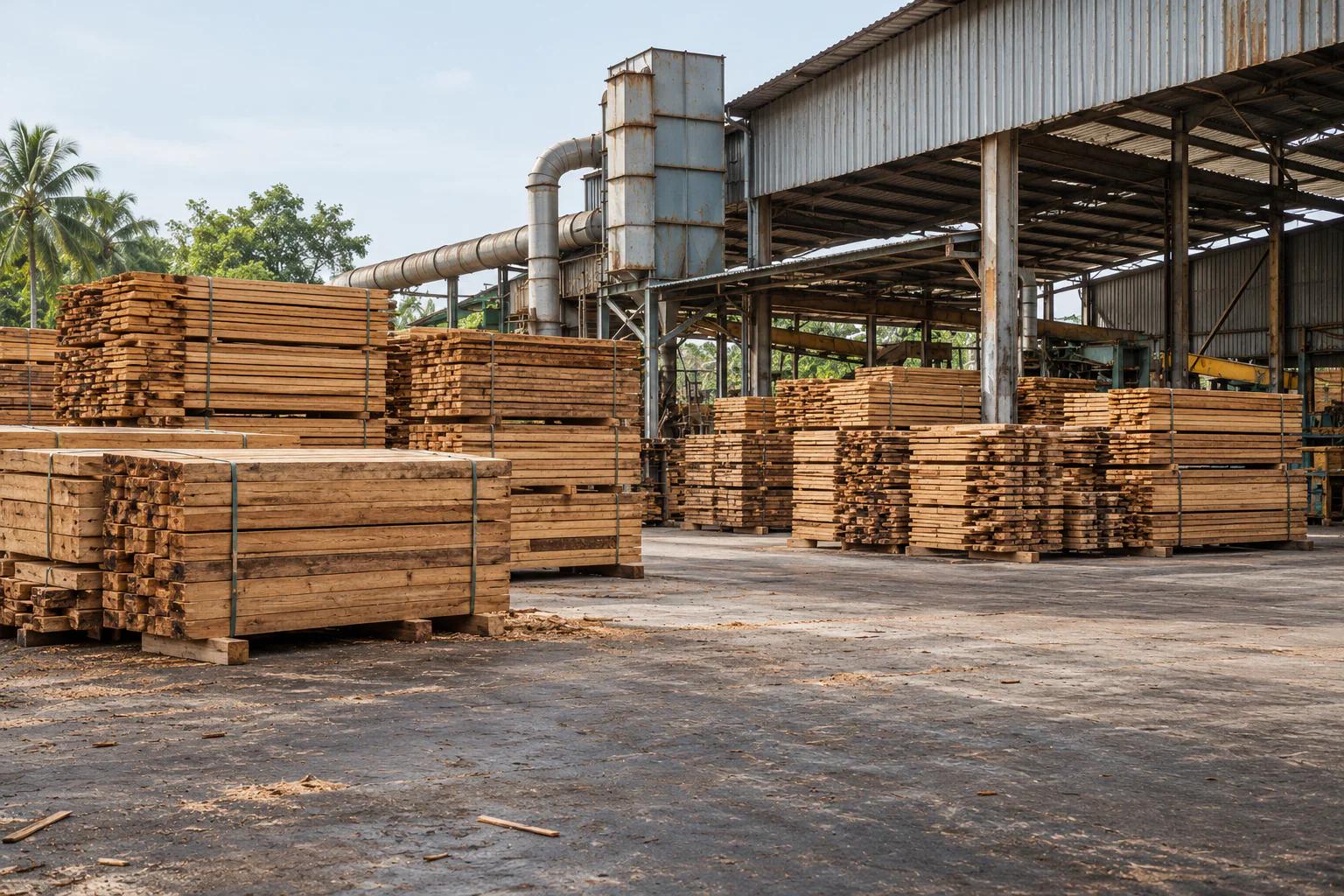
Sawmill yard with stacks of sawn timber beside an open-sided shed

Manufacturing

Wood and Furniture Manufacturing

Approved Group International investigates fire, failure and damage, and assesses risk, across sawmills, plywood and veneer plants, fibreboard and particleboard production, kiln drying, and the finishing and spray booth operations that turn manufactured wood into furniture.

Manufacturing

What we are called to in wood and furniture manufacturing

Fire, failure investigation, damage assessment, restoration and risk assessment for wood and furniture manufacturing operations, by the engineers who investigate the losses.

  • Manufacturing: what fails and why

What Fails in Wood and Furniture Manufacturing

Wood dust is the defining hazard of this sector. It is everywhere. It is a fire risk. It is also an explosion risk. Fine dust suspended inside an enclosed extraction system, a silo or a hopper can ignite from a spark, a hot bearing or an overheated motor. It then propagates through connected ductwork faster than most plants can isolate it. Settled dust is different again. It smoulders quietly. It flashes only once accumulated layers reach a critical depth. Outdoor storage carries its own version of the same risk. A chip or sawdust pile left stacked in the open can self-heat internally and radiate enough heat to ignite an adjacent building.

Kiln and hot press incidents are the second recurring cause. Timber kilns run for days at controlled temperature and humidity. A fault in that control, or timber loaded too densely for the airflow the kiln was designed around, can produce a smouldering fire inside the stack that is not visible until the kiln is opened. Hot presses used in plywood, particleboard and fibreboard manufacture apply heat and pressure to resin-bonded material. A fault in temperature control, or a jam under the platens, is a recognised ignition source.

Spray finishing and solvent storage complete the picture. Lacquers, stains and sealers are frequently solvent-based. That detail matters. They are applied in booths built to extract vapour before it accumulates. They are stored nearby, too, in quantities that matter once a fire starts. Overspray residue inside booth filters and ductwork is itself a fuel source. It is easy to underestimate.
Fire and Explosion

Investigation follows NFPA 921. It is conducted by investigators qualified against NFPA 1033, establishing area of origin from fire pattern, plant data and witness accounts. Dust explosion analysis addresses whether a dust concentration inside ducting, a cyclone or a silo reached an explosible range, what the likely ignition source was, and whether the explosion protection fitted, venting, isolation, suppression, performed as designed. Physical evidence and engineering calculation have to agree closely here. Only then is a finding reported. This is one of the few areas of the practice where that discipline matters most.

Kiln and hot press fires are investigated against the equipment's own control records: temperature logs, load configuration, and fault history where one exists. Together they usually narrow the cause well before the physical evidence is examined in detail. Spray booth and solvent storage fires are assessed for vapour concentration, filter and ductwork residue, and ignition source, in the same way a solvent-related fire in any other sector is assessed.

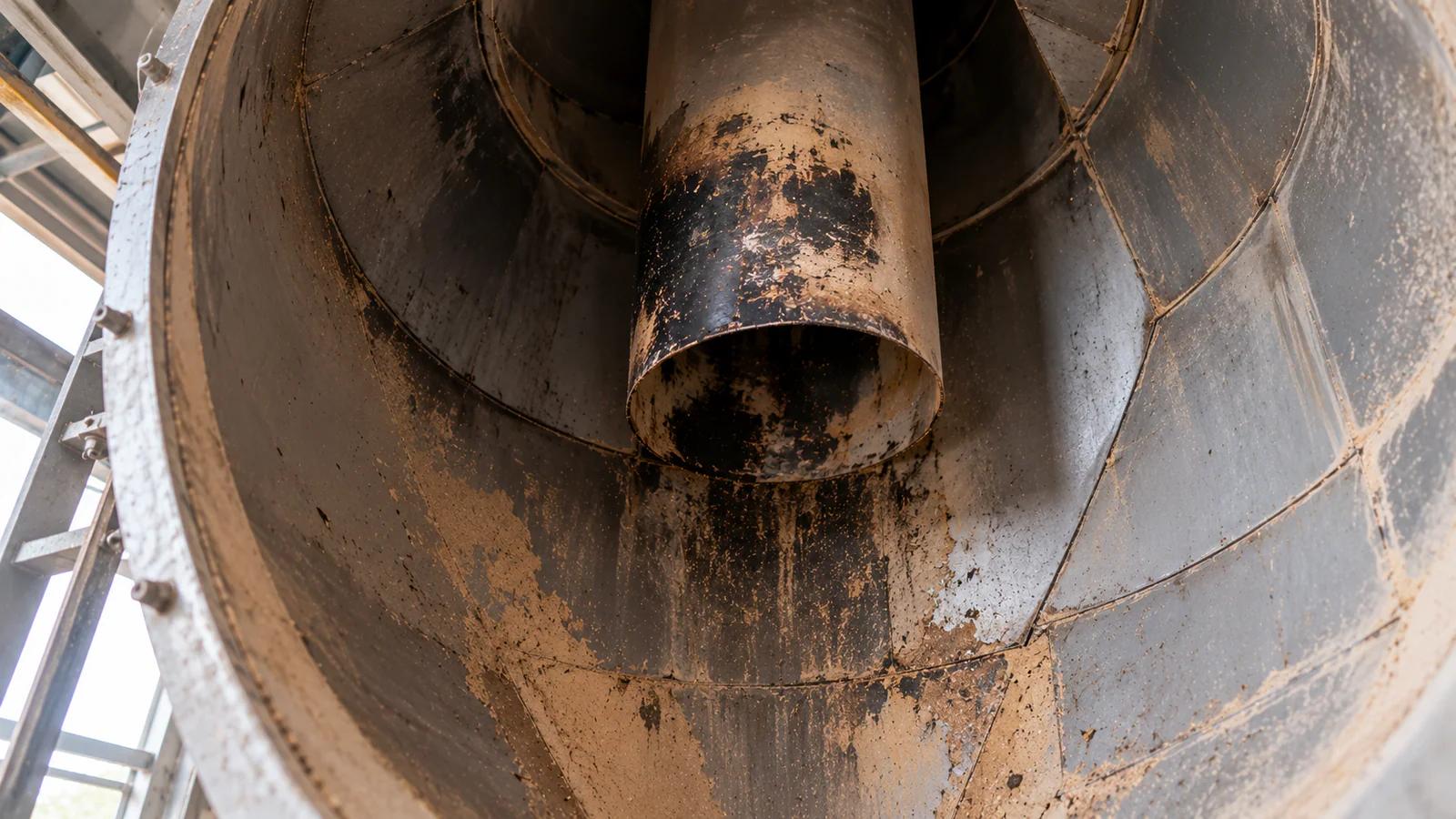
Inside a dust extraction cyclone, its walls scorched after a dust deflagration
Plate 01Inside a dust extraction cyclone, its walls scorched after a dust deflagration

Failure Investigation

Sawmill and primary processing failures concern saws, chippers, conveyors and debarking equipment. Most often, they trace to bearing and drive failures. A maintenance or lubrication history usually sits behind them. Veneer and plywood lines add lathes, dryers and layup equipment. Misalignment is the usual finding there. So are control faults. Hot press failures, beyond fire, include platen and hydraulic system faults that affect product quality as much as safety. They are investigated on the same engineering basis regardless of which consequence brought the instruction. Where the evidence does not permit a reliable determination, that limitation is stated.

Damage Assessment and Restoration

A damage assessment determines the nature and extent of the damage and the appropriate repair, restoration or replacement scope, and restoration begins once the relevant evidence has been documented, preserved or formally released for work. Smoke and heat damage to manufactured board, veneer and finished furniture is assessed against what is genuinely unsaleable and what has suffered cosmetic or minor contamination that does not affect structural or finish quality. Machinery exposed to a dust fire or explosion is assessed for direct damage. It is also assessed for contamination. Contamination affects bearings, motors and control systems if the machine is returned to service uncleaned. Water damage to stacked or kiln-dried timber changes moisture content in ways that are not always visible, and it affects the material's usable grade, a finding restoration teams and insurers do not always agree on without engineering input.

Risk Assessment

A facility risk assessment examines dust extraction system design and housekeeping against explosion risk, kiln and hot press control and alarm systems, and the separation between spray finishing, solvent storage and general production and storage areas. Explosion venting and isolation, where fitted, are assessed against the standard they were designed to meet. That is a different exercise from confirming that a system is present.

The Work in This Sector

We investigate. Dust explosion work establishes whether a concentration inside ducting, a cyclone or a silo reached an explosible range and whether the protection fitted performed as designed, while kiln and hot press fires are traced against the equipment's own control and load records. Structural failures on site, a collapsed section of steel storage racking or a failed lifting cylinder on a mobile crane, are investigated on the same engineering basis as a fire. Timber and wood-based materials are examined in their own right too, where decay, rot, coating failure or delamination in a truss, beam or cladding element raises a question separate from fire or explosion.

We assess. Smoke and heat-affected board, veneer and furniture are tested for genuine loss of grade rather than written off on appearance, and machinery caught in a dust incident is assessed for contamination as well as direct damage. Specialised production equipment, a veneer dryer or a dovetail tenoner, is assessed against its original specification before a repair-or-replace decision is made.

We restore. Moisture-affected timber flooring is mapped and dried under controlled conditions rather than assumed lost, machinery exposed to dust, soot or water is decontaminated and functionally retested, and furniture and furnishings carrying smoke or water contamination are treated rather than discarded by default.

We survey before a loss. Dust extraction design and housekeeping are reviewed against explosible concentration risk, kiln and hot press control and alarm systems are checked, and outdoor stockpiles of chips and sawdust are reviewed for self-heating potential and separation distance from occupied buildings.

What Decides These Cases

Whether a dust concentration inside an enclosed system reached an explosible range, and whether the protection fitted was adequate for that risk, is usually the central technical question in a dust incident. It is the one on which liability most often turns. Whether a kiln or hot press fault, rather than the timber or board itself, caused a smouldering fire is frequently contested between the equipment supplier and the operator. Whether smoke-affected timber and board retain usable grade, rather than requiring write-off, changes the value of a claim substantially, and depends on material testing rather than visual inspection. Whether spray booth and ductwork residue had accumulated beyond a reasonable cleaning interval is often the finding that decides where fault sits in a finishing line fire.

Common questions

Working in wood and furniture manufacturing

24/7 response

A loss in wood and furniture manufacturing?

Tell us what failed. You will get an engineer who has seen it in this sector, not a general enquiry form.