
Approved Group International
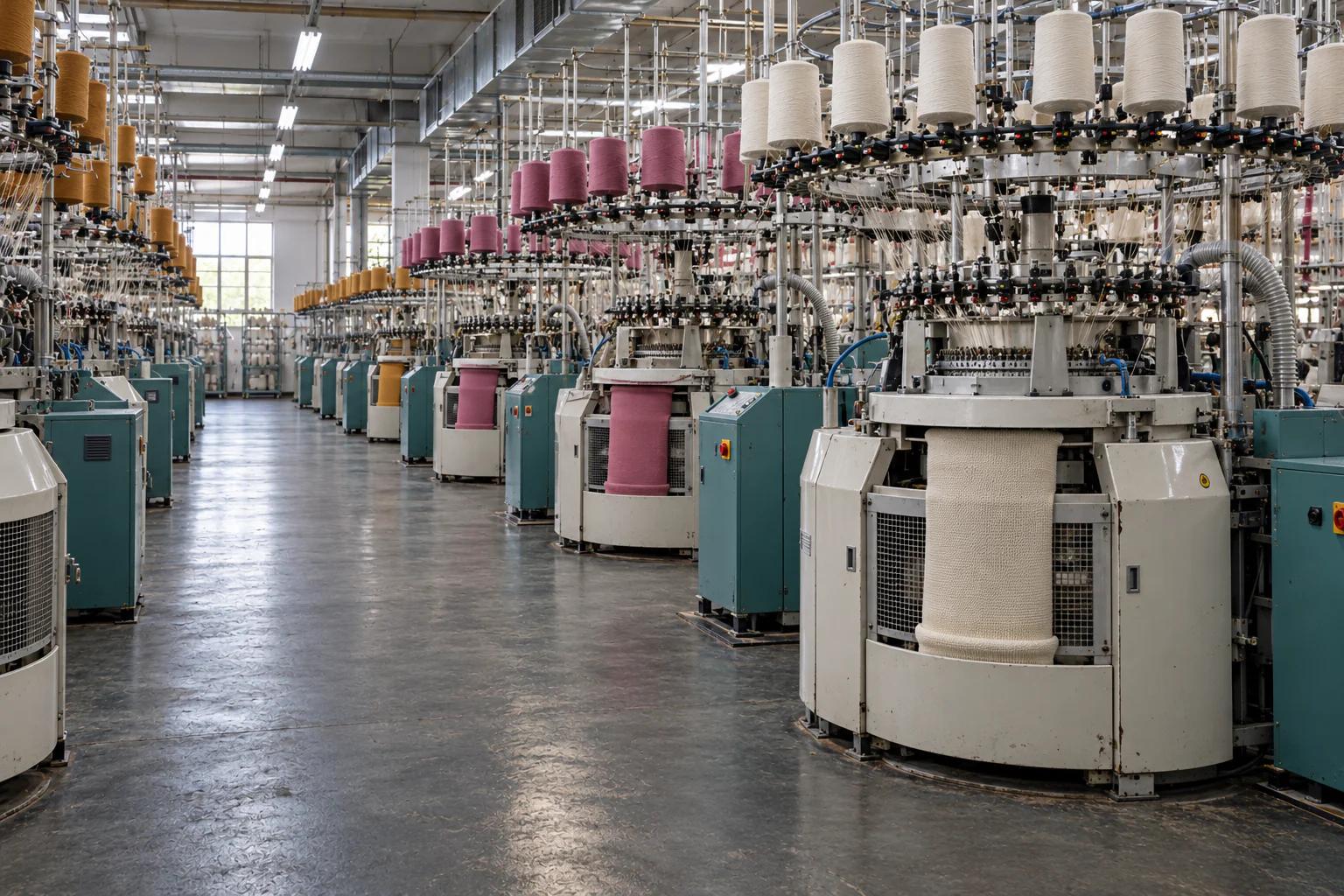
Textile mill with long rows of knitting machines and cones of yarn

Manufacturing

Textiles and Garments

Approved Group International investigates fire, failure and damage, and assesses risk, across spinning and weaving, knitting, dyeing and finishing, garment assembly, footwear and leather manufacture, and the warehouses that hold fibre, yarn and finished stock.

Manufacturing

What we are called to in textiles and garments

Fire, failure investigation, damage assessment, restoration and risk assessment for textiles and garments operations, by the engineers who investigate the losses.

  • Manufacturing: what fails and why

What Fails in Textiles and Garments

Lint is the constant. It builds fast. It builds everywhere. It accumulates on bearings, motors, rollers, ducting and overhead structure faster than most housekeeping regimes remove it. It is fuel, and it is a path. A spark at one machine can travel along an accumulated lint trail to the next bay before anyone reaches an extinguisher. Fibre dust from carding, combing and cutting behaves the same way. In sufficient concentration inside an enclosed duct or filter housing, it is an explosion hazard, not only a fire one.

Machinery friction is the second recurring cause. Bearings run hot. Lubrication fails, or alignment drifts, and a hot bearing inside a lint-coated frame is close to a worst case. Stenter and tenter frames dry and heat-set fabric under tension, and are a well recognised fire source in finishing. Residue on the mesh, an overheated zone, or a fault in the heating system can ignite fabric moving through the machine itself. Electrical failure in main distribution panels and machinery wiring is the single most frequent cause we find, independent of any lint or fibre ignition path.

Storage compounds all of it. Floor space is expensive. Turnover is fast. Raw fibre bales, greige fabric rolls, dyed and finished stock, and packed cartons of garments and footwear are usually stored at high density as a result, and where that storage sits close to process areas without a fire-rated separation between the two, a mill fire and a warehouse fire become the same fire.
Fire and Explosion

We investigate ignition in lint and fibre accumulations, in dyehouse and finishing equipment, and in storage areas holding raw and finished material. The method is the one set out in NFPA 921. It is applied by investigators qualified against NFPA 1033. That means establishing the area of origin from fire pattern analysis, and from control and witness data, before any hypothesis about cause is tested.

Stenter and tenter frame fires receive particular attention. Heating system condition, residue and mesh contamination, the state of any fire suppression fitted to the frame, and whether the frame's own extraction system carried the fire into ductwork, are examined together. Any one can be argued as the cause alone. Usually only the combination settles it. Dust explosion potential is assessed where fibre or lint concentrations inside enclosed plant are relevant, drawing on established dust hazard analysis rather than assumption. Electrical causes in dyehouses are a frequent finding. They are tested against the same standard as any other electrical failure.

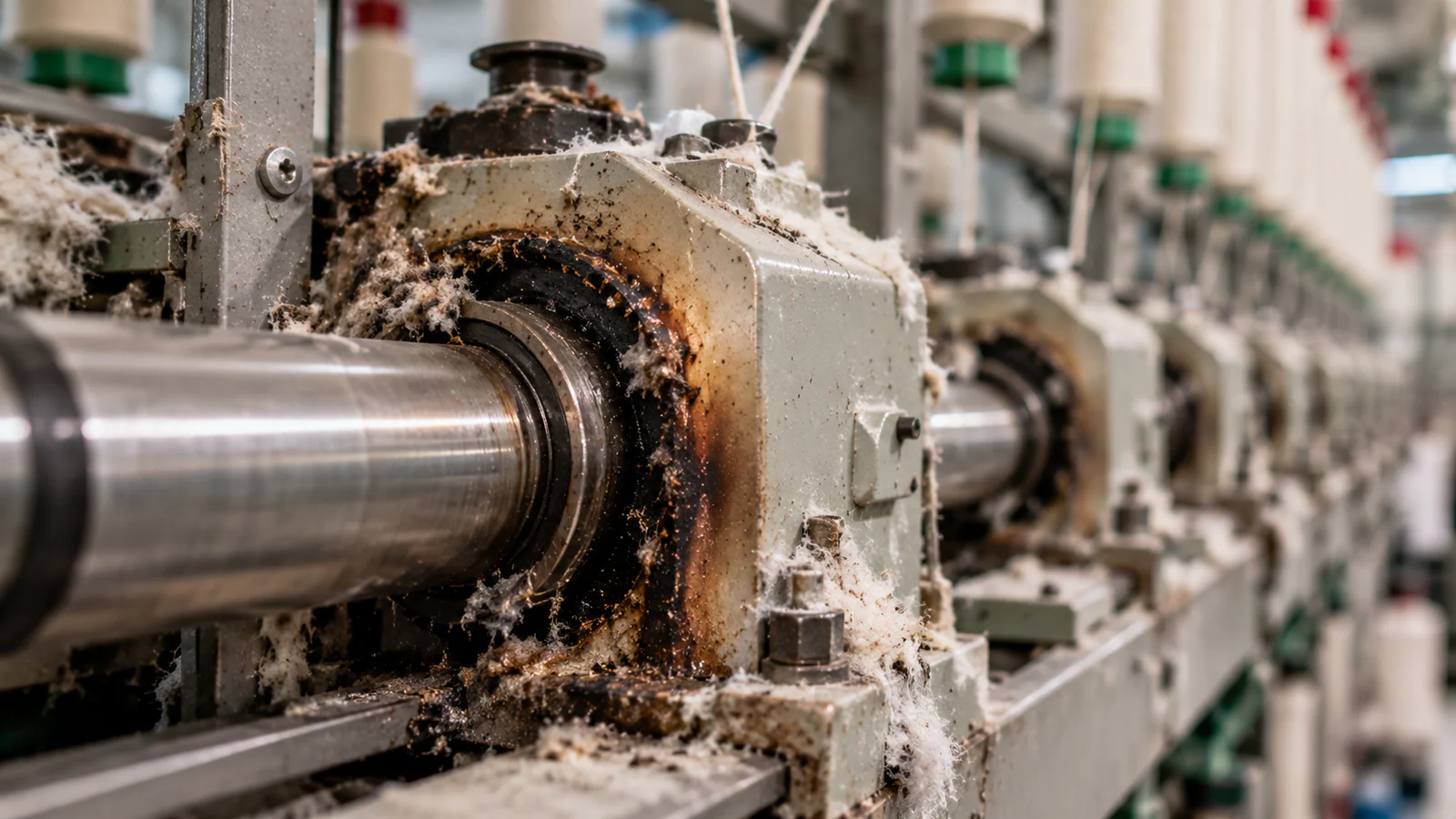
Spinning frame bearing housing clogged with lint and scorched from overheating
Plate 01Spinning frame bearing housing clogged with lint and scorched from overheating

Failure Investigation

Mechanical failure in textile plant is usually a bearing, a drive or a motor: overheating from lost lubrication, misalignment, or a foreign object drawn into a moving part. We examine the failed component itself, not only the machine it sat in, because maintenance and operating history usually explains more than the fracture does. Where the evidence does not permit a reliable determination, that limitation is stated.

Electrical failure investigation covers switchgear, motor control centres and the wiring serving wet dyehouse areas. Insulation degrades fast there. It degrades faster than in a dry production hall, so a familiar failure mode can have an unfamiliar cause. Boiler and thermal oil heater incidents are common where dyeing and finishing require process heat, and we investigate them to the same standard applied to any pressure or thermal plant.

Damage Assessment and Restoration

A damage assessment determines the nature and extent of the damage and the appropriate repair, restoration or replacement scope, and restoration begins once the relevant evidence has been documented, preserved or formally released for work. Smoke and soot are corrosive to the fine mechanisms inside spinning, weaving and knitting equipment. A machine that looks intact after a fire can be unusable within weeks if contamination is not addressed quickly. Assessment establishes which machines are cleaned and returned to service, which need component replacement, and which are beyond economic repair. Engineers make that call. They do so from what caused the damage, not only from what it looks like.

Water damage to stored fibre, yarn and finished goods is assessed separately from fire damage. A consignment can be a total loss to water alone, some distance from the fire itself. Restoration decisions on machinery and on stock are usually made on different timescales. Treating them as one exercise slows both down.

Risk Assessment

A facility risk assessment before a loss examines the same conditions an investigation examines after one. Lint and dust accumulation is measured against the housekeeping regime meant to control it. Fire detection and suppression around stenter frames and dyehouse plant is tested against the hazard it serves. Compartmentation between process areas, fibre storage and finished goods is checked, section by section. Electrical condition in wet processing areas is assessed on its own. It degrades on a different schedule from the rest of the plant.

The Work in This Sector

We investigate. Fire and electrical failure across spinning, weaving, knitting, nonwoven and dyehouse plant, footwear and leather production lines, and the yarn, fabric and finished goods warehouses that hold their output. Machinery fires traced to a motor, cable, bearing or control fault, thermal oil and heating system ruptures, and structural fire spread through a factory or storage building all fall within scope. Where cause is disputed, laboratory analysis of fire debris and residue, and evidence given in support of the finding, form part of the same appointment.

We assess. Machinery from carding and spinning frames to knitting, nonwoven and finishing lines, examined for smoke, soot and water damage before a decision is made to clean, repair or replace it. Fabric, yarn and finished stock, including footwear and leather goods, are assessed separately from machinery, since a consignment can be a total loss to water alone while the equipment around it is barely touched.

We restore. Spinning, weaving, knitting and nonwoven machinery, decontaminated of soot and moisture and returned to service, alongside stenter and finishing equipment recommissioned once released for work. Fabric, apparel and carpet affected by smoke or water receive odour treatment, deodorisation and cleaning rather than automatic replacement, and flooring and stock areas are treated preventatively where a repeat exposure is likely.

We survey before a loss. Lint and fibre accumulation in ducting, filter housings and concealed spaces measured against the housekeeping regime meant to control it, and electrical installations surveyed by infrared thermography across production and storage areas. Compartmentation between process, storage and finishing areas, and fire suppression on stenter and dyehouse plant, reviewed against the hazard each area presents.

What Decides These Cases

Whether lint and fibre accumulation at the point of ignition was a normal operating condition, or a housekeeping failure, often decides where liability sits, and that is usually established from maintenance and cleaning records rather than the fire scene alone. Whether fire suppression fitted to a stenter or finishing line was adequate for the hazard, and whether it operated, is frequently contested. The system's own maintenance history usually answers it. Whether smoke-damaged machinery is repairable changes the claim by an order of magnitude, and that finding depends on contamination testing, not appearance. Where storage areas lacked separation from process areas, the extent of the loss often traces back to that single choice.

Common questions

Working in textiles and garments

24/7 response

A loss in textiles and garments?

Tell us what failed. You will get an engineer who has seen it in this sector, not a general enquiry form.