Approved Group International
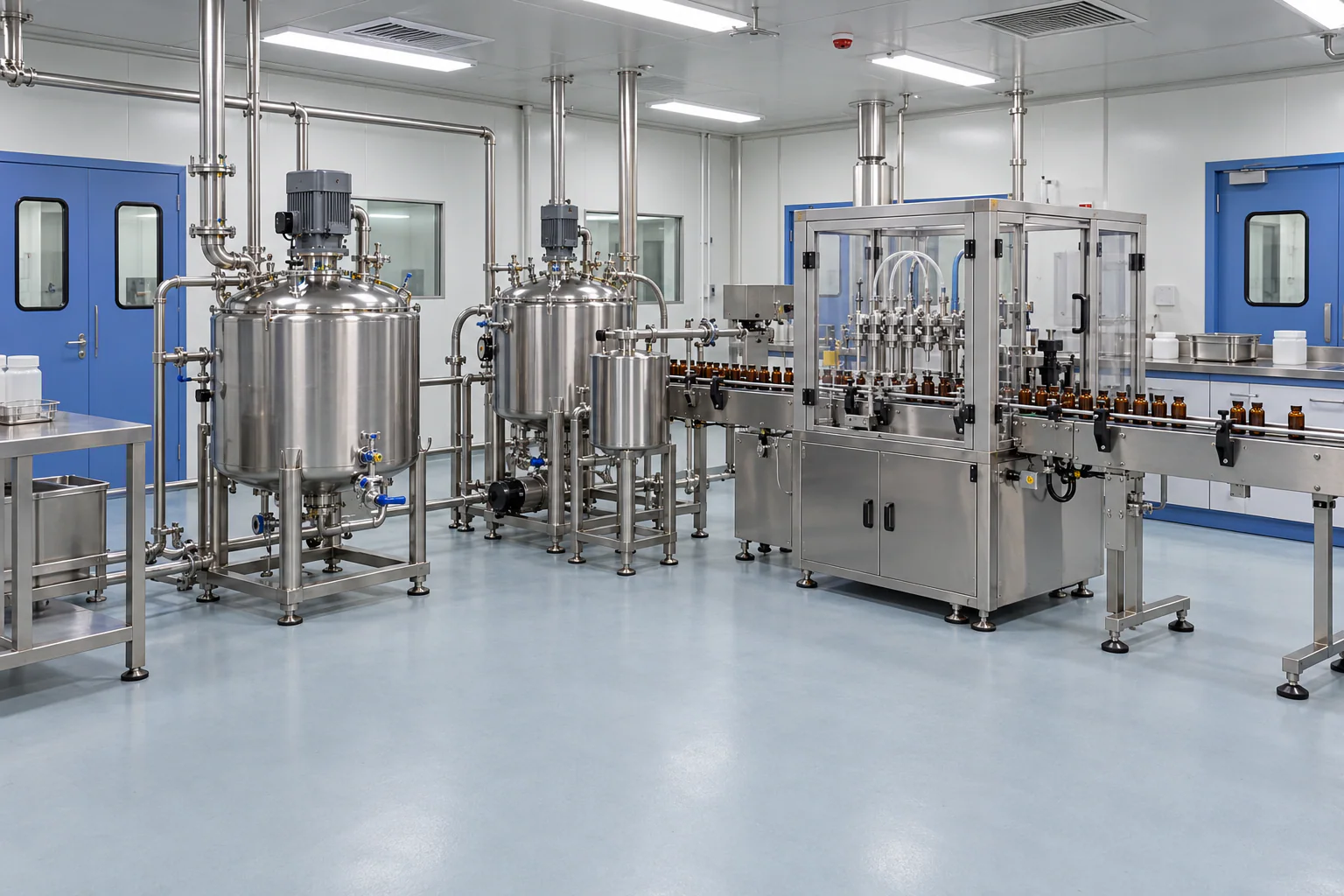
Pharmaceutical production room with stainless steel mixing vessels and a filling line

Manufacturing

Pharmaceutical and Healthcare

AGI investigates fire, contamination and equipment failure across pharmaceutical manufacturing and healthcare facilities, and assesses what stock, laboratory equipment and medical systems can be requalified after a loss.

Manufacturing

What we are called to in pharmaceutical and healthcare

Fire, failure investigation, damage assessment, restoration and risk assessment for pharmaceutical and healthcare operations, by the engineers who investigate the losses.

  • Manufacturing: what fails and why

What Fails in Pharmaceutical and Healthcare Facilities

Solvent and reactor processes. Flammable solvent handling, reactor overpressure, and the ventilation systems built to manage vapour, common to active ingredient manufacture and to formulation.

Cold chain and controlled storage. Refrigeration and monitoring systems protecting temperature-sensitive stock. A failure can be gradual. Undetected until a batch is already compromised.

Laboratories and analytical instrumentation. Sensitive, precisely calibrated equipment. A power event, contamination or minor water ingress can take it out of service. Often well beyond the physical damage it suggests.

Hospitals and medical imaging. Imaging equipment, main switchboards, and the building services supporting continuous patient care, where downtime carries a consequence beyond the commercial. Water ingress into wards, laboratories and lift shafts is a recurring loss in its own right, separate from any equipment or process failure.

Fire and Explosion

Solvent handling and reactor processes are the principal fire and explosion exposure in pharmaceutical manufacturing. The investigation follows NFPA 921 to establish whether an event originated from a vapour release, an electrical fault, or a process control failure. Ventilation and containment performance are examined alongside the ignition source. Whether solvent vapour was properly extracted, or allowed to accumulate, frequently decides whether a minor process upset became a fire at all.

Hospital fires present a different set of priorities. The investigation still establishes cause, electrical or mechanical. But it proceeds alongside a facility that in most cases cannot simply be evacuated and left. Patients come first. Evidence recovery has to be sequenced around continuity of care, not around convenience.

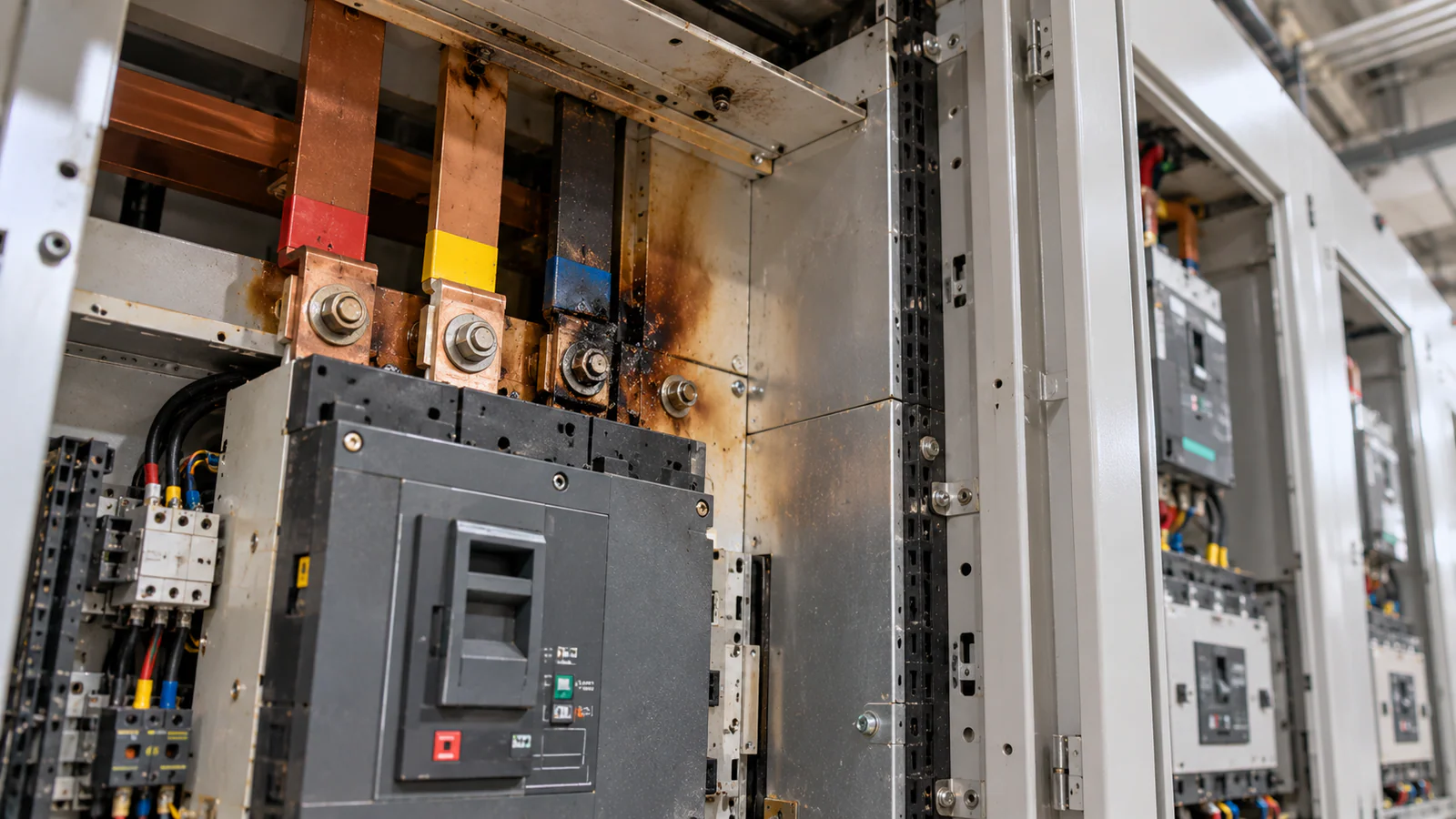
Switchboard cabinet with heat discolouration at a circuit breaker terminal
Plate 01Switchboard cabinet with heat discolouration at a circuit breaker terminal

Failure Investigation

Electrical failure investigation examines main switchboards, distribution boards and building services. These carry an outsized share of the risk in a hospital or a controlled manufacturing environment, because so much else depends on them staying live. Electronic failure investigation examines laboratory instrumentation and medical imaging equipment at component level. Whether a device was compromised by a power event, contamination, water or an internal defect. Whether it can be returned to service, or must be replaced. Where the evidence does not permit a reliable determination, that limitation is stated.

Component-level assessment matters more here than a general condition check ever could. An imaging system is rarely a single failed part. Neither is an analytical instrument. It is usually one board, one sensor or one calibration reference that has drifted or failed, sitting inside a unit that otherwise still functions. Treating the whole machine as a write-off because one component failed is as much a misjudgement as returning a contaminated one to service untested.

Damage Assessment and Restoration

A damage assessment determines the nature and extent of the damage and the appropriate repair, restoration or replacement scope, and restoration begins once the relevant evidence has been documented, preserved or formally released for work. Stock integrity is the question that defines pharmaceutical and cold chain losses. Product exposed to a temperature excursion, a contamination event or a power interruption can look, and sometimes even test, entirely normal. It can still fail to meet the specification it was manufactured to. Assessment proceeds against the manufacturer's own stability and storage data, not a general assumption about spoilage. It usually separates a batch into stock confirmed unaffected, stock requiring further testing, and stock that must be treated as compromised regardless of appearance.

Laboratory and imaging equipment is assessed the same way stock is: at the level of the component, not the cabinet. A scanner exposed to smoke is not automatically a total loss. Nor is one exposed to a brief power event. Testing at board and sensor level usually decides whether recalibration and requalification are sufficient, or whether replacement is genuinely required. Requalification against the manufacturer's own tolerance, not a visual check, is what makes that assessment defensible afterward.

Risk Assessment

Facility risk assessment for pharmaceutical and healthcare sites examines solvent handling and reactor containment, cold chain monitoring and redundancy, main switchboard condition and backup power, and the resilience of building services supporting continuous operation. It is commissioned most often ahead of a process change, a facility expansion, or a renewal where continuity of supply or continuity of patient care makes the cost of an unplanned outage disproportionate to the physical assets involved.

The Work in This Sector

We investigate. Fire and explosion investigation in this sector covers solvent handling, reactor overpressure and static ignition in production areas, together with oven and boiler explosions and fires involving stored pharmaceutical stock. Electrical failure investigation examines switchboards, distribution boards and building services, while equipment failure investigation works down to component level on imaging systems, ultrasound and other diagnostic machines, and chillers. Lightning damage verification on electronic instruments and building systems, corrosion investigation on medical equipment, and manufacturing deviation and contamination investigation, covering process design, technology transfer and human factors and feeding recall or market-withdrawal decisions, sit within the same practice.

We assess. Damage assessment covers cold chain and pharmaceutical stock, separating what remains fit for use from what does not against the manufacturer's own stability data. It extends to laboratory and diagnostic equipment damaged by fire, flood or transit, lifts and building services affected by water ingress, and flood damage at hospital and healthcare construction sites.

We restore. Restoration includes decontamination of laboratory instruments and analytical equipment, hospital and imaging equipment, and dehumidification of radiotherapy and other sensitive systems. Patient records and film can be recovered by freeze-drying. Mould, odour and HVAC decontamination can be phased so clinical operations continue, and larger fire or water losses at pharmaceutical facilities can be restored to a sanitary condition capable of standing up to regulatory inspection. Sterilisation of clinical and laboratory premises is also part of the practice.

We survey before a loss. Pre-loss work examines solvent handling and reactor containment, cold chain monitoring and redundancy, and the condition of switchboards and backup power. Infrared thermography of electrical installations, and a facility-wide fire risk review extending ward by ward through a hospital, can be carried out ahead of an incident, where continuity of supply or continuity of care makes an unplanned outage disproportionately costly.

What Decides These Cases

Whether stock genuinely fell outside its stability specification, or whether it can be shown, against the manufacturer's own data, to remain fit for use despite the incident. Whether laboratory or imaging equipment failed at component level in a way that testing can isolate, or whether the failure extends far enough into the unit that replacement is the only defensible outcome. Whether a switchboard or building services failure was itself the cause of the loss, or a downstream consequence of something else entirely. And how far cold chain monitoring data can be relied upon to establish the actual duration and severity of an excursion, rather than an assumption drawn from the alarm alone.

Common questions

Working in pharmaceutical and healthcare

24/7 response

A loss in pharmaceutical and healthcare?

Tell us what failed. You will get an engineer who has seen it in this sector, not a general enquiry form.