The operator of a Tower Crane was using it to lift up an object from the floor ground to the operator’s cabin. He noticed that the boom had deformed at the first and second sections when he exited from the cabin to retrieve the object.
Approved Forensics Sdn Bhd (AFSB) was engaged to investigate the cause of tower crane failure.
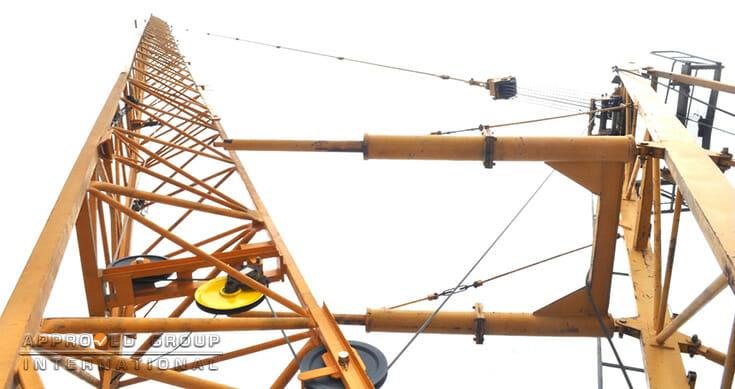
An overview of the affected sections of the boom indicated that the first section of the boom had sustained more damage compared to the second section of the boom.
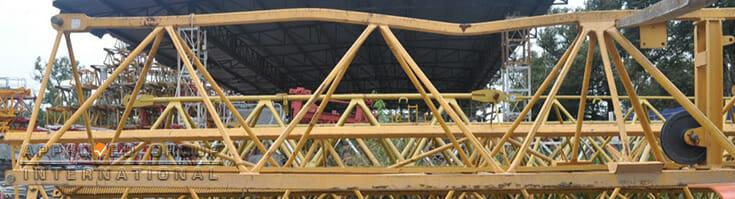
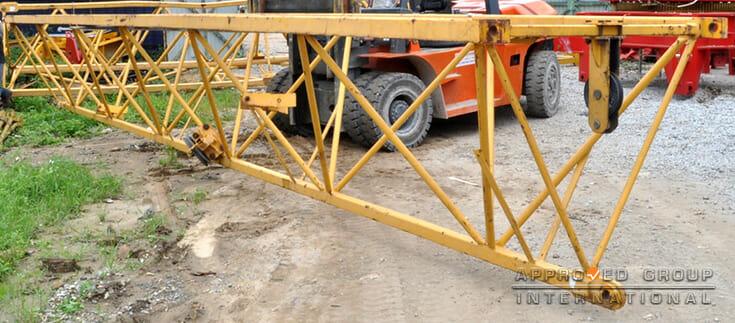
Further inspection of the first section of the boom showed that the entire first section of the boom had buckled upwards, causing the top beam of the first section to deform inwards.
No signs of damage were observed on the sheaves, hinge pins and pins connection of the sectional boom. There was also no significant deformation observed on the brackets for the boom bumper. Further examination of the second section of the boom revealed less damage compared to the first section of the boom. The degree of deformation was less severe than the first section of the boom.
However, it displayed similar nature of upwards deformation as the first section of the boom. Based on damage analysis, the affected sections of the boom were subjected to tensile stress on the both section and compressive stress on the top section.
This caused the both section to deformed upwards and the top section to deform inwards. These stresses acting on the boom are consistent with the stresses experienced by the boom during the luffing operation.
During the luffing operation to its maximum luffing angle, the boom bumper came into contact with the brackets located on the first section of the boom prior to reaching the maximum luffing angle.
The spring-loaded rods fail to retract and acted as an obstacle to the boom, preventing it from luffing further. The boom hoist motor had yet to be disengaged at this stage as the boom had yet to reach the maximum luffing angle.
Thus, the boom continued to luff further upwards before stopping upon reaching the maximum luffing angle. This further movement of the boom caused the top section of the boom to have compressive stress and the bottom section of the boom to have tensile stress.
This resulted in the inward deformation by the top section of the boom and upwards deformation of the bottom section of the boom.
Based on the circumstances surrounding the incident, statements of witnesses and information gathered, the failure of the tower crane was due to the faulty boom bumper which failed to retract accordingly.