
Approved Group International
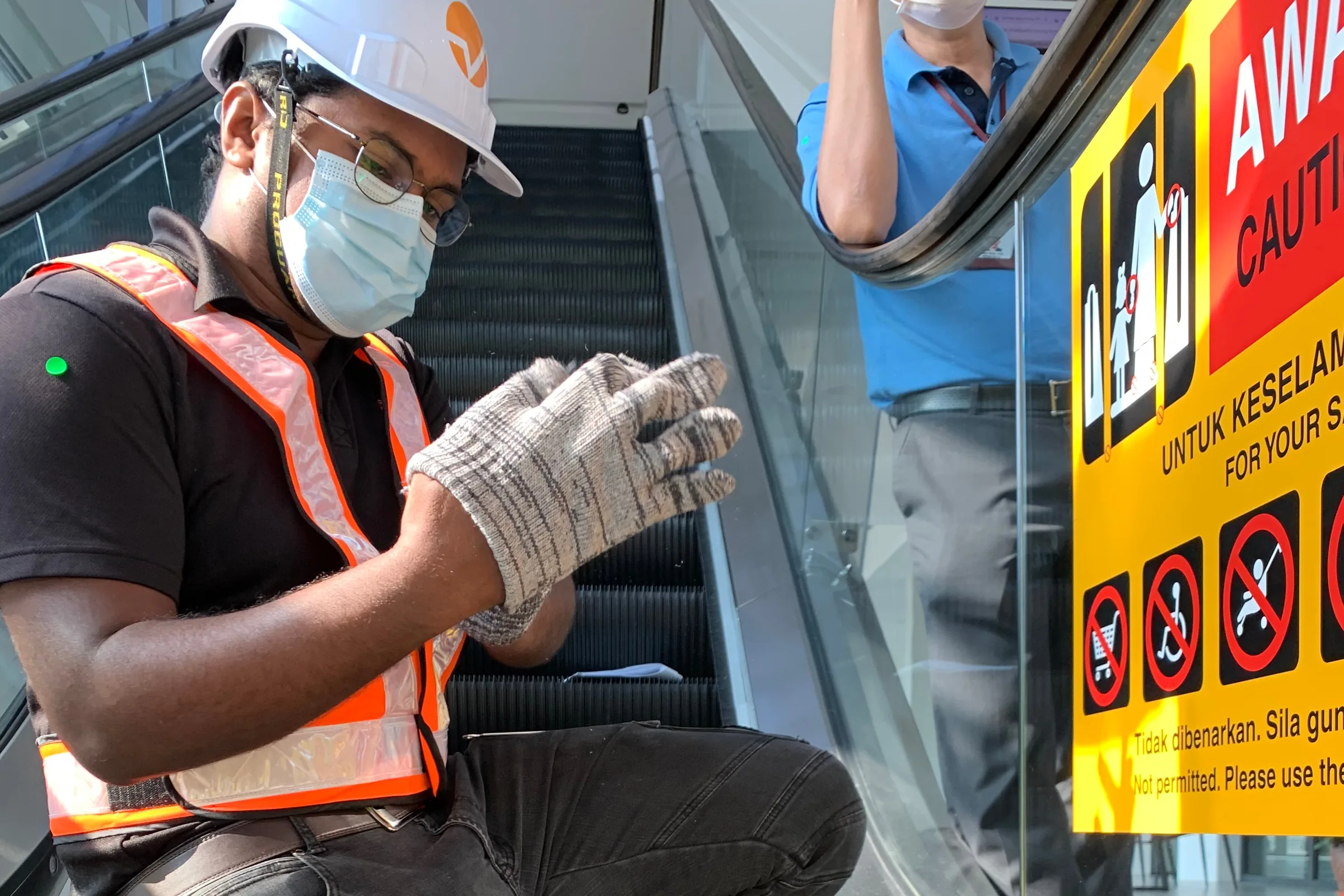
AGI technician in a hard hat, mask and safety vest inspecting an escalator beside a safety warning sign

Damage Assessment

Lift and Escalator Damage Assessment

Lift and escalator damage assessment determines what an incident did to a lift, an escalator or a travellator, and what it will take to return it to service. Applied before anything has failed, the same method is an independent inspection or audit of the installation's condition.

When to call

  • After water, fire or lightning damage.
  • After vandalism, impact or a reported malfunction.
  • When a unit is running but its safety is in doubt.
  • Before a lease, a sale or a major refurbishment.
  • As a periodic audit of ageing or heavily used units.

What you receive

  • AGI may be instructed by any party requiring an independent lift or escalator damage assessment, inspection or condition audit.
  • Most engagements produce a preliminary safety view within days of the site visit, then a written report on what was examined, what was tested, and what the evidence supports.

What Is Lift and Escalator Damage Assessment?

It is the determination of what has happened to a lift, escalator or travellator installation, and what should be done about it. Passenger-carrying equipment raises a safety question that most other plant does not: a hoist rope, a brake or a safety device that looks undamaged cannot be assumed safe on inspection. It has to be tested against its rated performance before the equipment returns to service.

The work takes three forms, and they share one method. A damage assessment follows a specific incident. An inspection examines a unit after a reported malfunction or a near miss, when nothing is visibly broken but something is wrong. An audit reviews the condition of an installation, or a whole bank of units, with no incident at all, against the manufacturer's specification and the applicable local code.

It differs from routine maintenance, which checks condition against a schedule, and from a lightning damage investigation, which establishes cause. Where the cause of an incident is itself in question, most often after a lightning strike, the two are usually run together, because the same physical evidence answers both questions.
How We Assess

  1. Initial safety review. The installation is checked for any condition requiring immediate isolation before detailed examination proceeds.

  2. Mechanical examination. Hoist ropes, safety gear, and car and landing equipment on a lift, and the steps, step chain, drive, gearbox and framework on an escalator, are each examined for wear, deformation, tension and alignment.

  3. Functional testing. Brakes, safety gear, door interlocks and safety devices are tested for stopping performance and correct operation against their rated values, not simply operated to confirm the equipment moves.

  4. Electrical and electronic testing. Controllers, drives, motors, safety switches and wiring are tested for insulation condition, contamination and correct response to fault conditions following water, fire or surge damage.

  5. Handrail and comb plate check. On an escalator or travellator, handrail speed synchronisation and tension, and comb plate alignment, are checked, since misalignment here is a common source of passenger injury.

  6. Surge path assessment. Where lightning or a power surge is suspected, the likely route of the surge through the installation is assessed against the pattern of affected and unaffected components.

  7. Restore or replace. Each component is assessed as restorable, requiring reconditioning, or requiring replacement, against the test results and the manufacturer's specification.

  8. Reporting. The finding sets out what was examined, what was tested, and what the evidence supports: continued service, repair, restoration or replacement. Where the evidence permits, the cause or contributing causes are reported; where it does not permit a reliable determination, that limitation is stated.

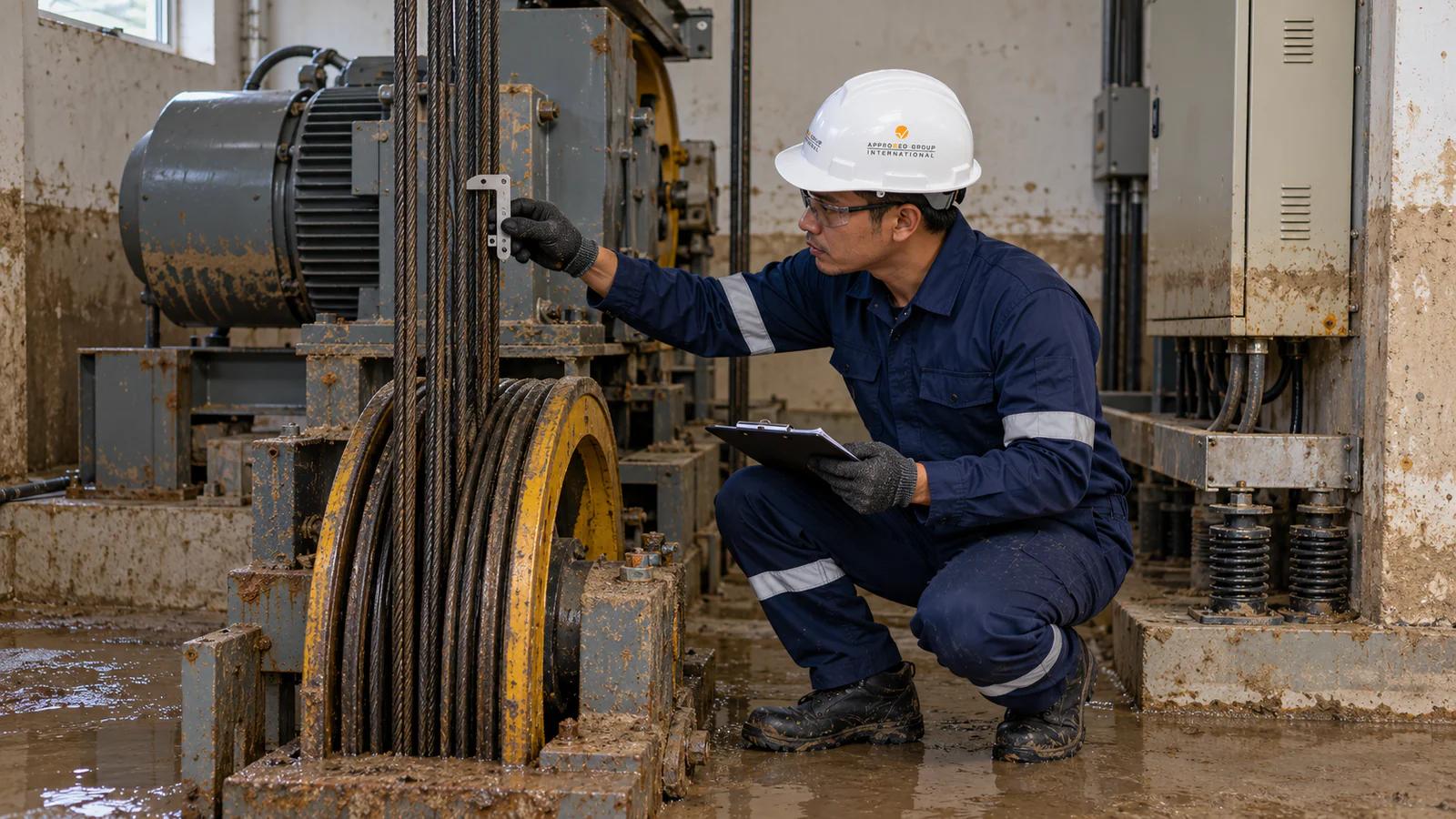
AGI engineer inspecting the hoist ropes and traction sheave in a flood-damaged lift machine room
Plate 01AGI engineer inspecting the hoist ropes and traction sheave in a flood-damaged lift machine room

What We Assess

Controllers and drives. The electronic and electrical systems that govern speed, positioning and safety response, assessed for contamination, insulation condition and correct operation after water, fire or surge damage.

Hoist ropes and safety gear. The components a lift's safe operation depends on absolutely, assessed against their rated condition rather than a visual check, because a rope or safety gear component that appears sound cannot be assumed to remain within specification after heat, water or impact exposure.

Car and landing equipment. Doors, interlocks, car interiors and landing fixtures, assessed for visible damage and for the condition of the safety systems operating behind it.

Steps, step chain and drive. On an escalator or travellator, the components that carry the unit's mechanical load, assessed for wear, elongation, tension and alignment.

Brakes and safety devices. Stopping performance, and the switches and interlocks that trigger a protective shutdown, tested rather than observed.

Handrails, comb plates and framework. Handrail speed and tension along its full length, comb plate alignment and obstruction risk, and the structural condition supporting the whole assembly.

What Decides These Cases

Whether a safety-critical component tests within specification. Appearance is not evidence for equipment that carries passengers. A hoist rope, a brake or a safety device is restored to service only where testing confirms it meets its rated performance.

Whether damage is confined to what is visible. Fire, water and surge damage often reaches the control and drive systems well beyond the area that shows obvious damage, and the examination is scoped to check for that rather than stopping at what can be seen.

Whether the surge path is technically credible. Where lightning is the suspected cause, the pattern of damaged and undamaged equipment has to be consistent with a plausible route for the surge through the installation. Where it is not, other causes have to be considered, and the matter is addressed alongside a lightning damage investigation.

Pre-existing wear against incident damage. Lift and escalator components wear steadily under normal use. The assessment separates deterioration that predates the incident from damage the incident caused, because that separation decides the portion of the repair scope properly attributable to the event.

Downtime to the building. A single lift or escalator out of service in a hospital, a transit station or a shopping centre has consequences beyond the cost of repair. The sequence in which components are tested and returned to service is set with that operational pressure in view, without shortening the testing itself.

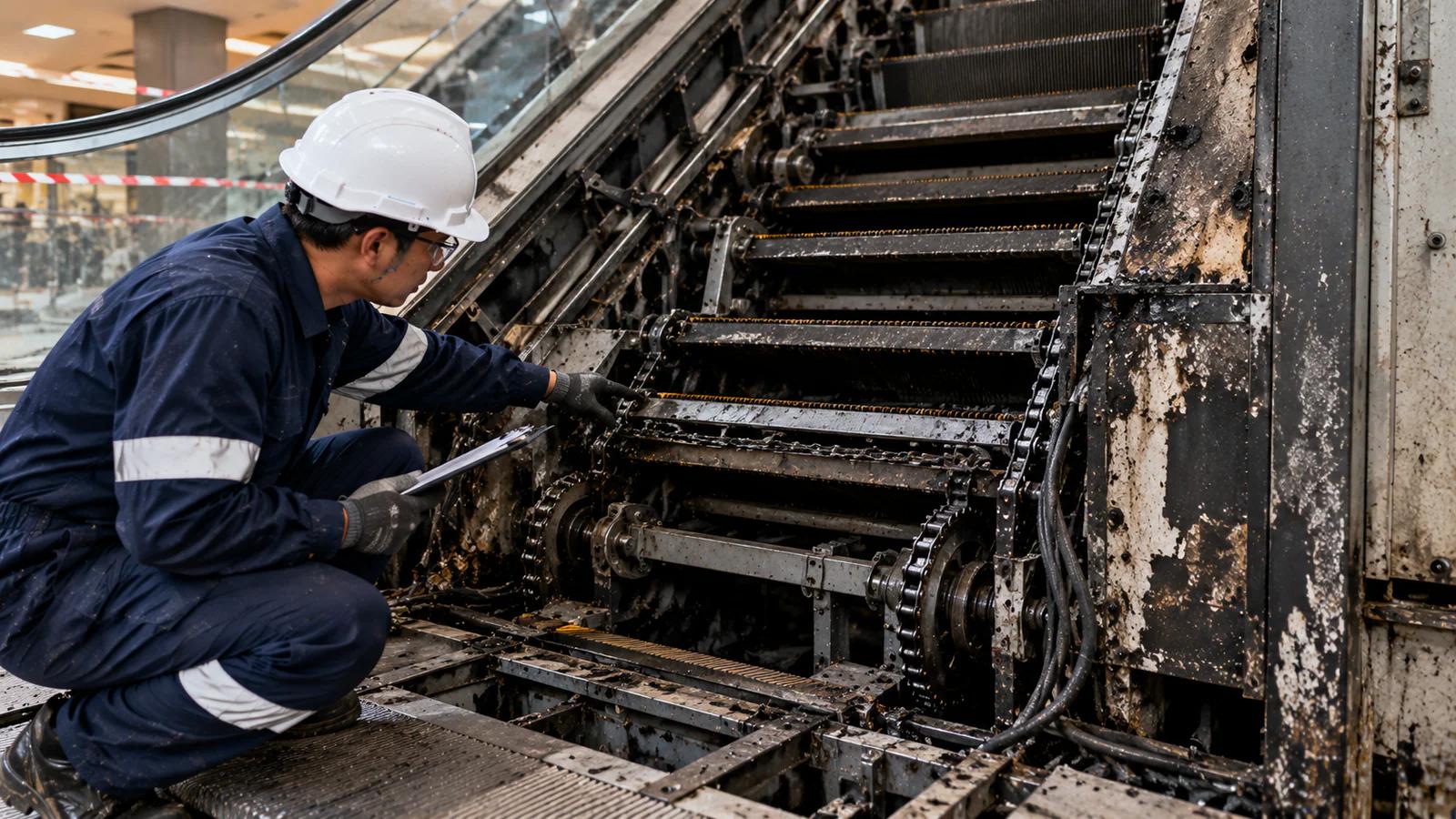
AGI engineer inspecting the step chain and drive of a fire-damaged escalator
Plate 02AGI engineer inspecting the step chain and drive of a fire-damaged escalator

Common questions

About lift and escalator damage assessment

The questions that come up before an instruction, answered plainly.

24/7 response

Protect the evidence first

Restrict access, change nothing, and call. Most of what decides a case is still on site in the first few days.

Emergency line open at all hours, across every office.