
Approved Group International
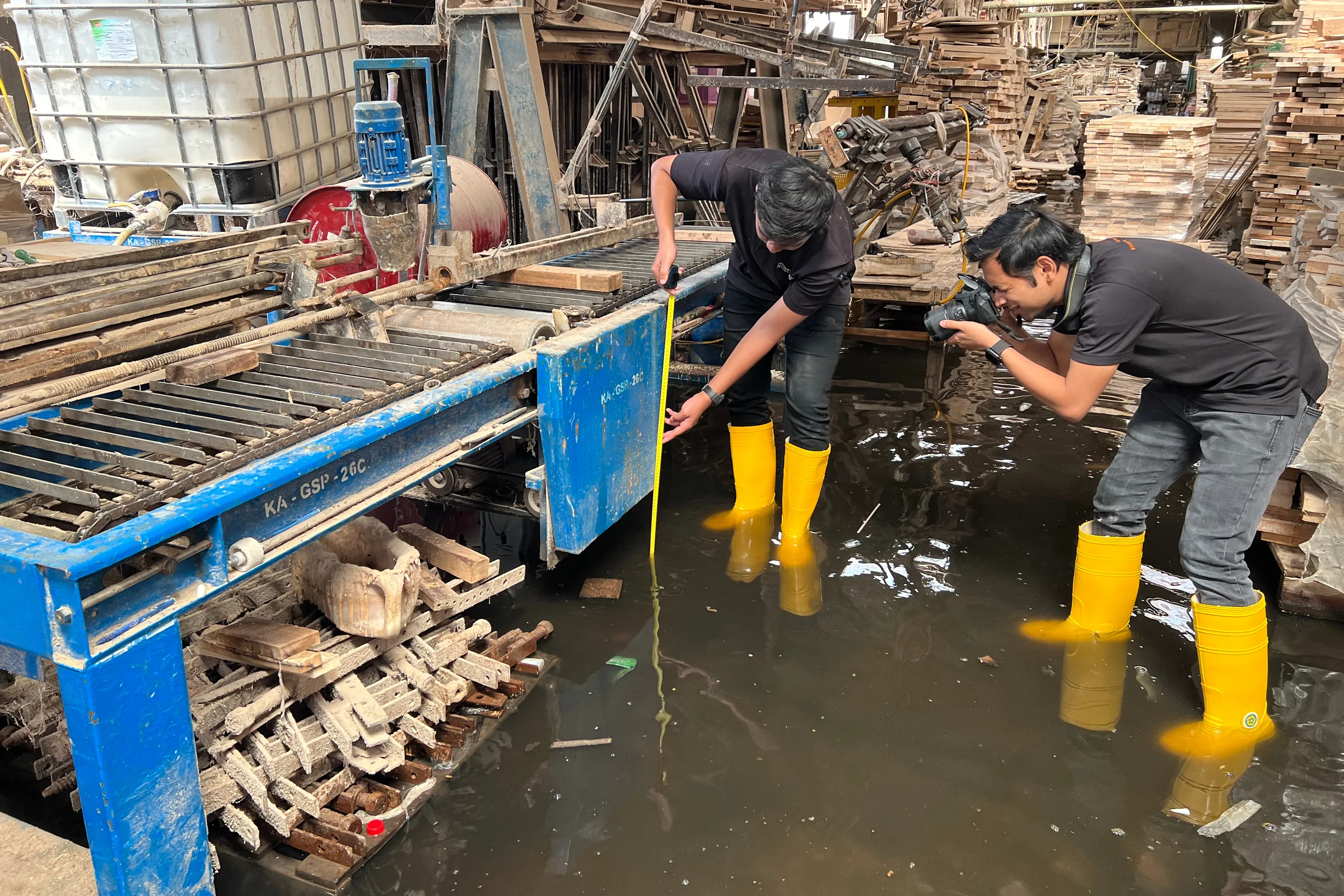
Two AGI consultants in rubber boots measuring floodwater depth and photographing damage in a flooded wood-processing factory

Services

Damage Assessment

A damage assessment determines the nature and extent of damage, and the appropriate repair, restoration or replacement scope.

The question

What is this actually going to cost?

Independent assessment of the nature and extent of damage after fire, flood or failure, and the repair, restoration or replacement scope, for owners and insurers.

People look for a damage assessment company when a quotation needs testing or a reserve needs setting. What arrives is an engineer rather than an estimator. Assessors attend from Malaysia, Singapore, Indonesia, India, the Philippines and Thailand, and which office picks up a loss is decided by travel time to the site, not by where the policy was written.

USD 1.2B
Property and machinery assessed
3
Assessment and inspection services
24h
Target attendance across the region
6
Offices across Asia-Pacific

What a Damage Assessment Establishes

It establishes four things: what is damaged, what remains serviceable, what must be replaced, and what a repair or restoration scope should reasonably cost. The assessment compares the property as found against a pre-loss baseline, drawn from drawings, specifications, maintenance and operating records, or the manufacturer's own tolerances, rather than against a general impression of what "looks" damaged.

That comparison matters because damage is not always visible. A machine that starts and runs may still carry contamination inside a bearing housing or a control cabinet that will fail within months. A wall that looks dry may still be carrying moisture behind the finish. The assessment is written to answer a specific, practical question: can this be safely and economically returned to service, and on what evidence.
How It Differs from an Investigation and from a Repair Quotation

A forensic investigation asks why something failed. A damage assessment asks what is now damaged and what should be done about it. The two are frequently run together, because the investigation team is often best placed to know what to examine, but they answer different questions and are reported separately.

It also differs from a repair quotation. A quotation is prepared by the contractor who will carry out, and be paid for, the work it describes, and it is not independent of that outcome. A damage assessment sits ahead of the quotation, or alongside it, verifying what the repair scope actually needs to cover before the cost is committed. This is where AGI's assessment work is most useful to an owner who has never had reason to doubt a contractor, but wants the scope checked once before signing it off.

Technical Inspection is a related but narrower service: a condition inspection of plant or building services, used in support of an assessment, a dispute or a pre-loss review, rather than a full determination of damage and repair scope in its own right.

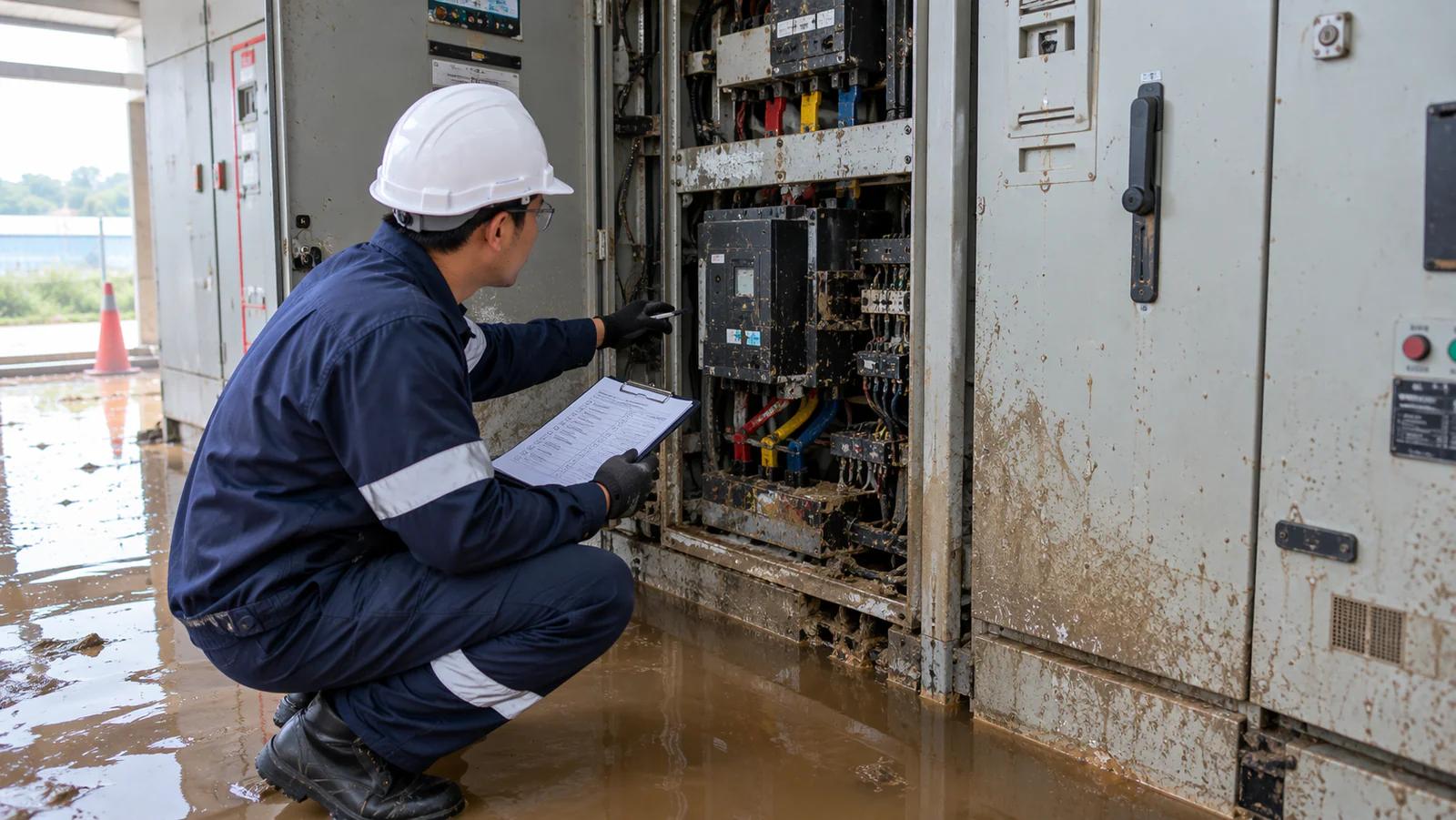
AGI engineer inspecting flood-contaminated switchgear, mud still on the floor
Plate 01AGI engineer inspecting flood-contaminated switchgear, mud still on the floor

How We Assess

  1. Scope. The assets, systems and areas to be examined are agreed with the instructing party before the site visit, together with the pre-loss reference the assessment will be measured against.

  2. Joint inspection. Where other parties have an interest in the loss, the inspection is usually carried out jointly, so that the same evidence is seen once, by everyone, rather than argued over later from separate accounts.

  3. Item-by-item examination. Each damaged asset, system or area is examined and recorded individually. A production line or a flooded floor is not assessed as a single figure; it is assessed component by component.

  4. Functional and contamination testing. Equipment that appears intact is tested for whether it still performs to specification, and checked for contamination, corrosion products or residues that a visual inspection alone would miss.

  5. Restorable-versus-replace criteria on evidence. Whether an item is restored or replaced is decided against test results, contamination levels and comparison with the manufacturer's specification, not against how the item looks.

  6. Cost-of-repair and scope verification. Where a repair quotation already exists, it is checked line by line against the assessed scope, to confirm that what is being charged for matches what is actually damaged.

  7. Reporting. Findings are set out for the audience that will act on them: an asset owner deciding whether to proceed, a lender reviewing a loss figure, or a board confirming that spending is justified. Where the evidence permits, the remaining cause or contributing causes are reported; where it does not permit a reliable determination, that limitation is stated.

What We Assess

Machinery and production lines. Rotating equipment, process plant, switchgear and the lines they sit within, assessed for contamination, corrosion, mechanical damage and whether cleaning and requalification can return the equipment to specification. The detailed method for this asset class sits on the Plant and Machinery Damage Assessment page.

Electrical and electronic systems. Switchgear, motor control centres, control panels, instrumentation and process electronics, assessed for insulation condition, contamination and whether components can be safely re-energised.

Buildings and finishes. Structure, envelope, internal finishes and building services, assessed for moisture, heat and smoke damage, and for the point at which drying and cleaning are no longer sufficient and replacement is the appropriate scope.

Stock and contents. Raw material, finished goods, documents, records and fittings, assessed for what can be cleaned, stabilised or salvaged and what has deteriorated beyond that point.

Lifts and escalators. Hoist ropes, controllers, drives, safety gear, car and landing equipment, and step and handrail systems, assessed after water, fire, lightning or vandalism damage. The detailed method sits on the Lift and Escalator Damage Assessment page.

Vehicles and plant. Mobile plant, fleet vehicles and yard equipment, assessed for mechanical, electrical and structural damage following fire, flood or collision.

What Decides These Cases

Pre-existing condition versus incident damage. Most assets carry some wear, prior repair or deferred maintenance before the incident under review. Separating that condition from damage caused by the event is usually the single most contested step in the assessment, and the one the evidence has to carry.

Whether cleaning and requalification returns equipment to specification. Contamination and corrosion do not always mean an item must be replaced. Where a manufacturer's cleaning and requalification process exists and can be verified by testing, restoration is often the technically supportable outcome. Where it cannot be verified, replacement is.

Betterment. A repair or replacement scope sometimes leaves an asset better than its pre-loss condition, whether through a newer component, an upgraded standard or a longer remaining service life. The assessment identifies where betterment arises so that it can be addressed separately from the loss itself.

Business interruption drivers. The sequence in which items are repaired or replaced, and the lead time for spares or specialist components, often determines how long an operation stays down. An assessment that only lists damage without addressing that sequence is of limited use to an owner trying to restart production.

From Assessment into Restoration

A damage assessment is frequently the step between an investigation and a restoration scope, and the three are often run by the same team. Restoration, whether drying, decontamination, mechanical reconditioning or rebuild, begins only once the relevant evidence has been documented, preserved or formally released for work, so that the assessment record and the site remain consistent with each other.

Where cause is still in question, the assessment and any physical evidence it relies on are preserved alongside the investigation, rather than disturbed by early repair work. Once that evidence has been secured, or where cause is settled or undisputed, restoration can proceed against the scope the assessment has set out.

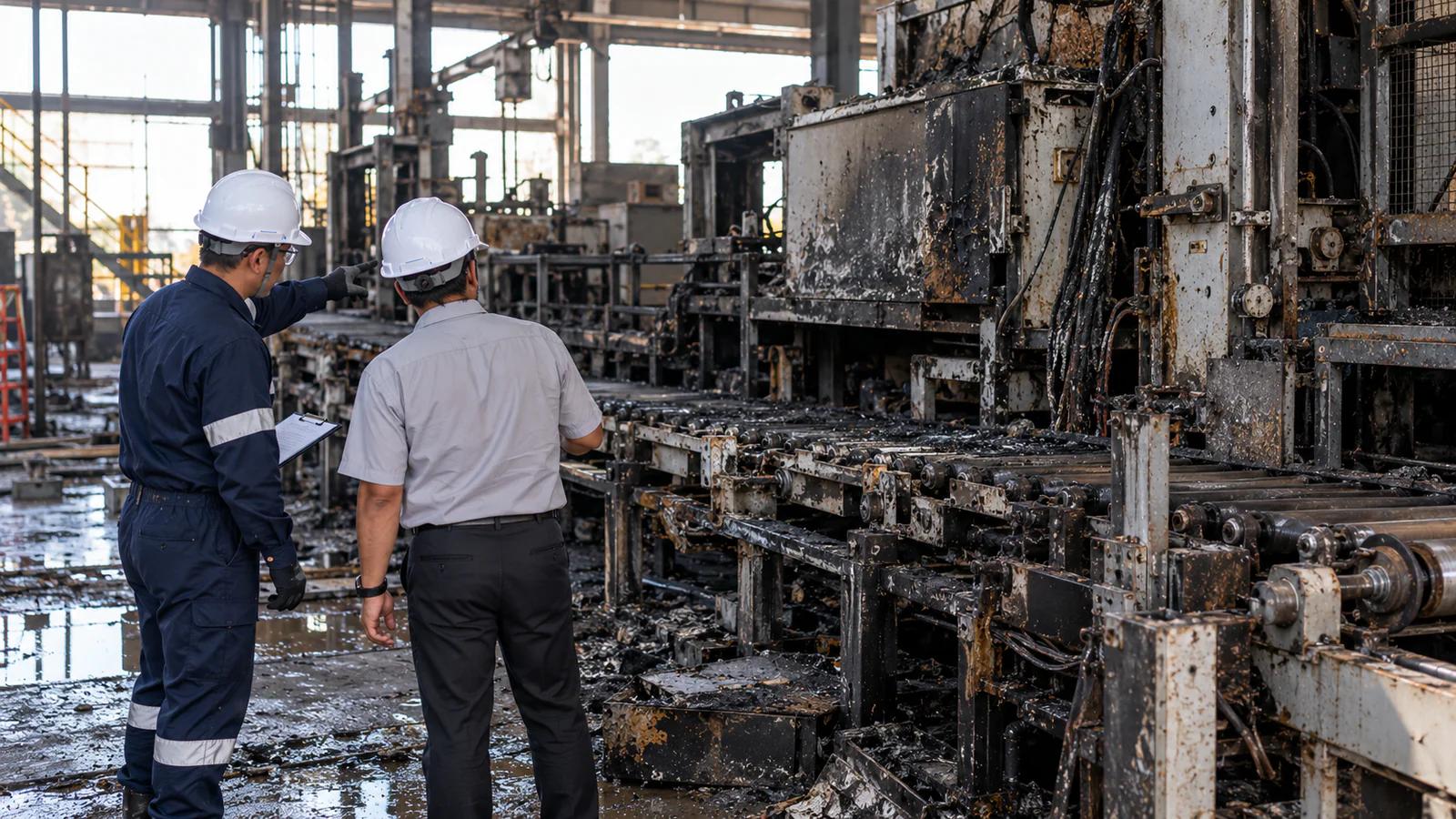
AGI engineer and a site representative inspecting a fire-damaged production line
Plate 02AGI engineer and a site representative inspecting a fire-damaged production line

Common questions

About damage assessment

The questions that come up before an instruction, answered plainly.

How it runs

Four steps, in this order

The sequence matters more than the speed. Skipping the third step is what produces a conclusion that does not survive challenge.

  1. 1

    Inspect

    Examine the asset as found and record condition before anything is moved or cleaned.

  2. 2

    Attribute

    Split damage caused by the event from deterioration that predates it.

  3. 3

    Scope

    Establish what restoring the asset reasonably requires, item by item.

  4. 4

    Test

    Compare the quotation against the scope and report where the two diverge.

24/7 response

Need damage assessment on a live matter?

Tell us what happened and where. A specialist in the right discipline will come back to you, not a sales desk.