
Approved Group International
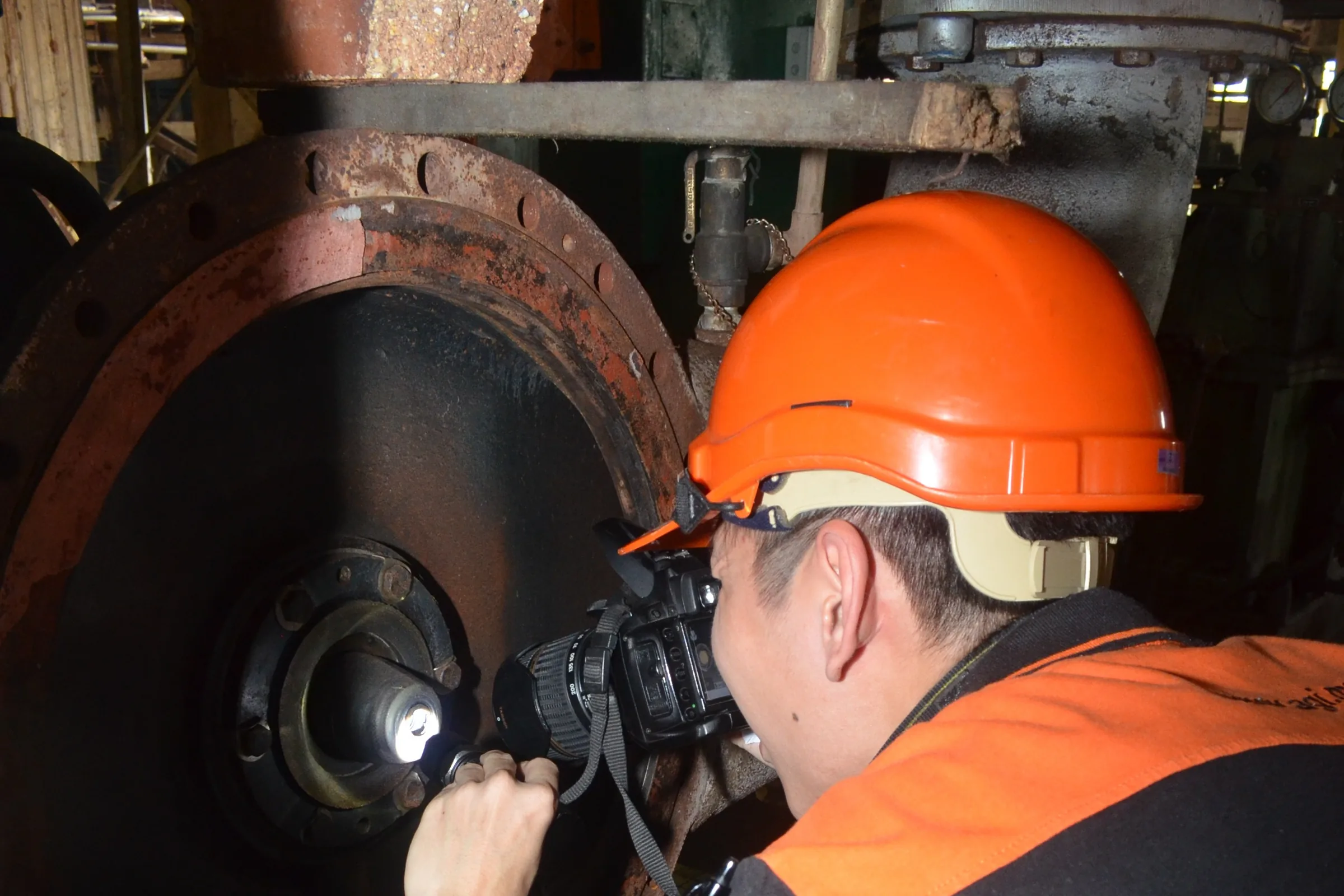
AGI consultant in an orange hard hat photographing a corroded industrial rotor up close by torchlight

Damage Assessment

Plant and Machinery Damage Assessment

Plant and machinery damage assessment determines the nature and extent of damage to process plant, rotating equipment, switchgear and production lines, and the appropriate repair, restoration or replacement scope.

When to call

  • After fire.
  • After flood.
  • After contamination.
  • After impact.
  • Before a repair scope is committed.

What you receive

  • AGI may be instructed by any party requiring an independent plant and machinery damage assessment.
  • Most engagements produce a preliminary view within days of the site visit, so that restart and spares-ordering decisions do not wait for the full…

What Is Plant and Machinery Damage Assessment?

It is the determination of what has happened to process plant, rotating equipment, switchgear or a production line after fire, flood, contamination or impact, and what should be done about it. The assessment differs from a mechanical failure investigation, which asks why a machine failed. This work instead asks what condition the equipment is now in, and whether cleaning, reconditioning or replacement is the appropriate response.

It also differs from a repair quotation. A quotation is prepared by the party who will carry out and be paid for the work it describes. A damage assessment is independent of that outcome, and is often used to verify a quotation before the cost is committed, or to establish the scope before one is sought at all.
How We Assess

  1. Scope and site safety. The equipment and systems to be examined are agreed, and any immediate isolation or safety requirement is addressed before detailed examination begins.

  2. Item-by-item examination. Each machine, panel or line section is examined individually, rather than assessed as a single figure for the facility as a whole.

  3. Functional testing. Motors, drives, switchgear and control systems are tested against their rated performance, not simply checked to see whether they start.

  4. Contamination testing. Residues, corrosion products and deposits are sampled and analysed where the source or extent of contamination is not otherwise clear.

  5. Comparison against specification. Test results are compared with the manufacturer's tolerances and the equipment's original specification, rather than a general sense of what "should" still work.

  6. Salvageability determination. Equipment is assessed as restorable, requiring reconditioning, or requiring replacement, against the evidence gathered rather than its outward condition.

  7. Manufacturer requalification. Where the manufacturer offers a cleaning, testing and requalification process, and warranty reinstatement depends on it, that process is followed and documented as the basis for the restore-versus-replace finding.

  8. Reporting. The finding sets out what was examined, what was tested, and what the evidence supports for repair, restoration or replacement, together with the sequence in which the work should proceed. Where the evidence permits, the remaining cause or contributing causes are reported; where it does not permit a reliable determination, that limitation is stated.

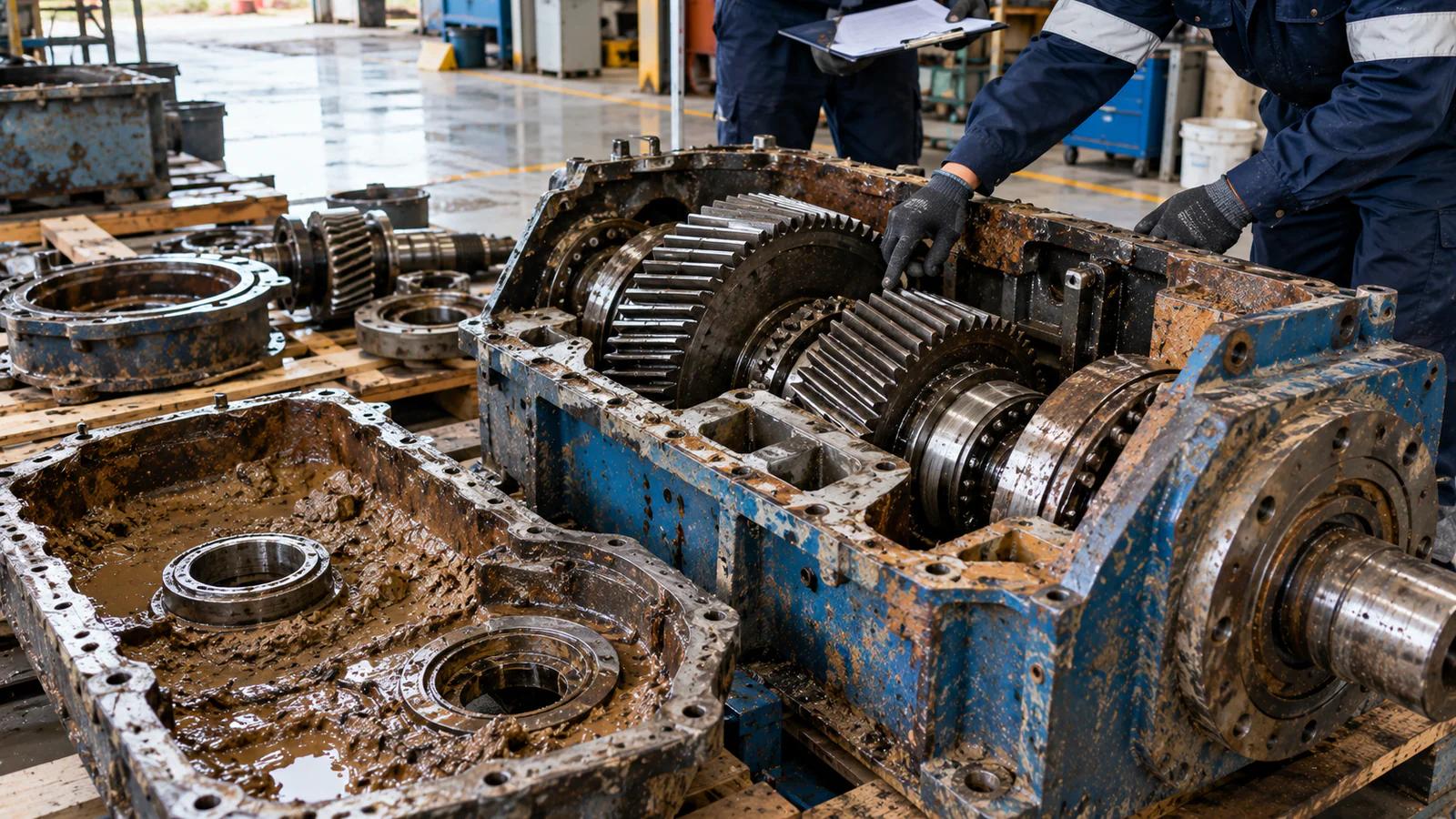
Gearbox contaminated by floodwater, stripped open for a salvage assessment
Plate 01Gearbox contaminated by floodwater, stripped open for a salvage assessment

What We Assess

Process plant. Reactors, vessels, heat exchangers, piping systems and the instrumentation that controls them, assessed for corrosion, contamination and the integrity of pressure-retaining components.

Rotating equipment. Motors, pumps, compressors, fans and gearboxes, assessed for bearing and winding condition, alignment, vibration signature and lubrication contamination.

Switchgear and control systems. Motor control centres, distribution boards, programmable logic controllers and instrumentation, assessed for insulation condition, contamination and the safety of re-energising the equipment.

Production lines. Conveying, forming, packaging and process equipment assessed as a connected system, because the sequence in which individual machines are restored usually determines how quickly the line as a whole returns to production.

What Decides These Cases

Whether contamination can be verified as removed. A machine that has been cleaned is not necessarily a machine that has been decontaminated to specification. Chemical testing, not a visual check, establishes whether the requalification threshold has been met.

Whether the manufacturer will stand behind the equipment. Where warranty reinstatement depends on a documented requalification process, following that process is usually decisive, both for the technical finding and for the commercial position it supports.

Spares and lead time. Restoration is sometimes the technically sound outcome but not the practical one, where the lead time for a critical spare or a replacement component would leave the equipment down longer than replacing it outright. The assessment weighs that lead time alongside the technical finding, rather than treating restoration as the default.

Pre-existing condition. Wear, prior repair and deferred maintenance are separated, as far as the evidence permits, from damage caused by the event under review, because that separation usually decides what portion of the repair scope is properly attributable to the incident.

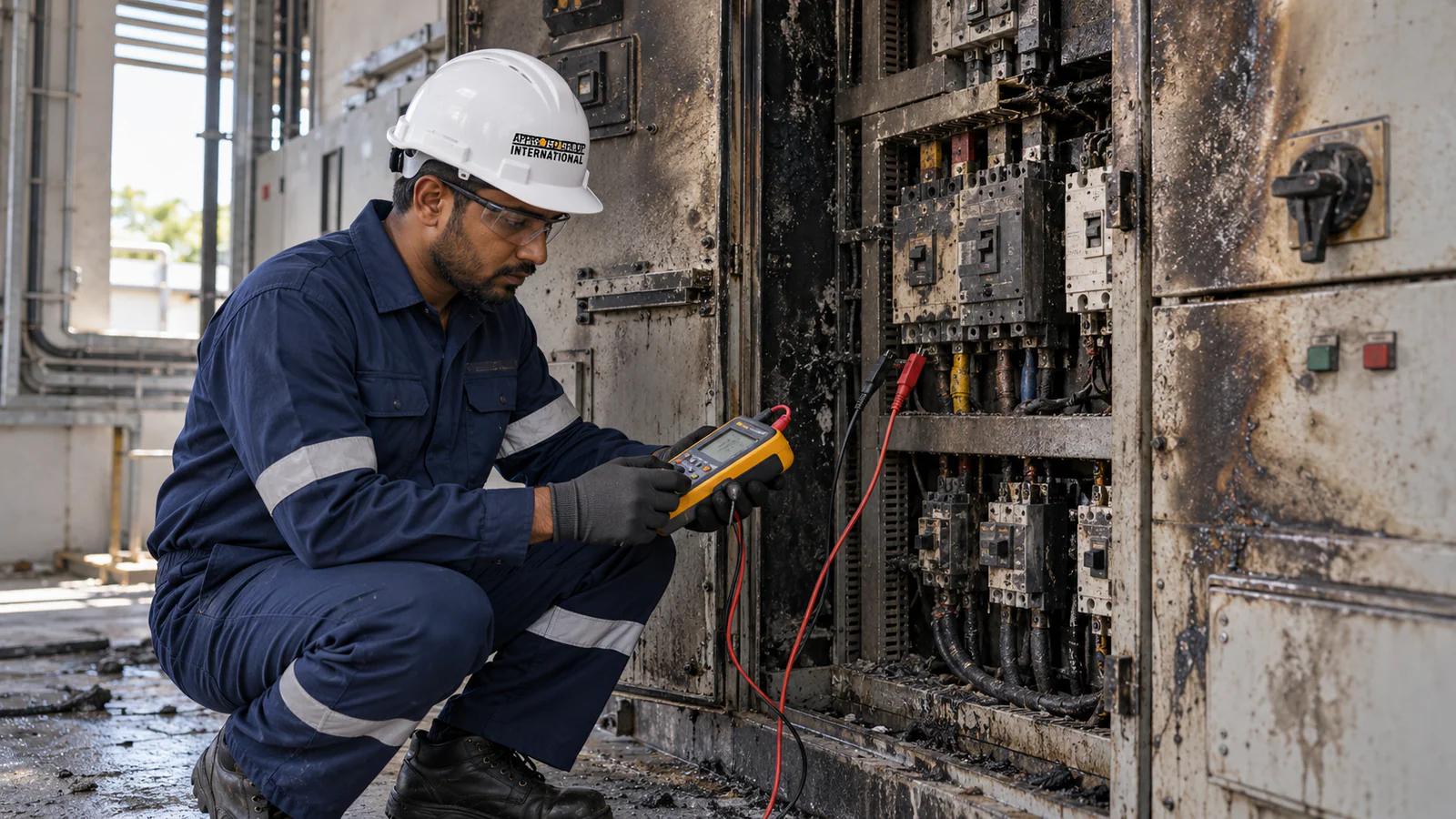
AGI engineer testing a fire-damaged motor control centre with a multimeter
Plate 02AGI engineer testing a fire-damaged motor control centre with a multimeter

Common questions

About plant and machinery damage assessment

The questions that come up before an instruction, answered plainly.

24/7 response

Protect the evidence first

Restrict access, change nothing, and call. Most of what decides a case is still on site in the first few days.

Emergency line open at all hours, across every office.