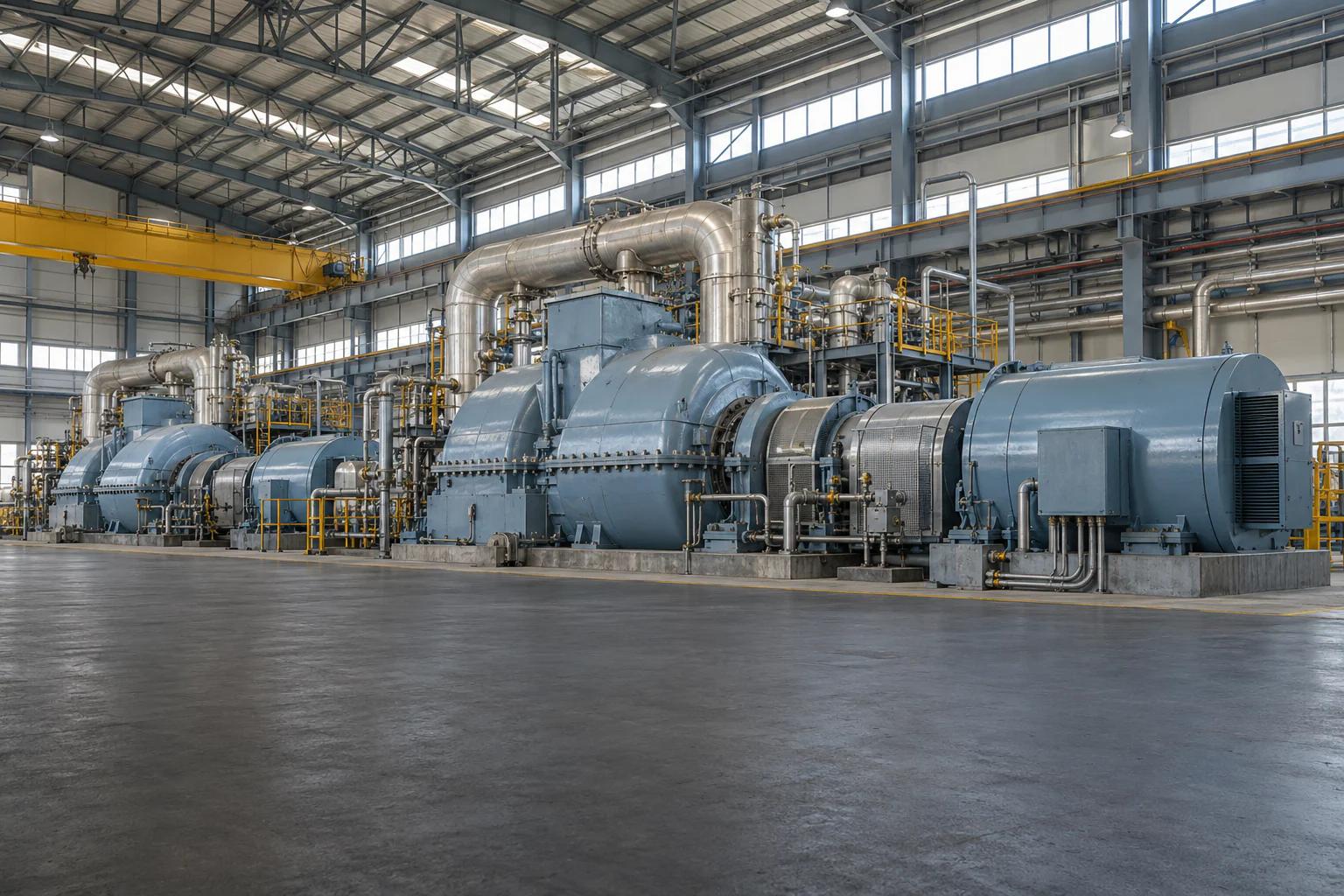
Critical-machinery identification and consequence ranking. Before any equipment is inspected, machinery is ranked by the consequence of its failure: safety, production loss, or knock-on damage to connected systems. The assessment spends its time where the risk is greatest.
Boilers, pressure vessels and thermal oil systems. Reviewed for water or oil chemistry, insulation condition, corrosion and leakage risk, the mechanisms our investigations have traced to a boiler explosion and, separately, to a fire that began as a thermal oil leak.
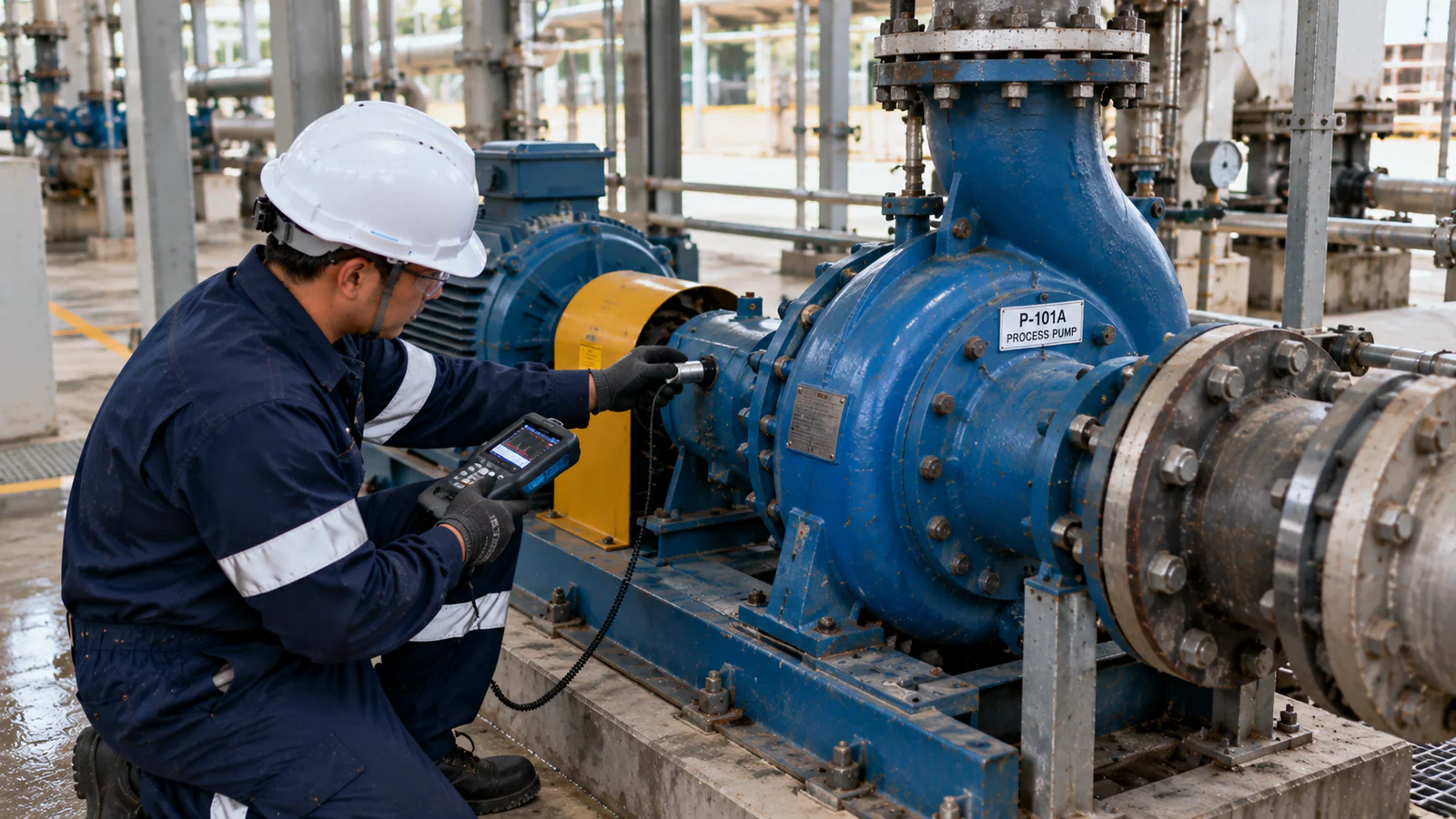
Rotating machinery. Turbines, compressors, pumps and motors are assessed for vibration, lubrication condition, alignment and bearing wear, close to the same indicators examined once a rotating-equipment failure has already occurred.
Chillers and refrigeration. Reviewed for refrigerant condition, compressor health and control stability, distinguishing normal ageing from an early sign of a developing failure.
Cranes, hoists and conveyors. Assessed for structural condition, hoist rope and chain wear, drive and brake condition, and, for conveyors, belt tracking, idler wear and guarding.
Maintenance regime and spares. A maintenance programme that looks adequate on paper can still leave a facility exposed if critical spares are not held or a component's lead time now runs into months. The regime is reviewed against the actual criticality and condition of the equipment it covers.
Operating practice, protection and interlocks. Machinery is only as safe as the practices around it. Permit-to-work practice, operator training and the condition of control interlocks are reviewed, since a bypassed interlock can turn a minor mechanical issue into a serious one.
Residual life and fitness for service. Where equipment is ageing or has a documented history of repeated failure, we help frame the right residual-life and fitness-for-service questions: what further non-destructive testing, thickness measurement or engineering calculation would be needed to answer them. A general risk assessment does not answer those questions itself, and it does not certify residual life or fitness for service. Where that level of assurance is required, the specific detailed investigation that would support it is recommended separately.