Ignition sources. Electrical reticulation and distribution boards are the ignition source our investigations trace back to most often, so loose terminations, overloaded circuits, damaged insulation and ageing switchgear are the first thing surveyed. Machinery and process heat, and hot work such as welding and cutting, are assessed alongside them. Where a facility handles it, self-heating stock such as palm kernel or agricultural residue is assessed too. It can ignite from within a stockpile, with no external spark at all.
Fuel load and storage. Combustible loading is assessed against the compartment it sits in, not against a generic limit. Packaging, racking density, chemical storage and housekeeping practice all change how quickly a small ignition becomes a large fire.
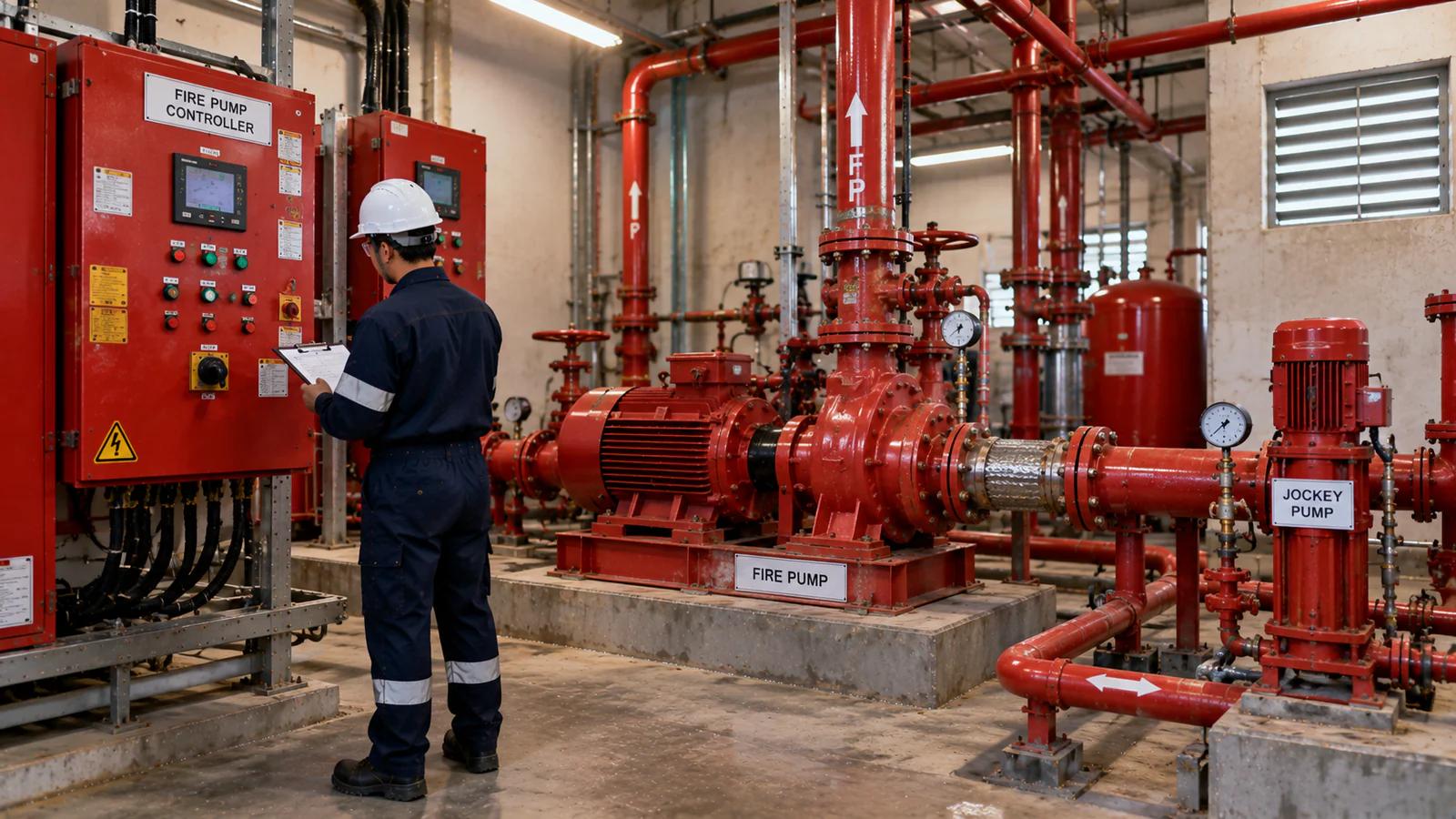
Fire protection system condition and readiness. Sprinklers, hydrants, fire pumps, alarm panels and hose reels are reviewed as a condition review, not a compliance certification. Is the valve open, is the pump proven under duty conditions, does the panel register the zones it should, is the hose reel accessible and charged. A record showing a system was serviced is a starting point, not the answer.
Compartmentation and spread paths. Fire-rated walls, doors, penetrations and voids are assessed for the gaps that let a contained fire spread further and faster than the building's design intended.
Housekeeping and management. Blocked escape routes, propped fire doors, unauthorised storage in plant rooms and deferred permit-to-work discipline are common findings. They have nothing to do with the fire protection equipment itself. They have everything to do with whether it works when needed.
Evacuation and continuity exposure. Beyond life safety, how a fire in a critical area would affect the ability to keep operating is assessed: single points of failure in production, data or utility rooms, and whether the evacuation plan still matches current occupancy and layout.
The deliverable is a single prioritised risk register covering all of the above, ranked so that management can see immediately what needs attention first.