
Approved Group International
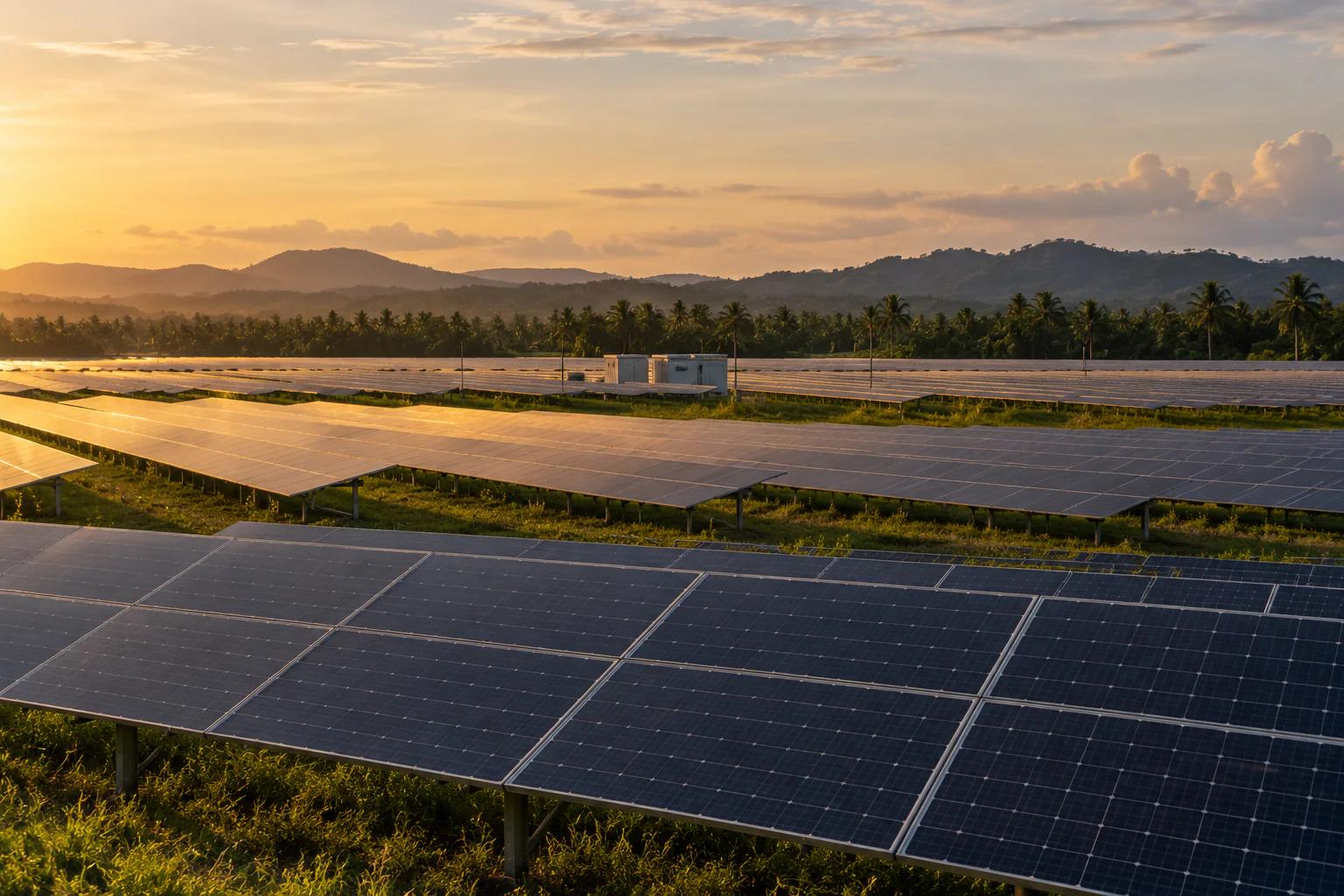
Utility-scale solar farm at golden hour with forested hills behind

Energy and process

Solar and Renewable Energy

AGI investigates why solar, biomass and wind assets fail. We assess and restore what a fault or a fire leaves behind. We survey arrays and plant before either happens.

Energy and process

What we are called to in solar and renewable energy

Fire, failure investigation, damage assessment, restoration and risk assessment for solar and renewable energy operations, by the engineers who investigate the losses.

All services

What Fails in Solar and Renewable Energy

DC-side arc faults. account for the largest share of the failures reaching us. A degraded module connector, a combiner box terminal or a junction worn by years of thermal cycling is usually behind it. Inverter failure interrupts generation. Sometimes it starts a fire. The cause is often a cooling system fault, a component-level defect, or a fault fed back from the array side. Module degradation reduces output gradually. It includes potential-induced degradation and hot-spot formation from a shaded or defective cell. It is frequently the subject of a warranty or performance dispute rather than a fire loss. Lightning and surge damage is a recurring problem here. Exposure is the reason. A solar farm presents a great deal of exposed conductor across open ground. The result is inverter and string-level loss that catches many asset owners unprepared, and that a standard property policy does not always anticipate. Battery storage failure is a further and growing source of loss where a battery system sits alongside a solar or wind asset, and a single cell entering thermal runaway can propagate before the battery management system intervenes.
Fire and Explosion

A DC arc fault in a combiner box or along a string run is the ignition source behind most solar fires. It is a particularly stubborn one. The array keeps generating in daylight. A fault that would self-extinguish on a de-energised AC circuit can continue to arc for as long as the sun is up. Rooftop arrays raise a second problem. Access is the issue. The fire service often cannot safely reach the roof while the array remains live, which changes how a fire spreads and how the origin has to be reconstructed afterward. Biomass plant carries a different exposure. Stored biomass fuel is prone to self-heating and spontaneous combustion where moisture content and storage conditions are not controlled. It is closer to an agricultural fire than an electrical one.

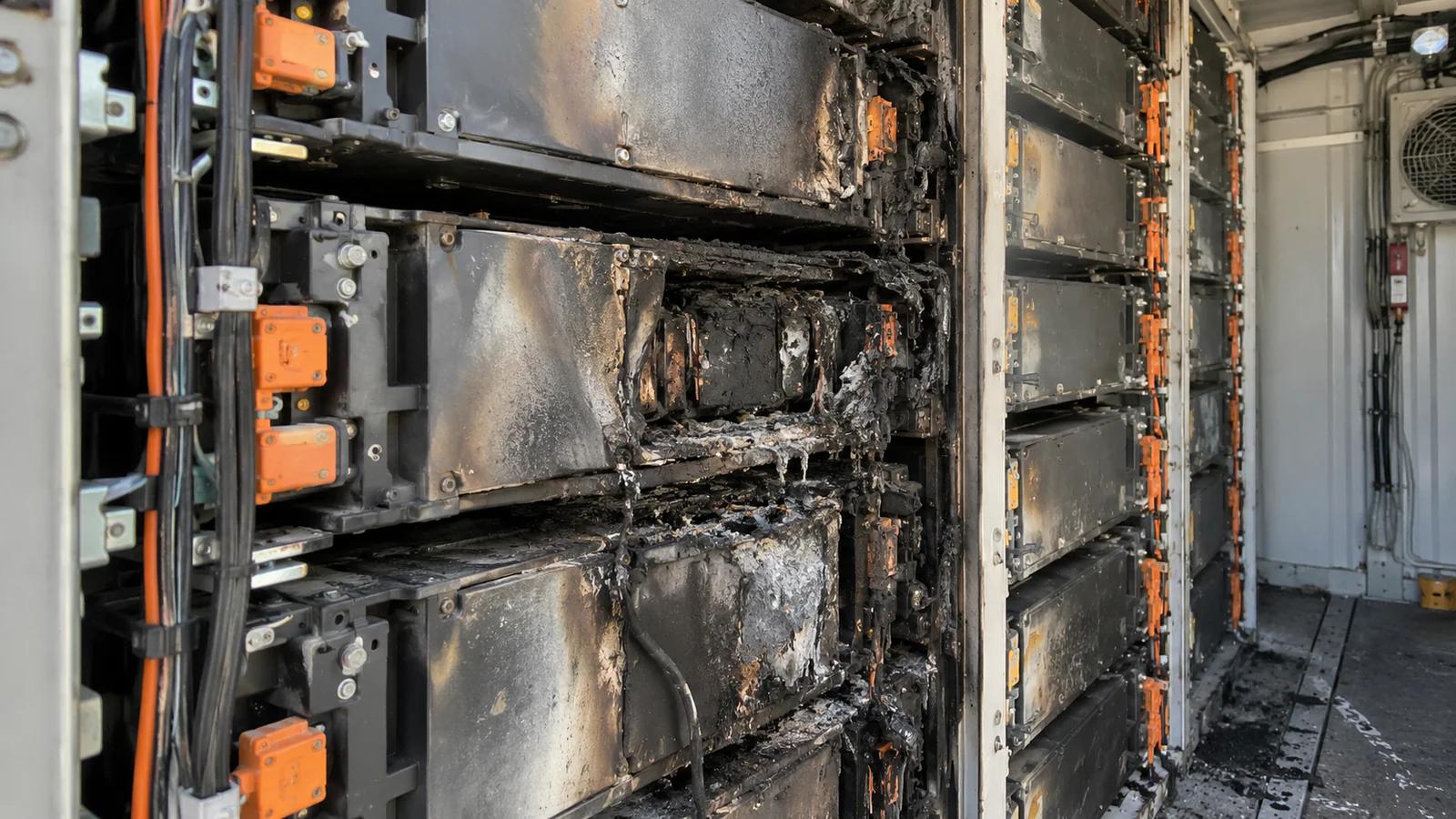
Battery storage modules scorched by thermal runaway inside an energy storage enclosure
Plate 01Battery storage modules scorched by thermal runaway inside an energy storage enclosure

Failure Investigation

Electrical and electronic failure investigation covers inverters, combiner boxes, string monitoring equipment and the DC and AC wiring connecting them, working from insulation resistance testing, thermal imaging and, where a fire has occurred, physical examination of arc damage at connectors and terminals. Mechanical investigation applies to wind assets. Gearbox, bearing and blade failures follow patterns closer to conventional rotating machinery than to anything electrical. Structural investigation applies to array mounting systems and wind turbine towers. It matters where wind loading, foundation movement or a mounting failure is in question. Where the evidence does not permit a reliable determination, that limitation is stated.

Damage Assessment and Restoration

A damage assessment determines the nature and extent of the damage and the appropriate repair, restoration or replacement scope, and restoration begins once the relevant evidence has been documented, preserved or formally released for work. A fire or a major fault on an array rarely damages every module equally. Treating an affected string or array as a single write-off usually overstates the loss. Modules, inverters and combiner boxes are assessed individually against the physical mechanism that caused the damage. Heat, smoke and water affect them differently. A module with surface soiling is not treated the same as one with cell-level thermal damage. The same engineers investigate the cause. They also assess what is salvageable. That distinction is made from evidence already gathered on site, rather than reconstructed later by a second visit.

Risk Assessment

A pre-loss survey of a solar asset looks for the deterioration an investigation would otherwise find only after a fire. Infrared thermography of module strings and combiner boxes identifies developing hot spots and degraded connections before they arc, and surge protection devices are inspected for condition and correct rating, since a device rated for the wrong transient level offers little real protection. An open array is exposed to induced transients. Combiner box and inverter enclosures are checked for water ingress and thermal stress. On biomass sites, fuel storage and handling practice is reviewed against the self-heating risk a standard fire survey often overlooks.

The Work in This Sector

We investigate. Our engineers determine the origin of DC arc faults in combiner boxes and string wiring, examine inverter failures for a cooling fault or an internal component defect, and establish whether module degradation reflects normal wear or a manufacturing defect. Battery storage systems installed alongside solar and wind assets bring their own failure mode: a cell or module entering thermal runaway, and a battery management system that may or may not have responded as designed. Wind turbine investigation extends to the drivetrain, blade and generator systems, and to the nacelle and tower above them. Biomass plant failures are traced through the fuel store, chimney and control cabinet, supported by sensor and control-system data where it survives.

We assess. Module and cell condition is tested rather than assumed. IV-curve tracing and electroluminescence imaging separate a genuine cell fracture from a cable or connector fault that only looks similar from outside, and insulation-resistance and current-flow testing supports a hail or storm damage scope across an array too large to inspect panel by panel. Battery racks, modules and protection devices are assessed individually once a thermal event has occurred, because one damaged cell does not mean the whole stack is treated as a loss.

We restore. Strings, inverters and combiner boxes recovered from a fault or a fire are cleaned, tested and returned to service where the evidence supports it, and components beyond repair are identified before a wholesale replacement is assumed. Control cabinets and monitoring equipment affected by water or heat are decontaminated and functionally retested before reconnection.

We survey before a loss. Drone infrared thermography of module strings, combiner boxes and turbine components identifies a developing hot spot, a defective string or an early bearing fault, and the resulting baseline record supports later performance and warranty questions. Surge protection devices, enclosure sealing and fuel storage practice are reviewed against the standard they were meant to meet.

What Decides These Cases

Whether module or inverter degradation predates the reported event. This is commonly disputed. Performance data, thermal imaging history and manufacturer warranty records usually distinguish gradual degradation from genuine storm, lightning or fault damage, and the distinction decides most of these disputes, for the asset owner's warranty position as much as for the insurer.

Whether a DC arc caused the fire or resulted from it. As with any electrical fire, arc damage can look similar either way. A burnt combiner box does not announce which came first. The direction of propagation through the array is what usually resolves it.

Common questions

Working in solar and renewable energy

24/7 response

A loss in solar and renewable energy?

Tell us what failed. You will get an engineer who has seen it in this sector, not a general enquiry form.