
Approved Group International
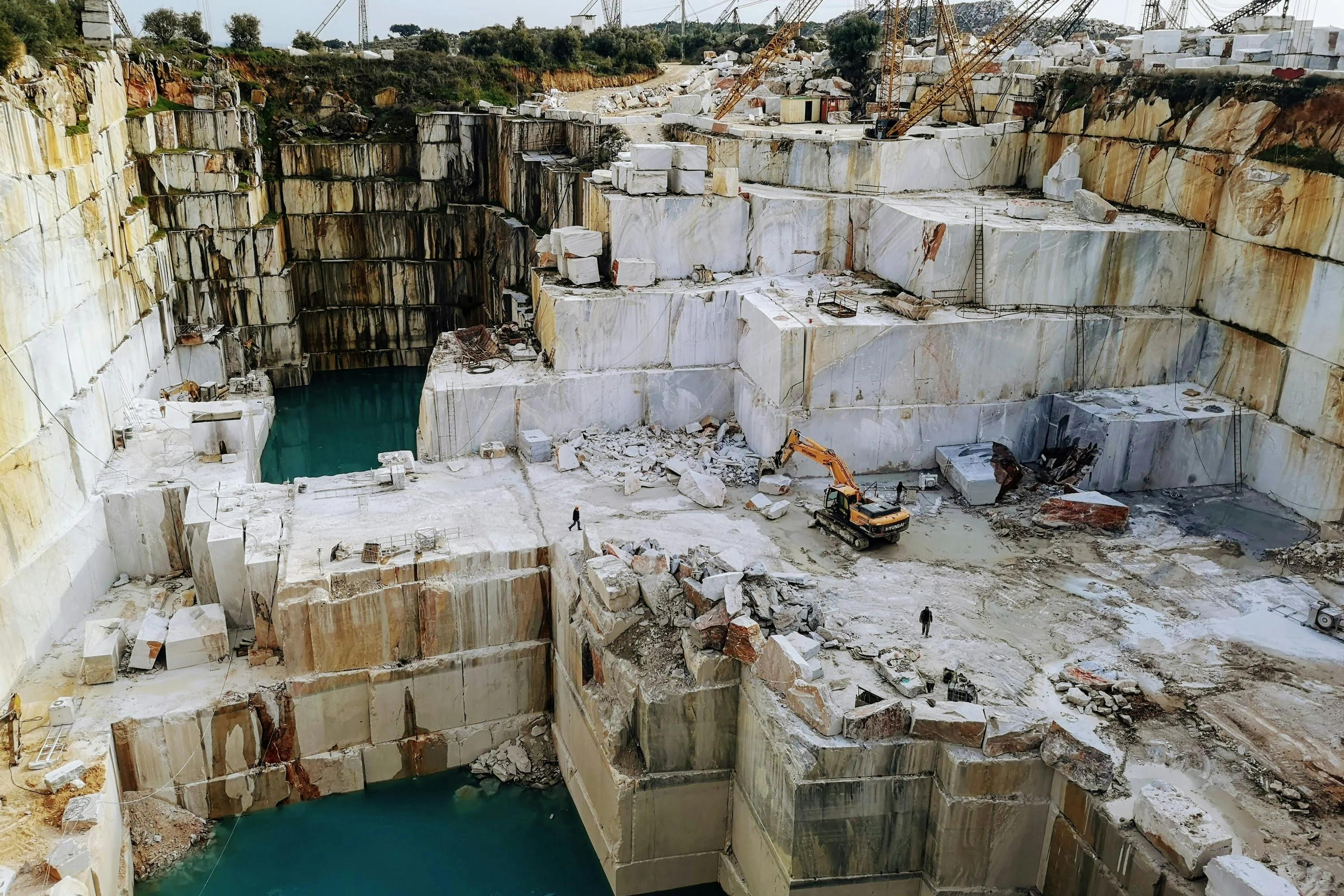
Quarry with stepped rock benches, an excavator and pools of water

Energy and process

Mining and Quarrying

AGI investigates why mining and quarrying plant fails. We assess and restore what a fire or a breakdown leaves behind. We survey operations before either happens.

Energy and process

What we are called to in mining and quarrying

Fire, failure investigation, damage assessment, restoration and risk assessment for mining and quarrying operations, by the engineers who investigate the losses.

All services

What Fails in Mining and Quarrying

Conveyor belt fires. are the single most recurring cause of loss in this sector, and most start at a seized idler bearing, where friction ignites the belt itself or the material piled up around it before anyone notices the bearing running hot. Crusher and processing plant failure usually comes down to bearing and liner wear. It costs downtime, and where friction or a mechanical spark is present, it also carries a fire risk of its own. Haulage and mobile plant fires usually begin in an engine bay. A hydraulic leak reaching a hot surface is the other common cause. They are investigated as a discipline of their own. Electrical failure in wet and dusty conditions is its own problem. Moisture gets in. It does not take long. Particulate ingress degrades insulation and enclosures over time, producing tracking and flashover faults a dry site rarely shows. Generator, transformer and substation failure feeding a site's power distribution is a further recurring source of loss, distinct from the electrical faults that develop within process plant itself.
Fire and Explosion

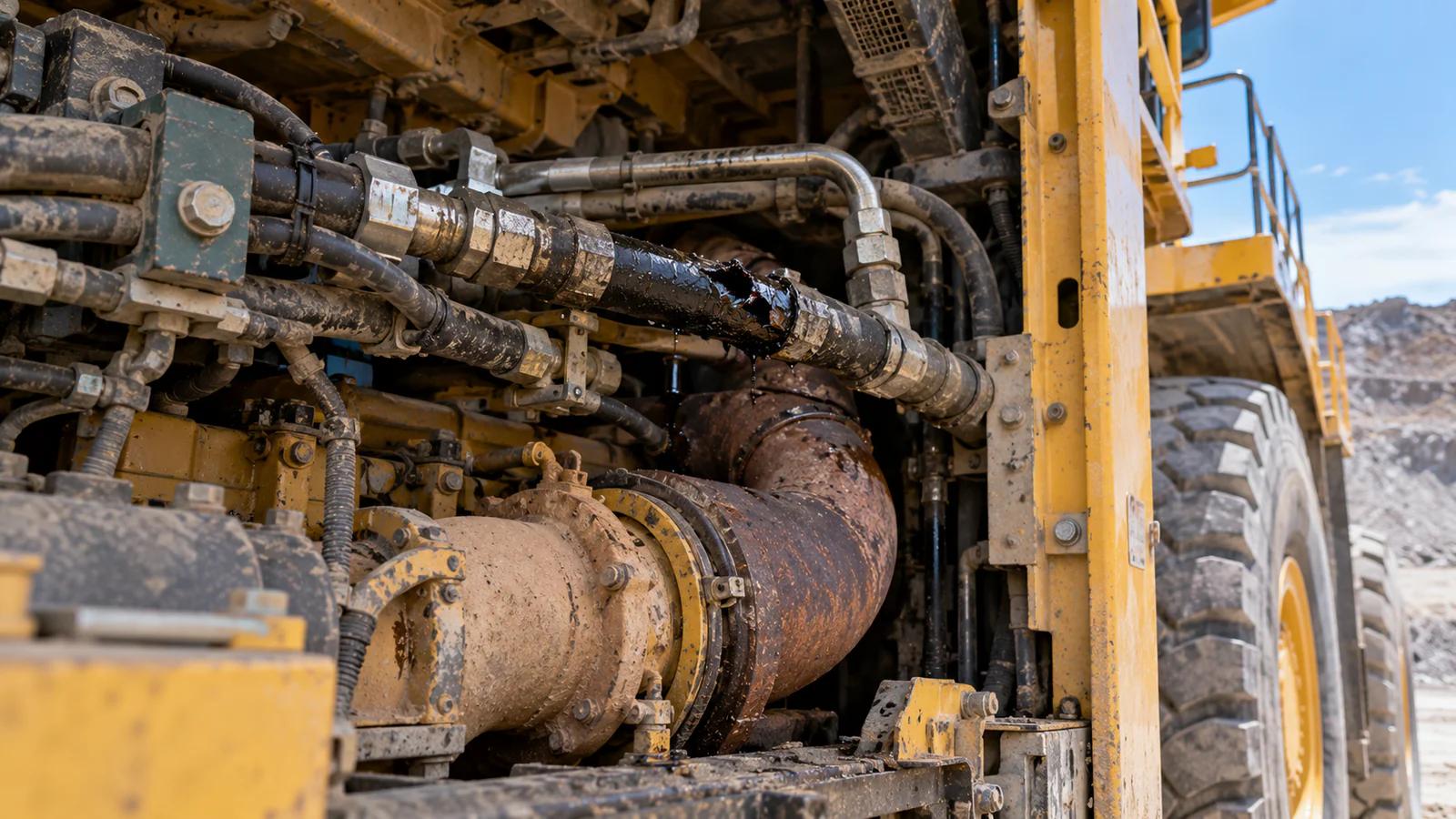
A conveyor fire, once established, travels. It can run the length of the belt. In a confined or underground gallery it is hard to fight. Early identification of the ignition source is central to understanding how the fire developed, and whether the protection systems that were meant to catch it did what they were supposed to do before it spread that far. Where the material handled is combustible, accumulation at an enclosed transfer point carries a dust explosion risk. That is investigated separately from the fire. Fuel and lubricant fires are common enough here to warrant their own method. A hydraulic line failure leaves different evidence from an engine compartment fault, and both differ from an electrical or structural fire.

Haul truck engine bay with hydraulic lines running above the hot exhaust
Plate 01Haul truck engine bay with hydraulic lines running above the hot exhaust

Failure Investigation

Mechanical failure investigation covers conveyors, crushers, haulage equipment and processing plant. We work from bearing and component examination, maintenance history and, where it exists, vibration data. The question is simple. Did wear, overload or a maintenance gap cause the failure? Electrical failure investigation covers distribution networks, switchgear and motor control equipment operating in conditions that accelerate insulation degradation, using insulation resistance testing and physical examination of ingress protection to establish where the fault began. Where the evidence does not permit a reliable determination, that limitation is stated.

Damage Assessment and Restoration

A damage assessment determines the nature and extent of the damage and the appropriate repair, restoration or replacement scope, and restoration begins once the relevant evidence has been documented, preserved or formally released for work. Dust and moisture ingress complicate every assessment on a mining site, because contamination that predates an incident is easily mistaken for damage caused by it. Equipment is assessed against its actual operating history and condition, and a harsh environment does not by itself mean a total loss. Our engineers establish cause. They also assess what is salvageable. That distinction is made once. It covers pre-existing contamination and incident damage, from evidence gathered on site.

Risk Assessment

A pre-loss survey in this sector looks for the deterioration an investigation would otherwise find only after a fire or a breakdown. Thermography of conveyor idlers and drive motors identifies a developing bearing fault before it seizes. Electrical enclosures are checked for ingress protection rating and actual sealing condition, not just the rating stamped on the nameplate. Fire suppression systems fitted to haulage and processing equipment are tested for coverage and condition. Presence alone is not enough.

The Work in This Sector

We investigate. Conveyor and crusher fires are traced to a seized bearing, a worn liner or an electrical fault in the drive system. Haulage and mobile plant fires are examined from the engine bay outward, distinguishing a hydraulic leak reaching a hot surface from an electrical origin. The same discipline covers rotating machinery generally, gearboxes, pumps and compressors, and the power supply equipment a site depends on: generators, transformers and substations, where insulation and switchgear failures are a distinct and recurring source of loss separate from process-plant faults. Starter and battery system failures on mobile plant are investigated on the same electrical basis.

We assess. Damage on a mining site is assessed against the plant's actual operating history, because long-term dust and moisture contamination is easily mistaken for damage caused by a single incident. Repair-versus-replace decisions weigh replacement cost against the production impact of extended downtime, and heavy equipment is reviewed alongside the manufacturer's own records and specification where that adds to the finding.

We restore. Process equipment, tanks, piping and pumps, is decontaminated rather than replaced by default, using grit or dry-ice blasting where contamination has become embedded in the surface. Conveyor sections, drive components and electrical enclosures recovered from a fire or a fault are tested and returned to service once the evidence supports it.

We survey before a loss. Thermography of idlers and drive motors, ingress protection testing on electrical enclosures, and fire suppression coverage checks are paired with a review of hot-work controls and the site's boiler and machinery hazards, supporting restart planning around the assets a production stoppage would hit hardest.

What Decides These Cases

Whether the ignition source was electrical or mechanical friction. A conveyor or crusher fire can start at an electrical fault in the drive system, or at friction from a seized bearing. The two are not the same claim. They point to different maintenance and design questions.

Whether fire protection on mobile or processing equipment operated as intended. Suppression was fitted. The fire spread anyway. Establishing whether the system activated, and whether it was ever adequate for the exposure, often decides where responsibility sits.

Common questions

Working in mining and quarrying

24/7 response

A loss in mining and quarrying?

Tell us what failed. You will get an engineer who has seen it in this sector, not a general enquiry form.