
Approved Group International
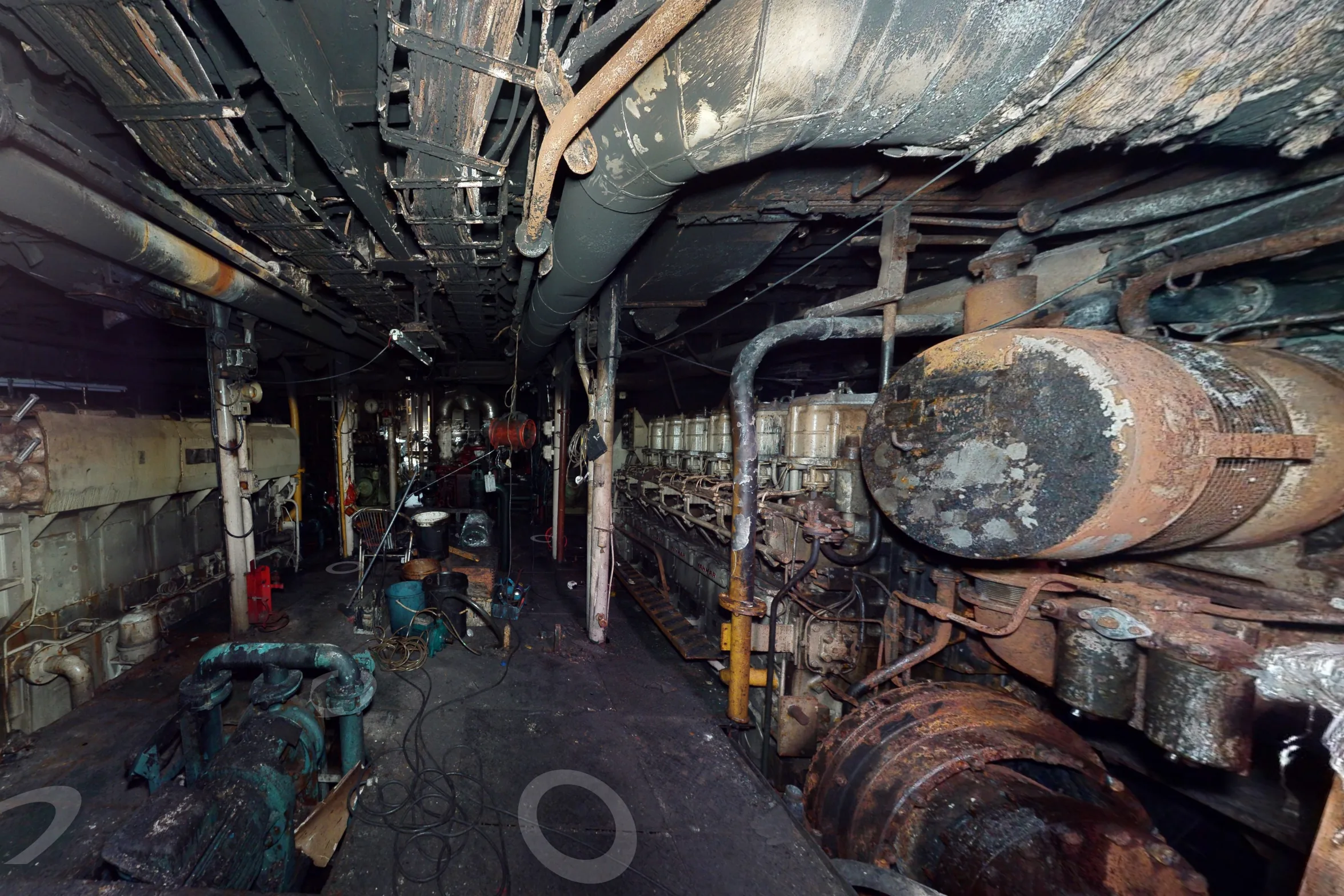
Fire-damaged ship engine room with blackened engines, pipework and deckhead

Forensic Investigation

Marine Hull and Machinery Failure Investigation

Marine hull and machinery investigation establishes what caused damage to a vessel itself, not to what it was carrying.

When to call

  • A vessel is out of service and the cause is disputed.
  • Recovery or defence involving a third vessel, a contractor or a shipyard.
  • An industrial incident.
  • Pre-loss.

What you receive

  • AGI may be instructed by any party requiring an independent finding on a marine casualty.
  • The engagement generally produces preliminary advice within days of attendance or document access, and a final report setting out the evidence,…
  • Many of our engineers hold chartered or professional registrations relevant to the jurisdictions in which they practise.

What Is Marine Hull and Machinery Investigation?

It establishes the physical cause of damage to a vessel's engines, propulsion, generators, switchboards, hull or onboard machinery. That is a different exercise from a class survey, which checks a vessel against classification society rules to confirm it remains certified as seaworthy. A hull and machinery investigation works backward instead, from a casualty that has already happened, to establish what caused it. It is different again from a cargo survey, which assesses the goods carried rather than the vessel carrying them; that sits within our separate marine cargo damage practice. Where a casualty involves fire, in the engine room, on deck or in cargo spaces, our fire origin and cause team works the case alongside the marine engineering finding.
How We Investigate

Review of vessel documents. Class certificates, survey history, maintenance records and engine logs, to understand the vessel's condition leading up to the casualty.

Vessel inspection or desktop peer review. Where the vessel is accessible, an engineer attends for physical inspection of the affected machinery, compartment or hull section. Where it has sailed on, been repaired, or the incident occurred far offshore, we carry out a desktop peer review of the vessel's own incident report and supporting evidence instead.

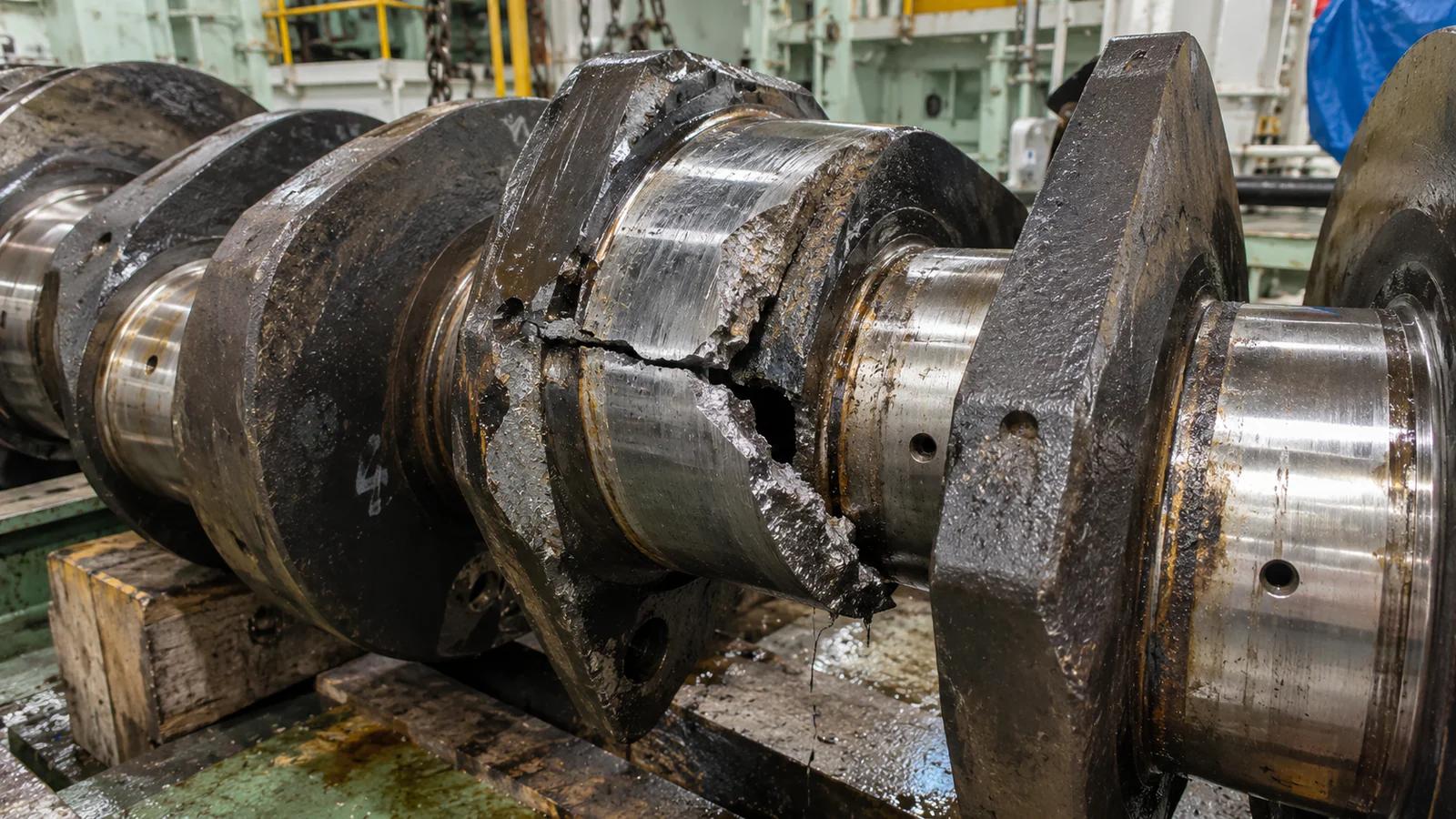
Engine and machinery testing. Affected engines, generators, switchboards or propulsion equipment, examined and tested where practicable, using non-destructive testing, wear-debris and oil analysis, fractography and infrared thermography as the failure mode requires.

Environmental and voyage data review. Weather, sea state and voyage data checked against the claimed cause, since conditions at the time of an incident often confirm or rule out storm damage or impact.

Elimination. Mechanical failure, operator error, weather, impact and deliberate damage are each tested against the evidence, and the finding names the cause the evidence actually supports. Where the evidence permits, the remaining cause or contributing causes are reported; where it does not permit a reliable determination, that limitation is stated.

Reporting. , with practical recommendations where mitigation is relevant.

Fractured crankshaft from a marine engine with a crack through the journal
Plate 01Fractured crankshaft from a marine engine with a crack through the journal

What We Investigate

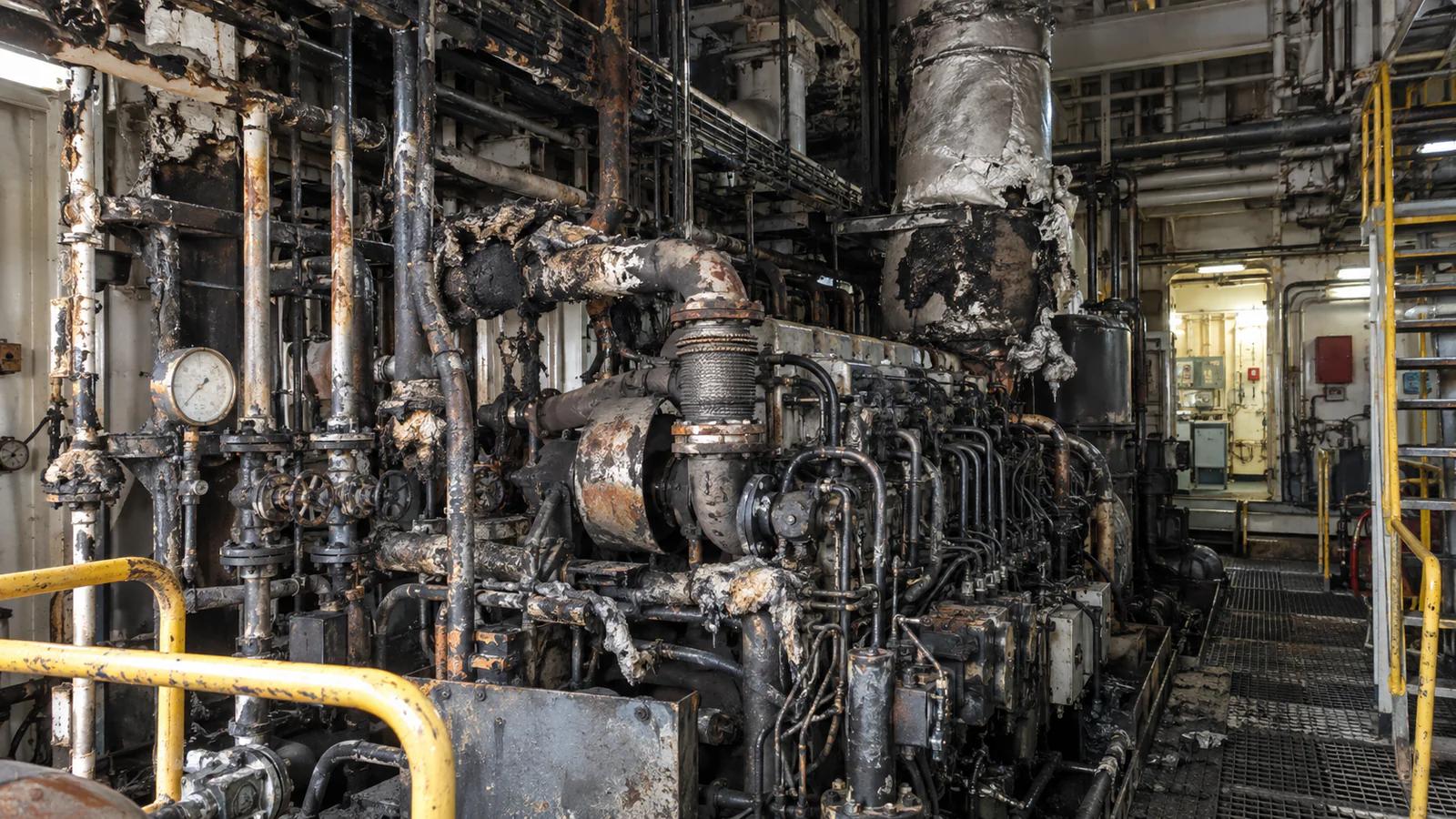
Engine room fires. Fires originating in or around the engine room, from fuel or oil leaks, electrical faults, or ignition sources introduced during hot work or maintenance.

Main and auxiliary engine failure. Breakdown of a vessel's main propulsion engine or auxiliary engines, from mechanical failure, overload, poor maintenance or operating error.

Propulsion, shafting and thruster damage. Failure of thrusters, propellers, shafting and other propulsion equipment affecting a vessel's ability to manoeuvre or maintain power.

Onboard electrical systems. Failure of generation and distribution equipment aboard the vessel, where the same electrical failure analysis applied ashore is adapted to the marine environment.

Hull damage from grounding, contact or heavy weather. Damage from grounding, collision, contact with a structure or floating debris, or the working of a hull in a seaway.

Shipyard and repair-period incidents. Fires and other incidents during construction, repair or maintenance in a dockyard, where hot work, temporary services and multiple contractors are often part of the causation picture.

Barges, dredgers and workboats. Machinery, structural and deck-equipment failures aboard marine plant other than self-propelled vessels, including equipment failing under swell and motion it was never designed to see.

What Decides These Cases

Whether the machinery damage is a maintenance issue or a sudden event. Wear, contamination and fatigue accumulate; an overload, an impact or a control failure does not. The record, the oil analysis and the fracture surface itself usually distinguish one from the other, a distinction that can decide whether a loss is a covered event or a deferred maintenance bill.

Whether the hull damage is consistent with the incident reported. The extent, location and pattern of hull damage either match the grounding, contact or weather event described, or they do not. A hull showing damage in places the reported incident cannot explain raises a question the investigation has to answer before cause can be settled.

The evidential problem created when a vessel returns to service before anyone attends. Commercial pressure to keep a vessel earning is real, and a casualty is often repaired, or the vessel sails on, before an independent engineer reaches it. Where that has happened, the finding is built from records, photographs and a desktop peer review rather than direct inspection, and the report says so. That limitation does not make the finding worthless, but it is not the finding a physical inspection would have produced, and it is not presented as one.

Fire-damaged pipework and machinery in a ship's engine room
Plate 02Fire-damaged pipework and machinery in a ship's engine room

Common questions

About marine hull and machinery failure investigation

The questions that come up before an instruction, answered plainly.

24/7 response

Protect the evidence first

Restrict access, change nothing, and call. Most of what decides a case is still on site in the first few days.

Emergency line open at all hours, across every office.