Approved Group International
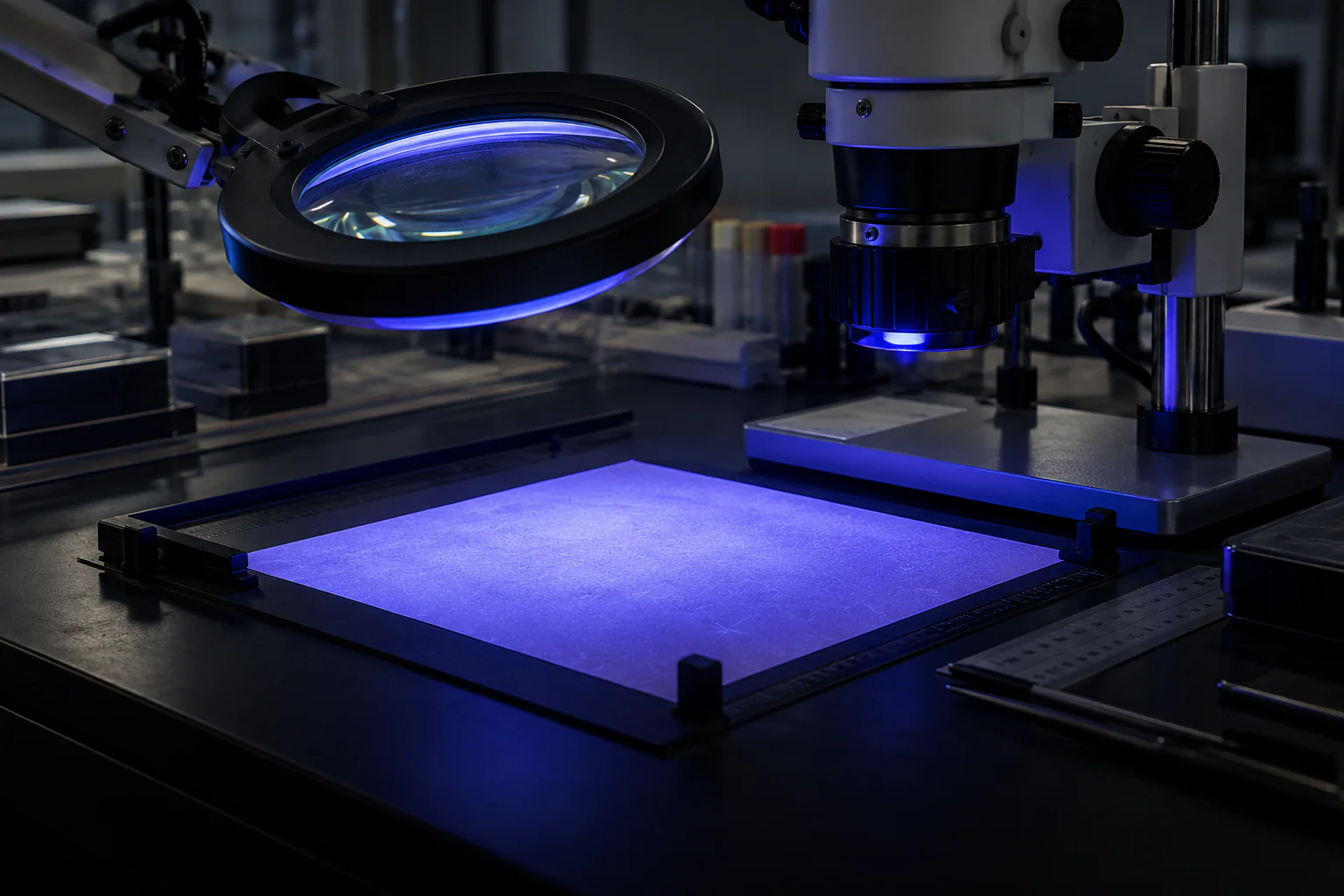
Magnifier and microscope over a sheet of paper under violet UV light in a forensic document laboratory

Forensic Investigation

Forensic Document Examination

Forensic document examination determines whether a signature, agreement, certificate or other document is genuine, altered or fabricated.

When to call

  • A signed agreement is disputed, and a decision cannot wait for the matter to reach court.
  • A business record is suspected of tampering.
  • A legal dispute turns on a contested will, contract or signature.
  • A company wants its document controls reviewed before a dispute arises.

What you receive

  • Companies instruct document examination directly where a contract, invoice or identification record is questioned, with no dispute necessarily…
  • The engagement produces a reasoned opinion on the balance of probability, the comparison method and evidence set out for legal or business review,…

What Is Forensic Document Examination?

It compares a questioned item against known, undisputed reference material to reach a defensible opinion on genuineness. It is not the same exercise as handwriting analysis marketed as a read on personality or character. Examination is directed at a single question: is this document genuine, altered or fabricated, not at what a person's handwriting reveals about them. A firm offering the second is not offering forensic document examination, whatever it calls itself.

How We Examine a Questioned Document

Collect reference material. Known, undisputed signature, handwriting or document samples are gathered before any comparison begins, since a comparison is only as sound as the material it is measured against.

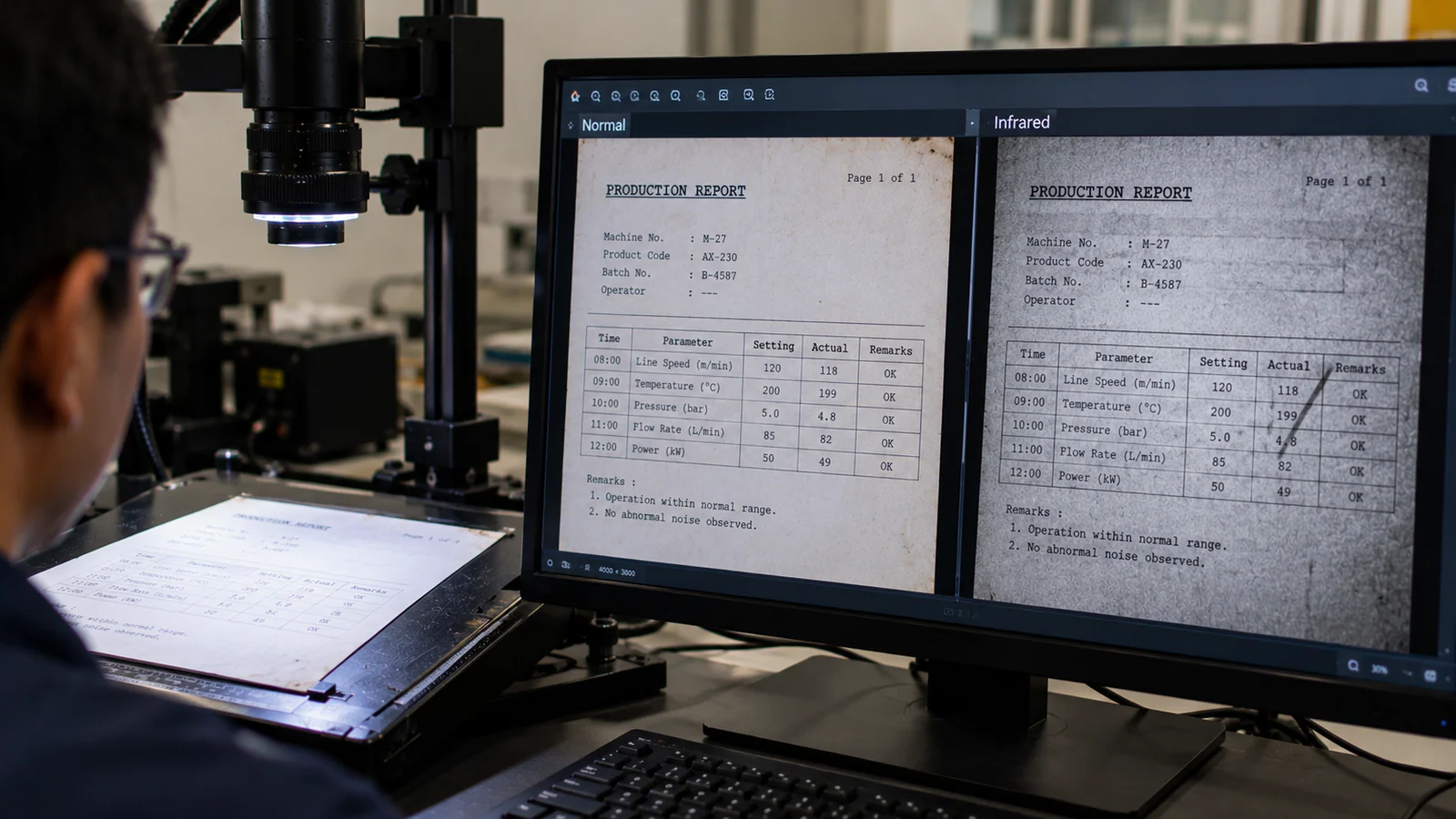
Examine optically and physically. Magnification, oblique and raking light, and infrared and ultraviolet examination identify indentation, erasure, an added stroke or a substituted page.

Analyse ink, paper and printing. Ink, paper stock and printing process are compared against the reference material and against what the document's stated date would require.

Test the sequence and dating. Whether a document's position in a sequence of records, or its stated date, is physically consistent with the rest of the file.

Assess authorship from language and style. Vocabulary, spelling, punctuation and recurring patterns are compared against known material from the author in question, where handwriting alone cannot settle the question.

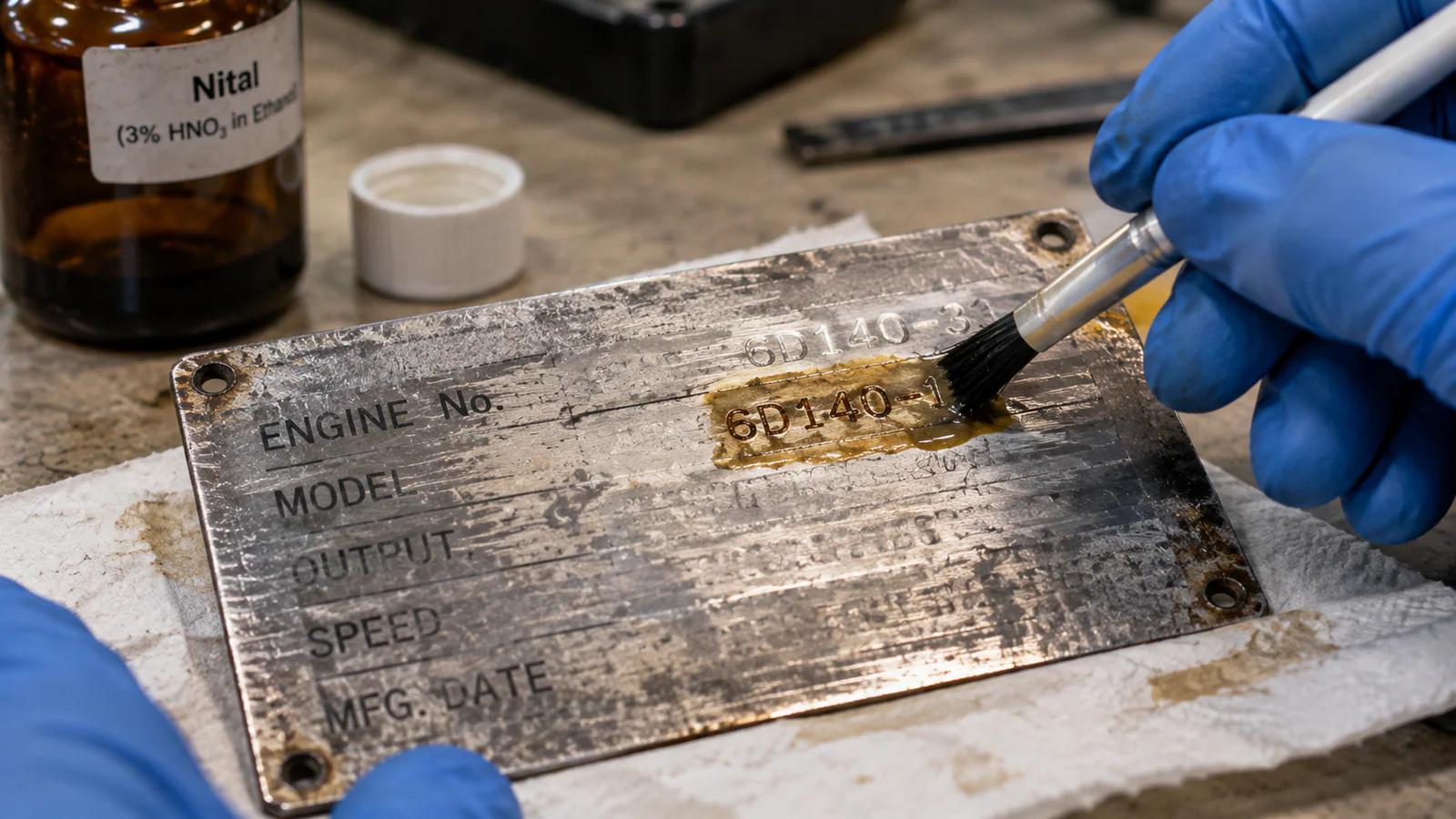
Examine identification marks. A stamped or engraved number is recovered by chemical etching where a surface has been ground and re-stamped, the detection principle used on paper, applied to metal.

Verify photographs and digital documents. File metadata and version history are checked against the account given of when and how an image or document was created.

Each examination proceeds by evaluation and elimination: the possible explanations for the feature in question are tested against the physical and digital evidence, and the report states which survive. Where the evidence does not permit a reliable determination, that limitation is stated.

Examiner comparing a document under normal and infrared light on two screens
Plate 01Examiner comparing a document under normal and infrared light on two screens

What We Examine

Signature and handwriting comparison. A questioned signature or handwritten entry, on agreements, wills, contracts and certificates, compared against known samples from the same person.

Invoice and record tampering. Whether an invoice, contract or other business record is consistent with the dates, figures and parties it represents.

Sequence and dating questions. Whether a document's date or place in a sequence of records holds up against the rest of the file.

Authorship from language and style. Vocabulary, spelling, punctuation and recurring error patterns used to identify a probable author where a document's origin is disputed.

Identification marks. Verification of a chassis, engine or serial number by chemical etching where a surface has been altered.

Authenticity of photographs and digital documents. File metadata and version history checked against the account given of when and how the item was produced.

What Decides These Cases

Whether the reference material is genuinely undisputed. A comparison built on samples whose own origin is in question carries little weight, whatever the examination technique applied to them.

Whether the physical evidence supports one account and not the other. An indentation, an ink line or a re-stamped surface either aligns with one version of events or it does not, and a finding that reaches further than the material examined supports it is the weakness a challenge finds first.

Whether the examiner has stated the limits of the evidence as plainly as the conclusion. An opinion that says what cannot be established, alongside what can, is the one that tends to hold up.

Investigator applying etching solution to an identification plate to recover an erased engine number
Plate 02Investigator applying etching solution to an identification plate to recover an erased engine number

Common questions

About forensic document examination

The questions that come up before an instruction, answered plainly.

24/7 response

Protect the evidence first

Restrict access, change nothing, and call. Most of what decides a case is still on site in the first few days.

Emergency line open at all hours, across every office.