
Approved Group International
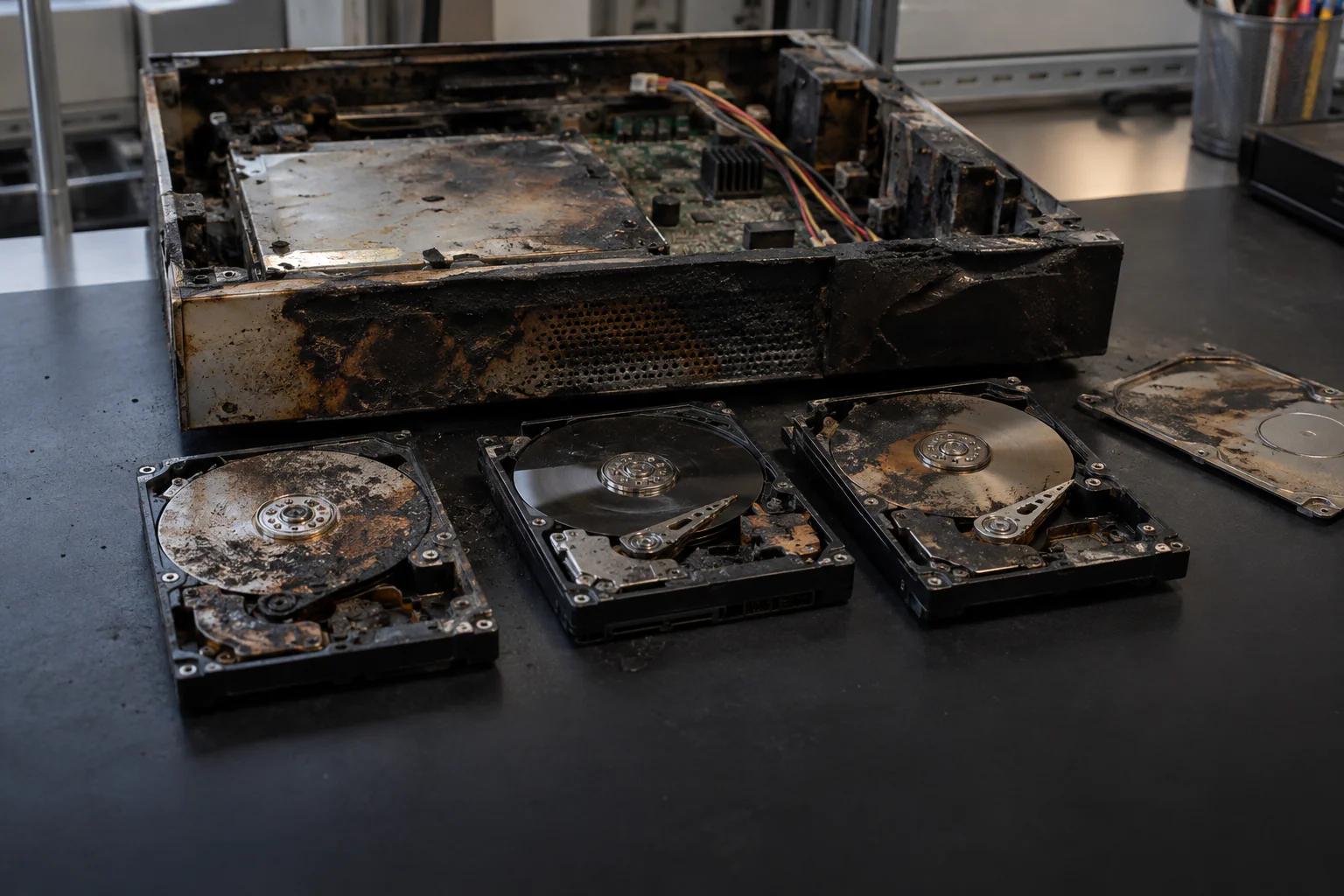
Fire-damaged video recorder and hard drives laid out on a laboratory bench for data recovery

Forensic Investigation

Digital Forensic Investigation

Digital forensic investigation recovers and interprets electronic evidence in support of a wider technical or legal investigation.

Digital forensics Malaysia and the wider region: our examiners work from the Kuala Lumpur laboratory and attend across Southeast Asia. Instructing parties who need a digital forensic consultant Malaysia-based for court work should ask for the examiner by name.

When to call

  • Operations have stopped, and the recorder that would explain why has been damaged by the same event.
  • A record is suspected of being staged, backdated or otherwise misrepresented.
  • An industrial incident has camera footage or system logs that need correlating.
  • A facility wants to know its evidence would actually be recoverable before it needs to be.

What you receive

  • Insurers and lawyers instruct digital evidence work as part of a fire, vehicle, fraud or liability investigation already under way.
  • The engagement produces a preserved and logged evidence set, a finding on what the recovered material does and does not show, and a report written…

What Is Digital Forensic Investigation?

It is the recovery, preservation and analysis of electronic evidence, carried out so the evidence keeps its value once someone else examines it. A device is imaged, not simply copied, and a document's file properties are checked, not only its printed content. It is not a stand-alone cyber-security or data-breach service. Recovering footage from a damaged recorder for use in a fire or engineering investigation is a different engagement from a network intrusion investigation, with a different scope and method. AGI does not offer the second. This work exists inside a wider file, a fire, a failure, a vehicle collision, a fraud or a liability question, and answers what the physical evidence alone cannot: whether a recording captured the moment something started, whether a device's data corroborates an account, whether an image is what it claims to be.
How We Investigate

Preserve. A device, recorder or file is imaged or securely recovered, so the recovery process itself does not alter the original, even where the device has been damaged by heat or water.

Maintain chain of custody. Every device, recording or document is logged from the point it is taken into possession, and that record travels with it.

Recover and review. Footage, data or files are extracted and reviewed, including recordings that are partially overwritten or held on a damaged recorder.

Examine authenticity and metadata. A photograph's or document's file properties are checked against the date, time and location it is said to represent.

Correlate the timeline. The recovered digital record is set against the physical evidence and against access or control-system logs already established by the wider investigation team.

Report. Findings are written for use alongside the wider investigation, preserved to a standard capable of independent review and, where necessary, challenge in legal proceedings. Where the evidence permits, the remaining cause or contributing causes are reported; where it does not permit a reliable determination, that limitation is stated.

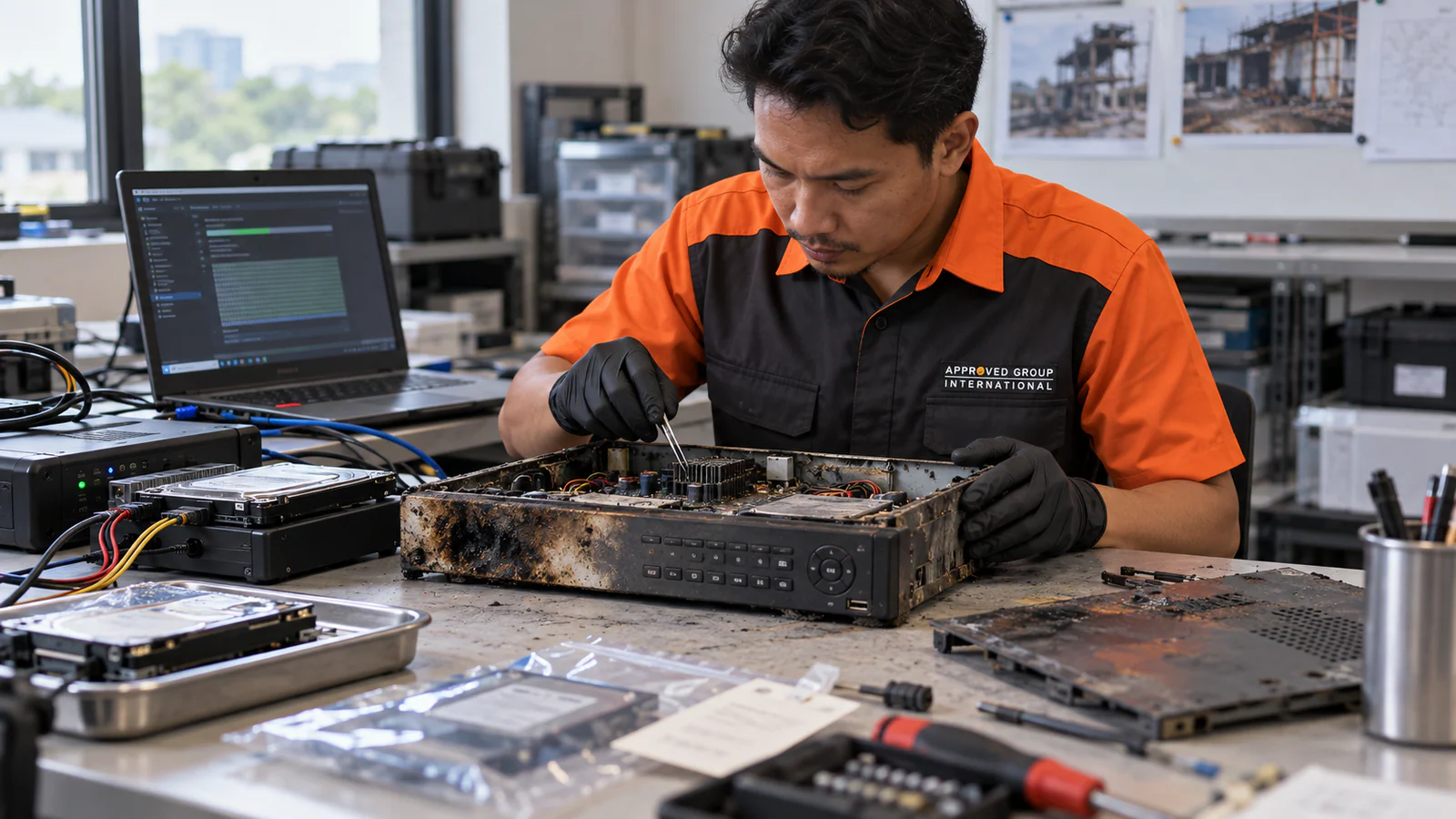
AGI digital forensic examiner working on a heat-damaged video recorder at a laboratory bench
Plate 01AGI digital forensic examiner working on a heat-damaged video recorder at a laboratory bench

What We Examine

Recorded images. CCTV and DVR footage recovered from intact, damaged or partially overwritten recorders, correlated against the fire or incident timeline built from physical evidence.

Devices and storage media. Phones, drives and other storage recovered and imaged, including where a unit has been heat or water damaged and the data is not accessible through ordinary means.

Server logs and system records. Access-control, alarm and control-system logs read alongside the physical evidence to establish a sequence of events.

Photographs and digital documents. Whether an image's or a document's file properties are consistent with the date, time and location it is said to represent.

Device usage history. Call logs, access records and application activity used to establish who did what, and when, where that sequence is in dispute.

What Decides These Cases

Whether the recovery preserved the original properly. A device imaged before anything is altered supports a finding that a copied device does not, and a challenge finds the gap first if the recovery step was skipped.

Whether the timeline actually agrees with the physical evidence. A recording or log that merely sits beside the engineering or fire findings, unexamined, is weaker than one shown to corroborate them, or to contradict them, on specific points.

Whether the material can be independently reviewed. A finding built on evidence that another examiner cannot re-check from the same record is a finding open to challenge on that basis alone.

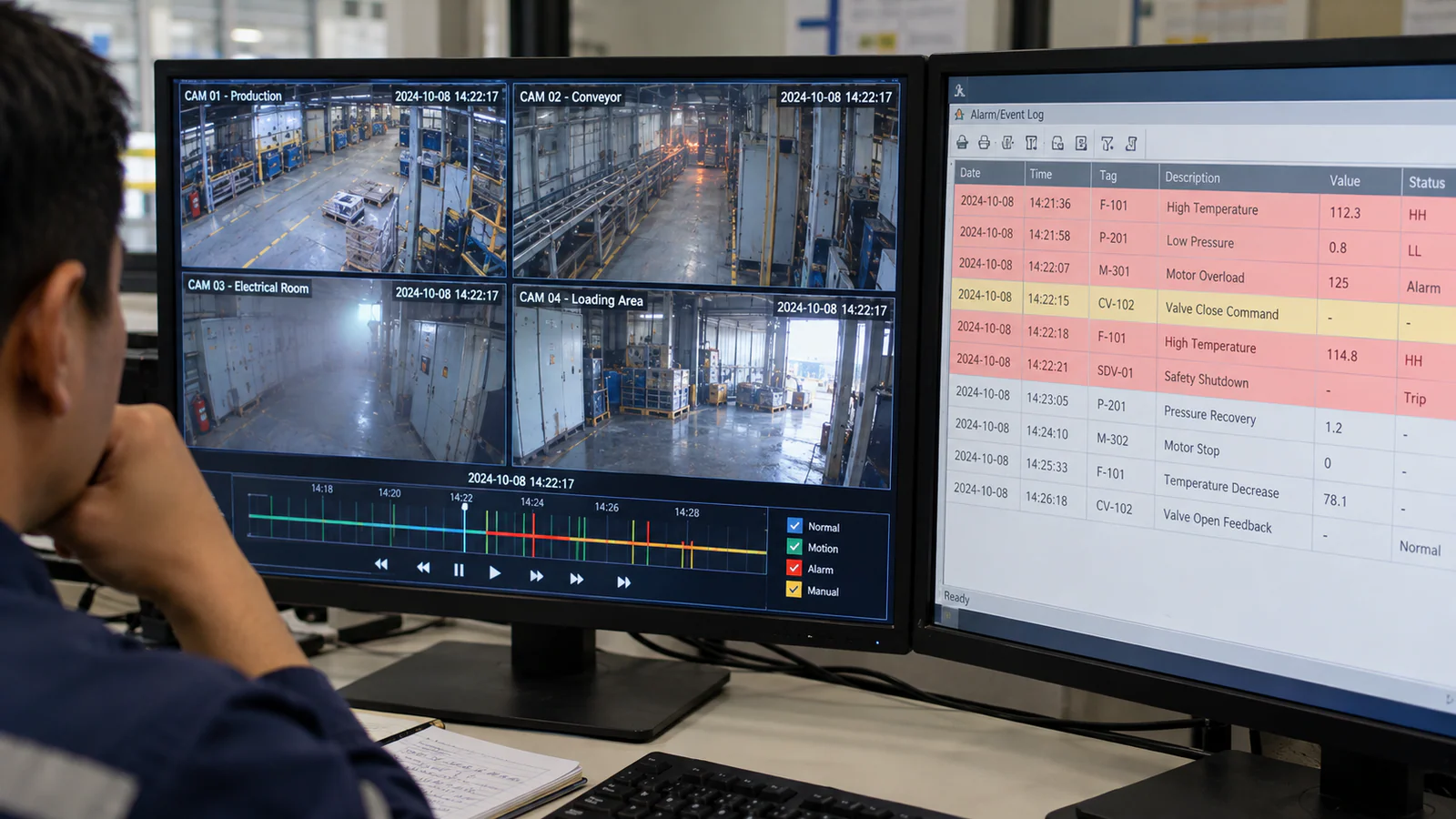
Investigator reviewing CCTV footage alongside a control-system alarm log on two screens
Plate 02Investigator reviewing CCTV footage alongside a control-system alarm log on two screens

Common questions

About digital forensic investigation

The questions that come up before an instruction, answered plainly.

24/7 response

Protect the evidence first

Restrict access, change nothing, and call. Most of what decides a case is still on site in the first few days.

Emergency line open at all hours, across every office.