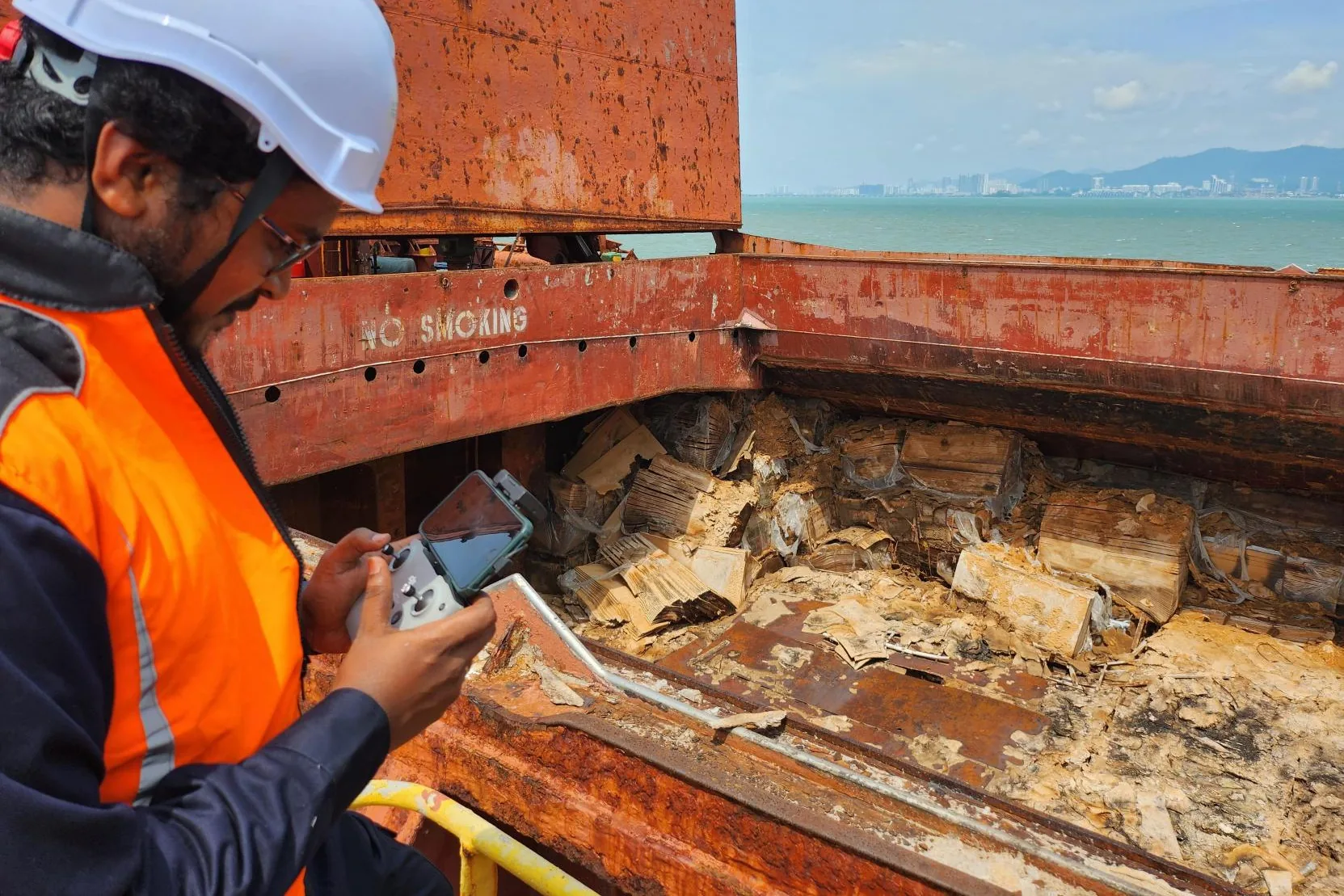
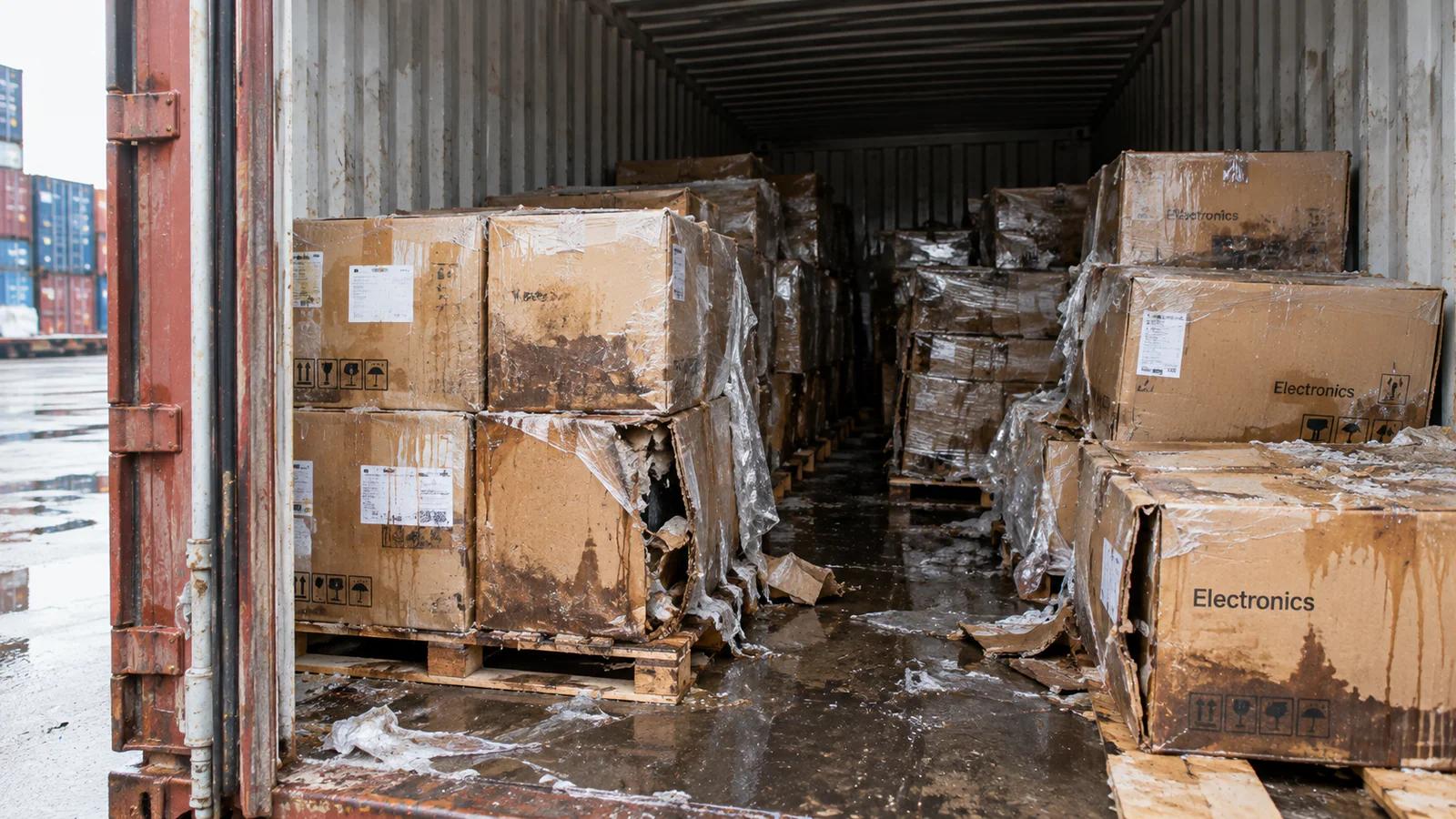
Containerised general cargo. Water ingress and condensation damage, container integrity failure, and stow and lashing failure. Contamination discovered inside a sealed container after a voyage that gave no reason to expect it.
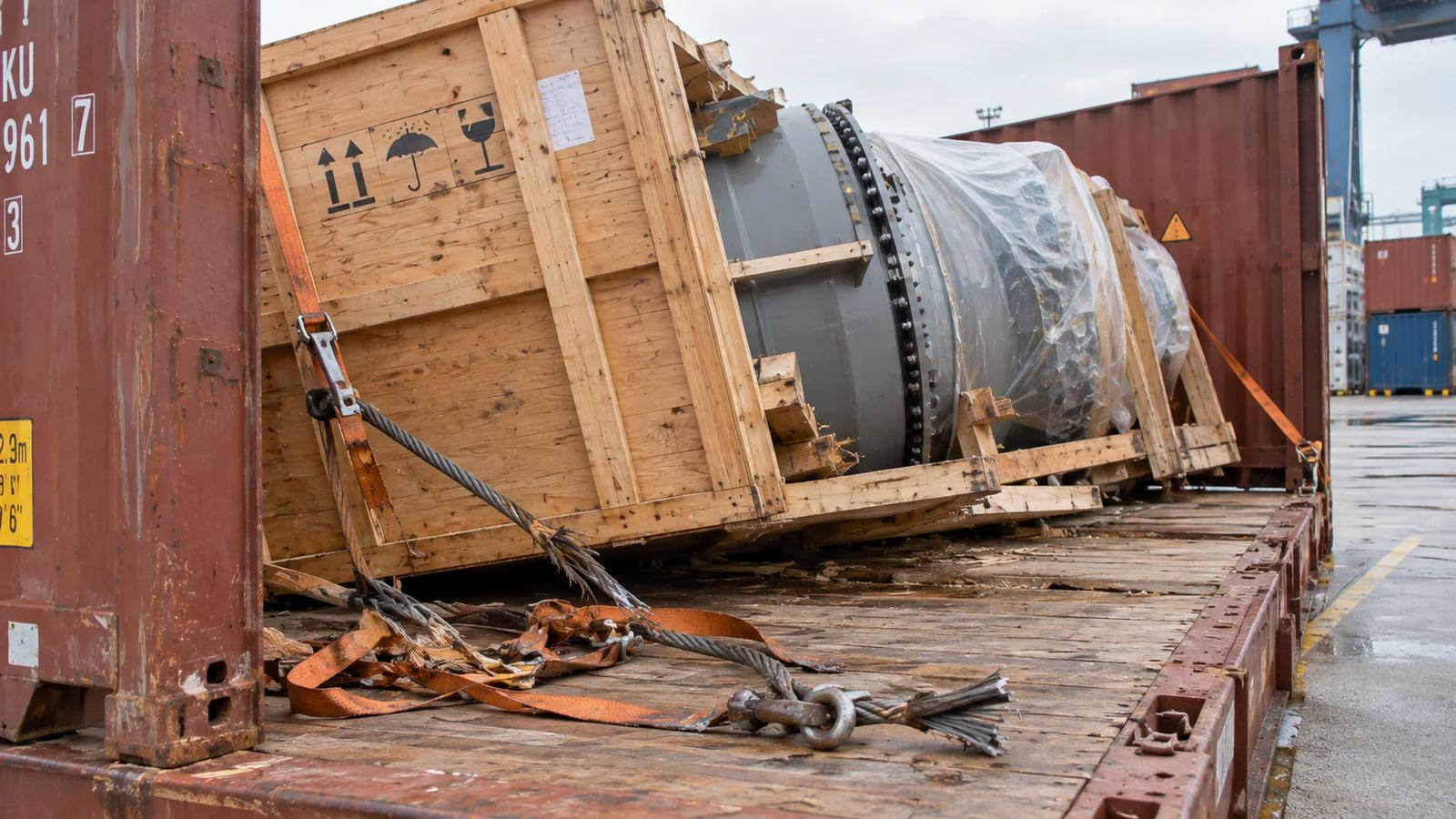
Project and heavy-lift cargo. Machinery and process equipment moved as project cargo, including toppling, lifting and rigging incidents during load-out or discharge. The securing calculation for an oversized unit is itself part of the evidence.
Precision equipment and electronics in transit. Servers, inverters, medical and laboratory instruments and other sensitive equipment, where the central question is usually whether a unit is safe to return to service or must be replaced.
Vehicles and parts. Automotive components, spare parts and safety-critical items such as airbag inflators. A sampling and functional-test regime decides the scope of the loss here, not a visual check.
Chemicals, drums and liquids. Bulk and drummed chemical cargo, contamination and cross-contamination questions, and chain-of-custody reconstruction from loading point to delivery.
Temperature-controlled cargo. Reefer and cold-chain shipments, where the investigation turns on the temperature record and whether any excursion is consistent with the loss reported.
Inland transit and lifting incidents. Damage on the inland leg of a shipment, and incidents during lifting or handling at a port, yard or site, including overload analysis of the equipment involved.
Damage discovered at the terminal. Condition noted at discharge, before a container has even left the port, where the question is often whether the damage happened at sea or during handling ashore.