
Approved Group International
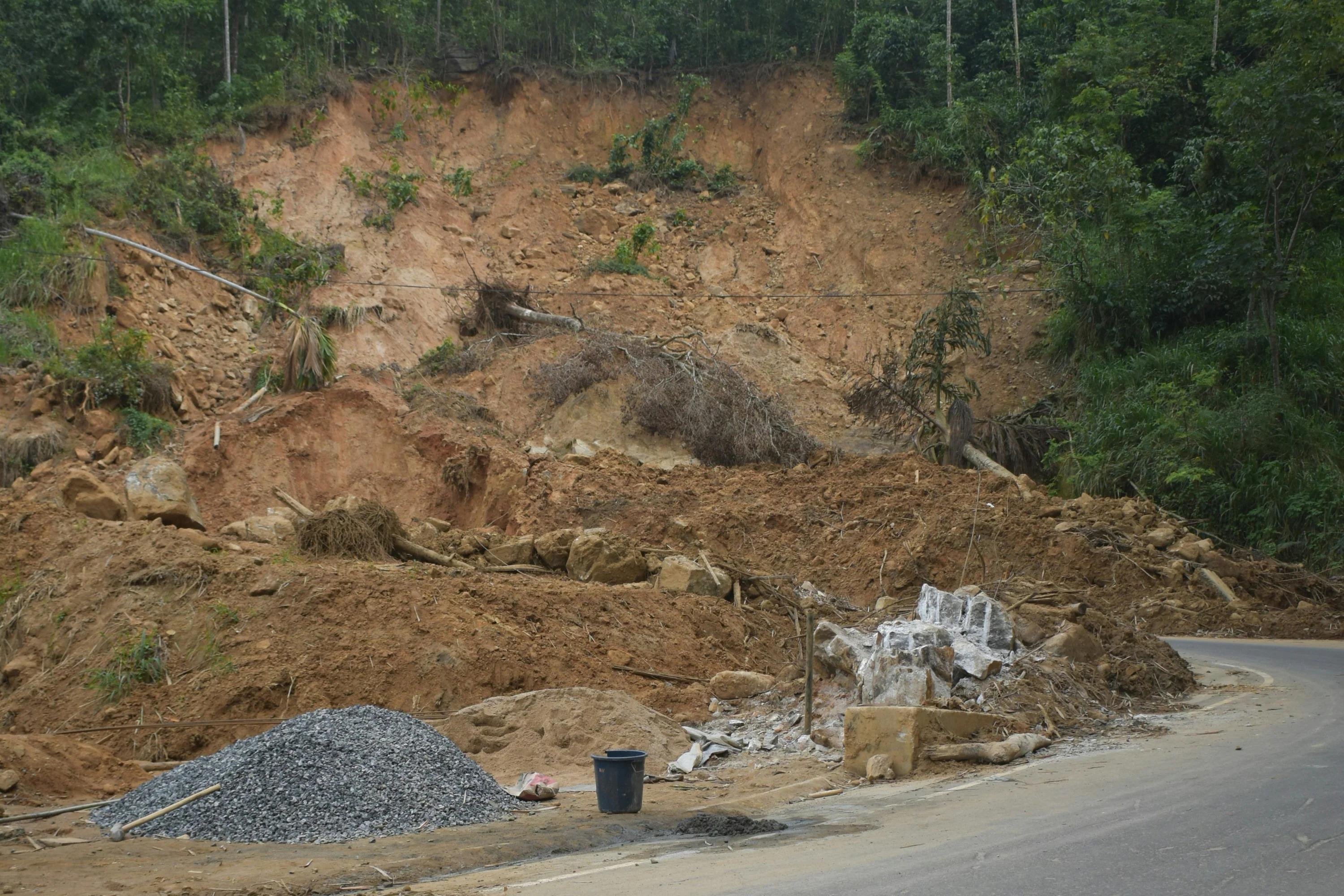
Landslide on a tropical hillside above a road, debris spilling onto the carriageway

Forensic Investigation

Geotechnical Failure Investigation

Geotechnical failure investigation establishes why the ground, or a structure founded in it, moved.

When to call

  • A slope, an embankment or a retaining structure has moved, and the ground above or below it cannot be used until someone says why.
  • A building or a piece of plant has settled unevenly, and cracking or misalignment is getting worse.
  • A contractor's excavation, piling or dewatering is suspected of causing movement nearby.
  • An excavation or a shoring system has failed during construction, and the site cannot proceed until the cause is understood and the remaining…
  • A ground movement loss has been disputed, and the party funding the remediation wants a finding that will hold under challenge from another expert.

What you receive

  • Asset owners, developers, main contractors and the engineers of record instruct us directly when ground has moved and a remediation or a…
  • Most engagements produce the same three things.
  • Many of our engineers are chartered and professionally registered in the jurisdictions in which they practise.

What Is Geotechnical Failure Investigation?

Geotechnical failure investigation establishes the physical cause of slope movement, settlement, subsidence or a foundation failure, using ground evidence, instrumentation and analysis rather than assumption. It differs from a routine geotechnical inspection, which records visible condition against a standard at a point in time. This work instead runs backward from a movement that has already happened, reconstructing the groundwater regime, the loading and the ground behaviour that produced it.

The discipline sits beneath the other two. Once the cause is established, a failed retaining wall or a settled foundation is often handed to structural failure investigation for the structure itself, or to civil failure investigation where a road, a drain or a marine work sits above the ground that moved. All three are frequently run together on a single site.
How We Investigate

  1. Desk study. Geological mapping, historical aerial imagery, prior ground investigation reports and the original design basis are reviewed before anyone goes to site.

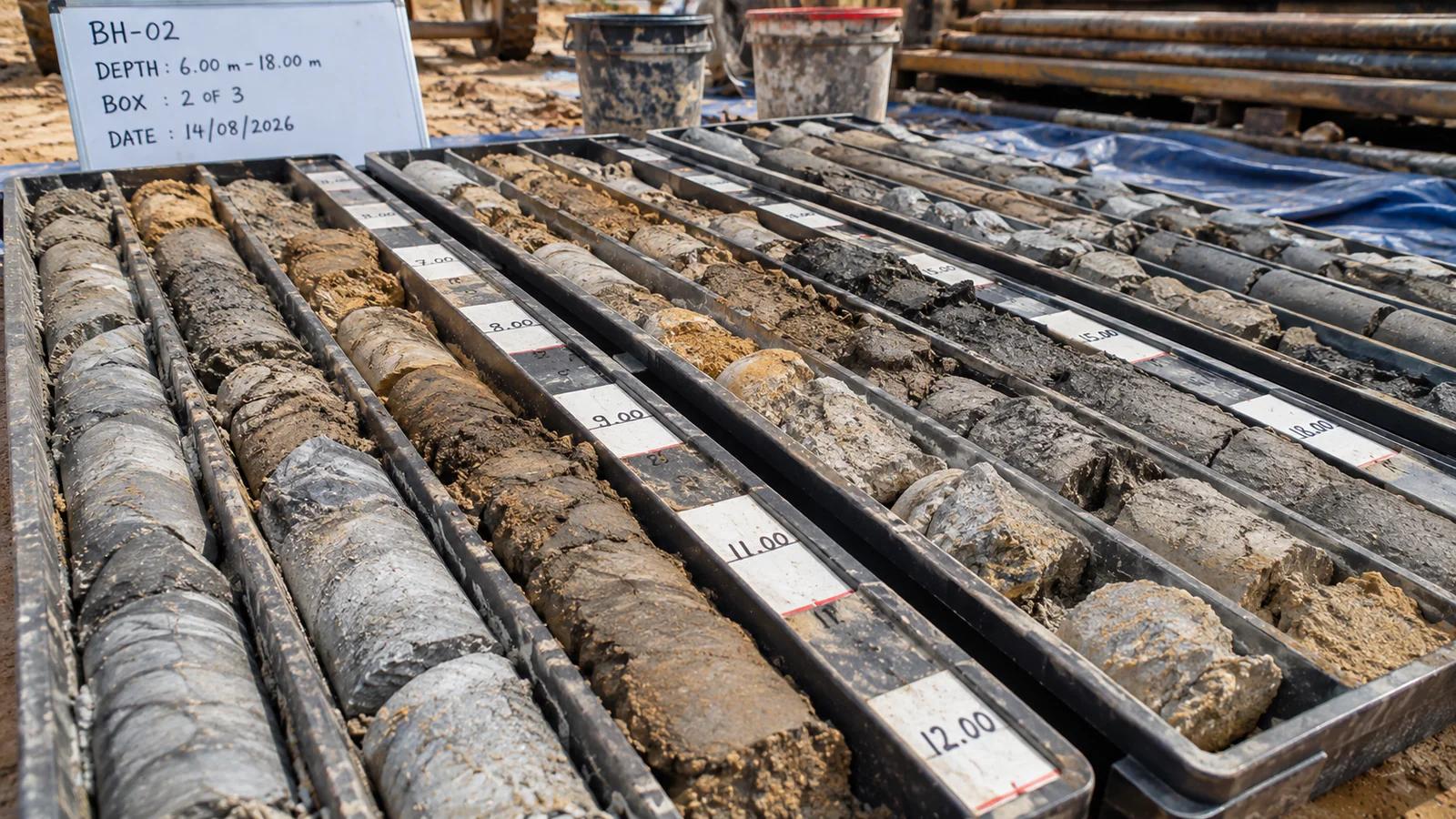
  2. Ground investigation and sampling. Boreholes, trial pits, cone penetration testing and in-situ testing establish the soil and rock profile and recover samples for laboratory testing.

  3. Instrumentation. Inclinometers, piezometers, settlement markers and, where movement is ongoing, automated monitoring establish the rate and the depth of movement and the groundwater conditions driving it.

  4. Laboratory soil testing. Shear strength, permeability, consolidation and index testing on recovered samples characterise the material actually present, rather than the material assumed at design.

  5. Stability and settlement analysis. The ground and the structure are modelled against the loading and the groundwater conditions actually encountered, to establish the factor of safety or the settlement the evidence supports.

  6. Comparison against design assumptions. The ground model used at design stage is checked against what the investigation actually found. A failure often traces back to a gap between the two. Where the evidence permits, the remaining cause or contributing causes are reported; where it does not permit a reliable determination, that limitation is stated.

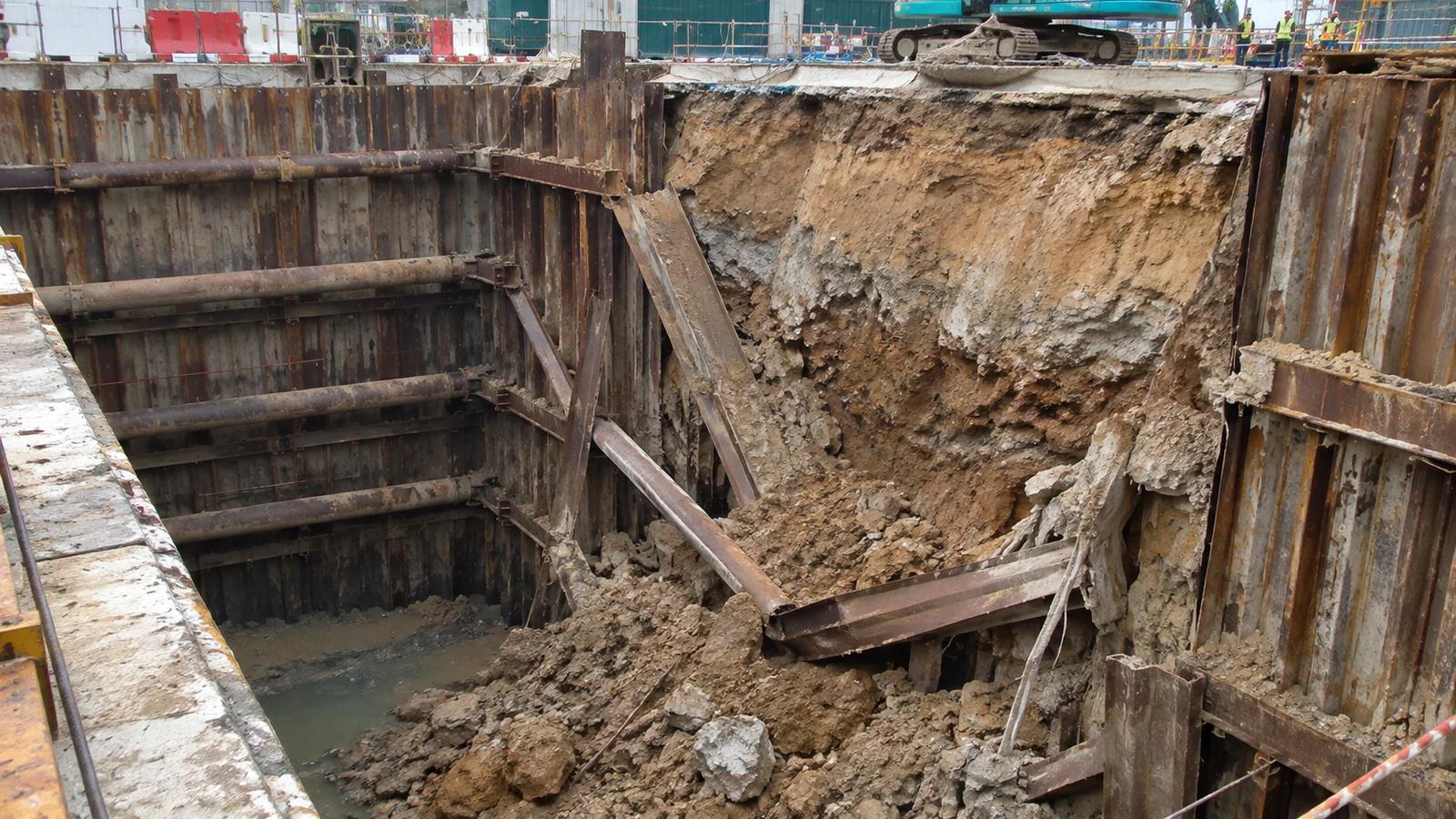
Failed shoring at a deep excavation, soil collapsed between the sheet piles
Plate 01Failed shoring at a deep excavation, soil collapsed between the sheet piles

What We Investigate

Slopes and embankments. Cut and fill slopes, road and rail embankments and dam embankments that have shown cracking, bulging or a discrete slip, most often driven by groundwater conditions the original design did not fully account for.

Retaining structures. Gravity, cantilever, sheet pile and reinforced soil retaining structures that have moved, tilted or shown distress, assessed against the soil pressures and the drainage the structure was designed to manage.

Foundations and piles. Differential settlement, pile failure and foundation movement, traced through soil conditions, construction sequencing and loading history to establish whether the ground, the design or an external event is responsible.

Settlement, subsidence and heave. Ground movement beneath buildings, tanks and pavements, driven by consolidation, groundwater drawdown, decomposition of buried material or expansive soil behaviour.

Ground movement under and around plant. Tanks, cranes, heavy machinery foundations and transmission structures affected by settlement or lateral ground movement, where continued operation depends on knowing whether the movement has stabilised.

Excavation and shoring failures. Collapse or excessive movement of a shored or braced excavation during construction, assessed against the ground conditions, the support design and the sequence of works actually followed.

Reclamation and marine ground. Settlement and instability in reclaimed land and the ground beneath marine structures, where the fill material, the consolidation of the ground it was placed on, and the time allowed for settlement usually decide the outcome.

What Decides These Cases

Water, almost always. Most movements described as a slope failure are, on investigation, a failure of the water management around the slope: a blocked drain, a burst pipe, an unmanaged surface flow, or pore-water pressure the design did not anticipate. Establishing the groundwater regime at the time of failure is usually the single most decisive step in the investigation.

Whether the ground model was wrong or the ground changed. A design is only as good as the ground conditions assumed for it. Sometimes those assumptions were wrong from the start. Sometimes the ground genuinely changed, through drainage alteration, loading or excavation nearby. The distinction decides who bears the cost.

Whether movement has stabilised. A structure showing cracking is not necessarily still moving. Instrumentation over weeks or months, not a single site visit, is usually what separates a historical movement now at rest from one that is ongoing and will keep damaging the structure above it.

Where the full extent of a failure surface or a fill profile cannot be confirmed without further boreholes, the finding is bounded by what has actually been investigated, rather than extended beyond it.

Borehole core samples laid out in core boxes for logging
Plate 02Borehole core samples laid out in core boxes for logging

Common questions

About geotechnical failure investigation

The questions that come up before an instruction, answered plainly.

24/7 response

Protect the evidence first

Restrict access, change nothing, and call. Most of what decides a case is still on site in the first few days.

Emergency line open at all hours, across every office.