
Approved Group International
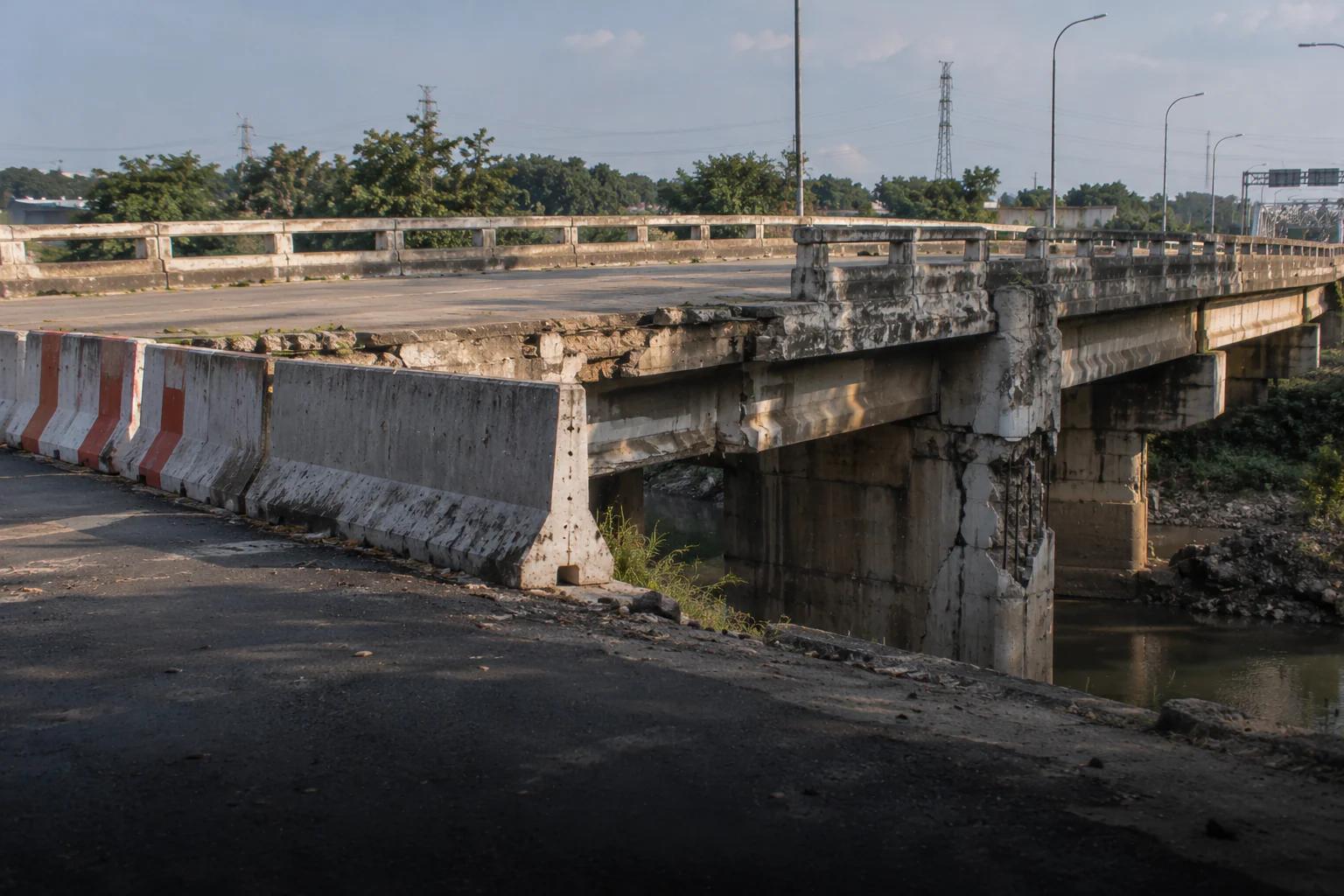
Damaged concrete road bridge closed to traffic with barriers across the deck

Forensic Investigation

Civil Failure Investigation

Civil failure investigation establishes why infrastructure or civil works failed.

When to call

  • A road, a bridge or a section of a yard has closed, and traffic or plant cannot move until someone says why.
  • Water is where it should not be.
  • A contractor's work is suspected of causing the failure.
  • A marine structure has failed inside an operating port or terminal.
  • A civil asset loss has been disputed, and the party funding the repair wants a finding that will hold under challenge from another expert.

What you receive

  • Asset owners, developers, main contractors, port and estate operators instruct us directly when infrastructure has failed and a repair, a closure…
  • Most engagements produce the same three things.
  • Many of our engineers are chartered and professionally registered in the jurisdictions in which they practise.

What Is Civil Failure Investigation?

Civil failure investigation establishes the physical cause of a failure in roads, bridges, drainage, marine works or earthworks, using site evidence, testing and calculation rather than assumption. It differs from routine network inspection or asset condition surveys, which record condition against a maintenance standard at a point in time. This work instead runs backward from a failure that has already happened, reconstructing the loading, the hydraulic conditions and the construction detail that produced it.

The discipline sits between two others. Where a building or another engineered structure has failed, the matter is structural failure investigation. Where a civil asset failed because of the ground it was founded on or built into, rather than because of the works themselves, the matter moves to geotechnical failure investigation, and the two are frequently run together on a single site.
How We Investigate

  1. Site survey and 3D capture. An engineer attends to record the failure area, the surrounding infrastructure and any evidence at risk from repair or reinstatement, using laser scanning or drone photogrammetry where the site is large or unsafe to access on foot.

  2. Materials and concrete testing. Concrete, asphalt, reinforcement and joint samples are tested to recognised standards where the mechanism turns on material condition: strength, carbonation, chloride ingress or reinforcement corrosion.

  3. Hydraulic and load review. Drainage capacity, flood levels, wave and current loading, and traffic or plant loading are checked against the conditions the works were designed to accommodate.

  4. Construction record review. Design drawings, as-built records, compaction and testing records, and maintenance history are checked against what is found on site. A failure often traces back to a gap between the record and what was actually built.

  5. Elimination of alternative causes. Design inadequacy, construction defect, overload, a hydraulic event, deterioration and ground movement are each tested against the physical evidence in turn, and the finding names the cause the evidence actually supports. Where the evidence permits, the remaining cause or contributing causes are reported; where it does not permit a reliable determination, that limitation is stated.

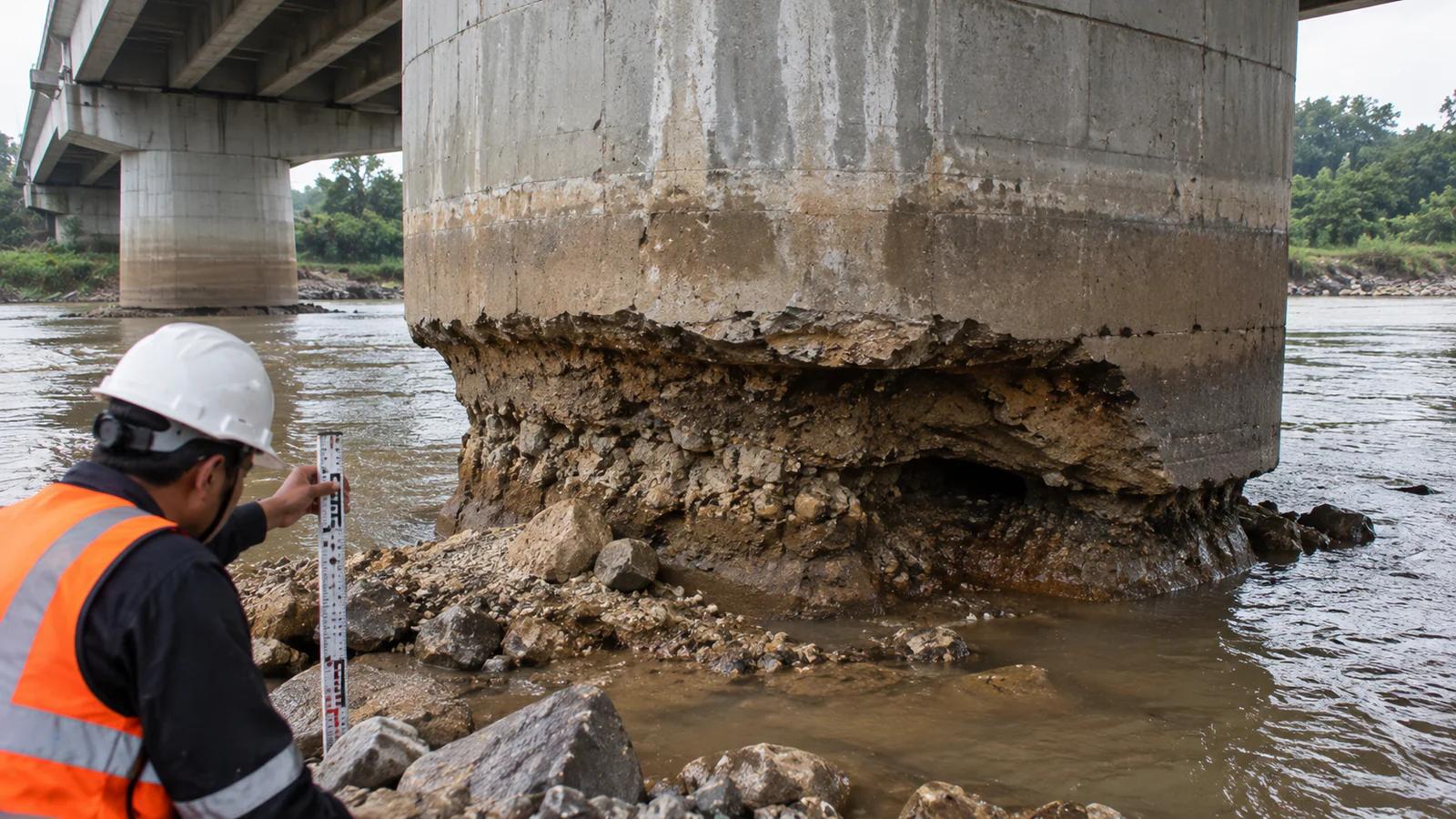
Engineer measuring scour damage at the foot of a bridge pier in a river
Plate 01Engineer measuring scour damage at the foot of a bridge pier in a river

What We Investigate

Roads and pavements. Rutting, cracking, potholing and structural failure in road and yard pavements, where the question is usually whether the design, the subgrade, the construction or the traffic loading is responsible.

Bridges and culverts. Structural distress, scour, joint failure and deck deterioration in bridges and culverts, assessed against the loads and the flows the structure was designed to carry.

Drainage, flood and water-retaining works. Drainage systems that have backed up or failed, flooding inside a facility, and distress or seepage in dams, reservoirs, bunds and other water-retaining structures.

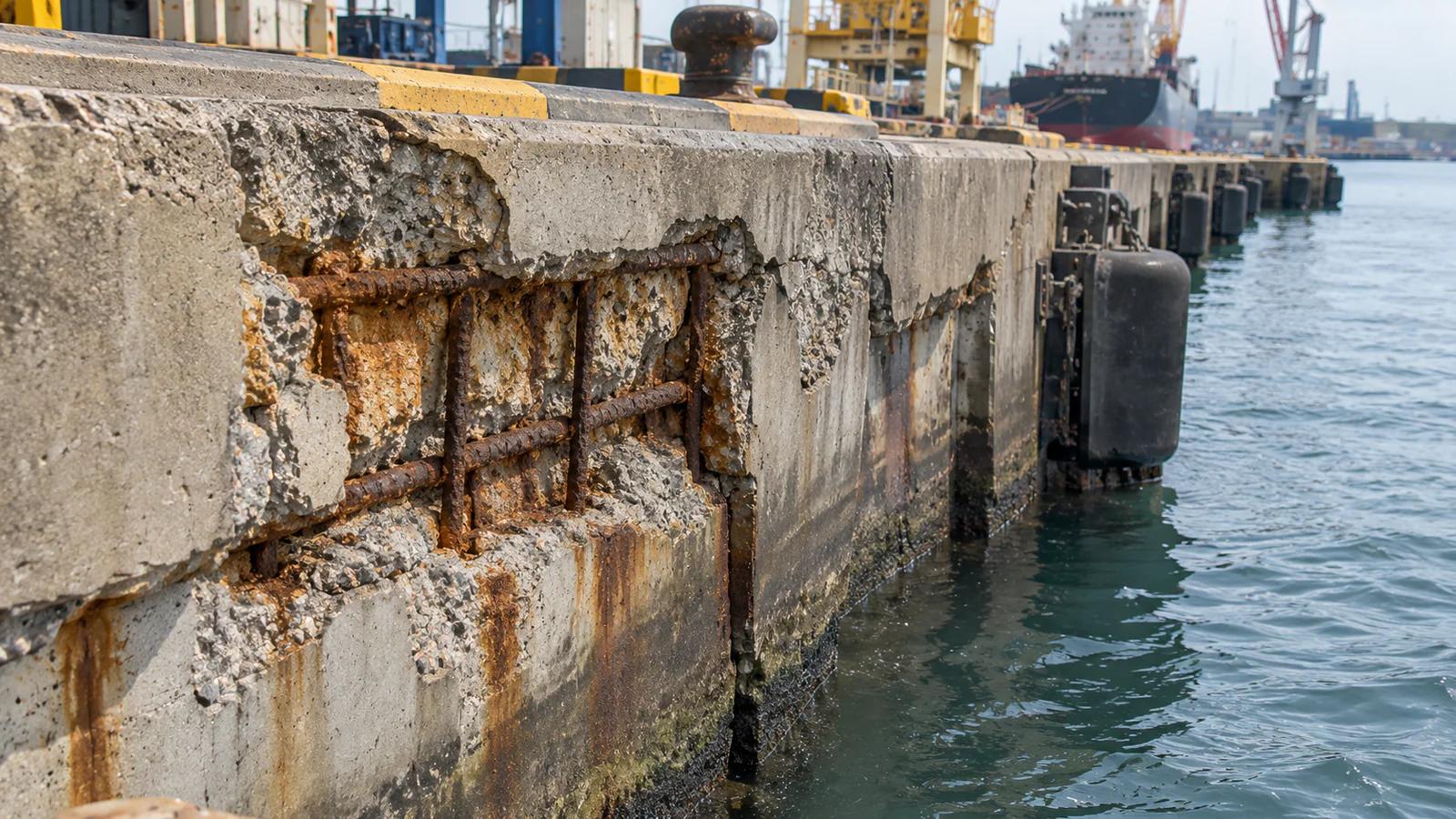
Marine civil works. Jetties, quays, revetments and reclamation platforms damaged by wave action, vessel impact, overload or deterioration, where cargo and vessel operations usually cannot resume until the structure is assessed.

Earthworks and site infrastructure. Cut and fill failures, erosion, and the roads, hardstanding and drainage inside industrial estates and logistics sites, where an isolated failure often points to a wider condition across the estate.

Where the ground decided it. Some civil failures trace not to the works themselves but to settlement, subsidence or slope movement beneath them. That interface is handed to geotechnical failure investigation, usually run alongside this one rather than instead of it.

What Decides These Cases

Design capacity against the event actually recorded. A drainage or a hydraulic failure is checked against the rainfall, the flow or the wave condition the asset was designed to withstand, not the event as first described. That comparison either supports the stated cause or points elsewhere.

Whether the works were built to the record. Compaction, cover, joint detailing and material specification are checked against the construction record. A gap between the two is frequently the actual cause, independent of how the asset was loaded afterward.

Deterioration against a discrete triggering event. A pavement, a culvert or a marine structure that failed after a storm or an overload sometimes shows distress that had been developing for years beforehand. Establishing which is present, or both, decides how the cost of repair is apportioned.

Where full condition cannot be confirmed without excavation or dismantling a structure, the finding is bounded by that limit rather than extended beyond what the evidence supports.

Port quay wall with spalled concrete and corroded reinforcement above the waterline
Plate 02Port quay wall with spalled concrete and corroded reinforcement above the waterline

Common questions

About civil failure investigation

The questions that come up before an instruction, answered plainly.

24/7 response

Protect the evidence first

Restrict access, change nothing, and call. Most of what decides a case is still on site in the first few days.

Emergency line open at all hours, across every office.