Technical NoteForensic Investigation
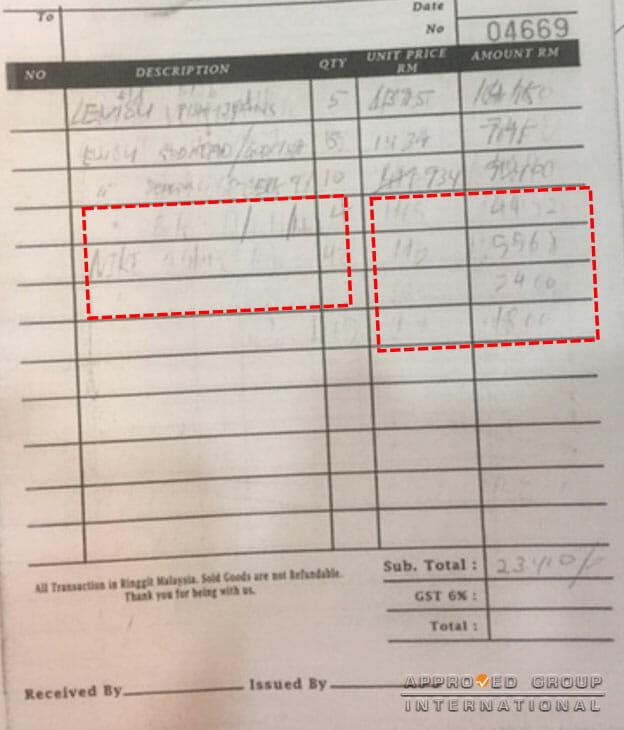
Document Authenticity Determination
AFSB was approached to determine the authenticity of two (2) invoices that were submitted for insurance claims purposes.
By AGI Team1 min read
Read the technical note
Arson or incendiary fire is a crime of intentionally setting a fire to a property with the intent to cause damage.
Arson or incendiary fire is a crime of intentionally setting a fire to a property with the intent to cause damage. The motives often include financial gain, act of revenge and juvenile delinquency. However, like any other fire, incendiary fire can be identified and distinguished from other types of fire. One of the method is through the fire patterns that are formed when the products of combustion (smoke) come into contact with a surface. In a way, the fire tells the investigator how it behaves during the incident through various fire patterns. At approximately 2200 hours on 22 May 2017, John was having supper with a friend at a restaurant when he suddenly noticed black smoke emanating from the following block away from the restaurant. By-passers began to notice the smoke and stopped to have a look. The smoke was seen coming out from a closed shop lot. Moments later, John heard 2 explosions. He then immediately notified the Fire and Rescue Department. Upon the Team’s visit, the affected the two (2) shop lots designated as SL1 and SL2:
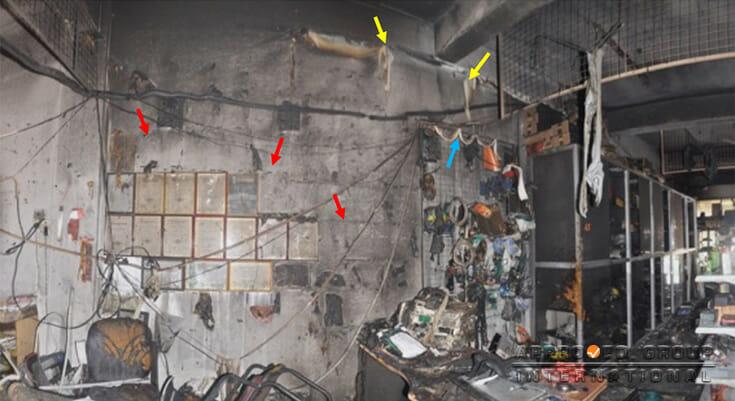
From the onsite inspection, the Team noted 3 areas with severe fire damage while the remaining area sustained high fire damage. 2 of the areas with severe fire damage were located in SL2 while another one area with severe fire damage was located in SL1.
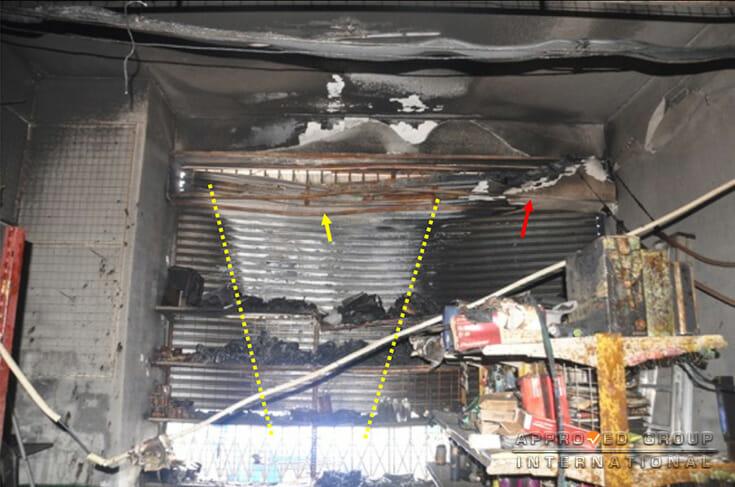
A distinct V-pattern was seen at the rear roller shutter of SL1 which indicates that the fire was intense at the lower level. However, further examination revealed that the roller shutter casing was made of wood material. Hence, when the hot smoke accumulated at ceiling level, the high temperature ignited the wood material of the roller shutter casing and the dropped down debris ignited the combustible materials beneath.
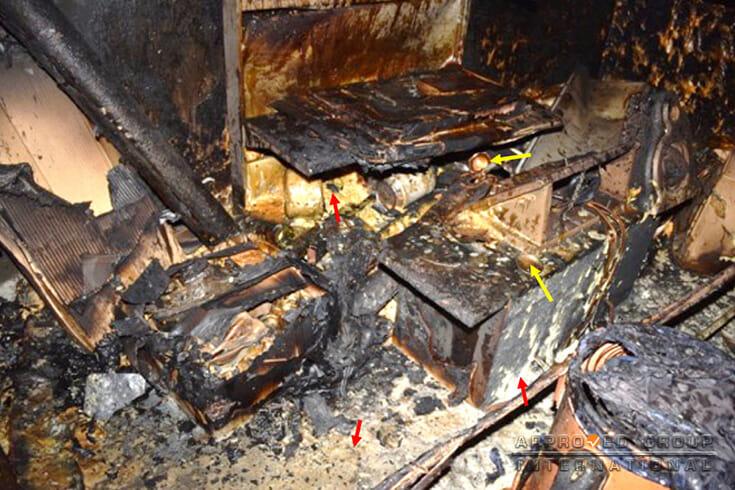
Close examination of the severely damaged areas in SL2 revealed that there are residue of solidified polyurethane foam and ruptured polyurethane foam spray cans. According to the owner of the premises, the polyurethane foam spray cans are used for sound absorption where it is sprayed into empty cavities of the vehicle to reduce noise. Due to the presence of these polyurethane foam spray cans, the severe fire damage sustained in these areas was plausible. Nevertheless, there was no source of ignition in these two areas.
However, the severe fire damage in SL1 was questionable. The fire pattern in the severely damaged area of SL1 was suspicious as this area sustained low elevation fire damage which indicates that the fire was intense at the lower section. There was no source of ignition within the area as well, the closest source of ignition was the electrical reticulation routed on top. Hence, the Team excavated the area to identify the source of ignition in the area.
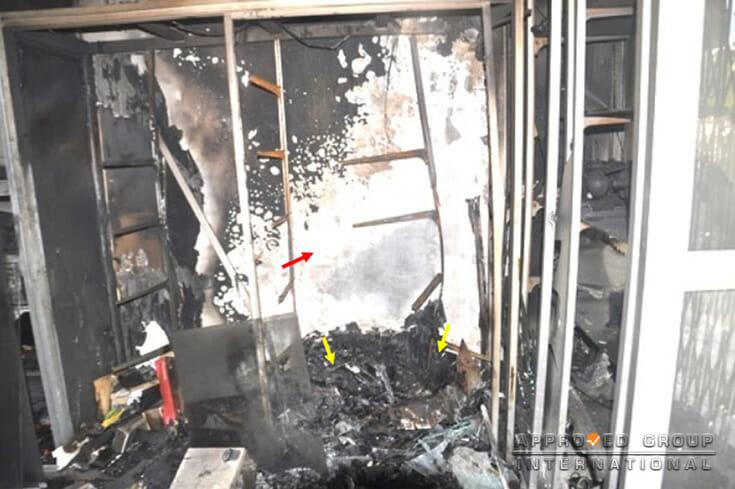
The Team collected fire debris samples from all three (3) locations and the result for the fire debris analysis was positive for gasoline. The areas of origin and spread of fire is illustrated in the following figure.
An incendiary fire is detectable; although in some circumstances, the fire appears to be accidental and/or natural. Fire pattern analysis is one of the many ways that help fire investigators to determine how the fire spread. On-site fire pattern analysis coupled with other observation and laboratory analysis help strengthen the conclusion achieved.
Keep reading
Technical NoteForensic Investigation
AFSB was approached to determine the authenticity of two (2) invoices that were submitted for insurance claims purposes.
Case StudyForensic Investigation
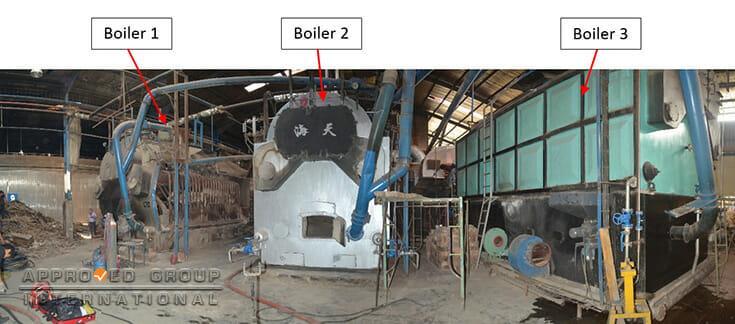
The director of a lumber core manufacturing plant was in his office when he suddenly heard an explosion-like sound coming from the Boiler Room in the production…
ArticleForensic Investigation
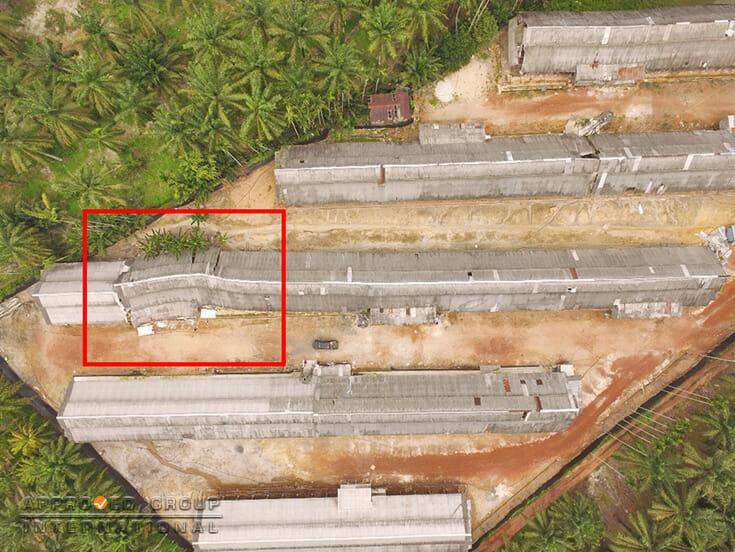
One (1) section of a barn (hereinafter referred to as Barn X) used for rearing ducks was reported to have collapsed.
24/7 response
Send us the detail and we will tell you what a proper investigation would need to establish.